By Whitney Miller, ISA Agronomic Services Coordinator
With harvest season approaching in west-central Illinois, conversations are shifting from in-season management to evaluating what the 2026 growing season has delivered and what lessons farmers can carry forward. Those topics were front and center at the Wenger Ag Solutions Field Day ’26, held August 28 in Rushville, Illinois, where approximately 40 local farmers gathered to hear insights on crop conditions, emerging disease challenges, nutrient management and farmland economics.
Gary Wenger welcomed attendees by encouraging growers to think outside the box when evaluating management decisions. He emphasized that achieving the same or better yields does not always require more inputs. Instead, success often comes from identifying the practices that provide the greatest return on investment and focusing resources where they can make the most impact.
Crop conditions and harvest priorities were a major focus of the meeting. Dana Harder, CCA, Field Agronomist with Burrus Seed, reflected on the weather challenges that shaped the 2026 season. According to Harder, excessive rainfall during June may have contributed to nitrogen losses across much of the region, with some areas receiving 200% to 300% of normal precipitation. As a result, many growers faced difficult decisions regarding supplemental nitrogen applications.
The weather pattern shifted dramatically in July. While moisture became more limited, nighttime temperatures remained elevated, running approximately three to four degrees above normal. Harder explained that warmer overnight conditions place additional stress on corn plants because they have less time to recover from daytime heat. The result can be accelerated plant aging and premature death, further limiting yield potential.
As farmers begin evaluating fields ahead of harvest, Harder encouraged growers to pay close attention to stalk integrity. If corn can be easily pushed over in 10% or more of a field, he recommended prioritizing that field for harvest to minimize losses. Despite weather-related challenges, disease pressure has remained relatively low throughout much of the growing season.
Harder also discussed new soybean technologies that will soon be available to growers. Among them are Vyconic soybean varieties expected to be introduced next year, featuring Nemasphere technology for soybean cyst nematode (SCN) management. He noted that continued advancements in soybean genetics will provide growers with additional tools to manage some of the industry’s most persistent yield-robbing pests and diseases.
One disease receiving significant attention is red crown rot (RCR), which continues to spread across western Illinois. Harder described the disease as relatively easy to recognize once symptoms develop, but often difficult to accurately diagnose in the field. As awareness grows, researchers and industry professionals are working to better understand the disease and identify effective management strategies, including the screening of current soybean varieties for tolerance and resistance. Recent Illinois Soybean Association Checkoff-funded research led by University of Illinois plant pathologist Boris Camiletti has advanced understanding of RCR disease cycles, detection and management. Harder highlighted the availability of seed treatment options such as VICTRATO® (Tymirium) and SALTRO® as options for control and emphasized the importance of long-term efforts to reduce pathogen pressure in affected fields.
For growers interested in learning more about red crown rot, Field Advisor has covered the disease extensively in articles such as “Crying Red Crown Rot” and “Managing Red Crown Rot in Soybeans: Where the Research Stands and Where It’s Headed.” Growers can also utilize a free testing program offered through the United Soybean Board and Illinois Soybean Checkoff in partnership with the University of Illinois to confirm suspected cases.
The discussion then shifted from agronomy to farm economics. Ethan Koch of Compeer Financial shared insights from the organization’s farmland benchmarking program, which tracks land values across Illinois. By comparing similar farms and conducting annual appraisals, Compeer has developed a long-term view of farmland value trends throughout the state.
According to Koch, Class A farmland has appreciated 182% statewide since 2006, although appreciation rates in the local area have generally been more modest, ranging from 5% to 8% in recent years. High-quality farmland remains tightly held across west-central Illinois, making transactions less common than in some other regions. Class B farmland has appreciated approximately 200% since 2006 and continues to show stable to increasing values with little indication of a widespread pullback.
Koch also noted the growing influence of recreational land markets. Recreational properties have appreciated 242% since 2006, with values accelerating significantly following the COVID-19 pandemic. West-central Illinois is increasingly viewed as a global destination for hunting and recreational opportunities, creating demand that extends beyond traditional agricultural buyers. In some cases, pure timber tracts are now commanding higher prices than comparable cropland within the same county.
While land values have continued climbing, capitalization rates have generally moved in the opposite direction, indicating lower returns relative to land values. Koch explained that investor influence remains stronger east of the Illinois River, where buyers often place greater emphasis on cash flow. West of the river, local operators, family buyers and recreational interest continue to be major market drivers, although investor participation is becoming more common.
Nutrient management rounded out the day’s educational program. Tommy Roach, Vice President of Product Development with Nachurs Alpine Solutions, challenged growers to think beyond nitrogen when developing fertility programs. While nitrogen often receives the most attention, Roach emphasized that secondary and micronutrients can play a significant role in protecting yield potential.
A key theme of Roach’s presentation was nutrient timing. For example, zinc demand peaks later in the growing season, around R4 and R5, rather than immediately after planting. He also highlighted potassium as the most common nutrient deficiency he encounters, with sulfur quickly becoming the second most common. As atmospheric sulfur deposition continues to decline, sulfur deficiencies are becoming more widespread and can limit crop performance if left unaddressed.
Roach encouraged growers to routinely evaluate soil tests, base saturation levels and overall nutrient balance when developing fertility programs. He noted that corn remains highly responsive to nutrients such as sulfur, magnesium, boron and zinc later in the season, when grain fill and test weight are being determined. According to Roach, approximately 43% of a crop’s zinc demand occurs during the reproductive stages, reinforcing the importance of maintaining nutrient availability throughout the season.
Farmers interested in sulfur management in soybeans can explore ongoing sulfur research through the Illinois Soybean Association’s On-Farm Trial Network articles available on FieldAdvisor.org, where researchers continue evaluating sulfur’s role in maximizing nutrient efficiency and crop performance.
While the presentations covered everything from crop stress and emerging diseases to nutrient management and farmland values, the overarching message was clear: Every management decision matters. As growers head into harvest and begin thinking about next season, the discussions at Wenger Ag Solutions Field Day ’26 served as a reminder that success comes from combining sound agronomics with smart economics, finding opportunities to protect yield while making every input dollar count.
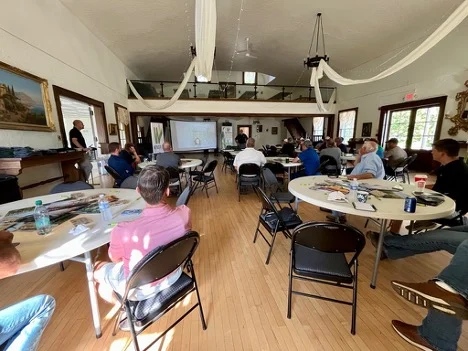
Wenger Ag Solutions Field Day (Photo taken by Whitney Miller, Illinois Soybean Association)
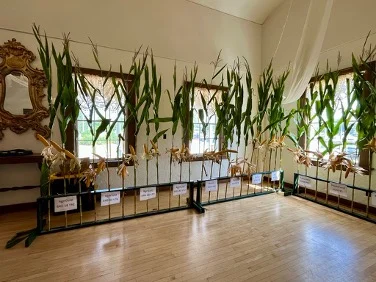
Wenger Ag Solutions Field Day (Photo taken by Whitney Miller, Illinois Soybean Association)

Whitney Miller is the Agronomic Services Coordinator for the Illinois Soybean Association (ISA), where she supports the On-Farm Trial Network team, contributes to outreach efforts, and manages responsibilities related to the NRCS partnership. She brings a diverse background in agricultural education, nonprofit operations, and the agriculture supply chain.
She holds a bachelor’s degree in Agricultural and Environmental Communications and Education from the University of Illinois at Urbana-Champaign and a master’s degree in Education from Western Illinois University.
Whitney lives on her family’s farm in Rushville, Illinois, with her husband and daughter, where she farms corn and soybeans alongside her father. She is proud to be raising the sixth generation on the farm. In her free time, she enjoys gardening, researching genealogy and local history, and spending time with her family.


 and then
FIND US ON