
Effective methods for controlling weeds in farm fields are becoming few and far between in Illinois. Farmers are fighting weeds that emerge continuously throughout the year, grow rapidly and are herbicide resistant. On top of that, variable precipitation patterns can prevent field access during critical spraying windows.
It then comes as no surprise that waterhemp was the No. 1 concern, and weed management was ranked the top research interest area of growers in Illinois for the past three years, according to the annual Growing Concerns Survey distributed by the Illinois Soybean Association (ISA).
Since farmers are no longer able to rely on herbicide applications alone, the ISA On-Farm Trial Network (OFTN) began evaluating the effectiveness of an alternative weed control method: cover crops. In the summer of 2025, the OFTN team began recruiting farmers in a trial titled Cover Crop Biomass and Weed Suppression. This study evaluates the weed suppression potential of the most popular cover crop before soybeans, cereal rye, and compares it to a similar species, winter barley.
Both species overwinter and produce tons of spring biomass, which can physically and chemically suppress weed germination and growth. This chemical suppression, known as allelopathy, occurs when a plant releases compounds that inhibit the growth of nearby plants, and cereal rye is thought to be strongly allelopathic. However, checkoff-funded research by Dr. Karla Gage at Southern Illinois University suggests that winter barley is also allelopathic and that its effects may be even stronger than those of cereal rye.
Still, more research is needed to determine how effective either species is at suppressing weeds. This study helps fill that gap by comparing cereal rye and winter barley, two cover crops with similar growth habits and the potential to help control herbicide-resistant weeds. The goals of the study are to:
- Compare biomass production of cereal rye versus winter barley.
- Assess how well cereal rye or winter barley suppresses weeds in the following soybean crop.
- Determine whether one species is more effective at weed suppression than the other.
- Evaluate the impact of cereal rye or winter barley on soybean yield.
To answer these research questions, three Cover Crop Biomass and Weed Suppression trials were implemented with growers in Henderson, Iroquois and Stark Counties in the fall of 2025 (Figure 1). On-Farm Trial Network agronomists collected cover crop biomass samples at each site in the spring of 2026 immediately prior to termination. These samples were collected by placing a 21 x 30” frame (1/10,000 of an acre) across the rows of a uniform section of cover crops, then cutting all the biomass present within the frame area (Figure 2).
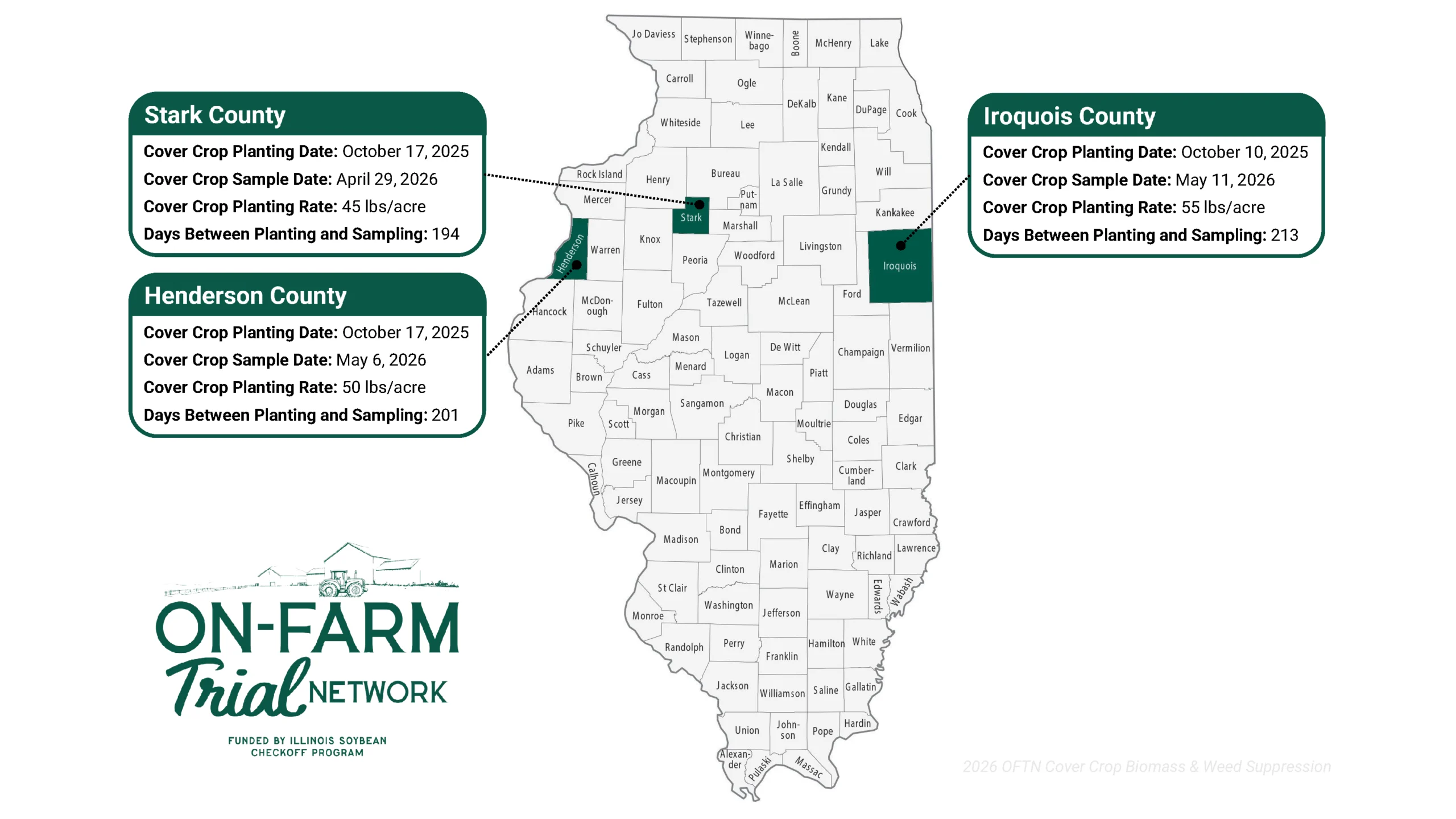
Figure 1. Cover crop planting dates, planting rates and biomass sample dates for the 2026 Cover Crop Biomass and Weed Suppression Study sites in Henderson, Iroquois and Stark Counties, Illinois.
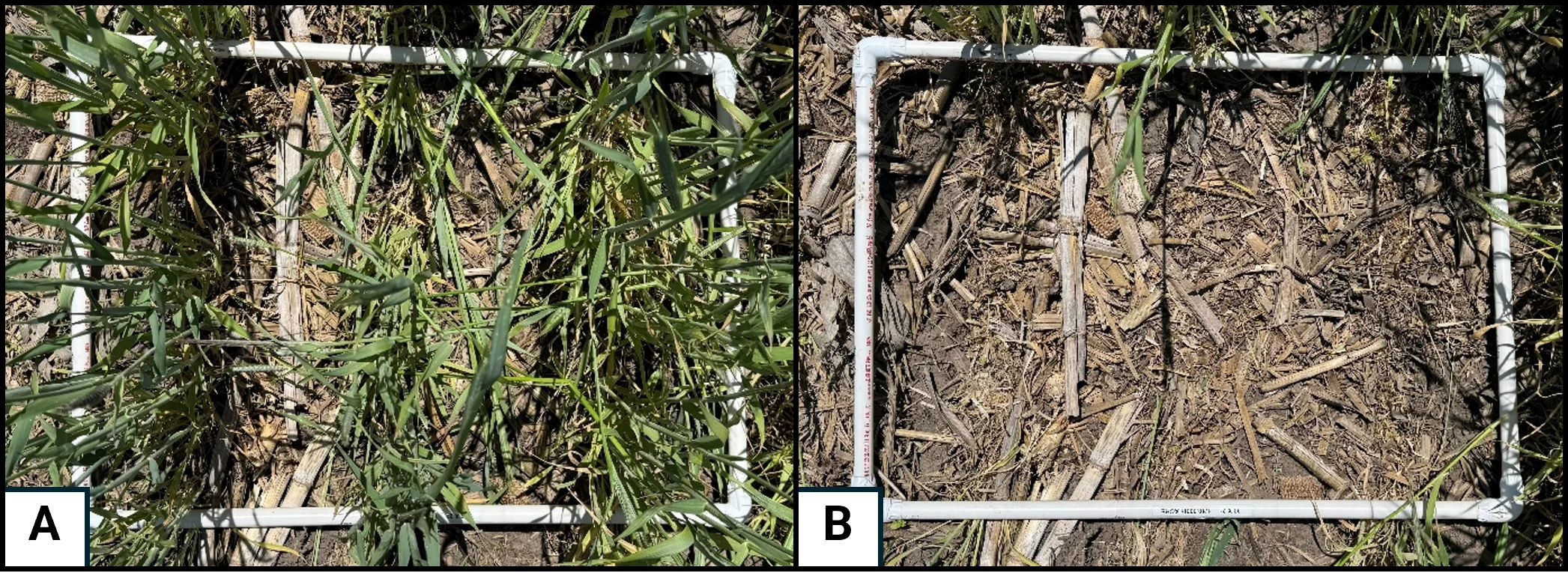 Figure 2. Image showing (A) a 21 x 30” frame placed over the growing cover crop biomass and (B) the cover crop biomass cut within the frame area.
Preliminary Findings
- Winter barley overwintered less consistently than cereal rye.
- Winter barley stands were visibly more variable than cereal rye stands at all trial locations (Figures 3 and 4).
- Total biomass production varied by location for both cereal rye and winter barley (Table 1).
- Cereal rye produced more biomass and contained more nitrogen, phosphorus and potassium than winter barley on a per-acre basis (Table 1).
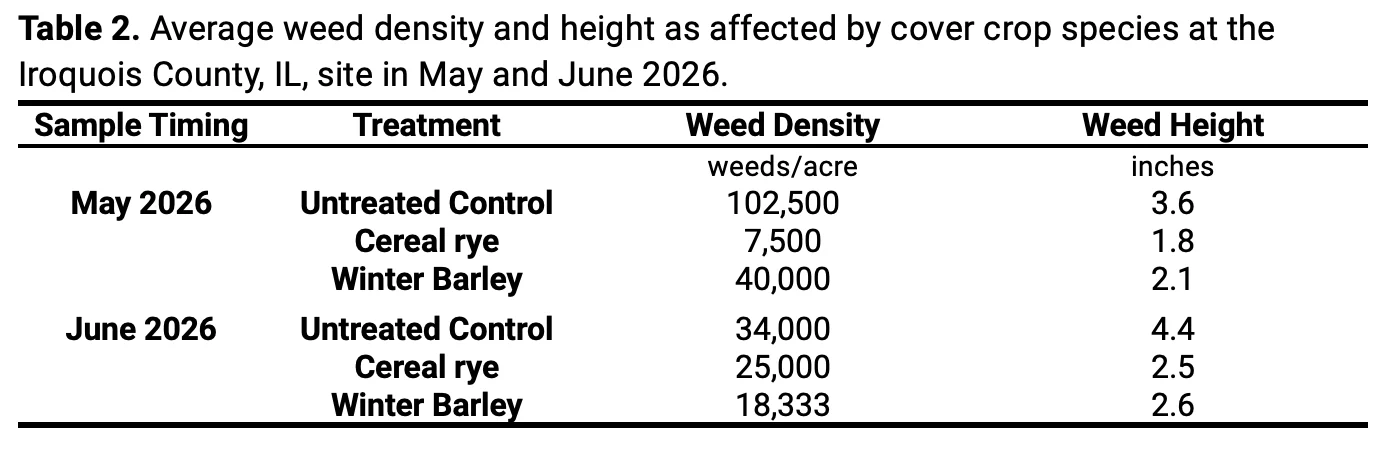
- Both cover crop species numerically reduced weed density and height compared with the untreated control at our Iroquois County site (Table 2)
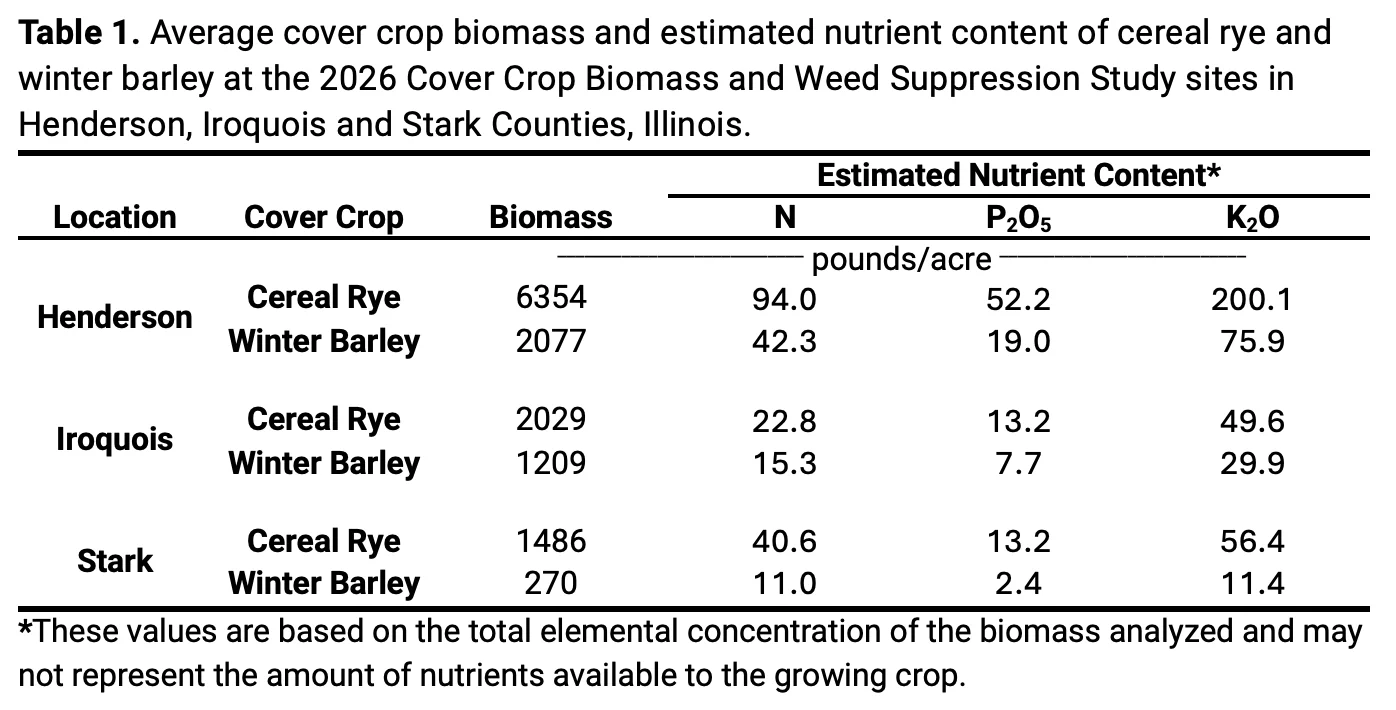
All three trial sites were planted within one week of each other, sampled within two weeks of each other and located at similar latitudes. Even so, biomass production varied widely among them (Table 1). Furthermore, a higher planting rate did not always result in more biomass production, as cereal rye planted at 50 pounds per acre in Henderson County produced three times as much biomass as cereal rye planted at 55 pounds per acre in Iroquois County (Figure 1 and Table 1). This difference may reflect site-specific factors such as temperature, precipitation, management and soil characteristics, all of which can influence cover crop biomass production.
Our initial findings also show that cereal rye consistently produced more biomass than winter barley (Table 1). However, more biomass does not necessarily mean better weed suppression. At our Iroquois County site, both cover crops reduced average weed numbers and height compared with the untreated control (Table 2). Cereal rye plots had the fewest weeds in May, when henbit was the main weed present, while winter barley plots had fewer weeds in June, after other species had emerged. Weed height, however, was similar between the two cover crops at both timings. Because these results are plot averages that have not yet been statistically analyzed, we will continue evaluating weed data from all sites, along with 2026 soybean yield data, to better understand the overall return of this alternative weed control strategy.
If you are interested in learning more about this research, check out the On-Farm Trial Network page on Field Advisor. You can also read about Gage’s findings on cereal rye and winter barley on the Field Advisor blog.
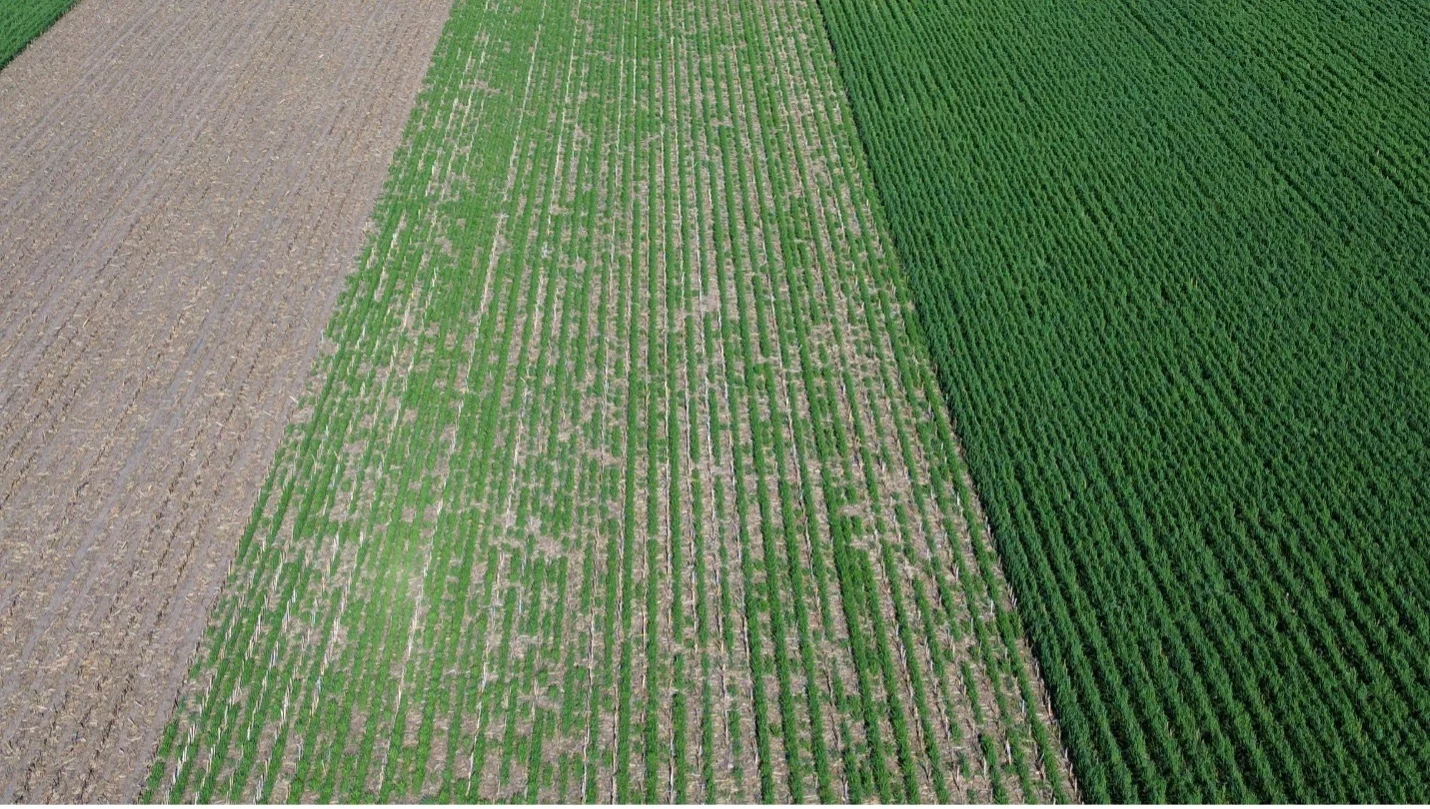 Figure 3. Strips of no cover (left) winter barley (middle) and cereal rye (right) at our Henderson County location on April 25, 2026. Photo credit: Brian Randall
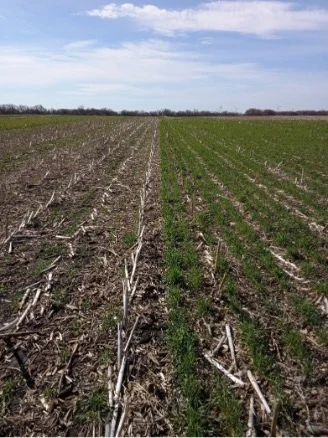
Figure 4. Strip of winter barley (left) versus cereal rye (right) at our Iroquois County location on April 9, 2026. Photo credit: Darby Danzl
This research is funded by the Illinois Soybean Association Checkoff Program.
Darby Danzl is the Regional Technical Agronomist for the Illinois Soybean Association (ISA). In her role, she contributes to on-farm trials, outreach efforts and NRCS partnership responsibilities.
Darby Danzl holds a B.S. in Environmental Economics and Policy, a minor in Horticulture, and an M.S. in Crop Sciences from the University of Illinois at Urbana-Champaign. Her graduate research at the Crop Physiology Laboratory involved small-plot research with a focus on soil health and regenerative agricultural practices. She is passionate about advancing agricultural sustainability using science-based practices that improve soil health, increase resource efficiency, and boost long-term productivity.


 and then
FIND US ON