
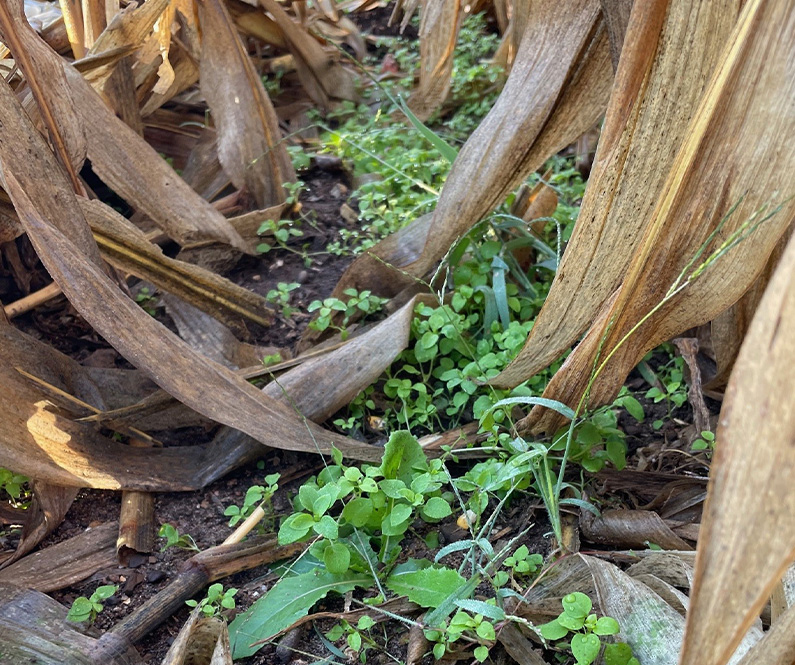
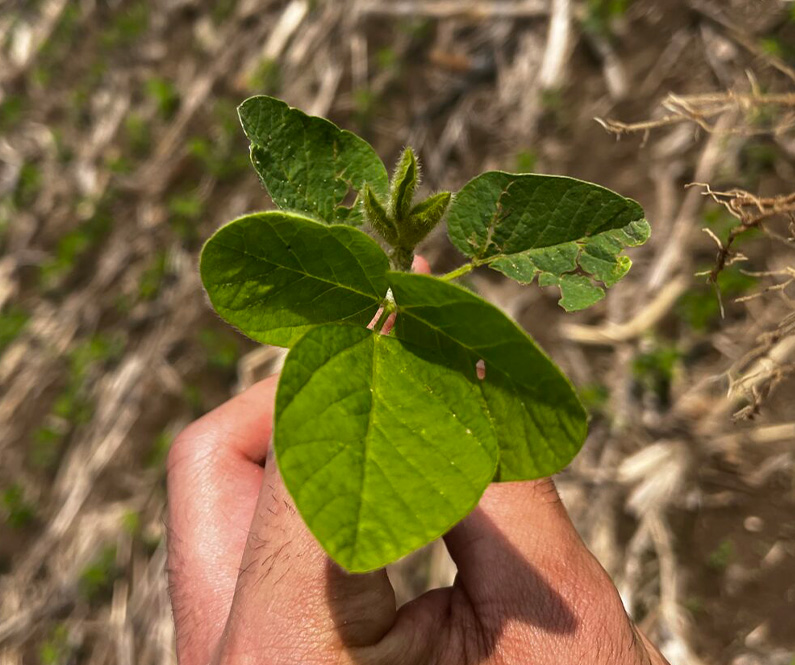
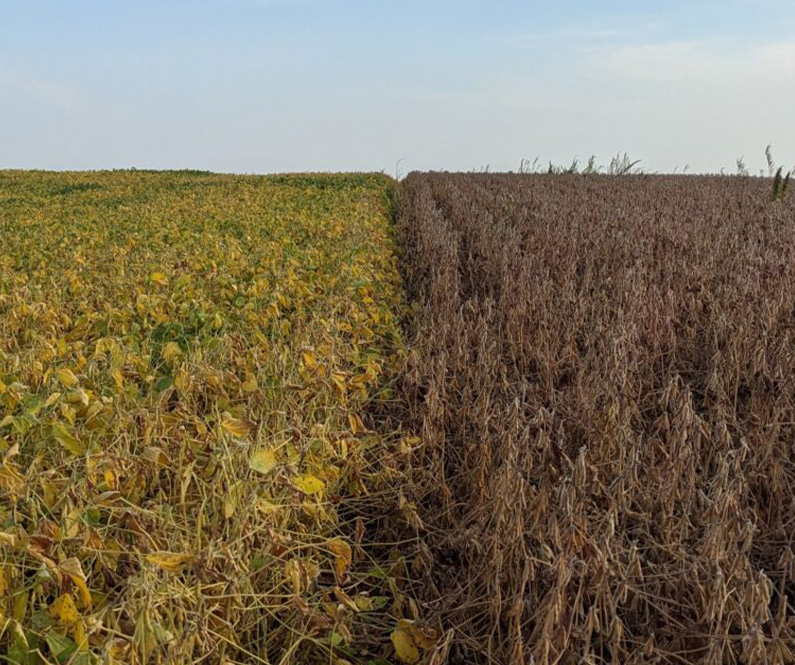
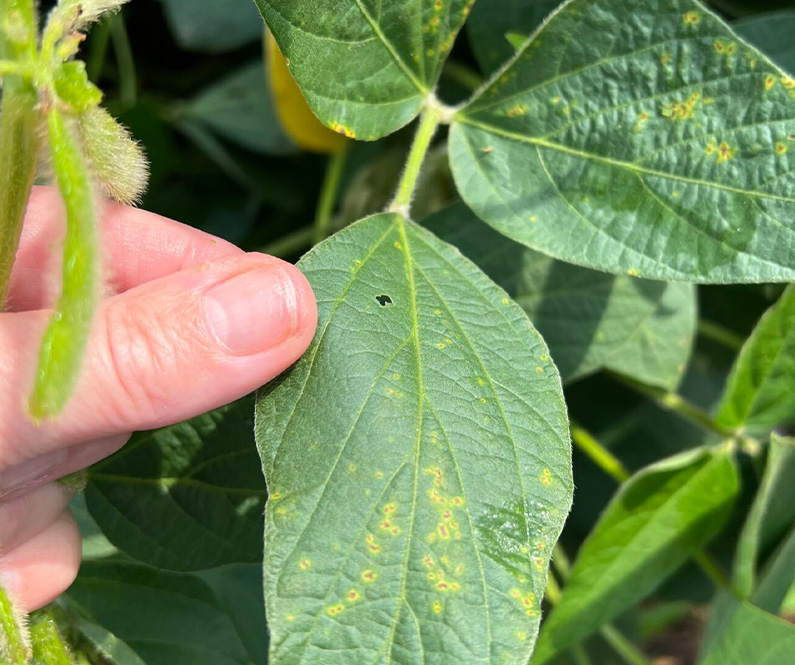
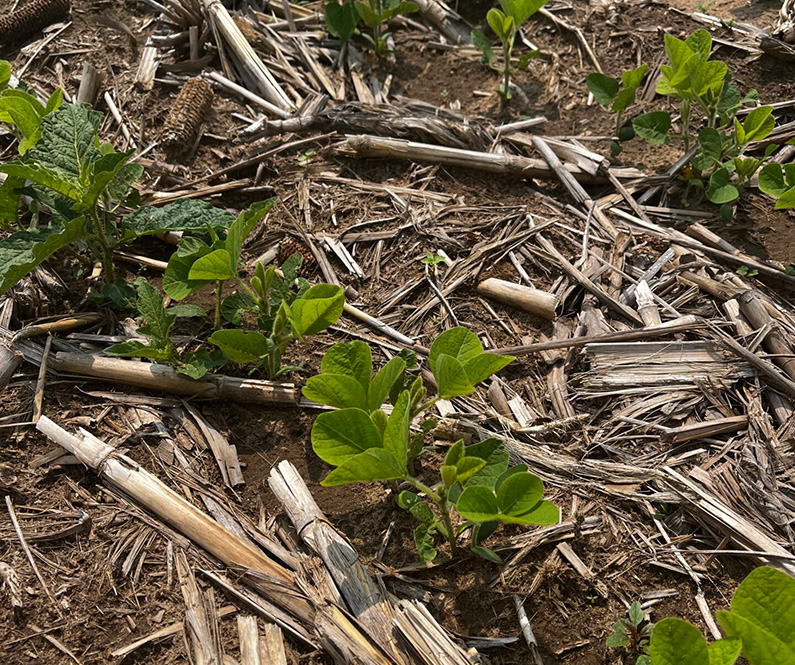
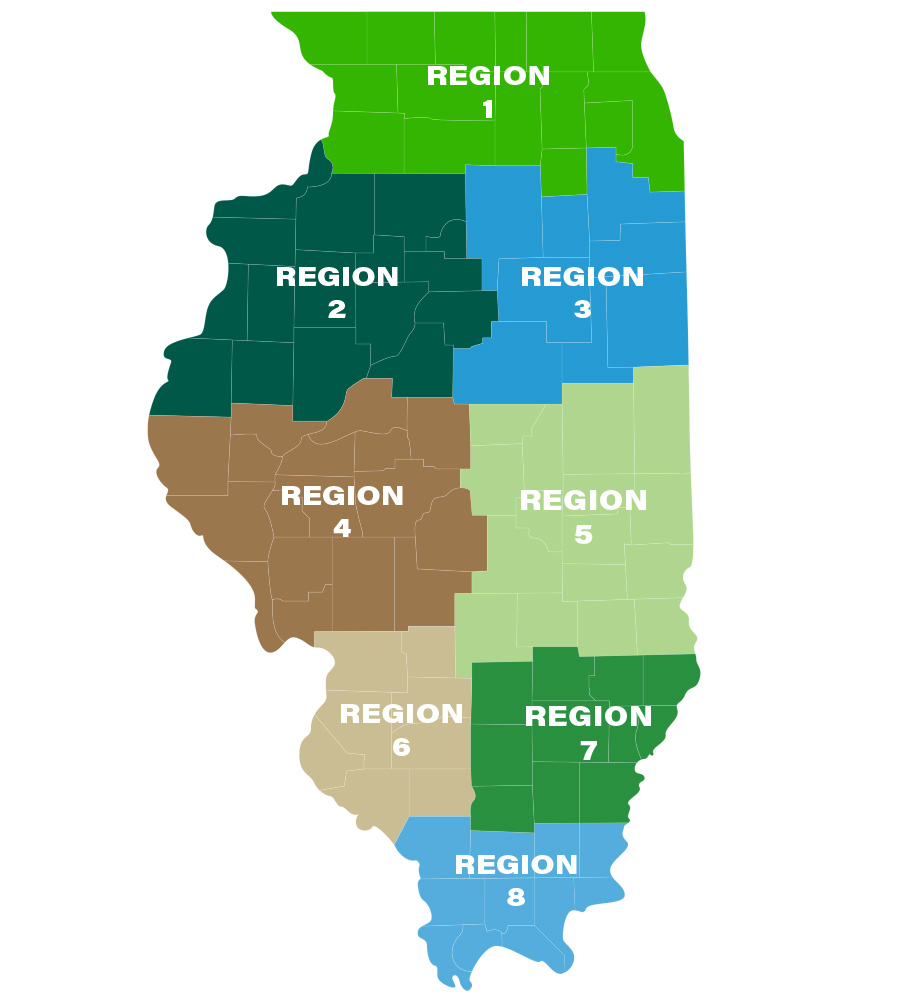
Spotty storms this week have dumped 1″–3″ of rain across Marion County after our longest stretch without precipitation since March. Our soils didn’t get dry exactly, but this moisture will help see the crop through the heat. This rain also helped even out some stands of double-crop soybeans in spots where the seed didn’t quite make it through the straw down into the soil and had yet to germinate. Most double-crop soybean fields I’ve seen are at V2 and looking good. First-crop soybeans are R1–R2 unless they were planted or replanted late. There were still planters rolling the first week of July, and those are more on pace with the double crops.
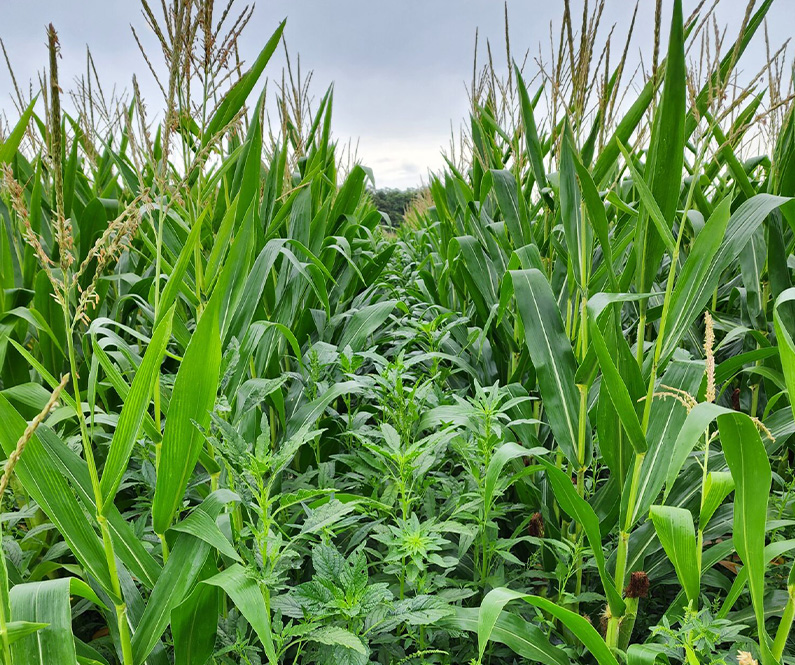
Corn in the area is still in vegetative growth stages, but you can feel the tassel forming down in the whorl, so VT is on the horizon.
The rains have finally arrived in northern IL, with a handful of widespread storm events and more starting this weekend and pushing into next week. Most areas have reverted to D0 or D1 drought status, and crops are doing well. Will County is the only area still in a D2 drought. With the rain and cooler temperatures in the forecast, disease may finally start to creep into our corn and soybean plots. This late in the season generally won’t have a large impact on yields, but scouting is still recommended through ear fill in corn, as well as scouting for white mold and frogeye in soybeans.
Corn is tasseling across the I-80 corridor. The DeKalb area was around 80% of fields at VT/R1, with the stragglers around V12/13 and spiking. Corn blotch leafminer is showing up in the lower leaves of multiple fields I scouted between DeKalb and Crystal Lake. This is also the kind of weather tar spot thrives in — wet, with intermittent rains and cooler temperatures overall. I would not be surprised if it is already in fields in northern IL or develops quickly with the upcoming forecast. Scouting is your best measure to know if it’s in your fields, as always. Corn overall is healthy, and I have not seen any fields with wind or hail damage despite the severe weather we have been seeing.
Soybeans are pushing quickly through growth stages. Most bean fields I scouted are in R3 and nearing R4 very quickly, if they aren’t already there. Disease pressure is low currently, with small amounts of Japanese beetle damage, but nothing that will lead to economic loss. I will be scouting heavily for white mold, SDS, frogeye, and other fungal diseases in the coming weeks if the water has turned on and stays on.
Depending on location, we have received between 1.5 and 4 inches of rain in the last week. It had previously been very dry in some areas, while others were lucky enough to get some pop-up showers. We now have the conditions for diseases to start showing up in corn or soybeans, but this will also depend on their disease susceptibility or disease scores. A few Northern corn leaf blight lesions were present in corn, but I was more concerned with the spread of gray leaf spot from the lower leaves. Japanese beetle infestations have ramped up, especially in later-planted soybeans. If farmers have decided to make fungicide/insecticide applications, they will start on corn this week as it has reached the VT growth stage. Early-planted soybeans have canopied and will soon reach the R3 growth stage. If warranted, they will also receive fungicide/insecticide applications at R3.
More hit-and-miss rainfall last week in NE Illinois as additional corn acres begin to reach VT (tassel). Areas that received rainfall are faring considerably better than those that did not. Corn growing in fields with gravelly knolls and lighter or sandy soils that did not receive recent rains is showing significant stress. Fungicide applications have started in the area. In scouting visits to R1 corn fields, the only disease noted was sporadic Northern corn leaf blight. This disease is recognizable by the cigar- or canoe-shaped lesions formed on leaf tissue. The causal pathogen for this fungal disease overwinters on corn leaf debris. Hybrid resistance is normally adequate for management of the disease, but substantial losses can occur with early infection and susceptible hybrids.
Interesting, but normally not economically important, leaf feeding was also noted in the corn. The corn blotch leaf miner is a small fly that deposits eggs on either the upper or lower corn leaf surface. After hatching, the larva tunnels in the leaf, feeding on the inner leaf tissue as it grows, leaving behind mines or transparent galleries. Eventually, the larva chews its way out of the leaf, drops to the soil, and pupates. I’m finding very limited leaf feeding, despite the presence of Japanese beetles, and no diseases at this point in the growing season in the soybean fields visited.
Currently, the corn and soybean crops are looking good. Some corn in the drier areas has fired on the lower leaves.
Soybeans vary from V5 to R3 (beginning pod), and corn varies from V10 to R2 (blister), with most of the corn crop in the R1 stage. Weed control is generally looking good; however, the amaranths are beginning to poke above the soybean canopy in some soybean fields.
Rainfall over the past 14 days has been over 150% of normal in southern Macon and Piatt counties, and less than 25% of normal through the balance of the three-county area.
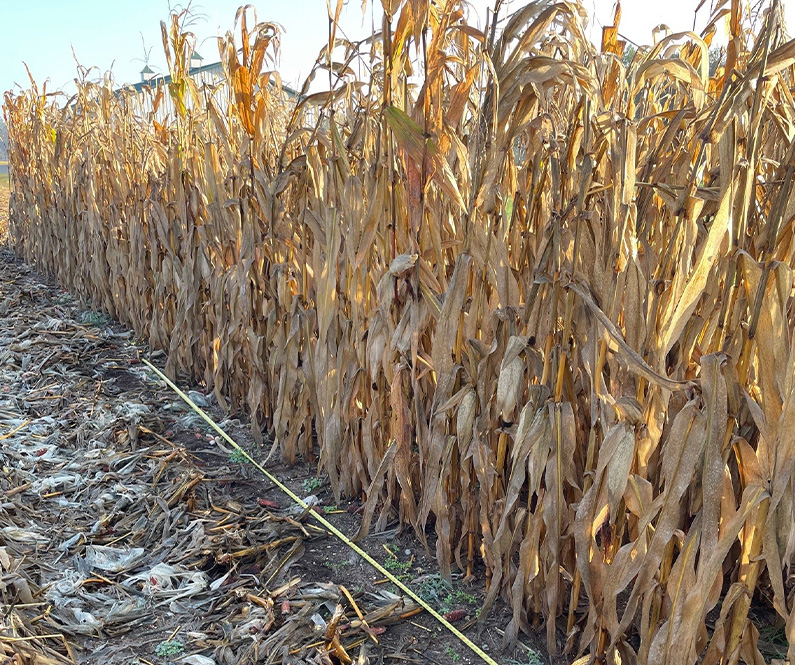
Now is the time to begin monitoring corn rootworm beetles — both to evaluate the performance of traits/insecticides used this year and to gauge the need for control next year. We will again be distributing yellow sticky traps to anyone interested in participating in our regional corn rootworm adult monitoring network in 2025 (for more information about the network and to see reports from previous years, visit www.rootwormipm.org).
If you are interested in participating and would like me to send you traps and/or the sampling protocol, please send me an email (nseiter@illinois.edu) with the following information:
• Your name and shipping address
• The number of corn and soybean fields you plan to monitor


 and then