
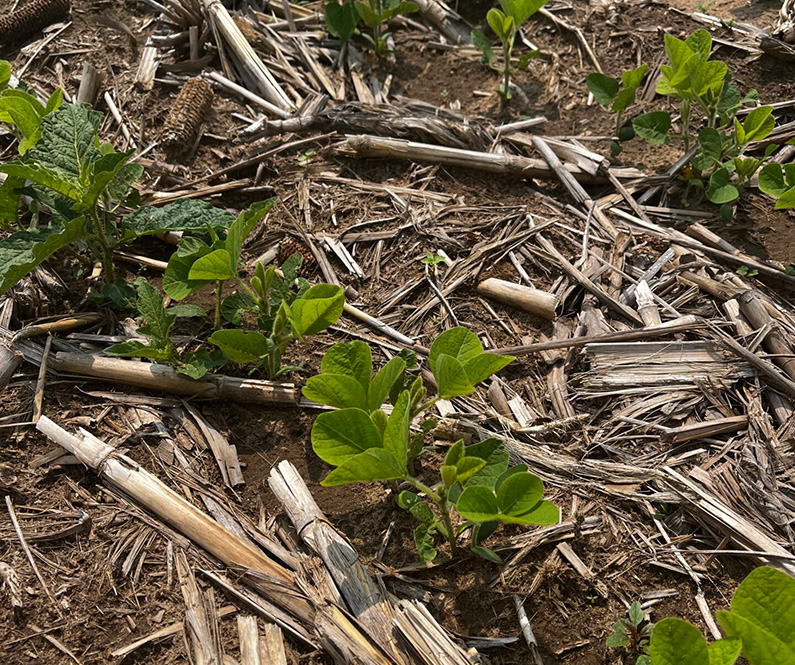
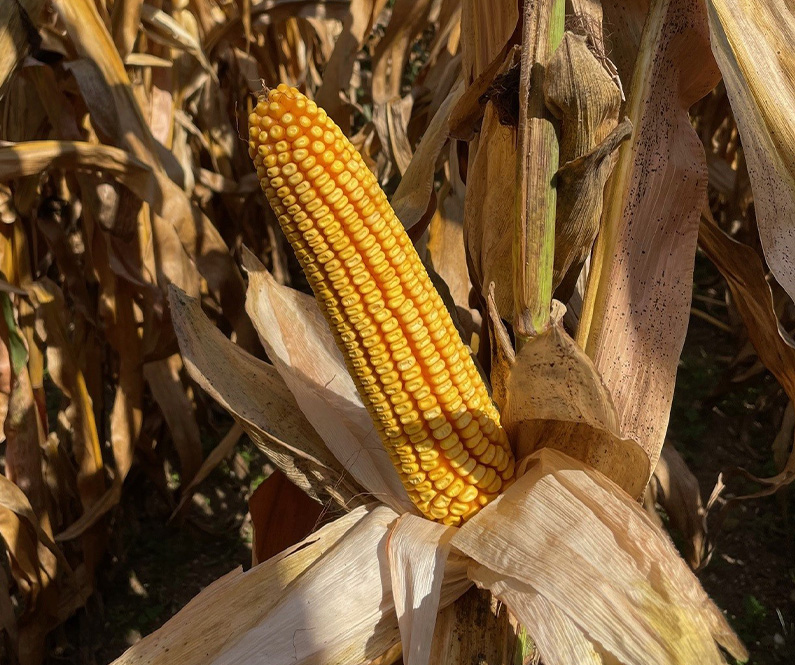
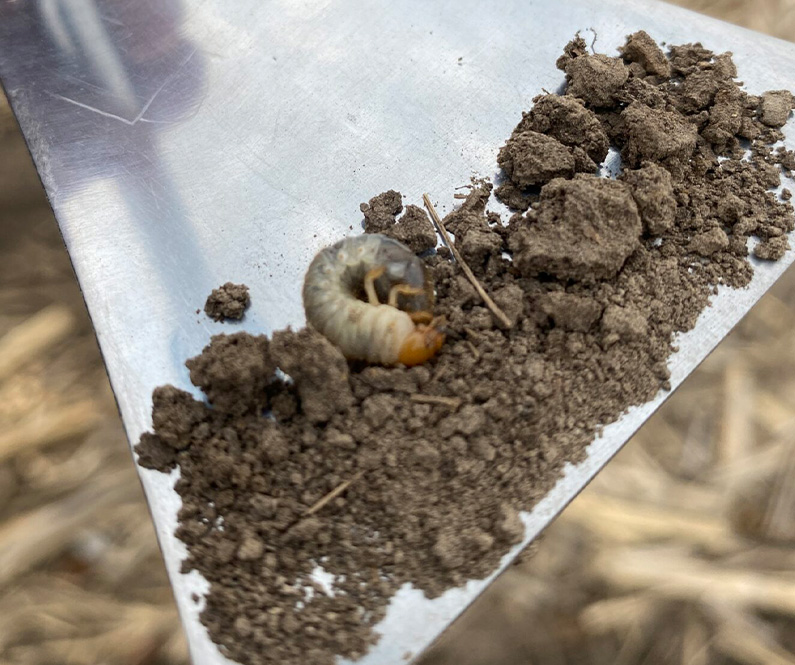
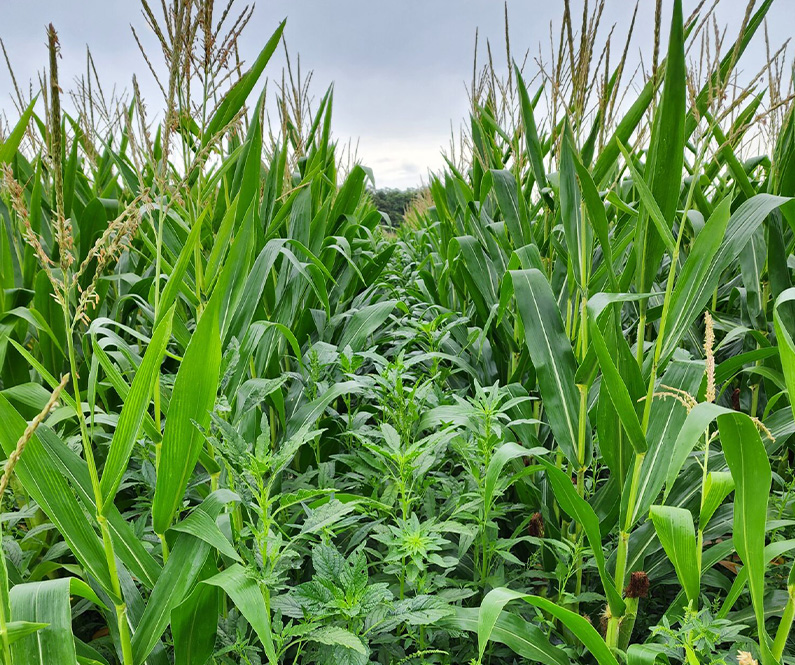
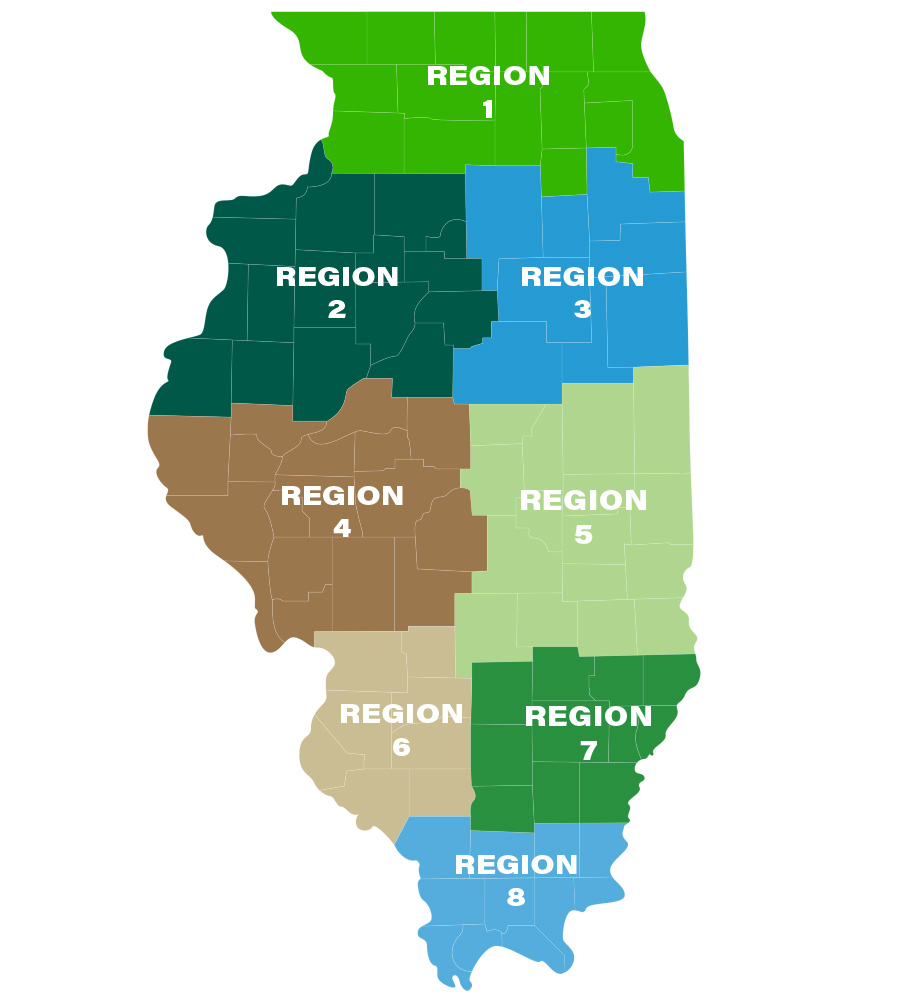
Corn and soybean fields across McLean, DeWitt, and Sangamon Counties have now reached the reproductive stages, with soybean fields closing their canopies and tassels clearly visible across every corn field I’ve driven past this week. These reproductive stages, combined with recent hot weather, create favorable conditions for insect and disease pressure—both of which are likely present by now, especially where preventative applications weren’t made. The heat is expected to ease starting tomorrow, which is good news for corn yields, since elevated night temperatures can greatly impact production. In corn fields with nitrogen deficiency, lower leaves are firing and showing the characteristic V-shaped chlorosis/necrosis. While rainfall has been consistent across the region, it remains scattered, with some areas receiving several inches over the past week.
HOT & HUMID — ideal conditions for disease development. Hot nights and foggy mornings mean lots of fungicide applications.
Corn fungicide applications have been in full swing, with planes, helicopters, and drones zooming through the air! Late last week and this week, the focus has shifted to soybean fungicide applications, typically done with ground rigs. Scouting continues to be a priority to monitor what is happening in corn and soybeans. Reports of wrapped tassels and other tassel-related problems have been a major concern. Producers and seed companies have scrambled to scout corn, as these issues have caused pollination problems in some areas. This is something we continue to monitor.
Last weekend’s 3+ inches of rain gave a much-needed boost for crops across Logan County. While some areas may still exhibit signs of heat stress, most fields appear strong and healthy. Corn at the University Research Plot in Hartsburg and across much of the county is in at least the R3 “milk” stage, with some in the R4 “dough” stage. The same can be said of soybeans, with nearly all fields having pods at various stages of development. Cooler temperatures and more rain in the next week will undoubtedly be welcome.
It’s another hot week upon us as a heat dome settles over the Midwest. July so far has brought 3.5 to 5 inches of rain, depending on the area, excluding Will County, which remains in a somewhat severe drought. Northwest Illinois is on pace with historical averages and enjoying a great growing season. South of Chicago and some suburban counties are drier than normal and continue to be in either a D1 or D2 drought. Corn planted on April 25 is likely around 1,500–1,600 growing degree units for the season.
Corn is mostly tasseled across the region, ranging from R1 to R2 (blister stage) and looking very healthy. With recent rains, disease has finally arrived across northern Illinois. I confirmed tar spot in DeKalb, Kane, McHenry, and Lake counties this week, with strong suspicions it is also present in DuPage and nearby counties. All plants I scouted had one or two lesions on the leaf below the ear leaf. At this point in the season, most fungicides have already been applied and should protect the crop through harvest. Scouting will help determine if additional sprays are needed, though anything after R3 is generally not recommended. Gray leaf spot has also been working its way up corn plants.
Soybeans are progressing well. Disease pressure is low, and they are moving into R4, with 3/4-inch pods. While we’re still seeing some stunting in northern Illinois from early drought and delayed emergence, overall soybean health looks good. Not much else to report, as pods are setting and filling.
Corn and soybeans have benefited from July rainfall. Both continue to progress quickly, with growing degree days maxing out. Various leaf diseases are present in corn, including gray leaf spot and northern corn leaf blight. Be on the lookout for Tar spot and southern rust—these can be especially devastating if left untreated. Continue to be diligent in your scouting and spray if needed. Leaf flaring is occurring in some fields, which is not normal for this time of year.
The only issue I’ve seen in soybeans is the pesky Japanese beetle. On average, I’ve seen 5% leaf damage on the low end and 10% on the high end. Begin treatment at 10% if soybeans are in the beginning pod to beginning seed stages.


 and then