
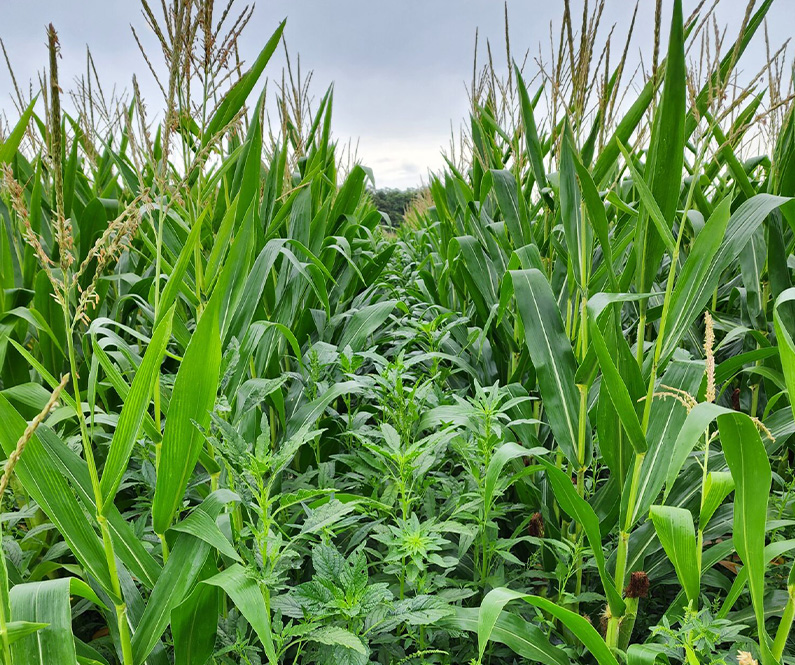
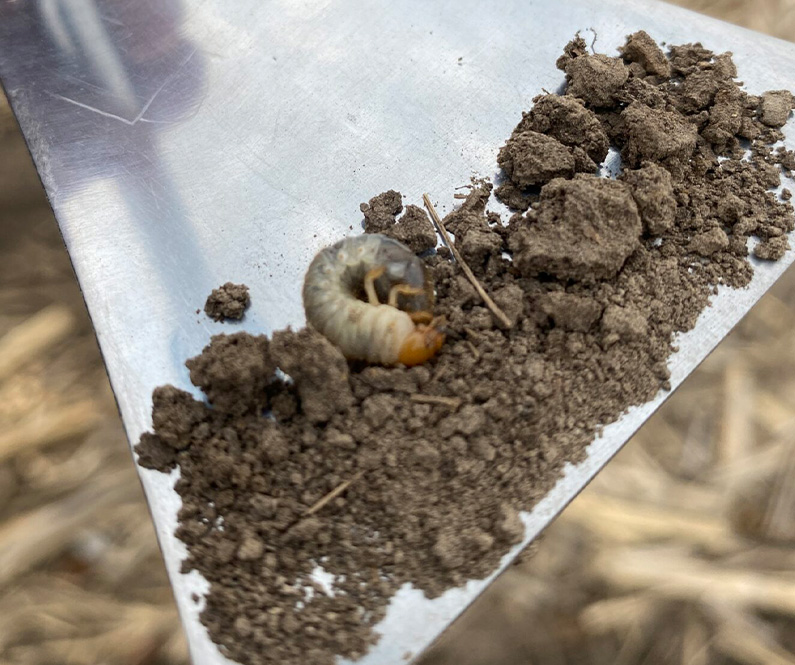
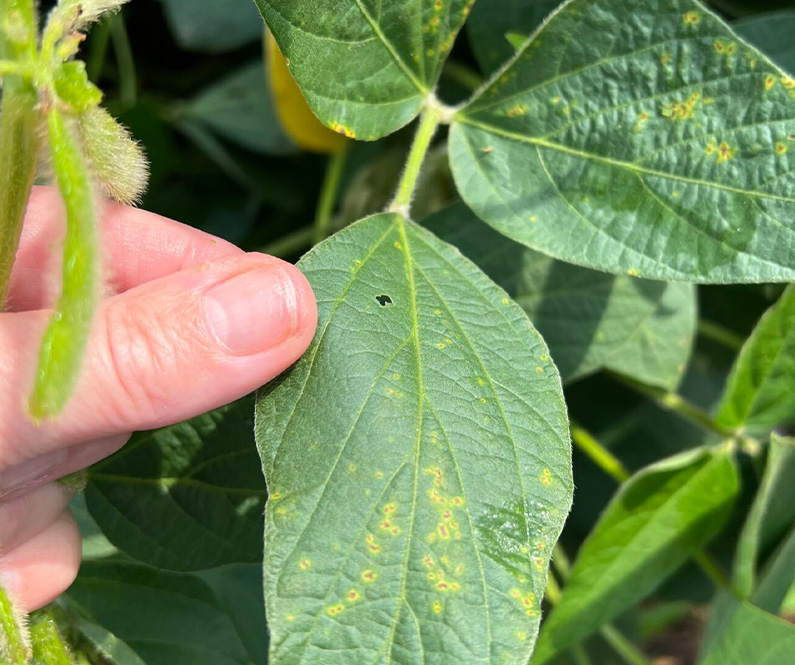
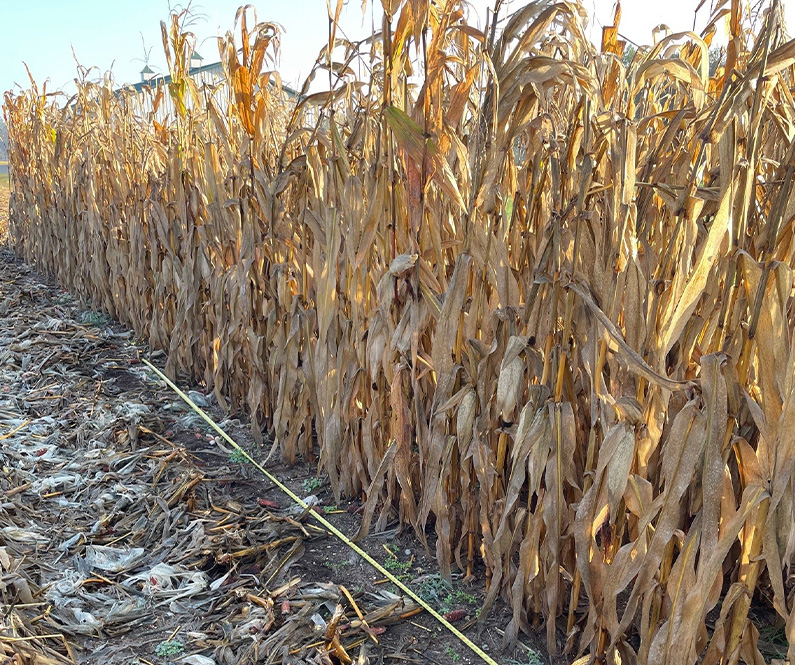
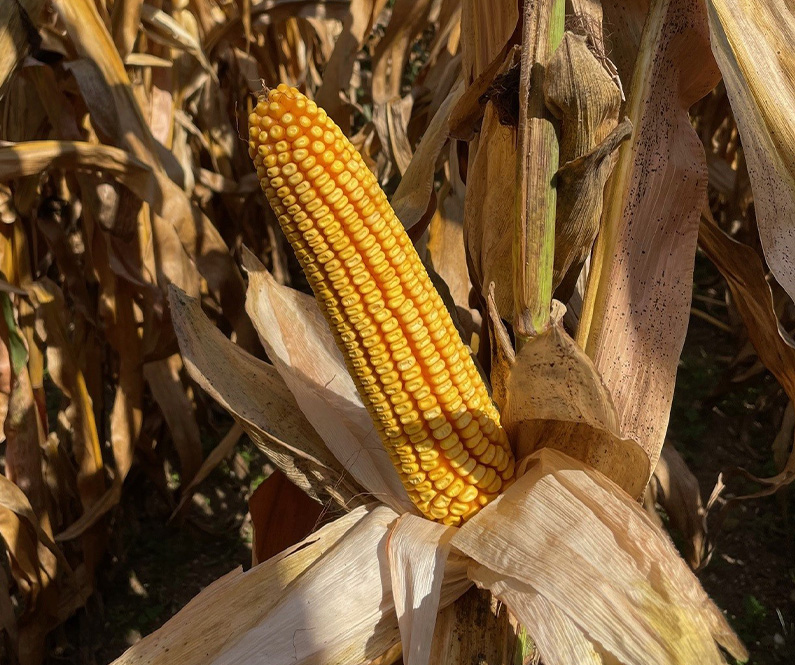
Continued timely rains in south-central Illinois are supporting excellent crop condition. Along with high heat and humidity and extended periods of leaf wetness, disease is taking hold. We are now seeing southern rust at 5 to 10% incidence up to the ear leaf and high severity on infected plants. This is triggering secondary fungicide applications in late corn.
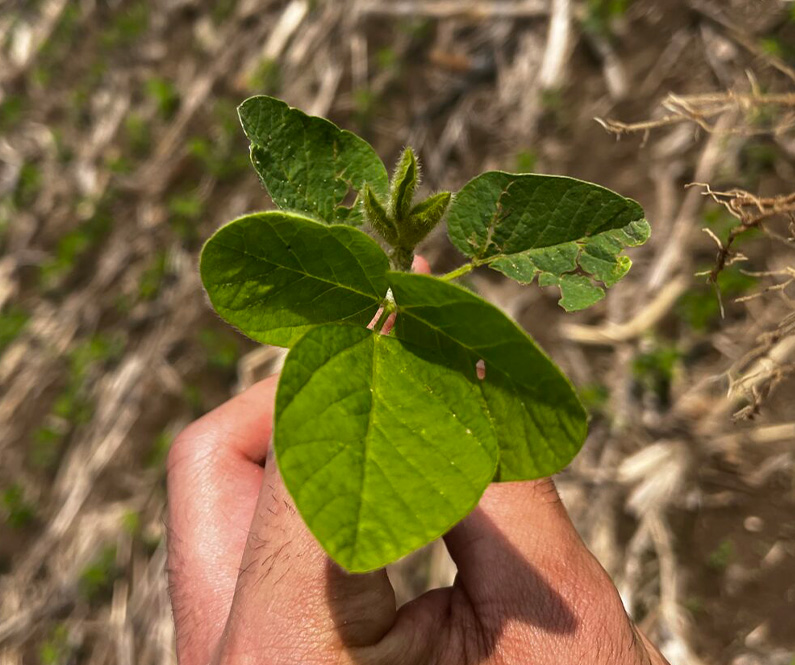
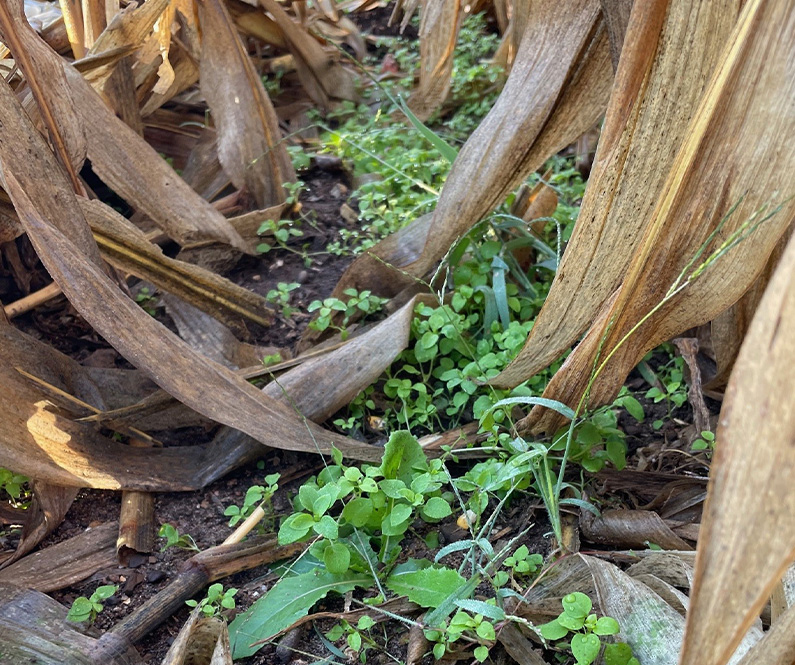
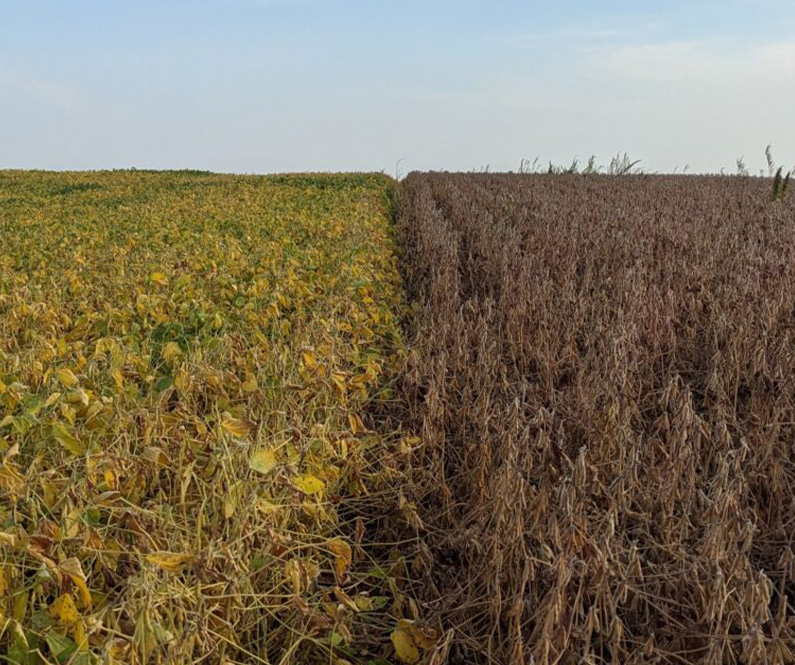
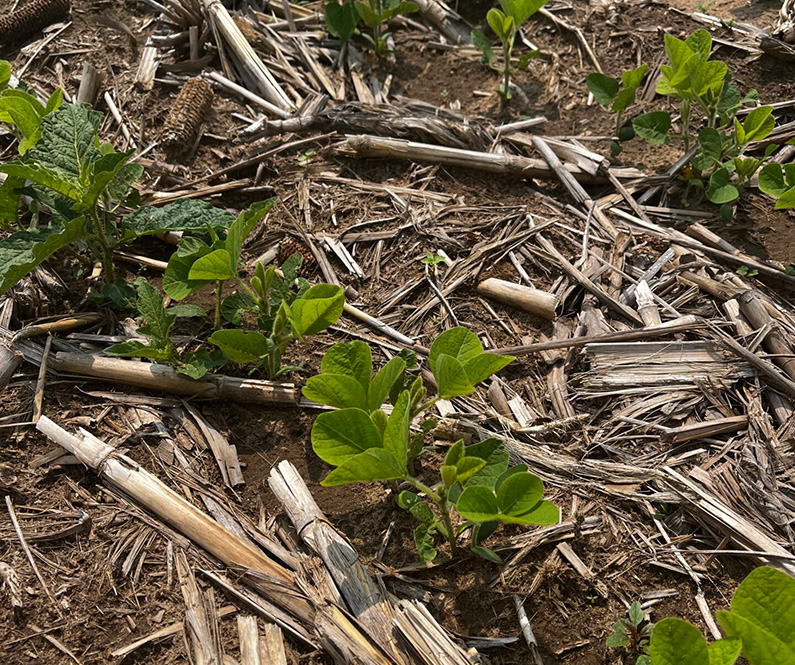
Second set of pictures appears to be phytotoxic injury associated with a recent drone application. Field pattern suggests drone coverage may not have been good.
Corn and soybean crops are generally looking good, with the only exceptions being areas of fields that experienced flooding or waterlogged soils earlier in the season. Leaf disease pressure is low in fields except those fields where plants experienced stress from waterlogged soils.
Last week’s timely rains had a noticeable impact on fields with low soil moisture and plant vigor. Soybeans are midway through the R5, Beginning Pod stage, and corn is in the R4, Dough stage, with kernels beginning to dent.
As we progress through the second half of the growing season for corn and soy, conditions have been mostly favorable for grain fill in the Northeast region. Most soy is at or near R5 also known as the beginning seed or beginning bean stage. As rapid seed fill begins later in this stage, the soy plant starts to remobilize nutrients from leaves and stems to meet the demand of pod fill. In fields visited, disease and insect pressure in the soy crop has remained very low. I have not come across red crown rot in soy fields visited, but reports have this emerging disease spreading in Illinois. It was announced this week that Illinois farmers can receive free red crown rot (RCR) testing thanks to the United Soybean Board and the Illinois Soybean Checkoff in partnership with the University of Illinois. If you suspect that you have RCR in your fields and would like confirmation, please consider sending diseased samples to the University of Illinois Plant Clinic in Urbana. While scouting R3 or milk stage corn, I noted white frass on a developing ear, almost always an indication of feeding by the corn earworm. The corn earworm is also known as the cotton bollworm and is a pest of several crops in addition to corn and cotton. The adult female corn earworm moth prefers to lay eggs on fresh silk. The hatched larvae follow the silk to the tip of the ear where they feed and produce excrement or “frass”. Larva inside the ear do not have effective insecticide control. While this pest is a challenging insect to control in sweet corn operations, it usually is a minor concern in yellow dent corn. As we diligently continue our foliar corn disease scouting, a slight uptick in gray leaf spot was noted, but fields I have visited are remarkably disease free at this stage compared to recent years.
After yet another heat wave, we finally received some reprieve with some consistent rain and cooler temperatures. We were briefly entering a drought across most of the region, but have come back to normal after this past weekend’s rain.
Most corn fields I saw are between R3 (Milk) and R4 (Dough). While disease levels are low, I did find some fields with ear rot, small amounts of tar spot on a lower leaf here and there, as well as some gray leaf spot. Nothing to write home about but the disease is present, and with the current weather conditions, could reproduce and spread rapidly. Overall, if a fungicide was applied, the corn should be fine and protected through end of season. If you have fields with hot spots or disease breakouts entering the R4 corridor, reach out to your agronomist or extension professional to see about options and how to handle those late spray season options.
Soybeans continue to look relatively disease free as they are averaging R5 to R6 and beginning seed fill. Pods are decent size and plentiful on the plants I scouted. The heatwave and dry conditions through flowering has tamped down the white mold risk quite a bit this year. With the current humid and cooler conditions, I do expect frogeye leafspot and SDS to start to show up in fields, and that would be something to monitor as we finish the season. I have not seen any Red Crown Rot so far this season, but it is moving north throughout the state, so that could be a potential disease to look out for as well.
Until next week, stay safe and have a great growing season.
With much of the east central IL region receiving at least 0.5″ of rain over the past week, soil moisture has rebounded back to optimal or ‘near normal’ levels in most fields, following a bit of a dry spell. In Douglas County, like much of the region, remnants of spring storms are still visible, but the remaining crop is overall healthy and progressing well. Disease and insect pressure continued to be low in the soybean fields I visited. Full season soybean fields are reaching R5, or beginning seed, on the most advanced end, and double crop soybeans are beginning to flower (R1-R2). Corn fields visited ranged from R2 (blister) to late R4 (dough), with closer to the more advanced end of that range. Aphids were present in a couple fields visited, although they seemed to be in isolated pockets within those fields. Similarly, isolated areas with leaf and stalk symptoms consistent with Physoderma brown spot/stalk rot could also be found in a couple of the fields surveyed.
I went south this week specifically on the lookout for any southern rust that might have made its way this far north, but I did not spot any pustules at this time. Once corn is past R4 (dough) growth stage, the available research shows a low likelihood of a fungicide providing a positive economic return (https://farmdocdaily.illinois.edu/2020/01/southern-rust-in-corn-disease-development-and-fungicide-use.html). So, at this point in the season, most fields are past the point of concern and late planted fields or late maturing hybrids should be the focus of scouting efforts.
Reporting to you from the ISA Agronomy Farm in Heyworth, Illinois (40.284611, -88.983532)! Crops are getting well into the reproductive stages, and the farm just received a well-deserved 1.4″ within the past week after receiving no more than 0.6″ the entire month of July. Many surrounding areas received significant weather events during July, but our farm was not one of them.
The pollinator strip at the farm is in year two, otherwise known as the “creep” phase. After being established with the help of Pheasants Forever and going through the “sleep” phase last year, it is nice to now see the strip filling in and the biodiversity that it has brought along with it. You can see the butterflies flying around, hear the crickets chirping, and today I even saw a pheasant!
I partially attribute this pollinator strip to the notable presence of lady beetle larvae I saw in the corn today, which is now at the R3 Milk stage. Aphid pressure was notable on some of the later planted corn at the farm that is at the R1 stage. Therefore, it was nice to see reinforcements forming (lady beetle larvae) to help control the aphids. Additionally, I found southern corn rootworm beetles, as well as a western corn rootworm beetle in the corn crop.
Double crop beans are at V3/V4 and full-season beans are at R3/R4. Crops are overall looking promising!


 and then