
We are coming out of a very significant heat wave. Northern Illinois is entering a mild drought with little to no rain in the foreseeable future. The Canadian wildfires smoked most of us in Northern Illinois out for the tail end of the week and well into the weekend. I am very thankful all of that has passed and look forward to some milder temperatures and lower humidity days in the coming weeks.
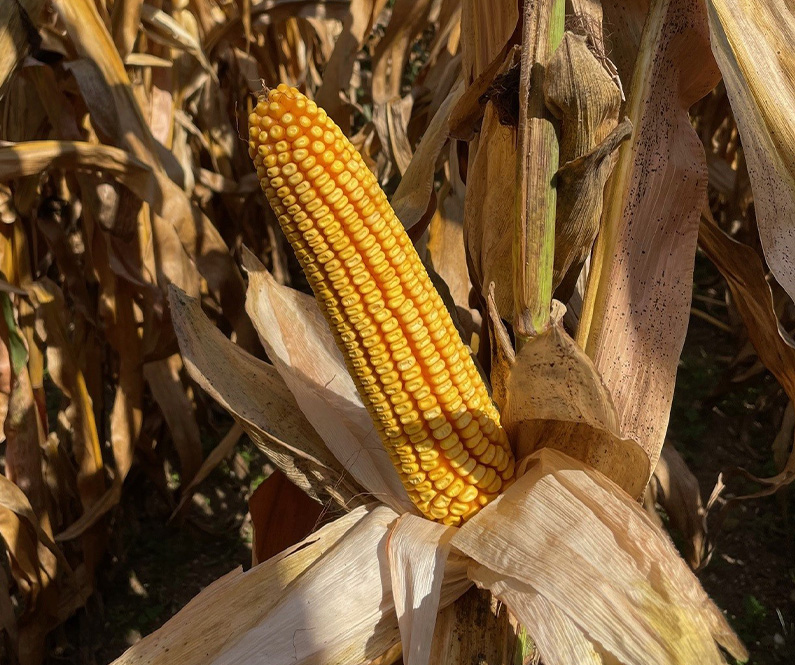
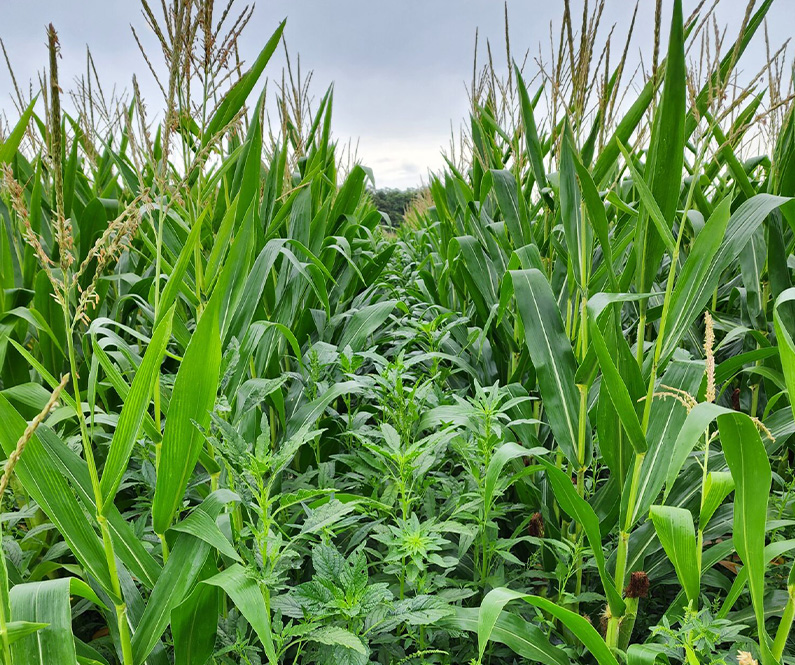
Corn continues to progress through growth stages as we exit the past week’s heatwave. Most fields I saw were in the R2 blister stage, with some fields in R3 milk. I did not see any R4 dough stage fields, but early plantings could certainly be approaching this. Disease continues to be very low in fields. Small amounts of gray leaf spot were found, and I did confirm the first case of Tar spot in a field in Dekalb Illinois today. It was literally one spot on the lowest leaf of an R2 corn plant, but it is present in fields, and something to be aware of. I urge to continue to scout fields as we enter the most critical growth stages for ear and kernel development. If the disease is not present past R4 dough stage, rarely if ever will a fungicide spray be economically viable.
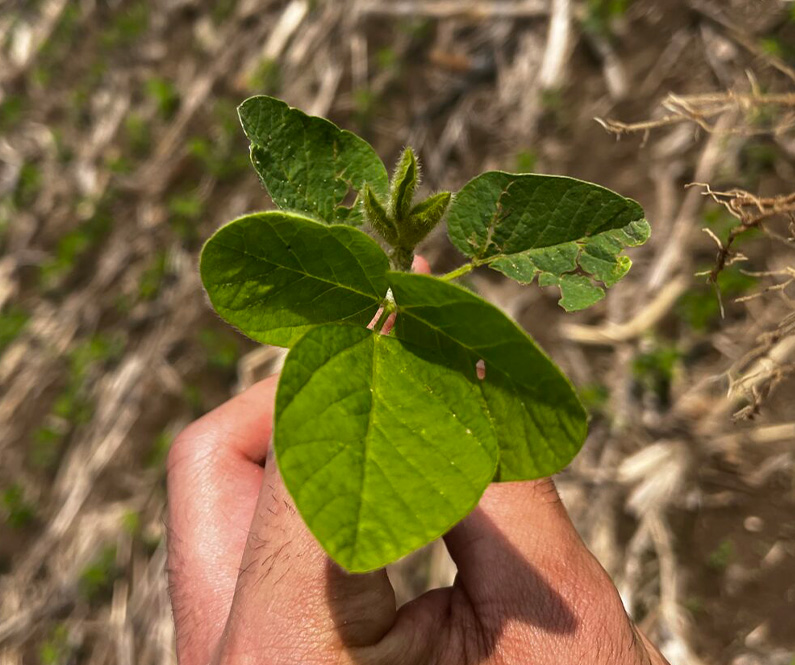
Soybeans continue to look great across northern Illinois. Beans are averaging R3 first pod development, with nearly all fields beyond R1 flowering. I’ve seen very little to no disease, and the only thing that is holding back bean fields at this point was early season flooding. Overall, not a lot to report on the soybean side as many fields are looking very healthy and robust.
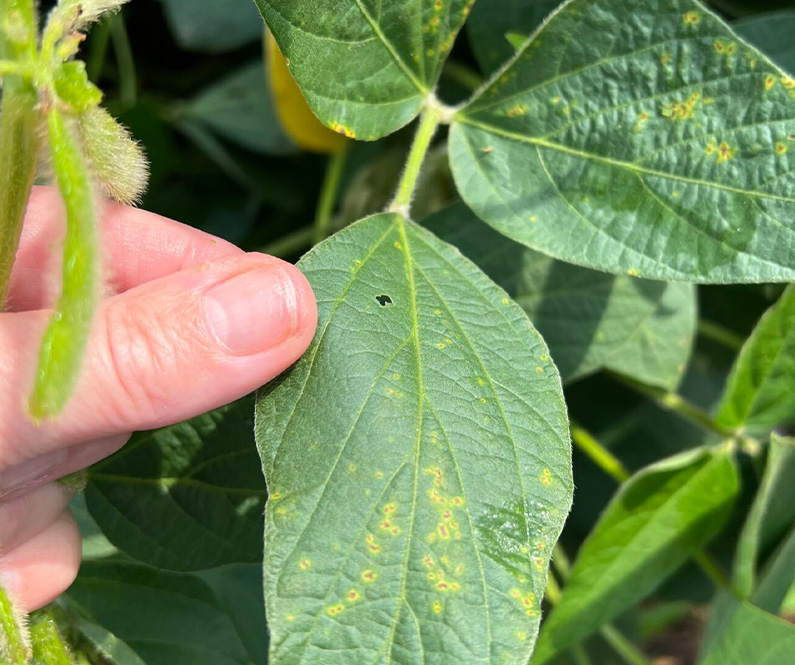
It has been hot and very, dry, but crops seem to be handling it well so far at the ISA farm. A few days of cooler weather, was a nice break, but hot temperatures are in the forecast. Corn is approaching VT and the only diseases that seem to be present are anthracnose on lower leaves and Physoderma brown spot. Most soybeans are R2-R3 with some Septoria brown spot found lower leaves. There are very, few insects in fields. The most prevalent was grape colaspis beetles with minimal feeding. Post herbicides took care of weed pressure. Rain is needed as corn enters reproductive stages.
While the temperatures have been sweltering and not much rain has fallen over the last week, crops do not seem to be showing any signs of stress or slowing down. Nearly all of the corn across Logan County has made it at least R1 or R2, with some of the earlier-planted corn already in the R3 stage. The bag is a little more mixed for soybeans. The fields that got planted later or had standing water for much of June are not quite to the reproductive stages yet, but are not far behind. At the Hartsburg Research Plot, a majority of the plants are in the R1 or R2 stage, with some parts of the field not far behind.
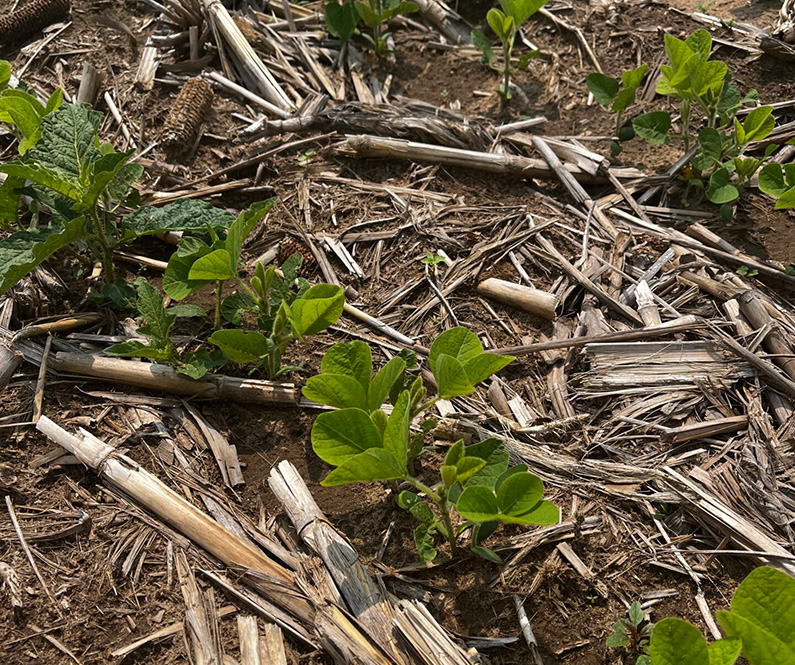
Although the soil moisture conditions are more in the normal range now, the impacts of early-season excessive rains can still be seen in Effingham County. Crop maturity across the county is extremely variable, with some soybean fields containing no apparent wheat stubble still being in early vegetative growth. It was unclear if these fields were subject to full replants or just severely delayed plantings, but they are at a similar growth stage as double-crop soybeans, between VC and V2. The more advanced soybean fields are reaching beginning to full pod (R3-R4). Corn growth stage is also variable, but not quite as much as soybeans. While most corn observed in the area had flowered and is well into seed fill, there are still plenty of fields that can be found in late vegetative or early reproductive growth stages. The most advanced corn I found was well into the kernel “dough” stage (R4). I didn’t find any major disease issues during my survey. Timely weed control was definitely an issue for some fields, leading to incomplete control and waterhemp poking through soybean canopies.
Fungicide applications are in full swing this week. Crop dusters, drones, and helicopters fill the sky as they apply to fungicide to protect our crops from unwanted diseases. The weather continues to be unbearably hot and uncomfortable for us and corn plants this week. Soybeans continue to grow looking healthier and fuller by the day.
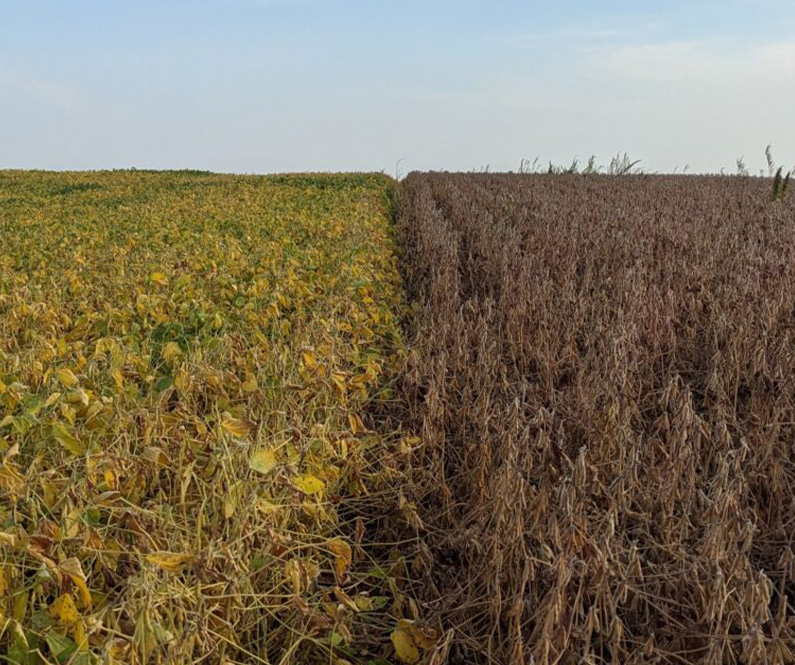
Earlier planted soybeans continue to look better than later planted. Most growers believe the difference is largely due to the cold snap we saw in early May. Beans planted before that point emerged and grew rapidly. Beans planted after stumbled and have struggled to catch up since that point.
Fungicide application in beans has begun, but more growers seem to be questioning if the investment is worth the price. Some growers are adding untreated check strips to gauge if the investment has paid off enough to stay the course or if the investment has been less impressive. Should check strips display the latter, it seems that growers would be more prone to step back their total fungicide-treated acreage in the future rather than exiting the practice entirely.
The most significant development in the soybean crop has been the sudden, early appearance of Red Crown Rot with reports coming in shortly after Independence Day.
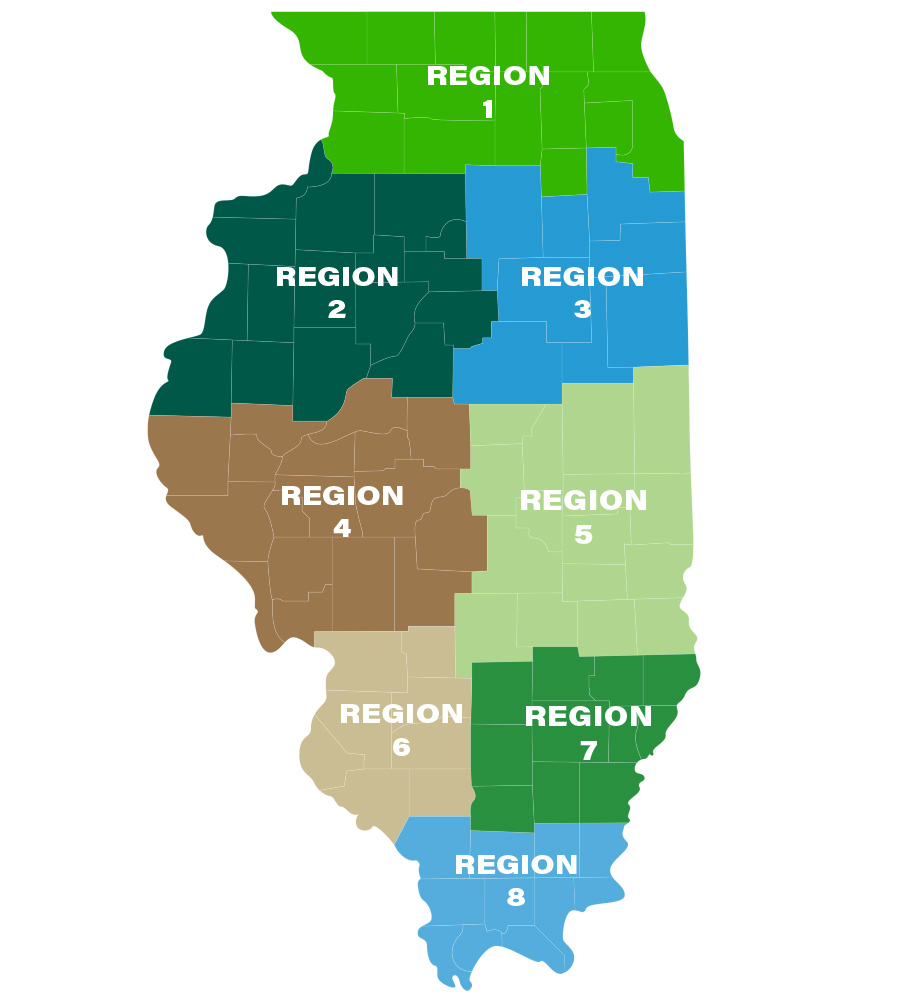
The very western portion of Region 4 (Pike County, Illinois) seems to be a focal point of such early and severe foliar symptoms. In some cases, nearly 25 percent of plants in an afflicted portion of the field display mottling, yellowing, interveinal chlorosis/necrosis, or outright plant death. The level of symptomology in some locations appears to be about 2 to 3 weeks ahead of previous seasons with perithecia (red fruiting structures) already evident on the lower stem and upper root material.
While much of this early and severe symptomology seems focused on the Pike County area, Red Crown Rot is appearing in other portions of the region as well. Growers across the region are watching and waiting to see if management techniques can withstand this early onslaught, and some other diseases run the risk of being misdiagnosed as RCR.
Double crop soybeans seem to have had enough moisture to get started well.
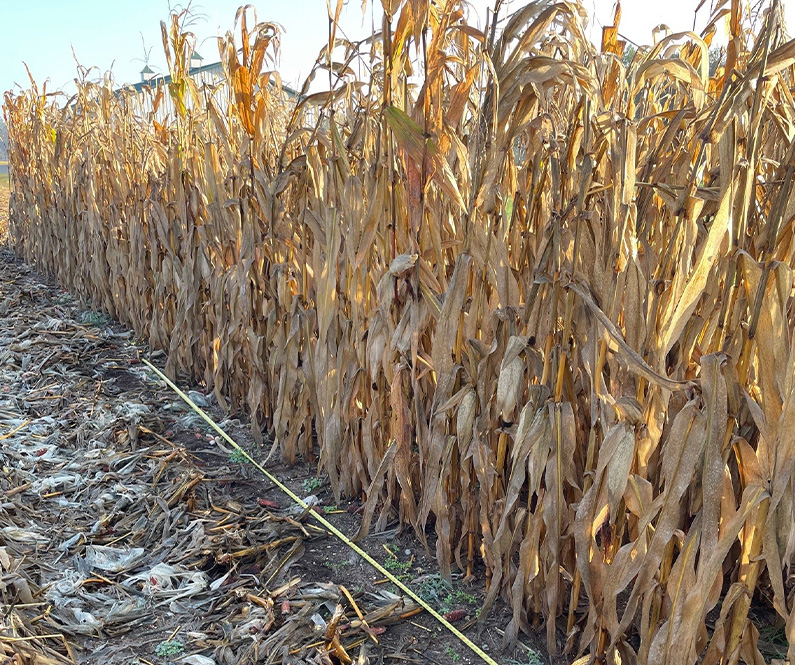
The corn crop has done a stellar job of establishing kernels. Pollination, despite some occasional tassel wrap, seems to have largely gone well. Gray Leaf Spot and Northern Corn Leaf Blight have begun to make an appearance, and fungicide applications are in full swing.
One senses a tangible shift toward much more drone fungicide application this season. It has not been uncommon to encounter drone trailers parked here and there across the countryside. In some locations, one has a gut feeling that drone-based applications may be surpassing aerial.
Herbicide misapplications continue to be reported in both crops at a level that seems to rise above and beyond previous experience. The industry will want to debrief and strategize following harvest to minimize issues next season.


 and then