
By: Rachel Vann
Soybean desiccation is a common production practice used in the Southern U.S. and South America to accelerate soybean harvest. Accelerated harvest can help mitigate the impacts of extreme weather events, reduce soybean green stem, protect soybean seed quality, manage grain moisture near harvest and facilitate more timely planting of winter crops. Desiccation can also help homogenize crop maturity to aid in harvest efficiency and terminate late-season weeds.
Key Facts on Soybean Desiccation
- Several products are available for farmers to use to desiccate soybeans late in the season, with the most common including Gramoxone (paraquat), Sharpen (saflufenacil) and Defol-5 (sodium chlorate).
- Most research indicates that R7 (beginning maturity where one pod has turned brown on the mainstem) is the optimal timing for desiccating soybeans. Desiccating before R7 can lead to yield loss.
- While limited research has been conducted on desiccating soybean in Illinois, recent national research has shown that soybean desiccation can accelerate harvest by four to15 days. Typically, harvest is accelerated more in Southern production regions than Northern production regions.
- Recent national research has also indicated that soybean desiccation can reduce green stem about 50% of the time.
- Our national Science for Success team recently hosted a webinar covering this and other late-season management practices that can be viewed here.
We will begin researching this production practice in Illinois next year to gain a better understanding of how soybean desiccation can influence harvest timing, seed moisture, green stem and seed quality in this production region. We will also carefully consider the economics of this production practice in a region where cold weather often hastens maturity effectively.
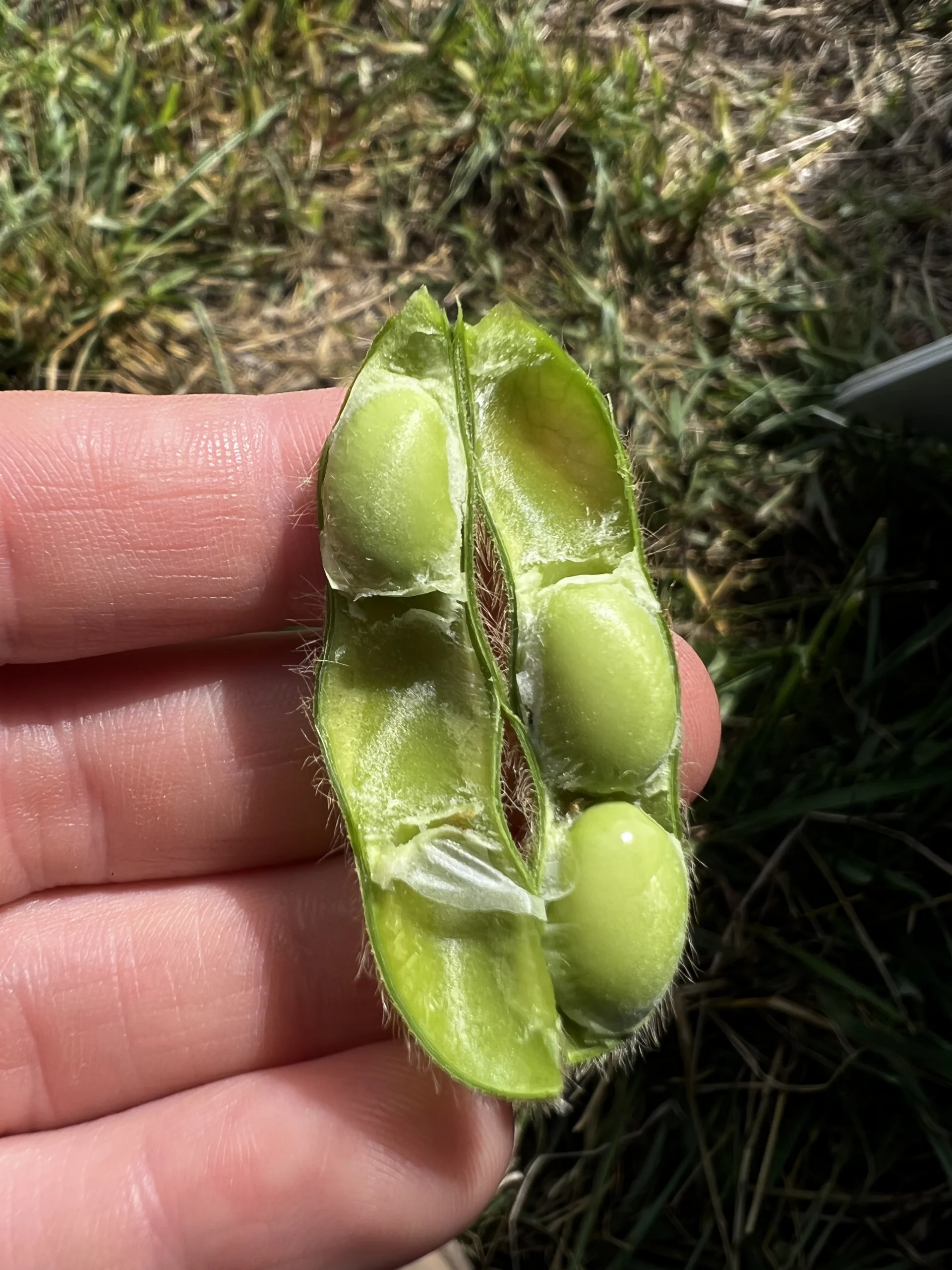
Photo courtesy of Abigail Peterson, ISA Director of Agronomy
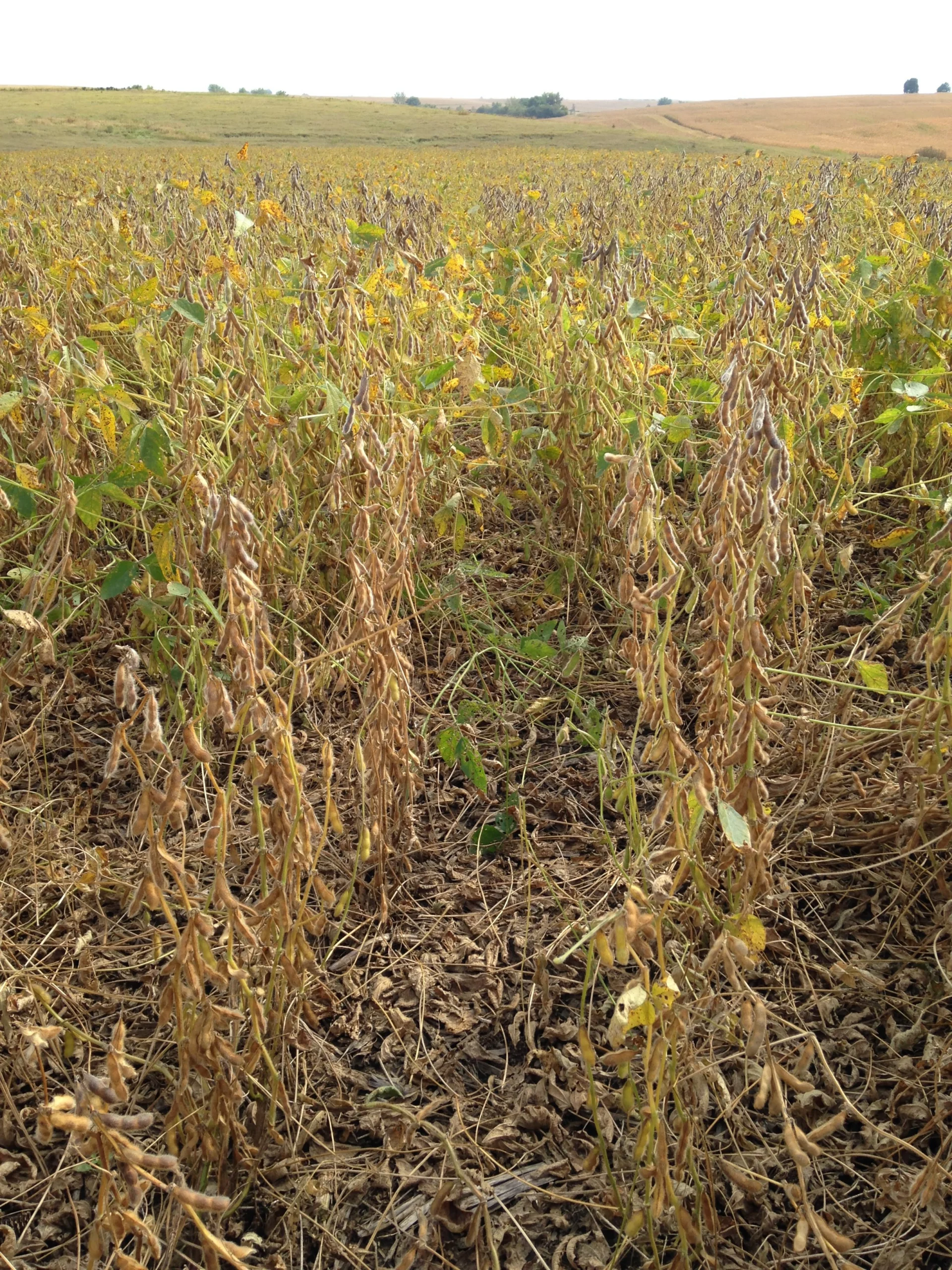
Photo courtesy of Abigail Peterson, ISA Director of Agronomy
References
Kendall, M. A., Mourtzinis, S., Lindsey, L. E., Menza, N. C. L., Licht, M. A., Matcham, E. G., McNeal, J. P., Moseley, D. O., Mulvaney, M. J., Naeve, S. L., Plumblee, M. T., Fontes, G. P., Ross, W. J., Vann, R. A., & Conley, S. P. (2025). Harvest aid applied at soybean growth stage R7 rarely impacted seed, protein, or oil yield. Agronomy Journal, 117, e70109. https://doi.org/10.1002/agj2.70109
Moseley, D., Casteel, S., Conley, S., Holshouser, D., Lee, C., Licht, M. A., Lindsey, L. E., Kandel, H., Kleinjan, J., Knott, C., Naeve, S., Nafziger, E., Plumblee, M., Ross, J., Singh, M., Vann, R., & Ortmeier-Clarke, H. J. (2025). The soybean growth cycle: Important risks and management strategies. Crop, Forage & Turfgrass Management, 11, e70086. https://doi.org/10.1002/cft2.70086
Stephenson, D., Miller, D., Brown, S., Moseley, D. 2021. Applying Harvest Aids in Louisiana Soybean. Louisiana Crops Newsletter. LSU AgCenter. https://www.lsuagcenter.com/articles/page1628783805876

Rachel Vann is a Cropping Systems Agronomist and Extension Specialist in the Crop Sciences Department at the University of Illinois Urbana-Champaign. She is dedicated to advancing effective cropping systems through innovative research, interdisciplinary collaboration, and impactful outreach. Her work focuses on improving row crop management and integrating specialty grain crops into diverse rotations to enhance agricultural resilience and productivity. Rachel serves as the Principle Investigator of the Science for Success initiative which brings together more than 25 soybean Extension experts from across the United States to collaboratively deliver soybean best management practices. Prior to working at UIUC, Rachel was an Associate Professor and Soybean Extension Specialist at NC State University.


 and then
FIND US ON