
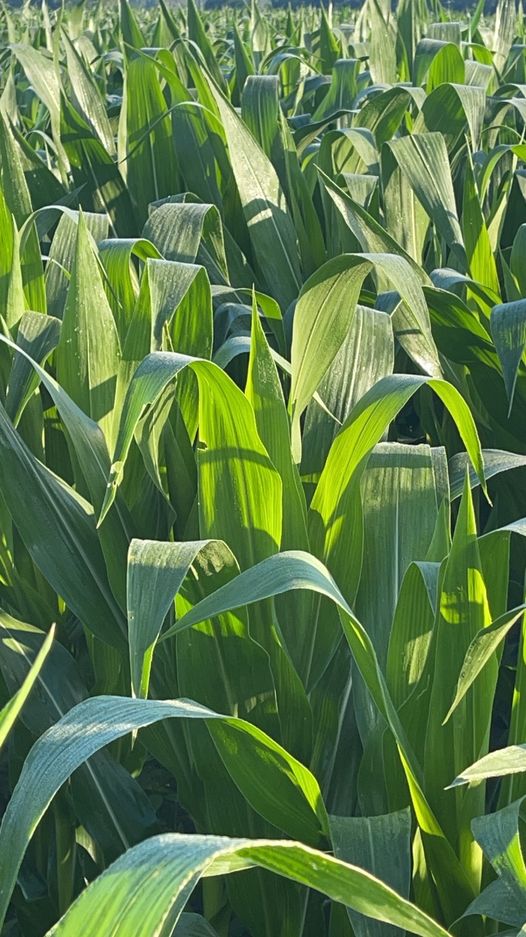
 Illinois Soybean Association Soy Envoy, Kelly Robertson, shares a lot of corn (the other crop) insights on his Precision Crop Services LLC Facebook page. Recently, he commented on shorter corn this year. Read his commentary below.
Shorter corn this year? There are several interacting factors can lead to shorter than normal corn. Corn plant growth & development (and height) is influenced by and depends on three primary factors:
Temperature
Water
Solar radiation during growth
Let’s review our growing season in some regions of Southern Illinois. After planting, we experienced warm daytime growing conditions and cool – sometimes cold – nighttime temperatures. There was adequate moisture for growth, but much of the young corn plant’s development was in drier than normal growing conditions (remember the 3-4 week dry stretch most growers experienced.) Water availability, temperature, and sunlight all impact growth rate. When we see slower cell expansion, shorter internodes (space between leaves) can follow and consequently shorter plant height.
The next question that follows: “Will this impact yield?” Not necessarily, conditions during pollination and grain fill are more important. Here is a good read from University of Purdue talking about this year’s “short stature corn” – click here to read.

Kelly Robertson has been a soil fertility agronomist and precision agriculture consultant since 1989 and also spends time in farm/agronomy management roles for farms in Southern Illinois.
In 2012, Kelly and his wife Lori started Precision Crop Services in Benton where they provide agronomic services for their customers including soil testing, crop scouting, data analysis, GPS/GIS services including variable rate seeding and fertility recommendations as well as farm and agronomy management for their customers.
He is a Certified Professional Agronomist, Certified Crop Advisor, Certified 4R Nutrient Management Specialist, 2015 Illinois Soybean Association Double-Crop Specialist, 2016 Illinois CCA of the Year and the 2021 Illinois Soybean Assoc. Dave Rahe Excellence in Soils Consulting Award winner.


 and then
FIND US ON