By Darby Danzl, ISA Regional Technical Agronomist
—
Harvest is underway across Illinois, and after a long growing season, farmers are anxious to get the crop out of the field. It’s looking to be a great year for soybeans, but farmers know better than to celebrate too early. Until the crop is in the bin, there’s still plenty of time for things to go wrong.
High winds can flatten fields, heavy precipitation can prevent field access, green stems can slow harvest, and rapid dry-down can increase the risk of pod shattering and yield loss. For farmers, the goal is to get the crop out of the field while conditions are still favorable.
So, what strategies can they use to get harvest done before late season weather or other issues become a problem?
One approach is soybean desiccation, which involves applying a desiccant or herbicide to accelerate plant dry- down. This can facilitate an earlier harvest, which can be especially beneficial for those looking to seed wheat or cover crops in the fall.
Soybean desiccation is gaining attention in Illinois particularly as green stem issues persist and late-season weather becomes increasingly unpredictable. However, desiccation is not yet a common practice, so many questions remain about when and how these products should be used in Illinois cropping systems.
To address this research gap, Dr. Rachel Vann at the University of Illinois has partnered with the Illinois Soybean Association On-Farm Trial Network to develop the Soybean Desiccation Evaluation study. This on-farm study simply involves comparing a desiccation product applied to soybeans at R7 (beginning maturity) to a control with no desiccation product applied.
This study will be implemented as strip trials on Illinois farmers’ fields, allowing growers to test soybean desiccation for themselves. The farmers involved will choose one of three desiccation products:
- Sharpen (saflufenacil)
- Defol-5 (sodium chlorate)
- Gramoxone (paraquat)
Many factors on the impact of desiccation applications will be measured, including:
- Green stem
- Grain quality
- Grain moisture
- Grain yield
- Harvest timing
The On-Farm Trial Network is currently looking to enroll farmers in the Soybean Desiccation Evaluation study for the 2027 growing season. Desiccant products will be supplied by the University of Illinois but will be applied by the farmer. Please note that due to the nature of these applications, soybean moisture levels may reach ideal levels at different times, requiring participating farmers to harvest the treatments at different timings.
In addition to on-farm sites, Vann will be implementing research plots in northern, central and southern Illinois in 2027 and 2028. The results of this research will be used to develop recommendations for using soybean desiccation as a yield protection tool in Illinois.
If you are interested in participating in this trial and contributing to the development of Illinois desiccation recommendations, please inquire with the On-Farm Trial Network by filling out a no-obligation interest form.
To learn more about soybean desiccation and green stem issues, check out Vann’s blogs: Timing the Dry-Down: Why Desiccate Soybeans? and Soybean Green Stem: What You Need to Know.
The On-Farm Trial Network is funded by the Illinois Soybean Association Checkoff Program.
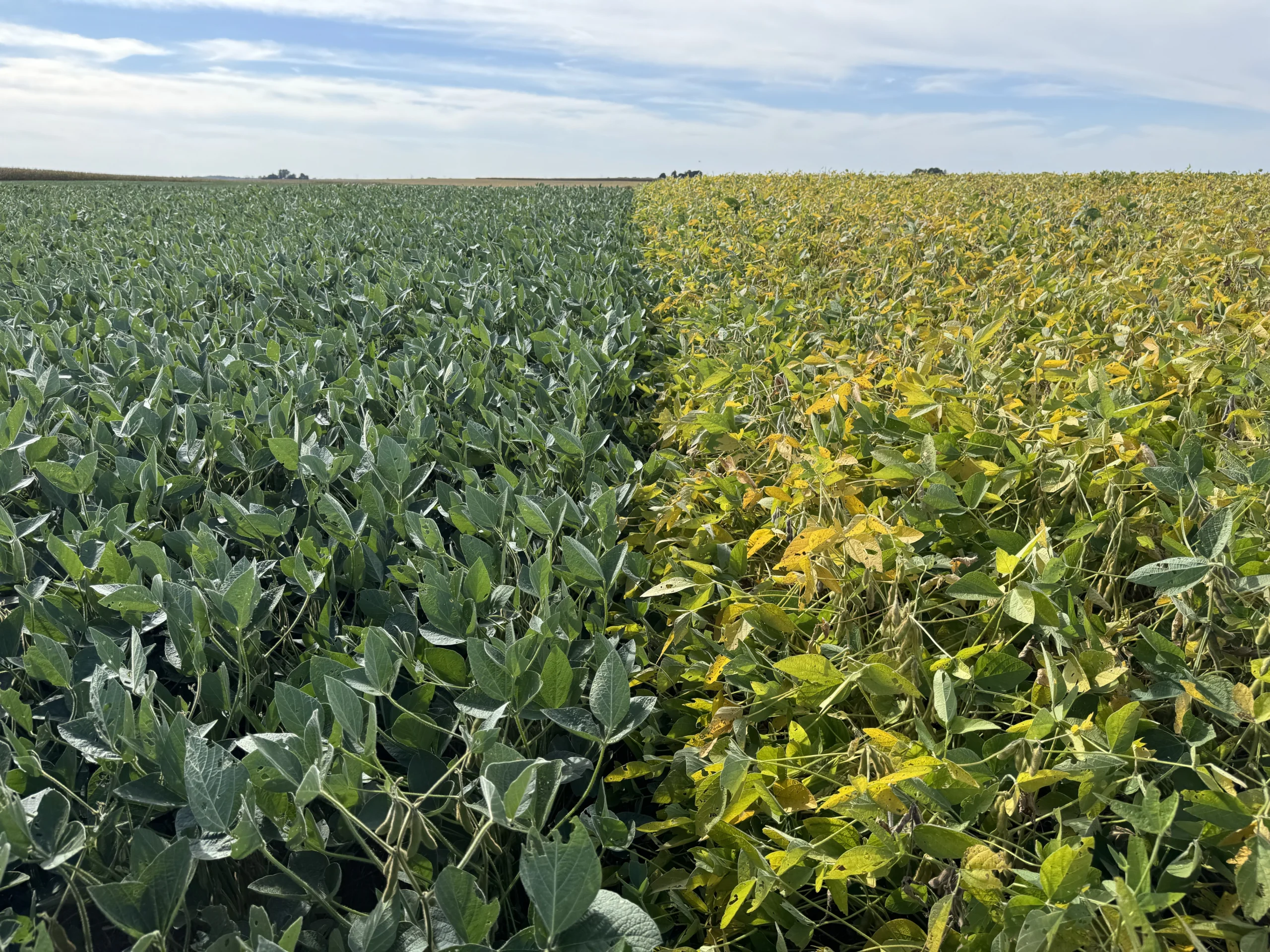
Photo courtesy of Darby Danzl
Darby Danzl is the Regional Technical Agronomist for the Illinois Soybean Association (ISA). In her role, she contributes to on-farm trials, outreach efforts and NRCS partnership responsibilities.
Darby Danzl holds a B.S. in Environmental Economics and Policy, a minor in Horticulture, and an M.S. in Crop Sciences from the University of Illinois at Urbana-Champaign. Her graduate research at the Crop Physiology Laboratory involved small-plot research with a focus on soil health and regenerative agricultural practices. She is passionate about advancing agricultural sustainability using science-based practices that improve soil health, increase resource efficiency, and boost long-term productivity.


 and then
FIND US ON