
One doesn’t have to drive too many miles on country roads to find a field of beans that is not as deep green as we would like to see. This may be a neighbor’s field, or it may be your own. Either way, you may be wondering what would cause the beans to look unhealthy. There are numerous possible causes, some of which we will explore.
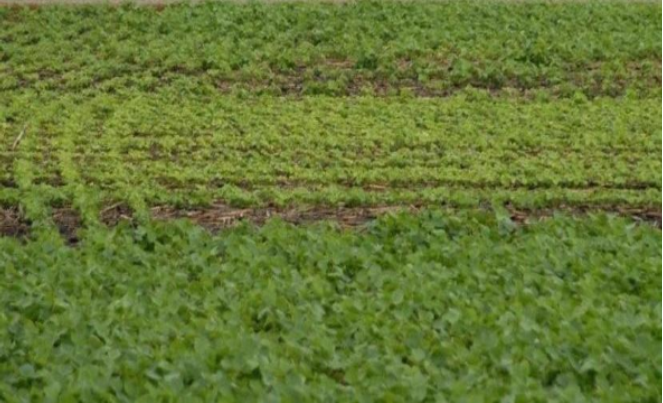 Nitrogen deficiency: Nitrogen deficiency often occurs in soybeans planted into fields that have been saturated for long periods of time. Saturated soil conditions hamper root development, which slows the uptake of nitrogen from the soil. To make matters worse, overly wet soils also slow the growth of rhizobia bacteria that live in the soil and in soybean nodules. In normal conditions, root nodules can provide half of the nitrogen needed by the plants with the rest coming from the soil. Nitrogen deficiency is characterized by yellowing of older leaves as the plant moves nitrogen from older leaves to new growth. In most cases, as the soil dries and root nodulation occurs, normal color should return to the plants. In rare cases where there are not enough rhizobia bacteria to allow nodulation, nitrogen fertilization may help preserve yield.
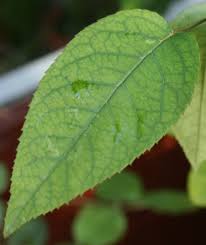 Manganese deficiency: If yellowing is on newer leaves rather than older ones, the culprit could be a manganese deficiency. Insufficient manganese will manifest itself as yellowing between the veins on the youngest leaves. This symptom usually shows up first in poorly drained or high pH areas of a field. A foliar application of manganese sulfate or a chelated manganese may be effective in treating this problem.
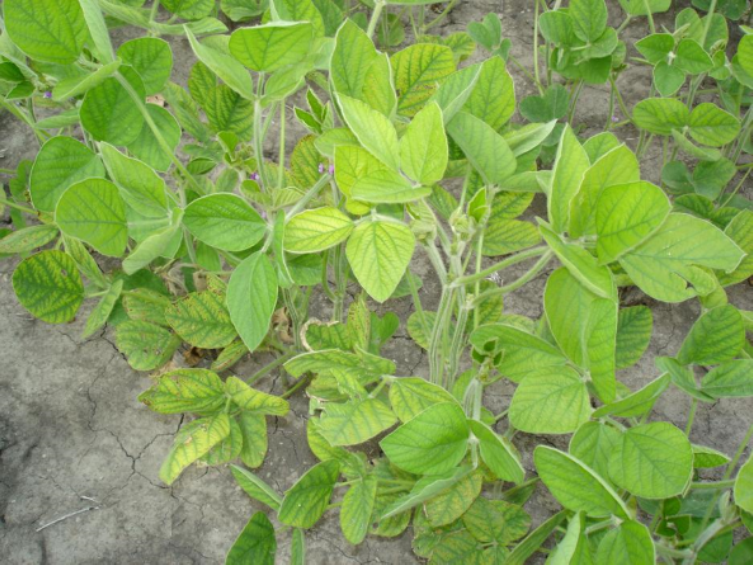 Iron deficiency: Iron Deficiency Chlorosis (IDC) also causes yellowing but is rare in Illinois. However, in certain circumstances it can appear in (you guessed it) wet pockets or high pH fields. This problem is much more prevalent in areas with alkaline soils, such as those found in Minnesota, Northern Iowa and the Dakotas. Not much can be done to correct the problem, but growers in areas where IDC is a chronic problem often plant resistant varieties.
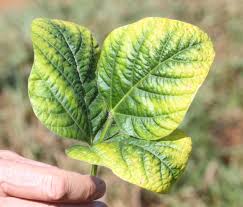 Potassium deficiency: Potassium deficiency starts to exhibit itself later in the season than some of the other nutrient deficiencies. Yellowing will begin on the edges of leaves and continue to develop inward. The entire leaf, including the veins will turn yellow, while the base of the leaf remains green. In severe cases, the edges of the leaves will turn brown and the entire plant will be stunted. Since potassium is a mobile nutrient, the older leaves will show symptoms first. Potassium deficiency often shows up in compacted soils. If root development is not severely hindered, symptoms will usually fade as the roots spread out and come into contact with more potassium in the soil solution. If soil tests or early tissue tests reveal insufficient K, a rescue application of potash may be applied to help protect yield potential.
Root damage: There are several factors that can cause root damage in soybeans. Anything that restricts root growth or otherwise causes injury can cause or exacerbate nutrient uptake problems. Soil compaction restricts root growth. Saturated soils can prevent roots from getting the oxygen they need for healthy plant development. Soil-borne diseases such as Pythium, Fusarium, and Phytophthora are often fatal to plants, but can also cause root damage which will lead to nutrient deficiencies. High infestations of soybean cyst nematode can lead to chlorotic plants.
There are many causes of yellowing in soybean plants, and only some are outlined above. When scouting fields, keep an open mind and utilize all your resources to decide how to best combat the problems that you identify.

Former Soy Envoy and current soybean technical product manager with Bayer Crop Science, Jason Carr evaluates new soybean germplasm and assists independent licensees with identifying varieties that fit their operations. Previously, he led agronomic research projects with corn and soybeans focused on creating tailored solutions for growers. Prior to that, he spent a decade in soybean breeding with Monsanto and led a team developing numerous commercially successful varieties in RM groups 2 and 3. Carr holds a master’s in molecular genetics and a bachelor’s in natural resources and environmental sciences from the University of Illinois.


 and then
FIND US ON