
By: Jamie Chesnek, IL Soy Envoy
Seeing patches of yellow soybeans are nothing new, but in 2026, the issue has become much more widespread than normal. Agronomists across the region have been working to determine what’s driving the problem and, more importantly, what management options may help.
If you’re noticing yellow streaks or patches in your soybean fields, here are a few things to consider:
- What are agronomists seeing?
The most common symptom this season resembles potassium (K) deficiency—yellowing that begins at the tips and margins of the newer leaves (see photo). While potassium deficiency appears to be the leading issue in many fields, it’s important to get out and scout carefully. Several diseases and nutrient deficiencies can look very similar, and diseases such as Sudden Death Syndrome (SDS) are also being found across the area. Proper diagnosis is the first step before making any management decisions.
- Why are we seeing potassium deficiency this year?
To understand what’s happening, we need to look back over the past 12 to 18 months.
Much of southern Illinois has experienced significantly below-average rainfall, with eight of the last 12 months falling below normal precipitation in Perry County. While last year’s drought is behind us on the calendar, many soils have not fully recovered.
The prolonged dry conditions have likely reduced potassium availability by causing potassium to become more tightly held between clay particles. As a result, soybean plants may be experiencing potassium deficiency even in fields where soil test levels historically have been considered adequate.
- What other factors may be contributing?
In many of the affected areas, potassium deficiency doesn’t appear to be acting alone but instead is exacerbated by other factors.
Field observations suggest that several additional stressors may be limiting root growth and nutrient uptake, including:
- Soil compaction
- Residue differences
- Soybean cyst nematodes
- Dectes stem borer
- Pod and stem blight
In some situations, fertilizer application patterns, including spreader width or variable-rate application zones, may also contribute to the streaking pattern observed across fields.
When multiple stresses occur together, the result can be more severe yellowing than any single factor would cause alone.
- What are the potential solutions?
The priority is identifying the underlying cause. Soil testing, nematode sampling and careful field scouting can help determine whether additional management is needed.
Some growers are also evaluating foliar potassium products, such as potassium acetate, to determine whether they can improve plant health. Research suggests that foliar potassium applications through approximately the R4 growth stage may provide some benefit, as soybeans continue to take up large amounts of potassium during pod fill. Results, however, will vary depending on the severity and underlying cause of the deficiency.
Looking Ahead
Many of these issues ultimately come back to moisture. Adequate rainfall will help replenish soil moisture and improve potassium availability as soils recover.
This season also serves as an important reminder of the value of maintaining a strong fertility program. Regular soil testing and making nutrient applications based on crop removal and soil test results remain some of the best investments in protecting soybean yield potential.
While 2026 has presented unique challenges, understanding the underlying causes of yellow soybeans today will help position fields for stronger performance in future growing seasons.
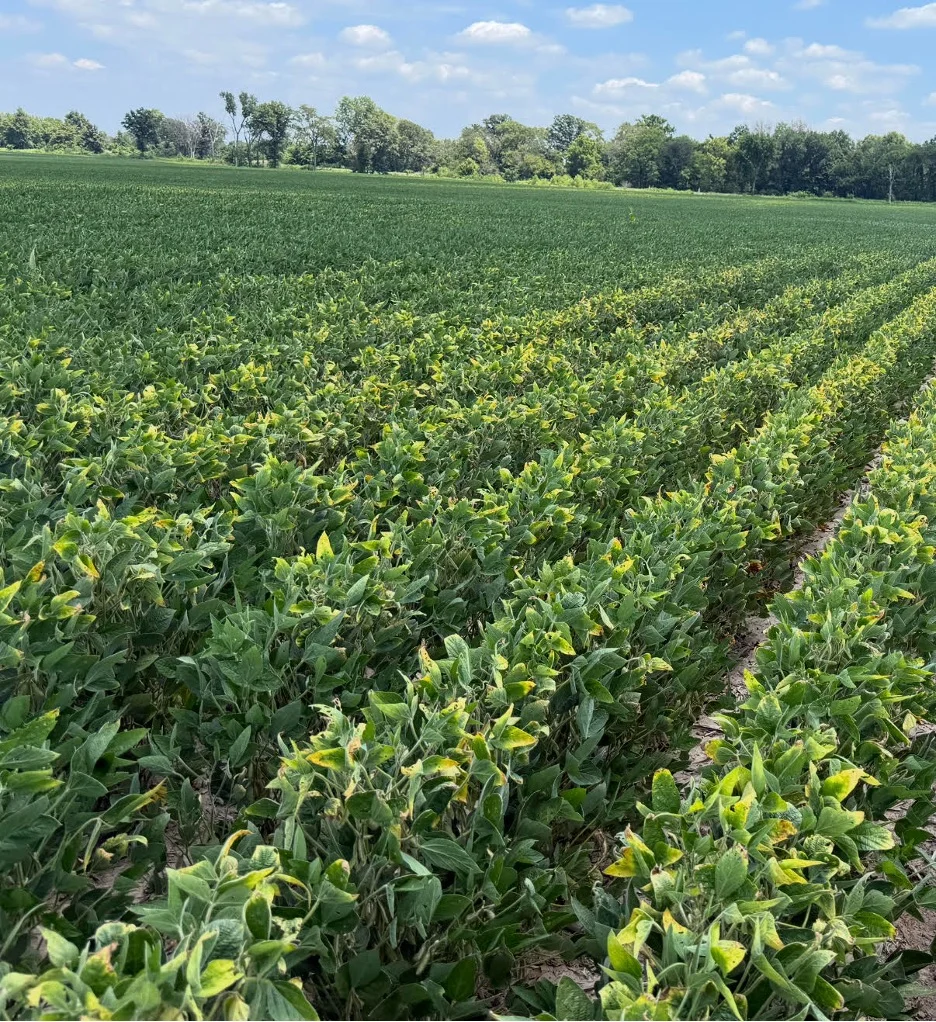
Photo 1. Provided by Jamie Chesnek

Jamie Chesnek is an agronomist and agricultural leader with a passion for helping farmers succeed through practical agronomy and innovation. Raised in southern Illinois and rooted in production agriculture, Chesnek has built her career around supporting growers through agronomic expertise and strategic leadership. Chesnek holds a master’s degree in botany and plant pathology with a specialization in weed science from Purdue University and a bachelor’s degree in plant and soil science from Southern Illinois University Carbondale. Throughout her career, Chesnek has held roles spanning agronomy, sales support and brand leadership within the agriculture industry. She previously served as an agronomist supporting the Burrus Seed Company sales organization, as well as the DEKALB and Asgrow brands. Her passion for strategy and leadership later led her to the role of DEKALB brand manager, where she led national marketing strategies, supported field teams and helped drive brand growth through data-driven insights and strong customer engagement. Despite success in corporate leadership roles, Chesnek's passion has remained closest to the field and the farmers she serves. She recently returned to her agronomic roots and now serves as an agronomist with Pitchford Elevator, headquartered in Richview, Illinois, where she works closely with retailers and growers to optimize crop performance, implement innovative agronomic practices and support farm profitability.


 and then
FIND US ON