
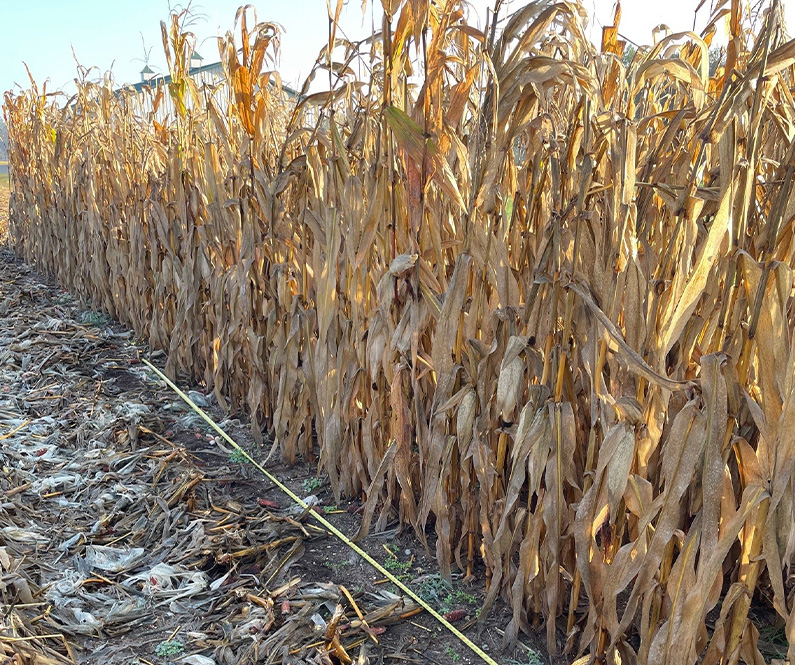
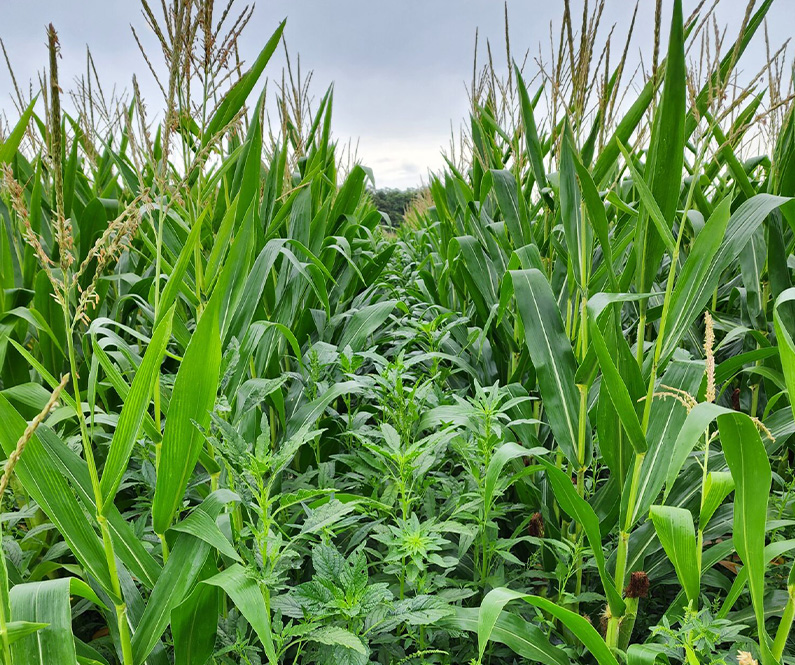
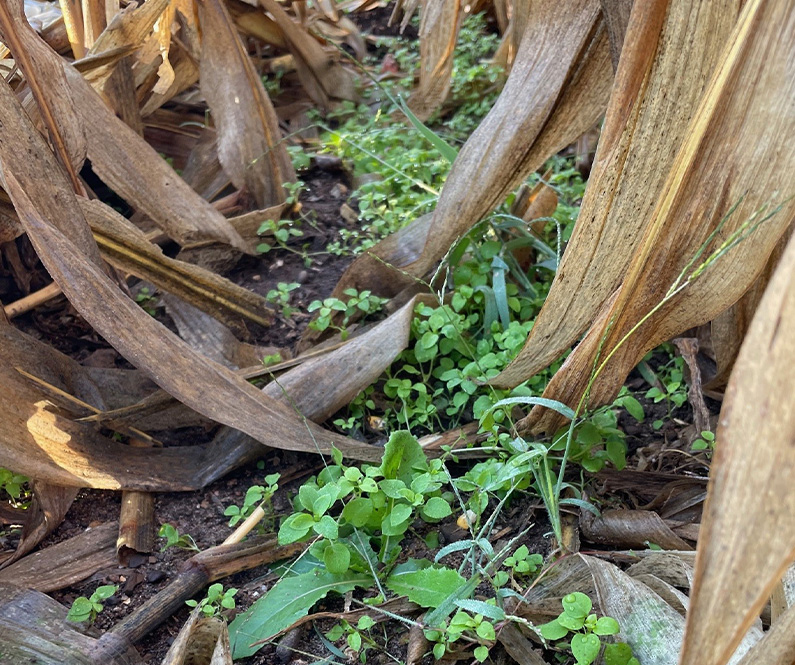
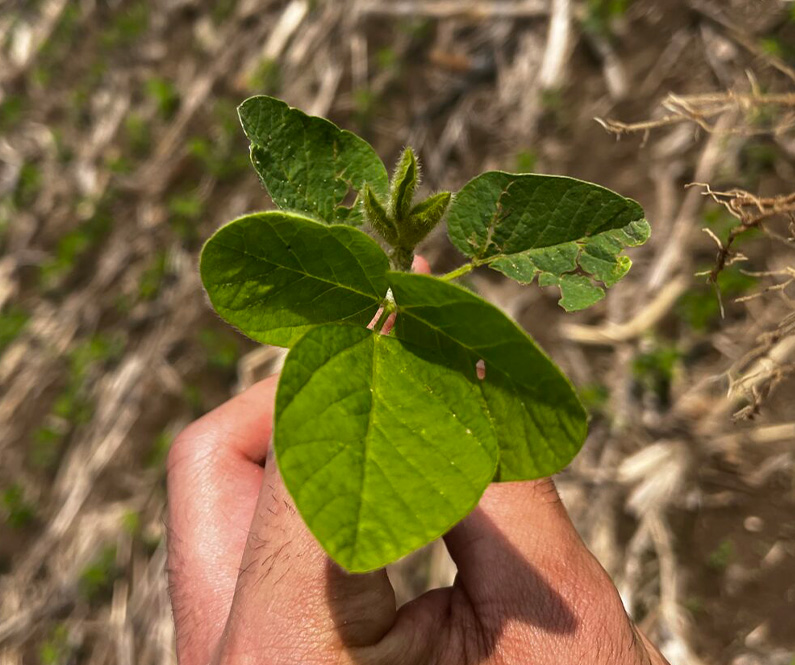
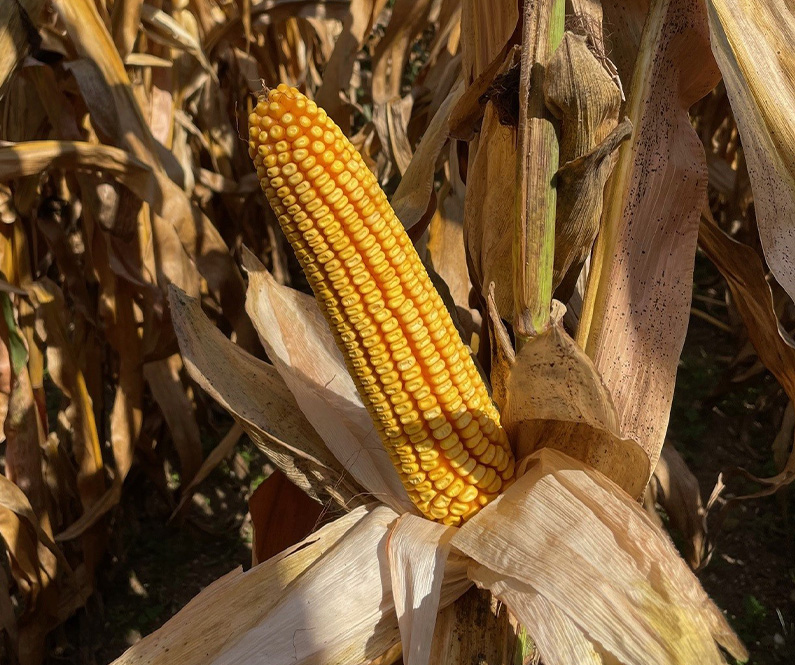
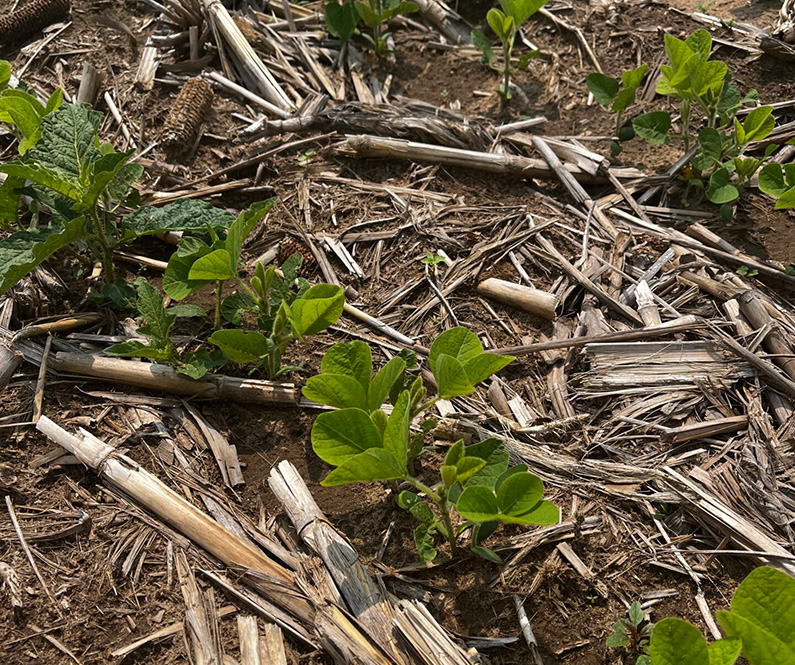
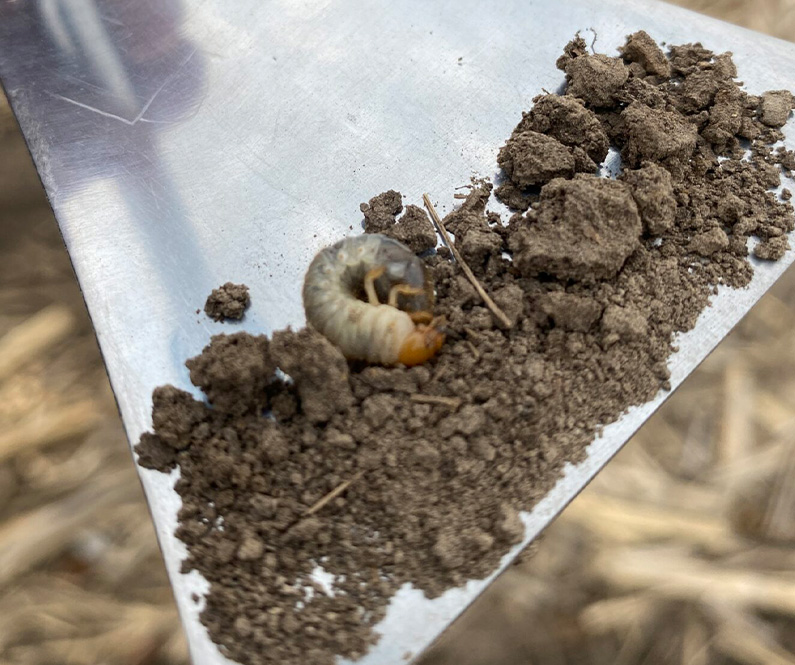
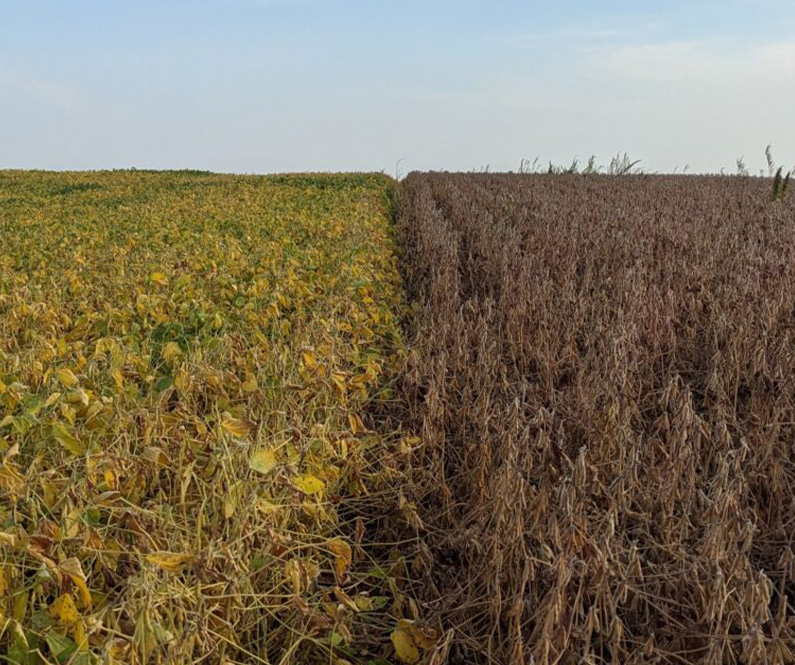
This week, I visited fields in central Champaign County. With much of the recently forecasted rain missing the area, soils are starting to dry up again. Digging down in a few field, there is still some moisture present a few inches below the surface, but that too is starting to dry. Plants do not looked stress at this point in time, but that could change quickly with a warm week ahead of us an minimal chances for rain in the current forecast. The vast majority of corn fields I visited had finished pollination, and were generally at blister (R2) or milk (R3) stages. Soybeans were generally at beginning pod (R3) to full pod (R4). Weed control was variable, with most pressure coming from waterhemp, and a few morning glories here and there. From the road, many soybean fields still look rather clean, but waterhemp pushing through the canopy is also starting to become a more common sight in the area.
Nice weather for corn pollination. Still need consistent rain showers of .75-1.5” per week to maintain yield potential. Soybeans are R2-R3.
Insect pressure is moderate.
Wheat harvest has mostly wrapped up in NE Illinois. This week fungicide applications started in earnest, I observed fields sprayed by plane, helicopter, ground rigs and a drone! Many growers simply include a fungicide application in their management plan; however, we still encourage scouting to determine disease pressure before committing to a fungicide application. Being aware of requirements and favorable conditions for certain diseases. Examples include Northern Corn Leaf Blight and Tar Spot, both require extended periods of leaf wetness (6 – 7 Hours) for establishment. With recent rainfall many have noted early morning mist settling over some fields, facilitating the leaf wetness requirement. For those still considering an application, the Fungicide Efficacy Guides (from Land Grant Universities) have been updated for 2023 and can be accessed at https://cropprotectionnetwork.org/news/fungicide-efficacy-guides-updated-for-2023
Will the dry weather in June and resulting shorter corn plants have an effect on final yield? One of the things I have noted scouting some corn fields is the amount of light reaching the ground. In my experience during good growing seasons very little light reaches the ground at R1. As the picture demonstrates, that is not the case in all fields this year.
During my 40-mile crop survey across DeWitt, Macon and Piatt counties, I noticed several things. First, the very spotty nature of the recent rains with water standing in a field and a mile away it was powder dry. Second, it seems that residual weed control is not lasting long enough in some 30-inch row soybeans. I saw applicators in two fields spraying to control amaranth in 30-inch soybeans and other fields that had been sprayed in the past week. Third, the effects of the violent storms in late June that crossed the area are particularly evident in corn fields showing tattered leaves or elbowed stalks.
Soybeans for the most part are in the R3 growth stage with early planted fields approaching the R4 stage. Corn field growth stages varying from R2 (blister) to R3 (milk).
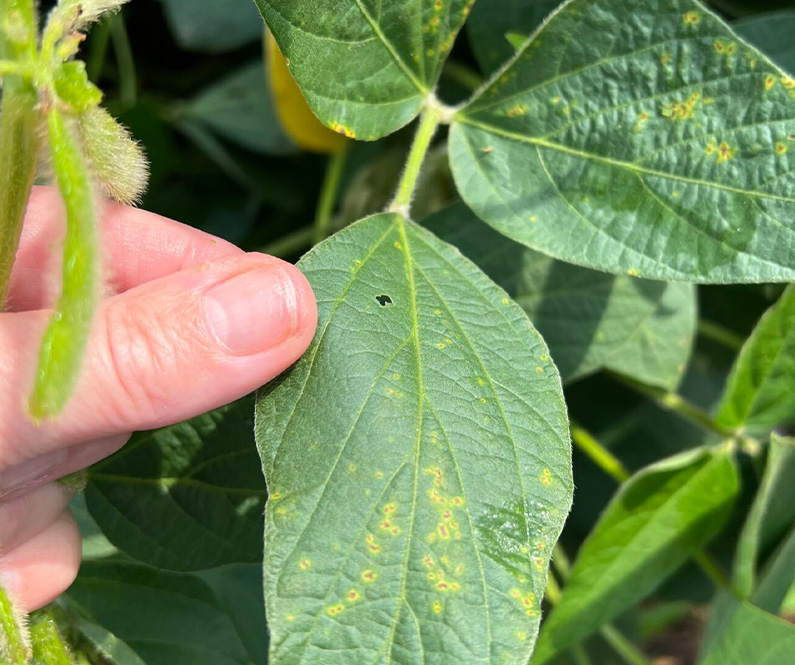
Corn pollination is complete. The cracks in the ground have me hoping for rain soon for grainfill. I unfortunately found that spot for the first time on our farm on a few lower leaves. We will continue to scout to see if the disease progresses and if the fungicide application holds. No report on our soybeans this week, but instead I headed to scout soybeans in Shelby Co.
Abigail Peterson unfortunately found red crown rot when scouting one of here cover crop side by side trials. I went there to investigate further and it is coming to light that this disease may have spread across Shelby County. We also found it in one field in Macon County.


 and then