
Still wet. We had one brief window last week in which a little more planting took place, followed by a few more inches of rain. Most fields are planted, but not all—still about 5–10% unplanted in this region. Temperatures in the high 90s are expected over the next several days, so maybe that’ll dry things up enough to finish the first crop. Hot weather should also help bring the wheat crop down the home stretch. The grain is almost dry, but fields are still wet. Hopefully, there will be enough evaporation to avoid rutting up fields during wheat harvest.
The past couple of weeks have been exceptionally dry for northern Illinois. We’ve had a few sporadic rain events, with rainfall totals being very isolated and regional from pop-up severe storms. The rain we received this past week, including on Wednesday, June 18, has helped move us toward a more normal seasonal total — which was much needed. Much of the area along and north of Interstate 80 has shifted between D0 and D1 drought status, a slight improvement from some localized D2 droughts.
Temperatures are rising, and we’re expecting hot and humid weather in the weeks to come, with more typical temperatures for this time of year. Overall, we had a great week for growing degree units (GDUs), and as of June 18, the DeKalb area has accumulated 740 GDUs.
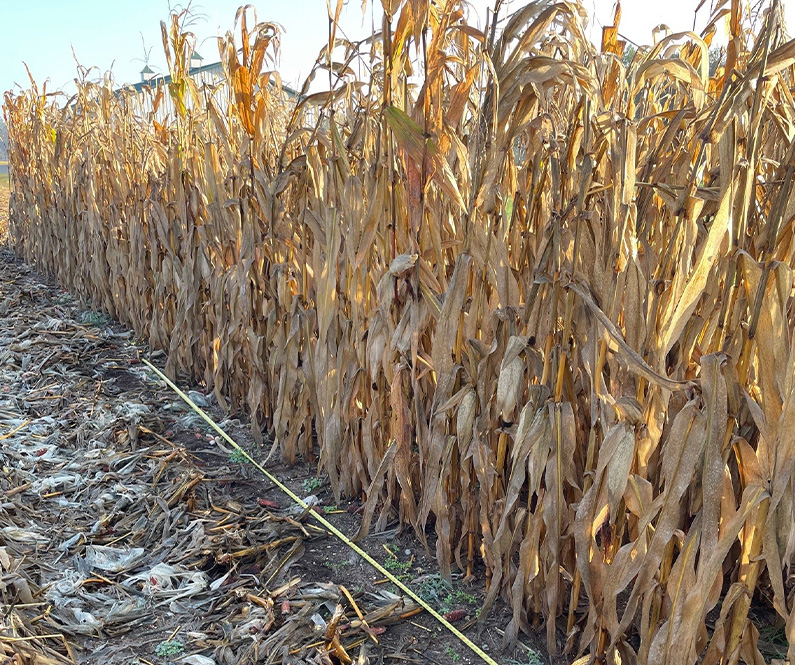
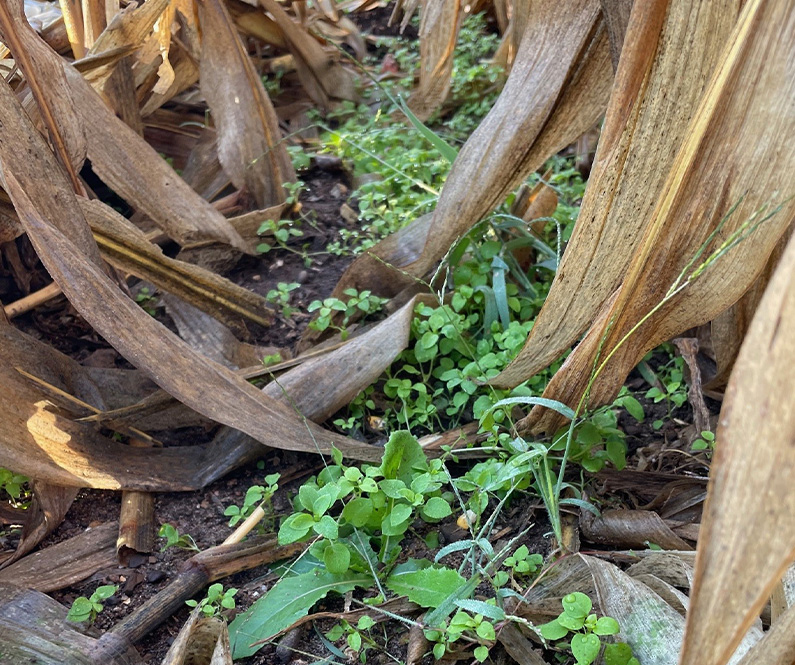
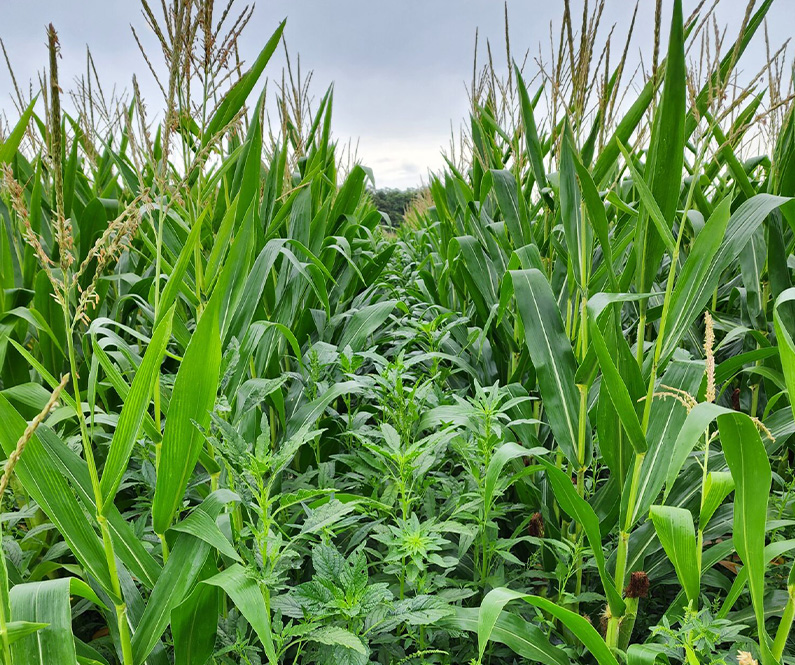
Corn, for the most part, is very drought-stressed and showing symptoms such as “pineapple corn” — skinny, withered plants across most fields. Crops are varying widely in growth stage, with some fields at V4 pushing into V5 and standing about 15 inches tall, while others are strong, healthy V7 plants measuring 2 1/2 to 3 feet tall. The localized rain from significant pop-up storms over the past week made a noticeable difference. Many fields are either the “haves” or “have-nots” when it comes to rainfall. The two corn photos I posted above are from fields about two miles apart in DeKalb County, clearly illustrating how isolated some of these rain events have been. The rain on June 18 brought anywhere from 0.5 inch to more than 1 inch, depending on how far south you are through the Joliet region.
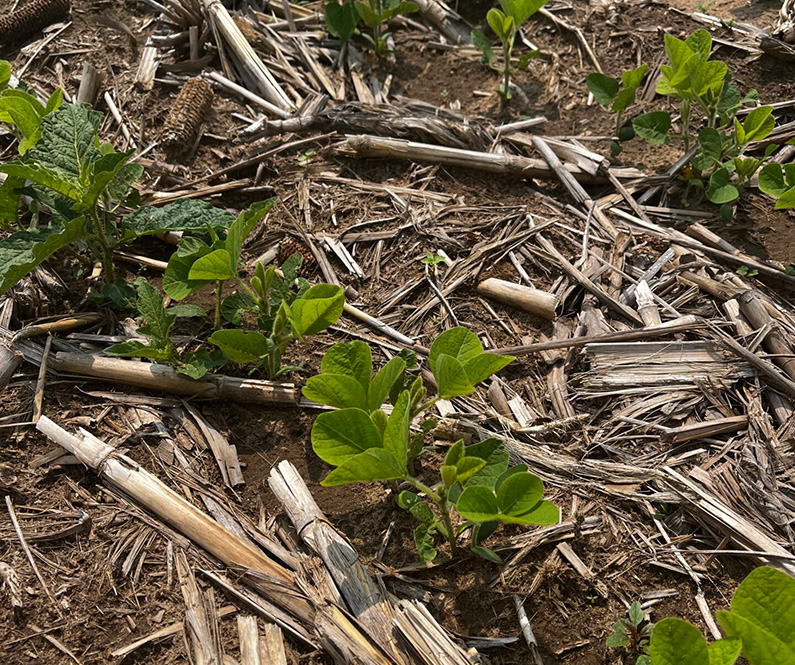
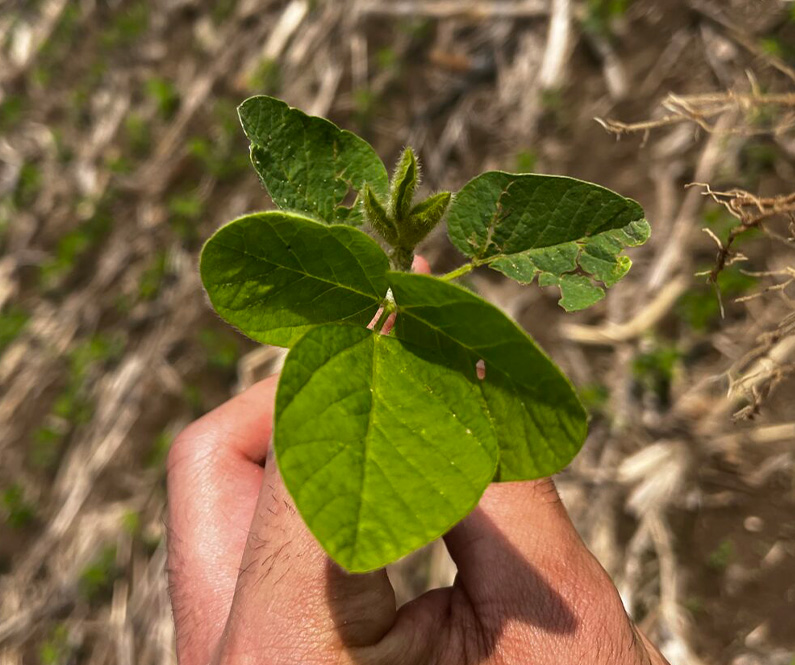
Soybeans are still slightly stunted from the drought but overall appear healthy. Most fields range between three and five trifoliates, and the added moisture should promote continued growth. I have not seen any early-season diseases, but I’ve noticed minor insect damage across most fields — nothing to write home about. Overall, fields have good stands and vigor and should grow out of the early-season stunting.
I didn’t have a chance to get into any wheat fields this week. The few I drove past and got a quick look at seem to be in Feekes stage 11, around dough stage, and are ripening nicely. I hope to scout for any late-season diseases by next week. With increased GDUs this week and the forecast calling for hotter temperatures, wheat should ripen nicely for an early July harvest.
Some late vegetative corn fields (V12+) in Menard County and northwestern Sangamon County are severely lodged from the tornadoes that went through the area on Wednesday (6/18). While some fields lay flat, there seems to be minimal snapping. Other later-planted corn fields in the region range in their vegetative stages (V5–V10) and were left standing after the high winds.
Soybeans appear unharmed by the storms and are starting to flower, although later-planted fields are still around the V4–V5 stage. While scouting, we noticed that Japanese beetles and grape colaspis beetles were beginning to appear, but in very low populations, and leaf-feeding damage was few and far between. Many fields are still growing out of foliar damage from their post-herbicide applications.
A wheat field in Menard County was starting to turn and will likely be ready to harvest within the next couple of weeks.
Both soybean and corn received a welcome rain on Monday, with local spots in Henry County receiving 1.5 inches and more in the forecast for Wednesday night—before a very hot and dry pattern sets in, with heat indexes forecasted to exceed 100 degrees. Corn is in the rapid growth stage, with most herbicide applications and sidedressing completed. Worked soybeans are outpacing those in no-till and minimum-till ground, and spraying is starting this week. Sprayers were rolling before the spotty thunderstorms arrived, with additional rain forecasted through midweek. Those unable to get into the field due to rainfall should have an opportunity later in the week as we shift to a hotter, drier summer pattern. These fields will need to be watched closely, as weeds will continue growing rapidly alongside the crop. Higher herbicide rates and different tank mixes may be necessary in these situations.
Crop growth is starting to vary across Logan County. Corn around the county looks very healthy, with many fields well above knee-high. Growth stages range between V4 and V6. Soybean growth is more varied. Some fields look healthy and are in the V4-V6 stage. However, some fields are lagging, with some in the V2 or V3 stage. With beneficial rains on 6/18 and more hot temperatures on the way, it will be interesting to see how these fields progress over the next week.
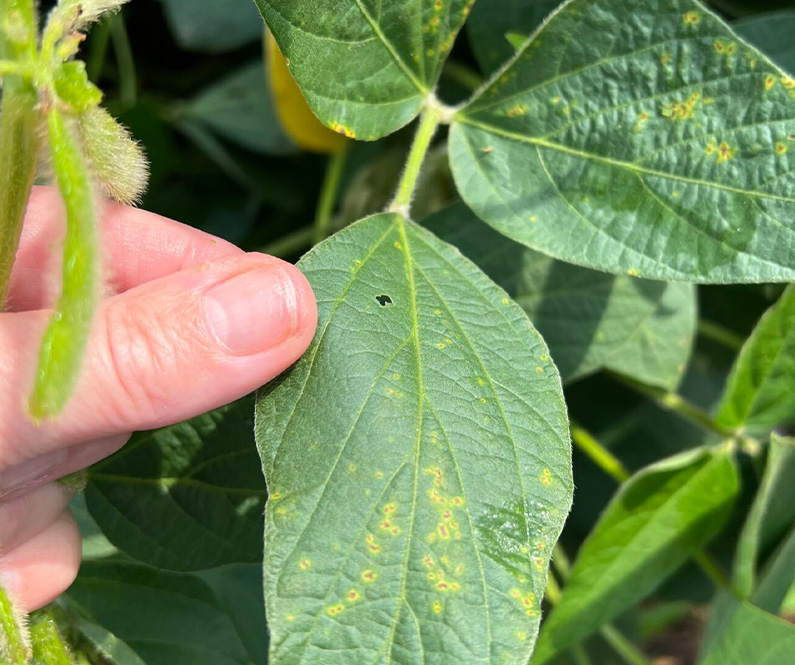
I was able to visit the Peoria Co. area this week to evaluate an Illinois Soybean Association sulfur plot. This is the earliest planted (April 12) and tallest (so far) ISA sulfur plot in the state. It had reached the R1 growth stage. Corn appeared to be at the V6–V7 growth stage. It is also interesting to note that pumpkins were once grown in this location and nearby. This week was hot with high humidity—you could practically hear the crops growing. Post-herbicide applications appeared to have taken place, and volunteer pumpkins were dying. Many soybeans showed herbicide speckling, which will likely disappear as the crop quickly grows. There was very little insect feeding, though some bacterial blight was present on the soybeans. This is a bacterial disease that favors cool, wet weather, so fungicides are ineffective.


 and then