
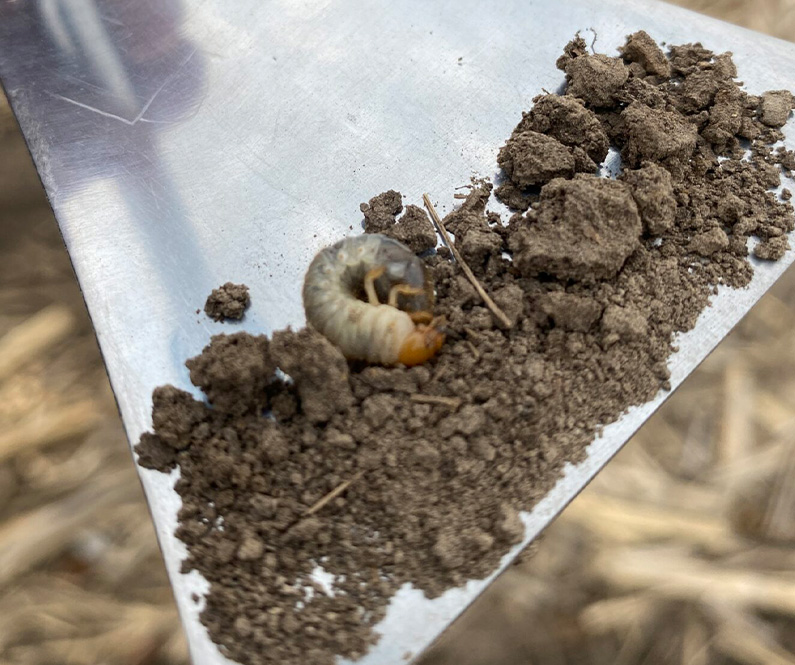
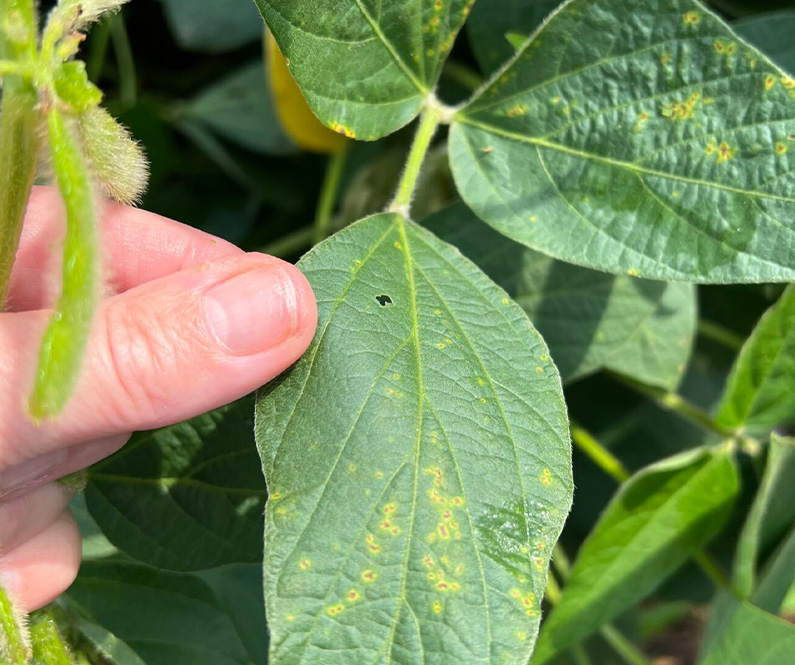
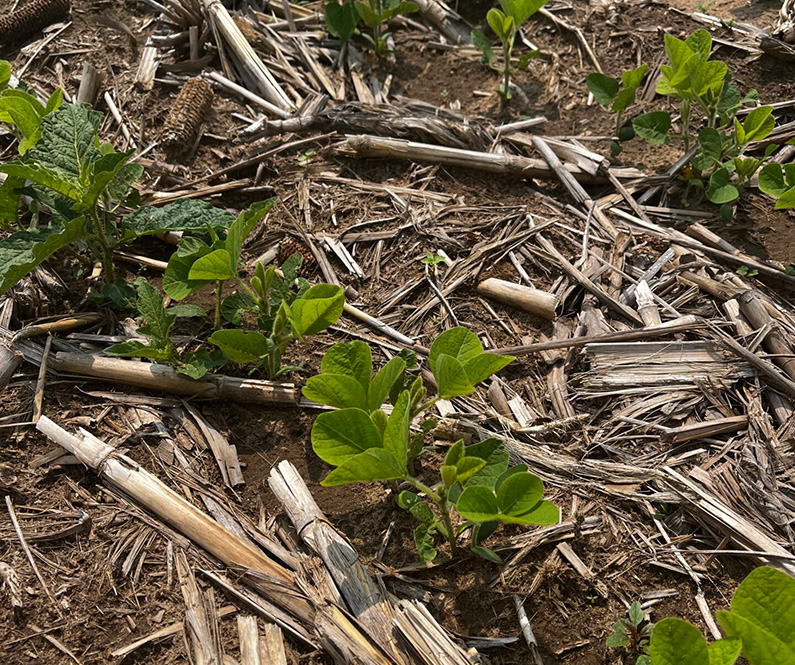
The most significant issue, encountered over the past two weeks, has been PPO herbicide injury to seedling soybeans. The most disturbing aspect of that injury has been how easily it can be missed.
In multiple cases, green plants have been present, and stand has seemingly looked okay. Unfortunately, excavation has shown extensive wounding at the soil line in some cases. In a few cases, this damage (girdling) was significant enough that late-season survival seemed questionable. We should emphasize that this has been the most significant field call issue to date, but issues of PPO injury are not present at epidemic levels.
Where the issue has been significant, growers have typically overseeded to get stands near a final 100,000 plants per acre.
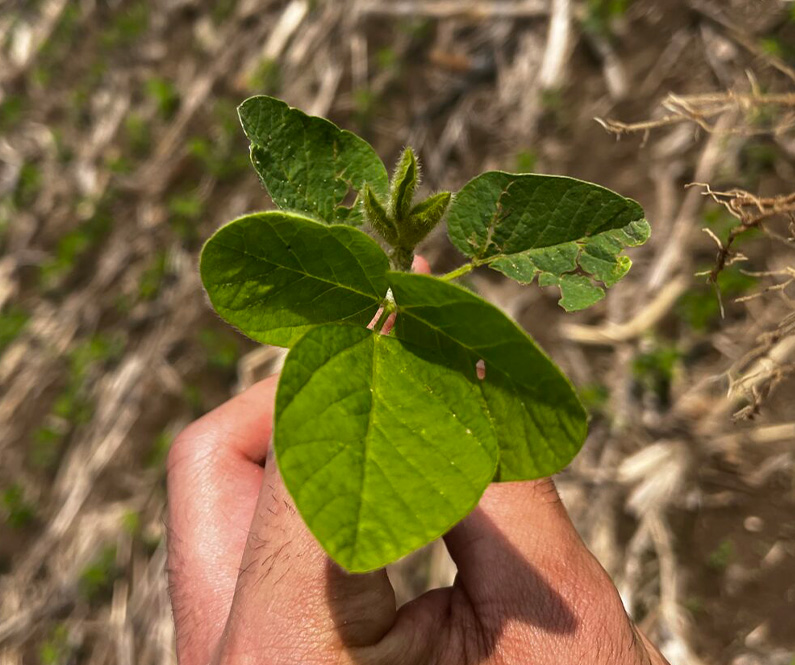
Our cold spell also allowed Group 15 veinal strapping to appear in soybeans, resulting in heart-shaped leaves. Some leaf tissue eventually developed a tattered appearance as developing leaf tissue surpassed stunted veins. While an interesting observation, those issues do not seem to represent anything of economic significance.
While the above represents a small degree of issues in the field, the overall appearance of the crop has been very positive. The color change for both corn and beans is coming on in earnest. Both groups are finally getting that dark green color that makes the countryside seem just a little brighter.
The corn crop is closing rows in the earliest planted of fields, with those fields now hitting the several leaf stage. The advancement of that crop has created typically seasonal pressure to get spraying done within label restrictions. Corn roots are nearing the mid row in those earliest fields as well.
The wheat crop continues to appear extraordinarily early.
Green has begun to fade from the wheat crop, and one gets the sense that crop growth and development has been a little lopsided this year. One occasionally notes crimped wheat heads that are not caused by any type of herbicide application. Our best assessment? The sudden move from very warm conditions to last month’s very cold conditions – resulted in something akin to rapid growth syndrome. The leaves of the boot stage could not get out of the way (fast enough) for the emerging head. This caused the stem below the head to zig zag and bent the head upon emergence.
Head scab is evident if you look close enough, and one suspects that growers will be thankful they used fungicide this year.
Hold on tight, because crop canopy will shoot up dramatically over the course of the next week.
This week, we have slowly started post-emergent herbicide spraying applications along with top dress fertilizer applications on corn. Crops are starting to take off this week with warm temperatures and sunny days. We see early planted corn crops at the V5-V6 growth stage and looks great. Collectively, over the last two weekends, our region has received between 1.0 and 1.5 inches of rain, and this shows in the fields. These rains have eliminated the crust we had on our soil that we mentioned in our previous crop report. This week and last week we have been doing a lot of crop scouting, and the majority of corn looks to be at the V2-V4 growth stages. Soybeans are a little smaller at V1-V3 stage. The wheat is headed out and flowering. The weather has been in the 80s-90s this week and forecasted to be the same next week as well. Rain will be much needed within the next few weeks with the heat we have received paired with the post-emerge herbicide applications that have been applied. Everything will be ready for a drink. We will need between a half to 3/4 in to get the residuals activated for week control.
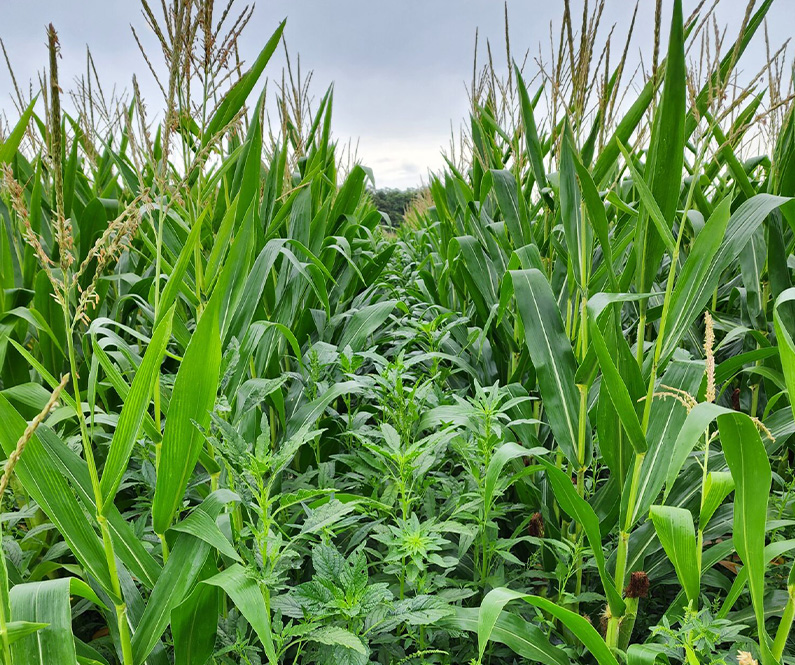
A warm and mostly dry week for growing crops (and weeds). Several mid to high eighty-degree days pushed corn from V3 last week to V5. At V5, all of the embryonic leaves and ears have been initiated in the corn plant, and its growing point (meristem) will soon be above ground. The warm weather also pushed the soy crop, last week a no-till soy field at VE has reached nearly V1 with the first set of trifoliates unfurling. I would be remiss if I did not share that the great growing weather also benefitted weeds as well. Several species, especially waterhemp are matching the crops quickened growth. In this region, most planting has finished and farmers are taking advantage of the rain free forecast to harvest the first hay cutting.
Over the years I have made numerous trips from Grundy County to the University of Illinois campus. My most frequent route includes a stretch of Route 47 straight south to Interstate 74. Yesterday I made the trip and wanted to share my windshield observations. I noted several agronomy practices that seem to be picking up in frequency, they include sidedressing corn with liquid nitrogen, no-tilling soy into a standing cereal rye cover crop, and a growing number of winter wheat acres in rotation. It will be interesting to follow these fields and practices as the growing season progresses.
This will be a quick report as there is not too much to report since last week. Most fields have emerged in both corn and soy. I’ve seen fields for corn varying from about to emerge to V2 pushing V3. Soybeans are in a similar boat between emerging in fields to 2nd trifoliate (V2). One thing with soybeans is that in some fields, we are seeing staggered and uneven emergence and I’m attesting that to the dry conditions we are experiencing. The beans should go out of this, especially if we can get a timely rain in the near future.
Speaking of dry conditions, we are continuing to see dry and sunny weather. Not much rain in the forecast but the uptick in temperature has been nice considering the cool April and May we have experienced up until last week. Crops should start making some major stage jumps with the heat units being put into the dirt.
One last note I saw across multiple fields was early weed pressure. We are seeing some early breakthroughs with our delays in planting. This should be something to monitor and keep in mind for when early post emergence herbicides go out, as they will have some significant growth by then.
Thanks all until next week, look forward to seeing you all then!
The southern half of Champaign County has received more rain in the past month than the north half of the county and is therefore just a bit behind in overall crop progress. As I conducted my survey on Tuesday afternoon, the majority of fields had emerged crop, but most were still in early growth stages with few fields beyond V4 for either corn or soybean. The few wheat fields I saw were in the later stages of flowering (Feekes 10.5.2 – 10.5.4) or just moving into ripening (Feekes 11.1). Dryer conditions this past week have allowed for planting to continue and near completion in that part of the county. In the southeast part of the county in particular, I saw several areas of fields that were drowned out and have been replanted or will soon need a replant, but these areas were generally small and not too widespread. So far, the forecast for next week is looking dry and a bit warmer, which should help most farmers finish up planting and POST herbicide applications on early-planted fields.
The month of May has had only 3 to 4 days suitable for field work due to frequent rains. Heavy soaking rain of 2.4 inches on May 19-20 left fields completely saturated and soft. Very few drying days through Memorial Day, as skies remained overcast and temperatures cool. But temperatures are now increasing and close to normal, which is starting to drive some rapid crop growth (along with weeds!). Early beans are showing some patchy yellow discoloration that appears to be connected with wet spots during tillage and aggravated by excessive rainfall. Early corn has reached V5 to V7 and is taking off rapidly. Saw a few sprayers going on Memorial Day and several more the day after. Corn planted in the window of May 15 still has not emerged or is emerging uneven due to excessive moisture, no sun and cool temps. Replant operations should commence this week, as needed. Soft red winter wheat is filling grain but showing apparent barley yellow dwarf virus (BYDV) affecting flag leaves in clusters. Also, some head scab in the wheat, even where fungicide was applied at flowering. A little sunshine and warmer temperatures forecasted ahead should help everything improve!


 and then