
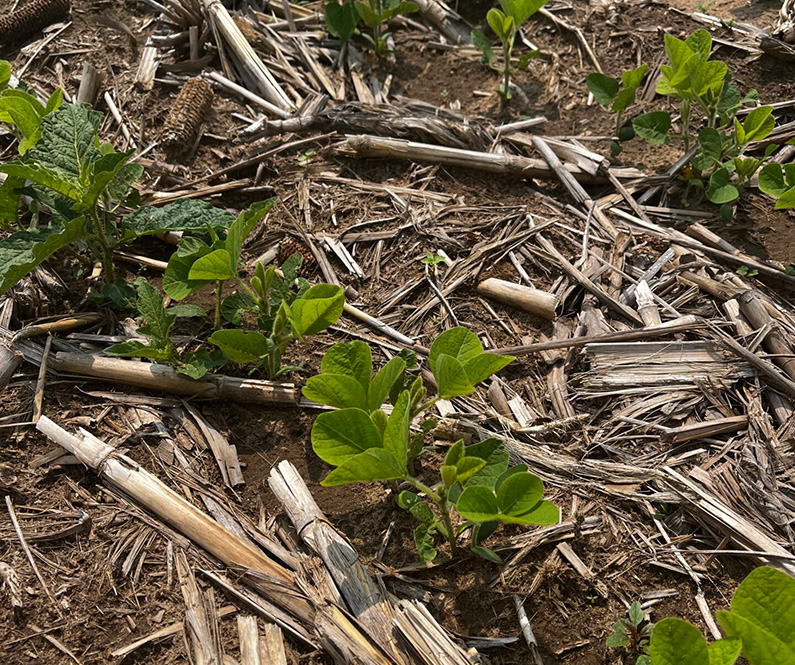
While crops across Logan County continue to look healthy, the lack of rainfall over the last week is starting to show some signs of stress, particularly in later-planted fields. The fields that were planted earlier in the season are in the V4-6 stage for corn and soybeans, with later-planted fields in the V2 stage. The first cutting of hay fields has also wrapped up across the county, with the hope of timely rains providing a good jumpstart for regrowth.
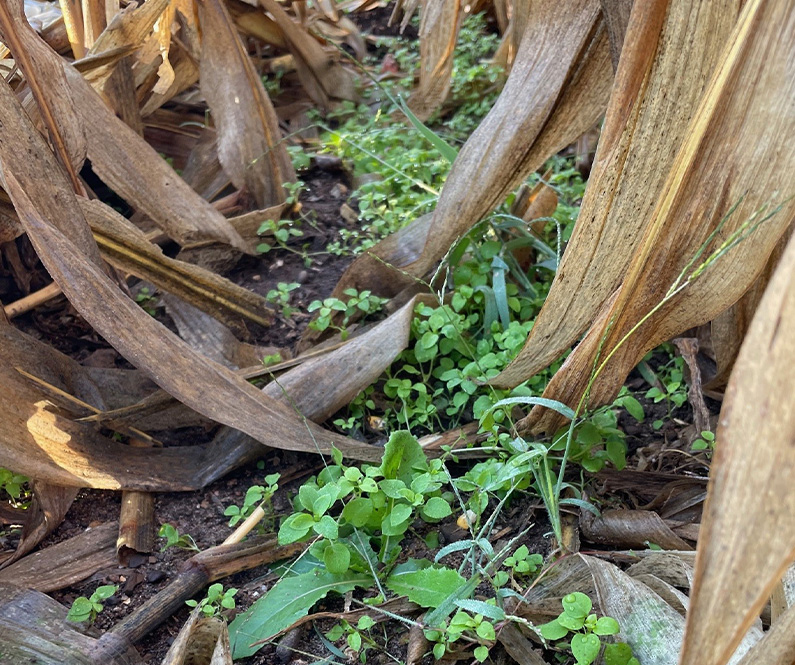
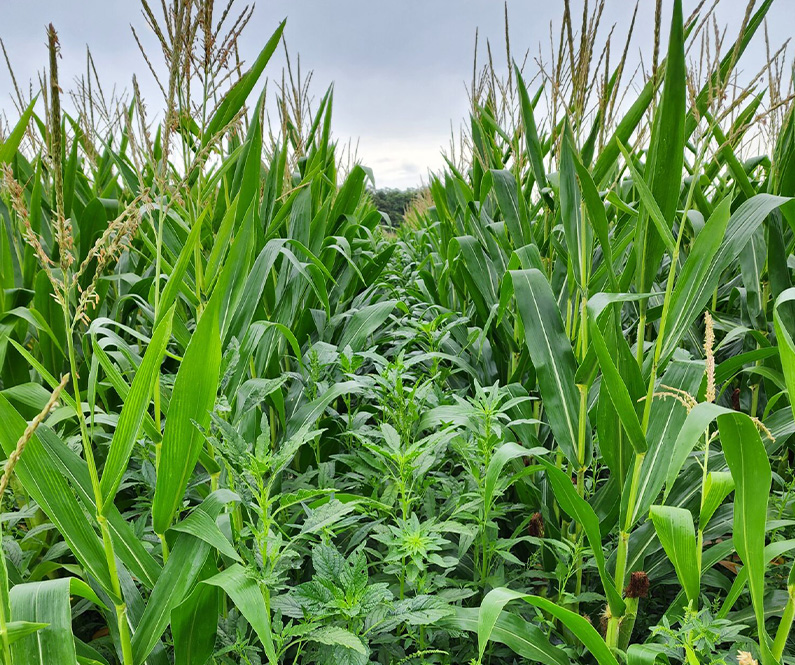
Soybeans vary from V2 to V5 in general, with some fields showing the effects of early crusted soils and reduced emergence in those areas. Tall waterhemp has reached the 4-inch stage by the middle of the week. Corn varies from V2 to V7. All the crops have good color in spite of it being dry for the past 14 days. NOAA shows that the 3-county area has 2 to 3 inches below average rainfall over the past 2 weeks. Grass is browning in the lawns.
First cutting hay is being made. Sidedressing of corn is wrapping up, and post-emergent herbicide applications are in full swing.
A dry week in the Northeast region, corn picked up one additional leaf (V6) and soy pushed out another trifoliate (now V2) in the fields that I am observing on a weekly basis. Hay harvest, nitrogen sidedressing, and post herbicide applications are all taking place. With the comparatively quick onset of dry conditions and stress on both crops and weeds, farmers are encouraged to evaluate post herbicide applications at least a week after application. Environmental stress, including drought, can slow active growth and herbicide solution absorption in plants, decreasing herbicide effectiveness on targeted weeds.
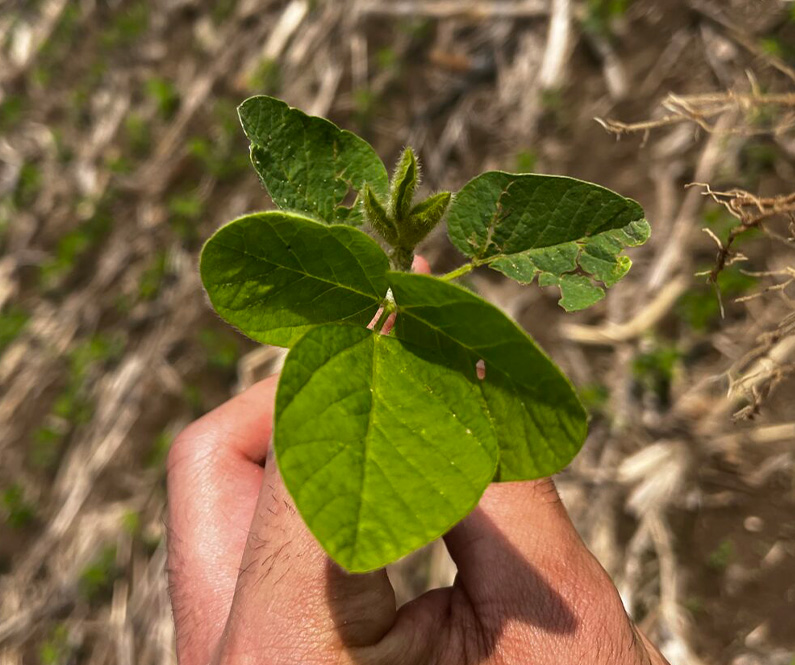
During my survey of Douglas County on Wednesday afternoon, I saw just a handful of fields yet to be planted, with planters rolling in a couple of them. Others were busy filling in some low spots of fields that failed to survive the wet conditions we experience in the area in late April and early May. Timely post-emergence herbicide applications were also being made, with most waterhemp seedlings in the area still small enough to effectively control. While most fields were planted, somewhere around 10% of fields did not yet have emerged crop. Soybean fields were generally in the V1-V2 range, with active nodules starting to form. Several fields were showing some damage on early leaves, likely related to the cool, moist conditions experienced during emergence and possibly compounded by increased duration of contact between those tissues and soil-applied pre-emergence or carryover herbicides. However, new growth looked healthy in most fields. Most corn was in the V3-V4 range, with some early-planted fields getting up to V8. Signs of side-dress nitrogen could be seen in several of those early-planted fields, with most of the more mature corn fields showing a nice dark green canopy. However, some of the corn fields in the V3-V5 range were showing uneven canopy color, possibly still waiting on some side-dress nitrogen.
Planting on the ISA farm has been completed and emergence of both corn (V3) and soybeans (VC) looks great. Nearby V5 corn will need to be sprayed soon as waterhemp is quickly advancing in size. Wheat has reached the grainfill stages with minor, scattered head scab as well as leaf rust.
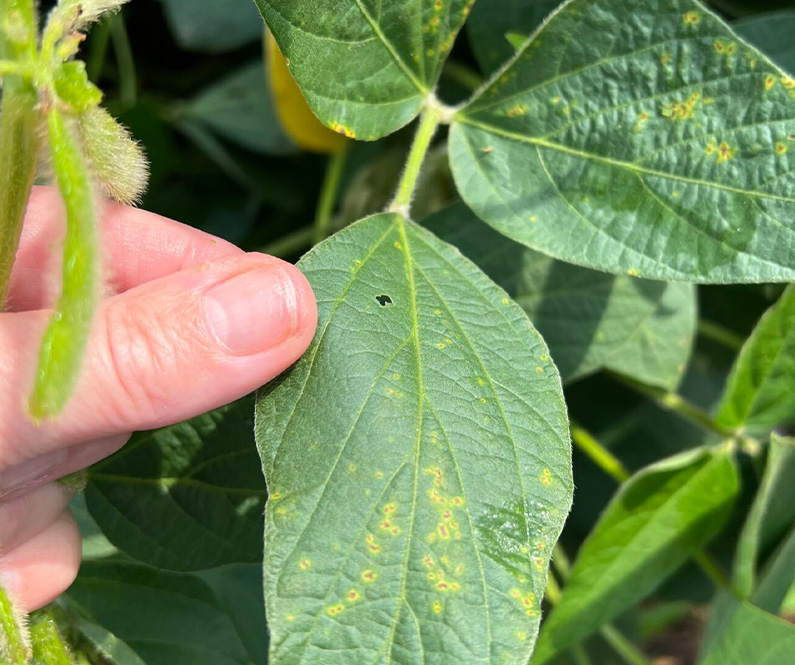
Many were able to get back into the field over the previous weekend to plant the last of a few fields, replant, and make post herbicide applications to early April planted soybeans. Early April planted corn is at V7 and is showing signs of micronutrient deficiency due to shallow root system during the rapid growth phase. Early April soybeans are at V4 and are showing signs of bacterial blight on leaves. We will start to see even more rapid growth of crops in next few days when nighttime temperatures also heat up to the 60’s. There is rain in the forecast again, but it seems to rain here when it is not in the forecast, so it is hard to plan ahead.


 and then