
The 2020 season has developed into a very challenging year—and that was before the planting and replanting issues. Earlier this season national and international demand for corn and soybeans slowed down drastically, which dropped the current CBOT future prices $0.70/b under what federal crop insurance set the spring price for. So over the next month the question will undoubtedly come up, with a late planted crop and low market values would a fungicide application on soybeans be profitable?
- Protecting yield and increasing profitability
- Reasons to apply: A fungicide treatment is not a steroid; it won’t boost a soybean yield past what’s already been established. However, it will support the plant as it fights off stresses during key reproductive stages. A treatment is designed to prevent a yield robbing infection. In many situations, an application is made proactively to prevent what may occur depending on weather events. Protecting plants can lead to improved seed quality and higher yield potential.
- Low yield potential and reduced cost
- Reasons to not apply: A fungicide treatment is designed to protect the established yield. In many fields across the state, top end yield may have already been compromised (late planting, reduced stands, herbicide damage, ect.). With current market values, its going to take more bushels per acres to generate a strong ROI then years past. Regardless of your decision to apply, be proactive in making the decision – sooner rather than later – because once a soybean plant progresses through the reproductive stage, the ROI decreases.
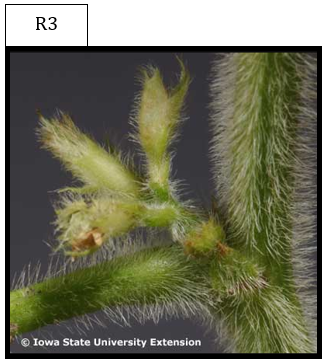
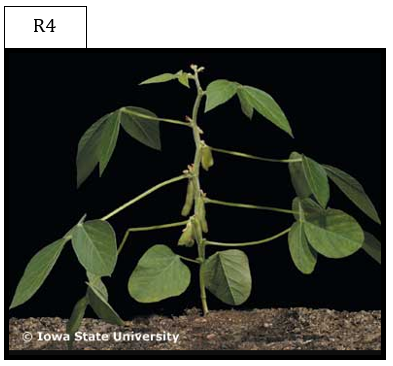
When applying a fungicide it’s important to align application timing with proper soybean growth stages. Fungicides are typically applied during the pod development growth stages (R3-R4). During this time, its critical to minimize plant stresses so that pods won’t be aborted, and seed counts/pods will be strong. The yield potential is being developed and needs to be protected. Follow link to learn more: https://crops.extension.iastate.edu/soybean/production_growthstages.html
In my territory as an AgriGold Key Account Specialist, I use digital tools that project future weather for a given area (temps and rain fall). This information is useful to understand the potential risk.
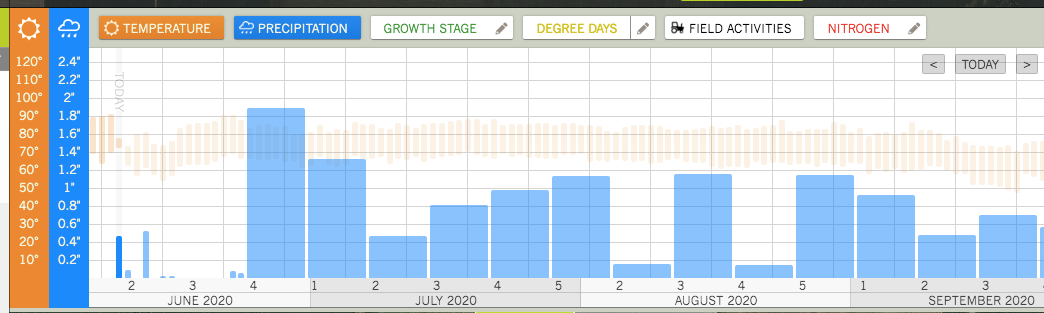
What are key consideration for 2020 fungicide investment?
- How healthy are your beans? Most seed guides show susceptibility to SDS, Frogeye, White Mold, Iron Deficiency Chlorosis, Brown Stem Rot, Charcoal and Stem Canker for each variety.
- Field History: It’s important to keep good field notes to understand if certain fields historically have issues such as foliar pathogens surviving in residue or blown in from the south.
- Yield Potential: If a given field has high yield potential, then it’s important to protect. However, a poor stand that has a low yielding potential cannot be rescued with a fungicide application.
- Keep track of the forecast—wet leaves can cause problems, especially in full canopies and primary areas for disease, whereas hot and dry conditions prevent this.
- It’s important to determine the potential financial return for this investment. This will vary for every soybean grower based on when you purchased product, when you sold your beans and what is the basis in your regional area.
- Review your trial data over the last 10 years. This data is validated and more important than what is generated from the person selling the product to you.
Our state is blessed to have such a strong agronomic network. Don’t be shy about reaching out to an Illinois CCA to help understand the risk and rewards of applying a fungicide in 2020, and to better understand what to look for.

Ashley McEwen grew up on a diversified grain and livestock farm near Bushnell, Illinois. Currently she is the assistant vice president and farm manager at First Mid Ag Services in Peoria, Illinois. McEwen is a Certified Crop Adviser and holds a master’s degree in crop science from the University of Illinois. Prior to First Mid Ag Services, McEwen was a key account specialist with AgriGold.


 and then
FIND US ON