
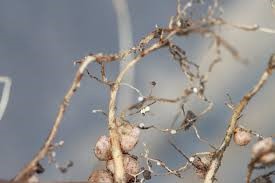
Soybean cyst nematode (SCN) is considered the No. 1 pest threat to soybeans and robs more bushels than any other threat. And unfortunately, many of those bushels are lost without ever seeing any above ground symptoms.
The challenges are that 1.) SCN can probably be found in every soybean-producing county in Illinois and across the Corn Belt and 2.) traditional practices of rotating soybeans regularly with corn and planting resistant varieties isn’t as effective in keep egg counts low.
Knowing where SCN egg counts are high and how high they are is the key to effective control. That is why it’s important to pull soil samples in the fall and even by management zone. Do you know what the egg count is in your fields? You can use the following scale to assess risk to soybean yield (collection details below).
- Low: 500 to 3,000
- Medium: 3,000 to 10,000
- High: >10,000
When it comes in SCN infestation, the fields most at risk are sandy soils, high pH fields and low spots. And remember, SCN and sudden death syndrome (SDS) often appear together. SCN wounds the plant, opening a pathway for the SDS pathogen to enter. The renewed SCN Coalition recommends the following best management practices for all fields:
- Continue to use PI 88788 or add in a Peking genetic resistance.
- Seed treatments to provide some additional some control.
- Extend crop rotations. Corn and wheat are non-host crops and decrease populations; the longer out of soybeans (once every three years), the greater the reduction in egg count.
The key to effective SCN management is discovering infestations when the nematode population levels are low and keeping them in check before they explode and impact yield. This can only be accomplished by routinely sampling the soil and measuring egg count. Sampling is very similar to composite soil sampling:
- Sample fields every 2 to 4 years, depending on rotation and SCN history.
- Sample representative areas or zones and collect following a zigzag pattern across the sample area.
- Limit the area represented in a single sample to 10 to 20 acres to increase accuracy of results.
- Use a soil probe and collect to a depth of 6 – 8 inches in the root zone of plants.
- Mix together 10 to 20 cores and take a take a 2-cup subsample.
- Place sample in a soil bag or plastic bag and label appropriately.
- Do not store samples in direct sun or allow them to overheat.
- Ship as soon as possible to a laboratory that does egg counts.
What will egg counts tell you?
- If egg counts are low, no special action is required; continue current practices and rotation.
- If egg counts are moderate, between 3,000 and 10,000, continue to rotate and plant a resistant variety, but if egg count is greater than 3,000 expect some yield drag even when planting a resistant variety and lengthen rotation out of soybeans to 2 years or more.
- If egg counts are greater than 10,000 rotate to a non-host crop and monitor the egg count till it begins to drop and then plant a resistant variety.
Soybean agronomist Daniel Davidson, Ph.D., posts blogs on agronomy-related topics. Feel free to contact him at djdavidson@agwrite.com or ring him at 402-649-5919.

Soybean agronomist Daniel Davidson, Ph.D., posts blogs on topics related to soybean agronomy. Feel free to contact him at djdavidson@agwrite.com or ring him at 402-649-5919.


 and then
FIND US ON