The 2026 Illinois Wheat Plot Tour commenced across the southern portion of the state on May 19, bringing many farmers, researchers and industry members together to scout wheat fields and gather data. Four groups set out and assessed 143 wheat crops across 25 Illinois counties, and Illinois Soybean Association (ISA) agronomist Darby Danzl joined the group in Hamel to participate in the data collection in Madison, Bond, Montgomery and Macoupin Counties.
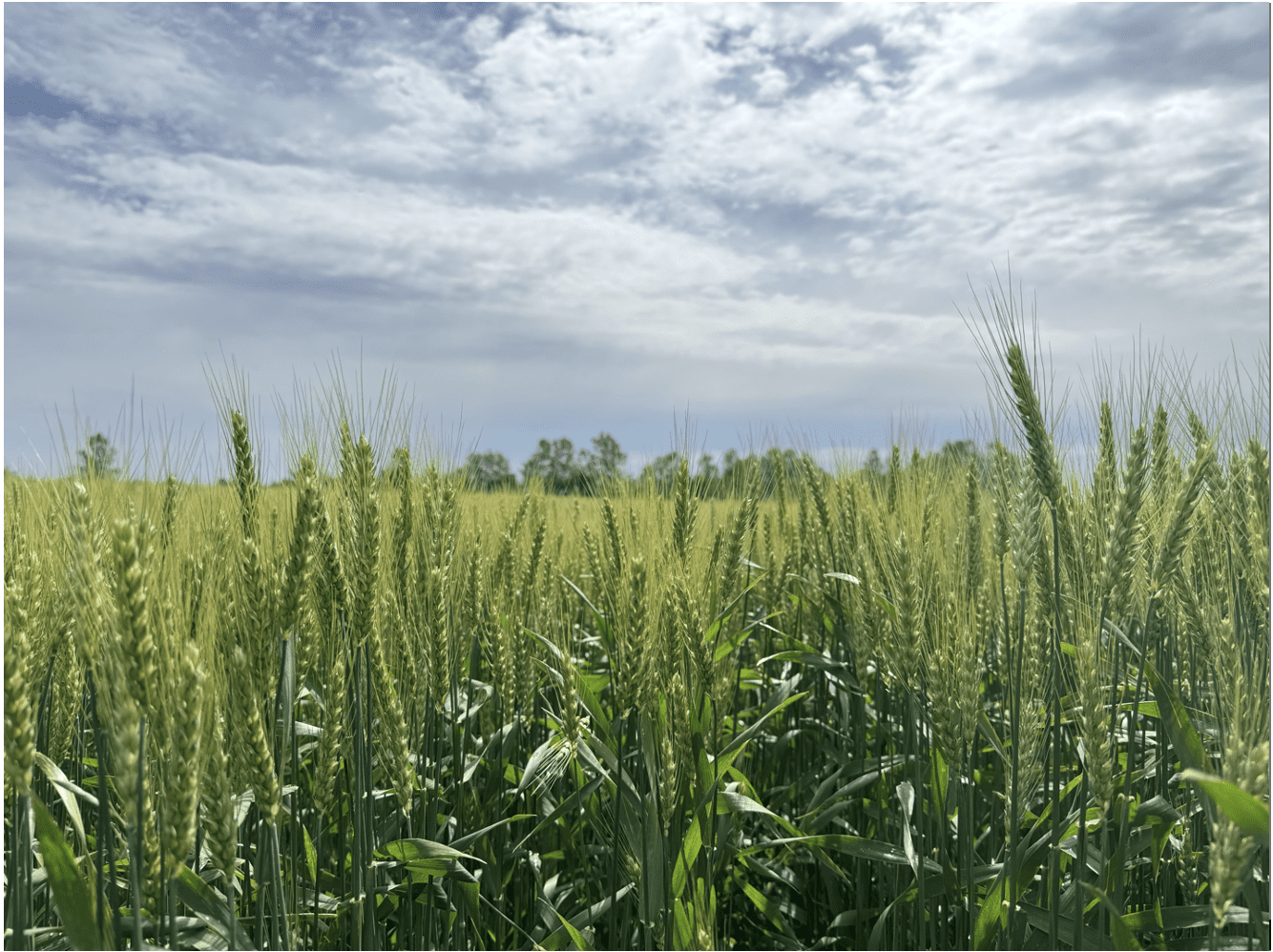
Wheat field. Photo provided by Darby Danzl, Illinois Soybean Association
To collect wheat yields, crops were assessed by placing a yardstick alongside a representative section of row and counting all the heads along that 3-foot strip. For spikelet counts, we counted the spikelets on 20 heads within the same 3-foot section and took the average. We also noted the row spacing in each field. Using our data, yield averages were estimated by the University of Illinois and the Illinois Wheat Association for each county.
Yields for these counties were estimated as:
- Bond: 117.11 bu/acre (four fields sampled)
- Macoupin: 113.77 bu/acre (three fields sampled)
- Madison: 87.06 bu/acre (three fields sampled)
- Montgomery: 93.44 bu/acre (one field sampled)
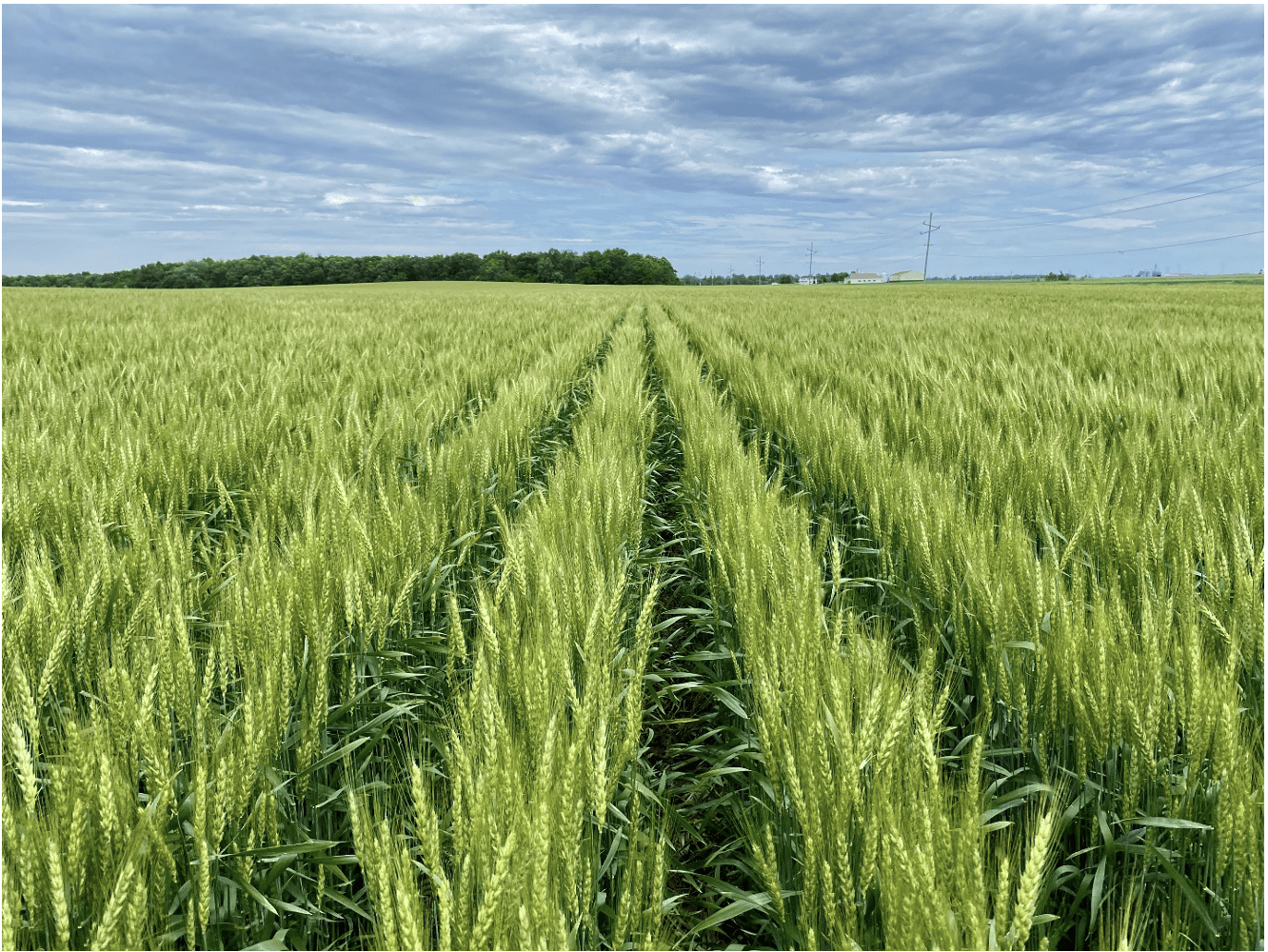
Wheat field. Photo provided by Darby Danzl, Illinois Soybean Association
Overall, the crops looked promising, and disease and insect pressure were low. This part of the state had been relatively dry until the past couple weeks, which brought one to two inches of rainfall and some hail in areas. Many fields showed signs of recent fungicide applications, as sprayer tracks were noted in all fields the group visited in Bond County. Other fields in Madison and Macoupin County were ready for fungicide as the crops were beginning to flower.
At this beginning flower stage, also known as anthesis, the crop becomes more susceptible to Fusarium Head Blight, or wheat scab, especially under the warm and wet conditions currently present in the area. While there was little Fusarium observed in the counties this group visited, there is more rain in the forecast for southern Illinois, so it is something to keep an eye on and consider a fungicide application if you haven’t already.
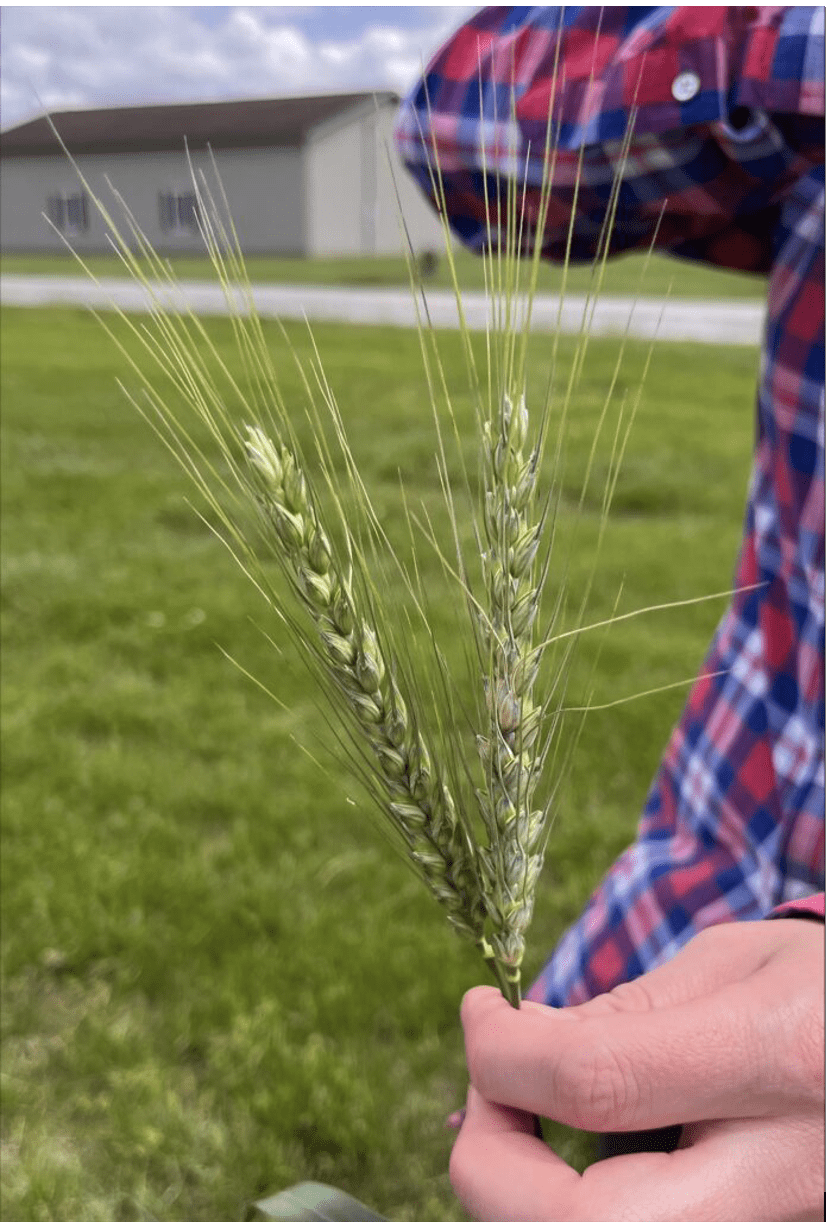
Fusarium head blight (scab), identified by spikelet discoloration and awn bending. (Photo provided by Darby Danzl, Illinois Soybean Association)
Illinois wheat growers should look forward to more support in the upcoming years as the Illinois Wheat Checkoff program will come into effect on July 1st of this year. Growers can expect to see a voluntary 1.5 cent per bushel assessment on the sale of wheat on or after this date. These funds will be leveraged to support wheat research, expand education on best management practices and develop new market opportunities. With wheat acres on the rise in Illinois, we hope that this new checkoff program will support Illinois farmers in the same way that we do at the Illinois Soybean Checkoff program.
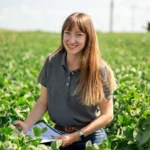
Darby Danzl is the Regional Technical Agronomist for the Illinois Soybean Association (ISA). In her role, she contributes to on-farm trials, outreach efforts and NRCS partnership responsibilities.
Darby Danzl holds a B.S. in Environmental Economics and Policy, a minor in Horticulture, and an M.S. in Crop Sciences from the University of Illinois at Urbana-Champaign. Her graduate research at the Crop Physiology Laboratory involved small-plot research with a focus on soil health and regenerative agricultural practices. She is passionate about advancing agricultural sustainability using science-based practices that improve soil health, increase resource efficiency, and boost long-term productivity.


 and then
FIND US ON