
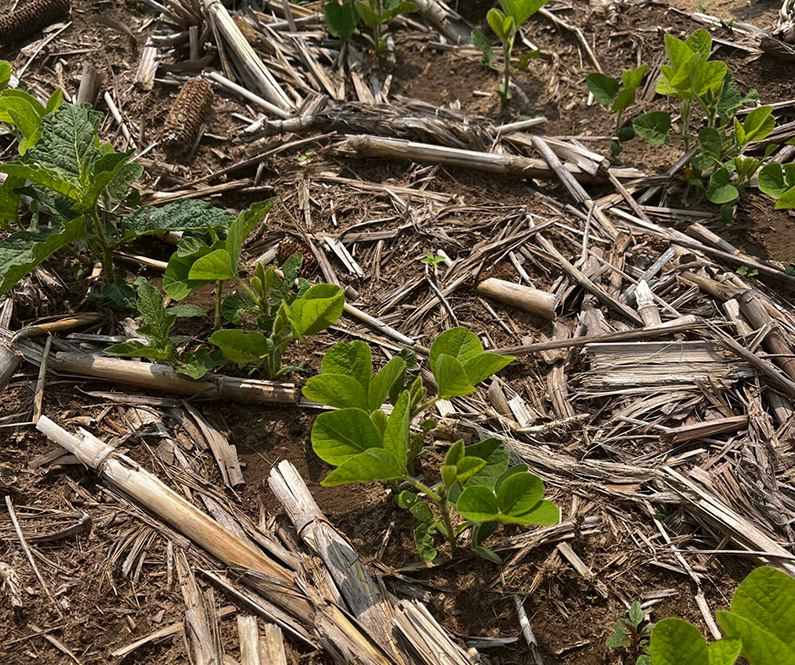
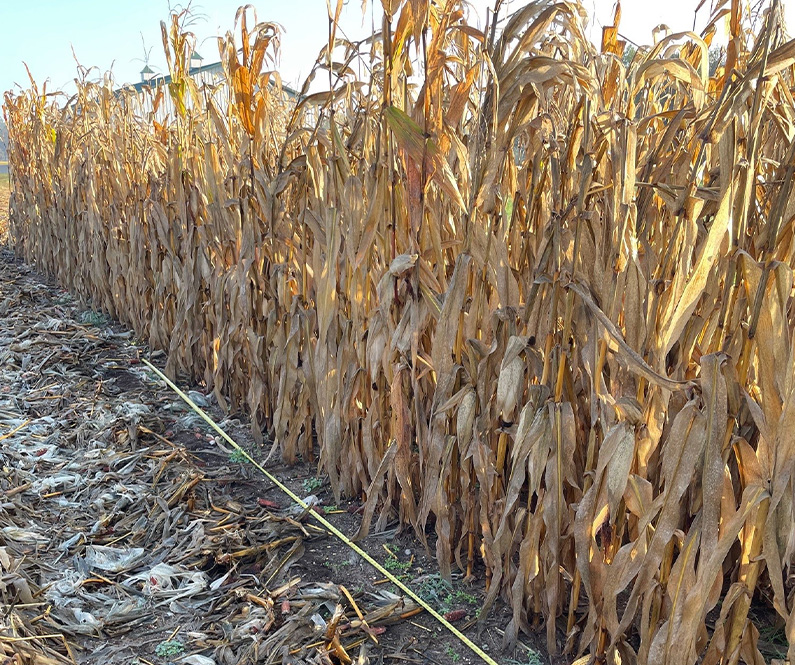
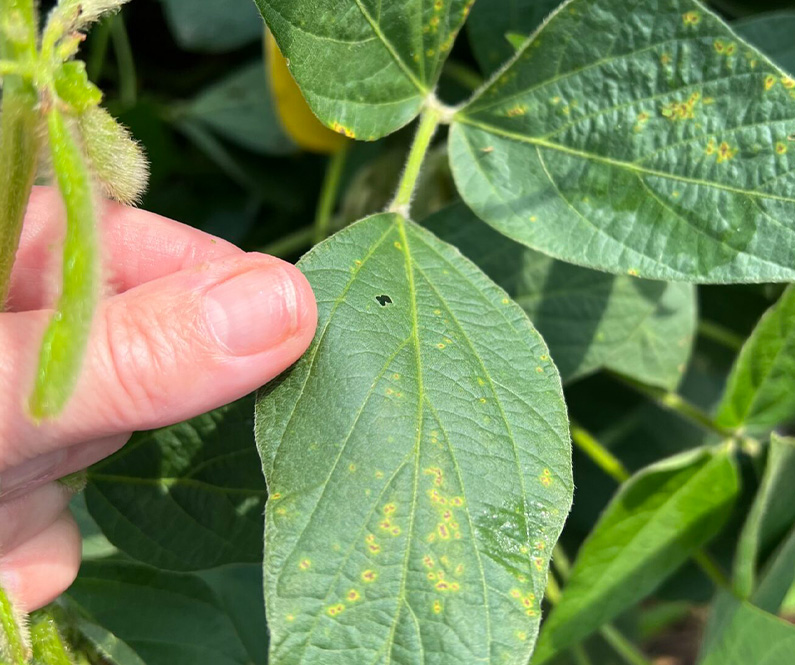
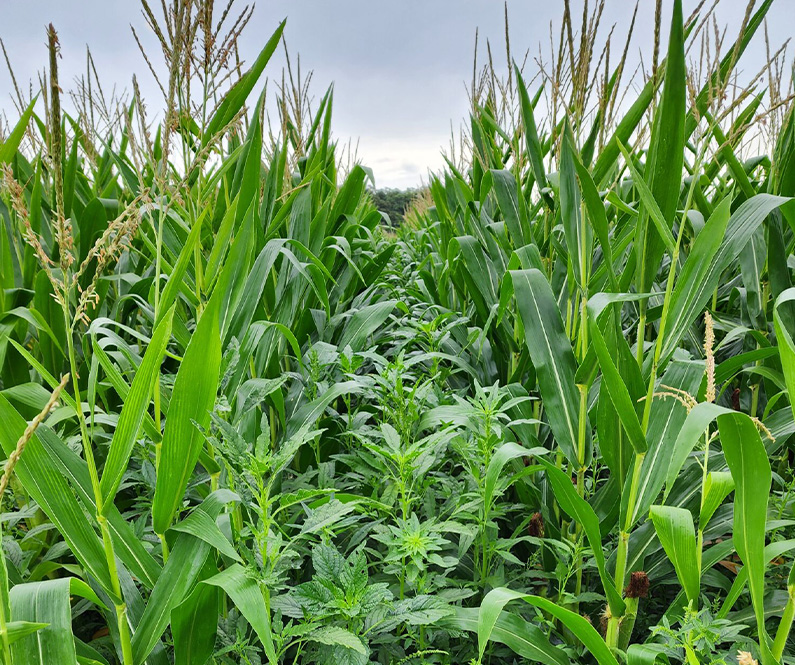
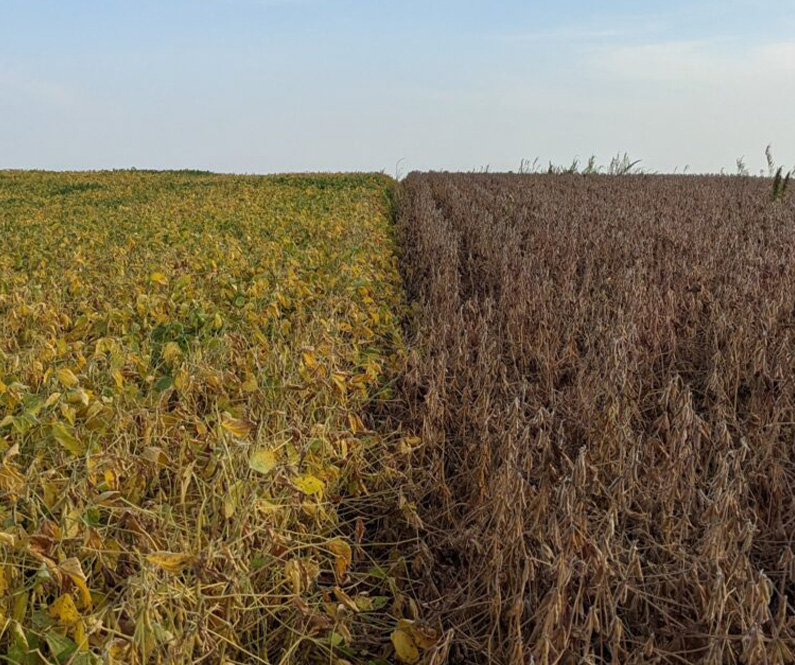
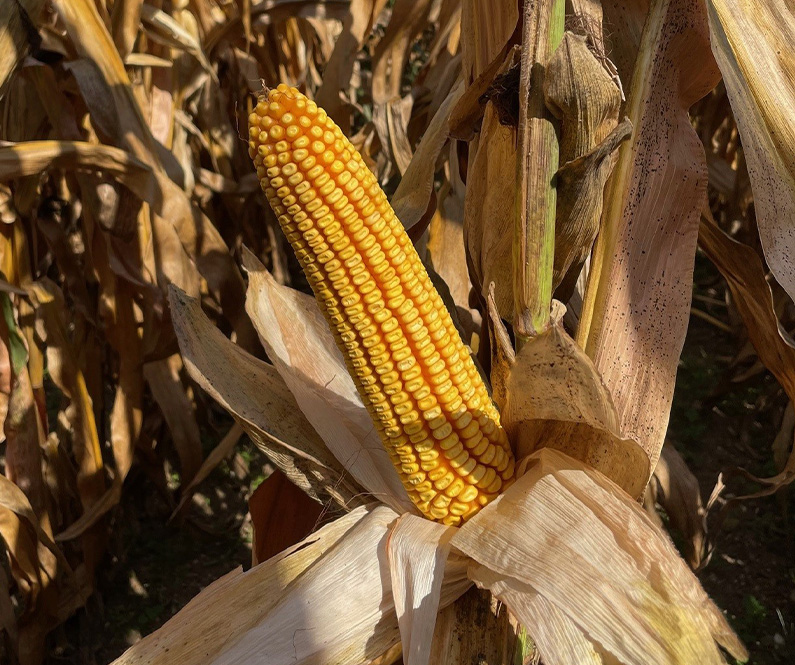
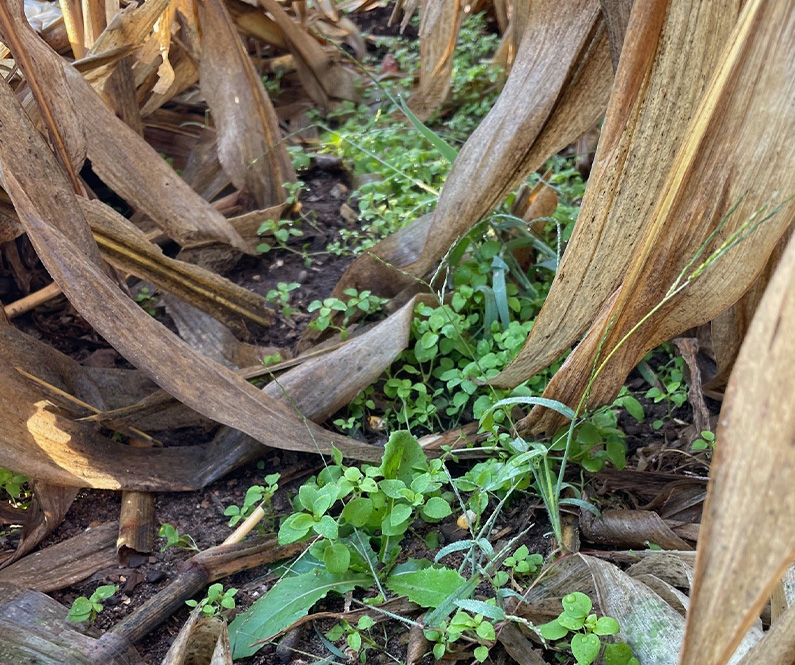
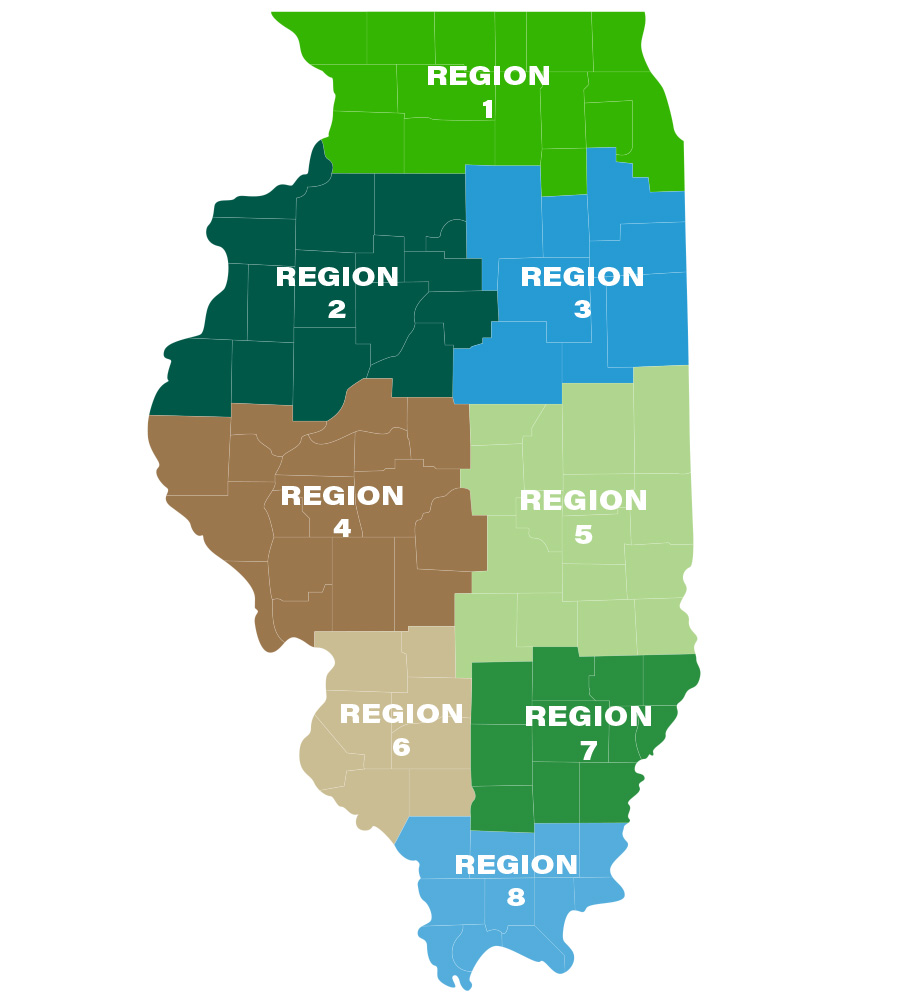
Champaign county received 1.5–2″ of rain this past week with more projected to come through the weekend. High temperatures have ranged from the 70s to 80s with lows in the mid-50s/60s. Some smoke from the Canadian wildfires has persisted for the past week and a half. Most corn and soybean planting is complete, with post herbicide applications underway in both crops. Soybeans are at V1–V4 and corn is at V2–V7, with early-planted corn nearing row closure. Rapid Growth Syndrome (RGS) is being observed in certain corn fields. Waterhemp pressure is still a concern, along with increased giant ragweed and cocklebur pressure, prompting adjustments in post herbicide programs.
A cool week ending with several warm days with consistent winds provided favorable first cutting hay-making weather. June 4th brought widespread precipitation across almost all of NE Illinois. Below average temperatures slowed crop growth, most apparent on no-till soy fields. Recent changes in weather patterns and welcome precipitation should accelerate growth. The regional soy crop ranges from emerging to V3. The majority of corn is V4 to V7. Yellowish corn that has yet to receive intended sidedress nitrogen is apparent. Why is nitrogen deficient corn yellow? The short answer is that nitrogen, including many other important processes, is required to produce chlorophyll used in photosynthesis; its chlorophyll that gives the corn its green color. The general consensus is to sidedress nitrogen before the corn reaches the period of rapid nitrogen uptake (V7-8 through pollination). The Nitrogen Management for Corn document authored by Dr. Emerson Nafziger shared that applying N as late as tasseling in severely N-deficient fields may increase yields, but the later the application, the more yield will be lost. Post corn herbicide applications have started when weather (including wind) has allowed. Producers are encouraged to evaluate both pre and post herbicide applications.
Nearly all fields in LaSalle County have now been planted and have emerged. Areas of LaSalle County saw upwards of 5 inches of rainfall on Wednesday, so most fields are looking healthy. Corn at the Extension Research and Demonstration Plots at Illinois Valley Community College is at V4, soy is at VC-V1. Earlier planted corn in LaSalle County is nearing V7. Most soy isn’t quite as far along – the most mature I observed was at V2.
This last week has seen very favorable conditions for crop growth across the area. The increase in temperatures has helped recently-planted fields begin to emerge. Much-needed rainfall arrived yesterday (6/4), filling many low-lying areas and ditches with water. Much of the corn and soybeans across the region are in the V3-V5 stages, with favorable conditions ahead likely to support plant growth.
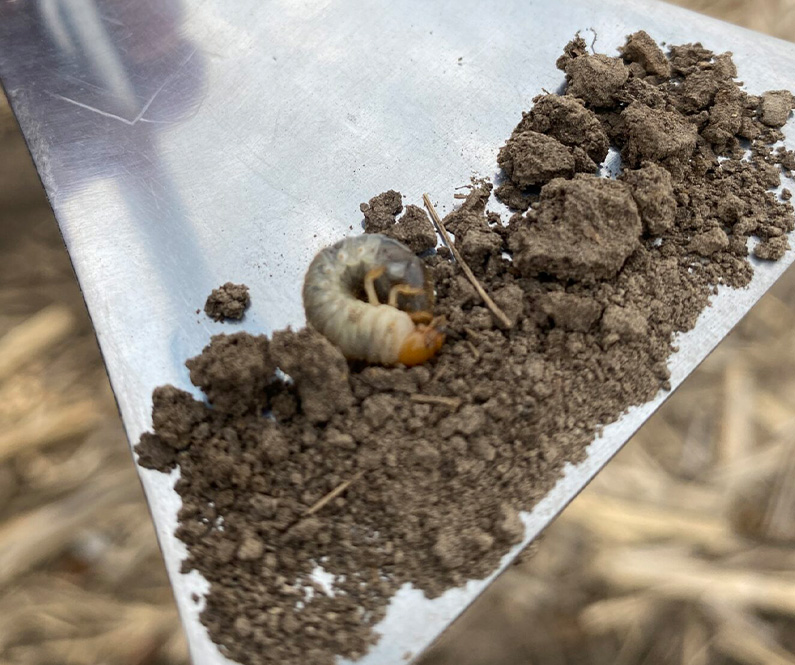
Corn rootworm egg hatch is underway in central Illinois, and will reach its peak in historical problem regions in northern Illinois over the next couple of weeks. I have not received dramatic reports of seedling insect injury so far this year – once corn is past roughly V5 and soybean gets a few true leaves on it, plants will mostly outgrow this sort of injury. Both crops are pretty resilient to early insect feeding as long as stand is not reduced.
We will participate in a regional monitoring program for corn rootworm adults again this year, beginning in early-mid July. If you are interested in participating, email me at nseiter@illinois.edu and we will send you traps and a protocol.
Tuesday’s storms and Wednesday’s rain resulted in over an inch of rain being supplied to the area, which have helped to supply some needed soil moisture.
The fields referenced in today’s report have experienced some hail damage, though the plants will fortunately grow out of it as the damage was not too severe and there is enough healthy tissue to enable the plant to overcome the damage. Producers in the area are encouraged to scout for hail damage.
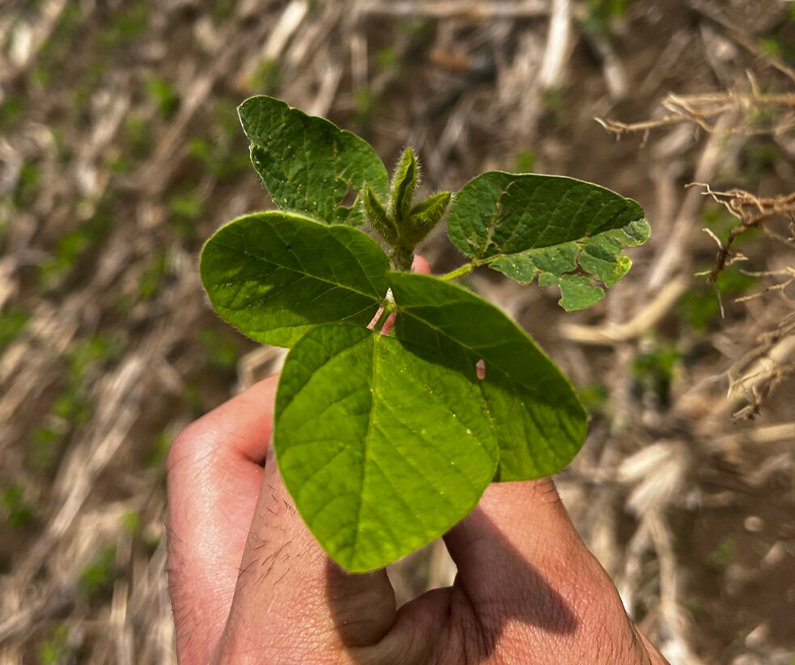
The soybeans in this field also seem to be exhibiting some Group 15 herbicide damage, as evidenced by the “drawstring” effect on the leaves whereby the midvein is shortened and the leaf tip is crinkled, resulting in heart-shaped leaflets. The damage is likely due to cold conditions, and fortunately, soybeans grow out of this injury quickly. Although this field is exhibiting some damage and injury, the soybeans have already produced active nodules, which may have been helped along by the producer’s use of in-furrow fertilization.


 and then