
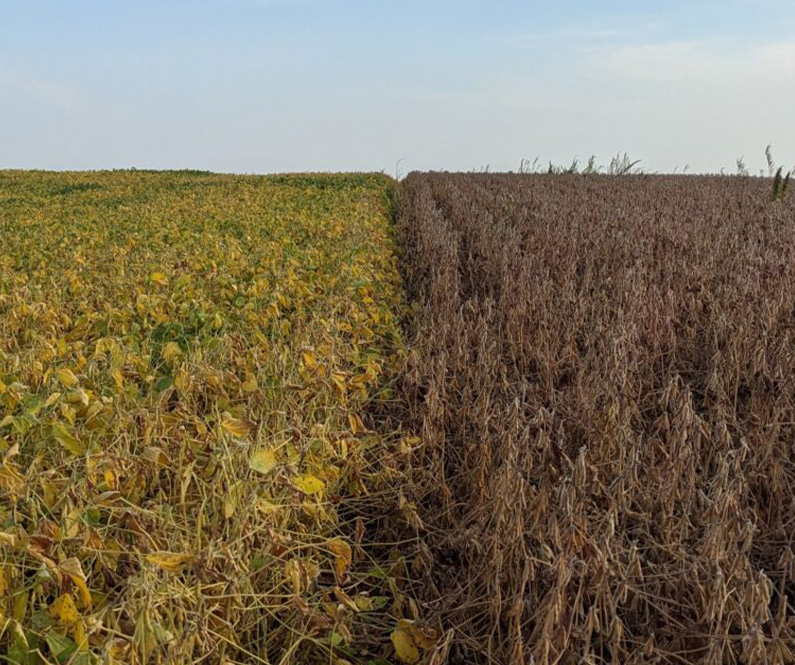
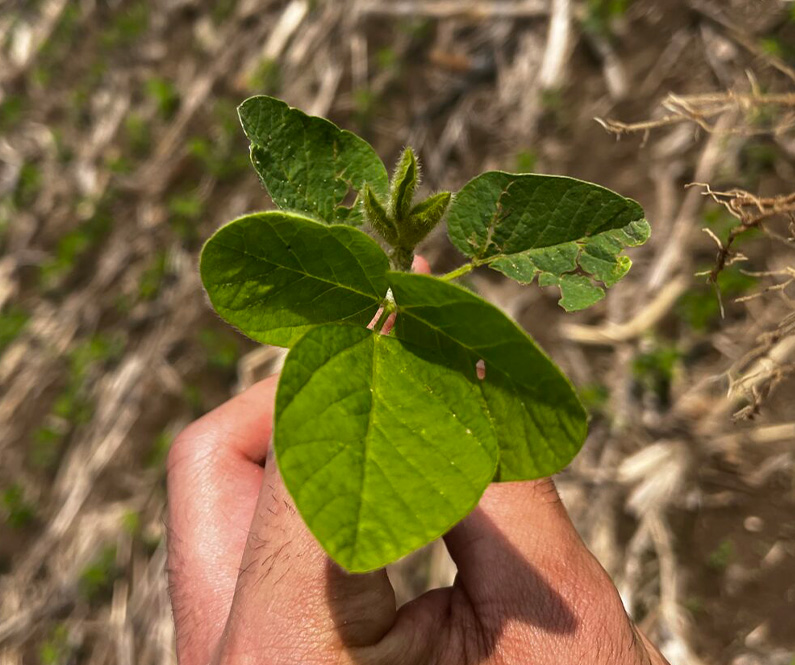
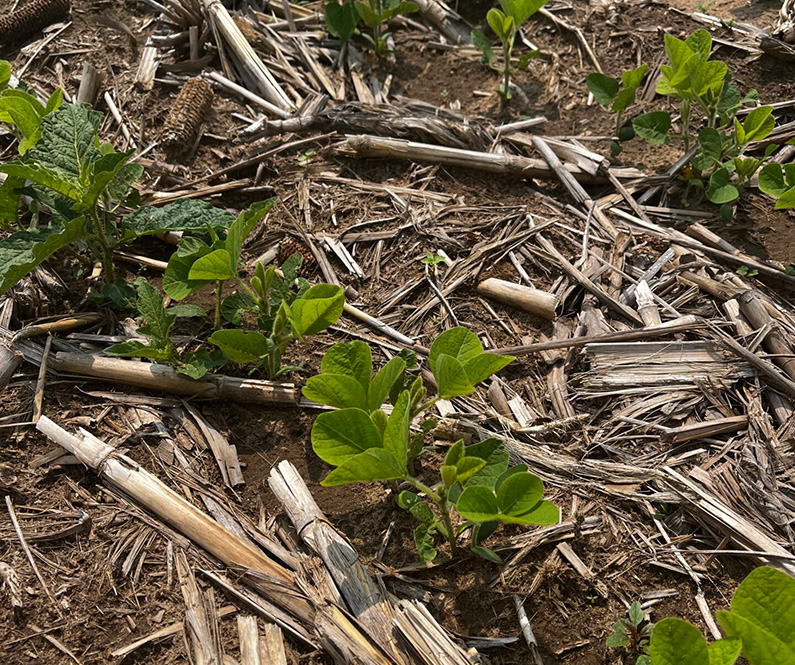
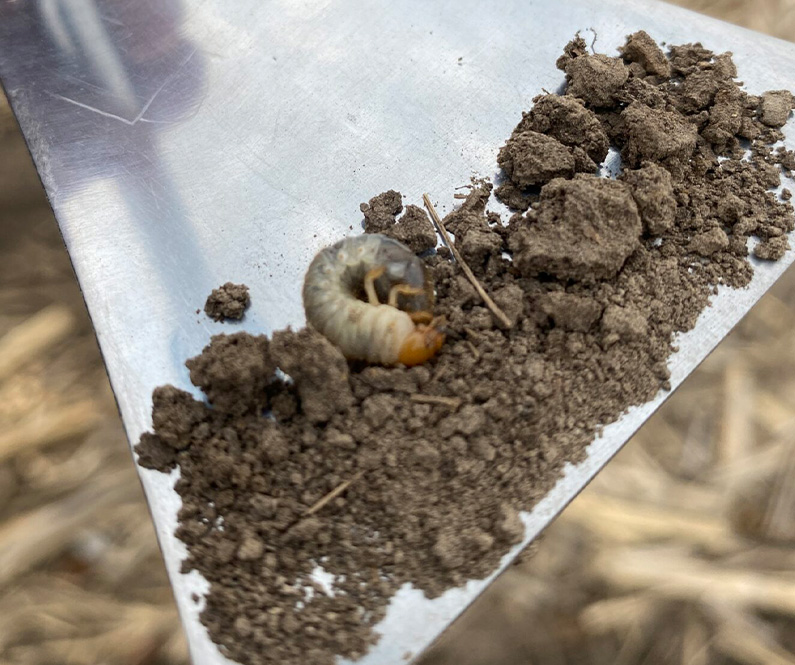
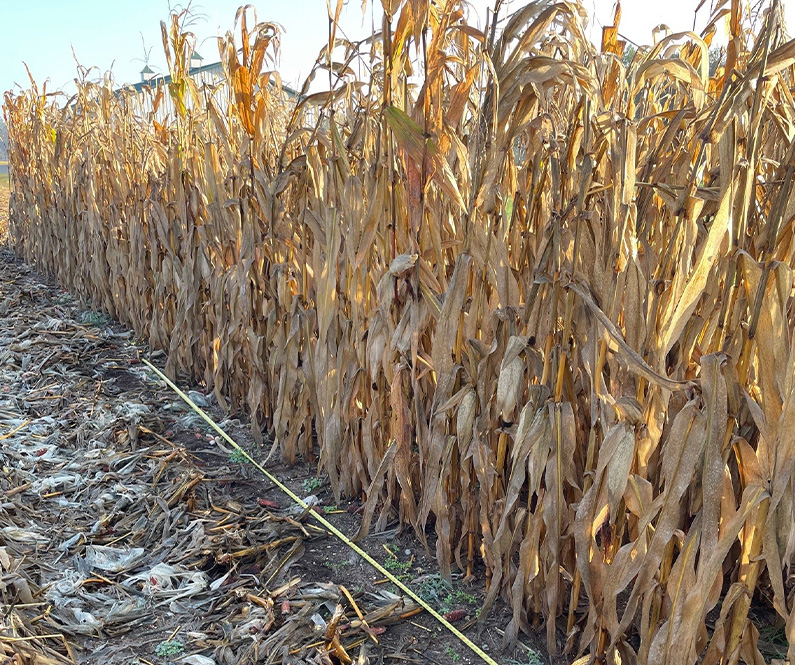
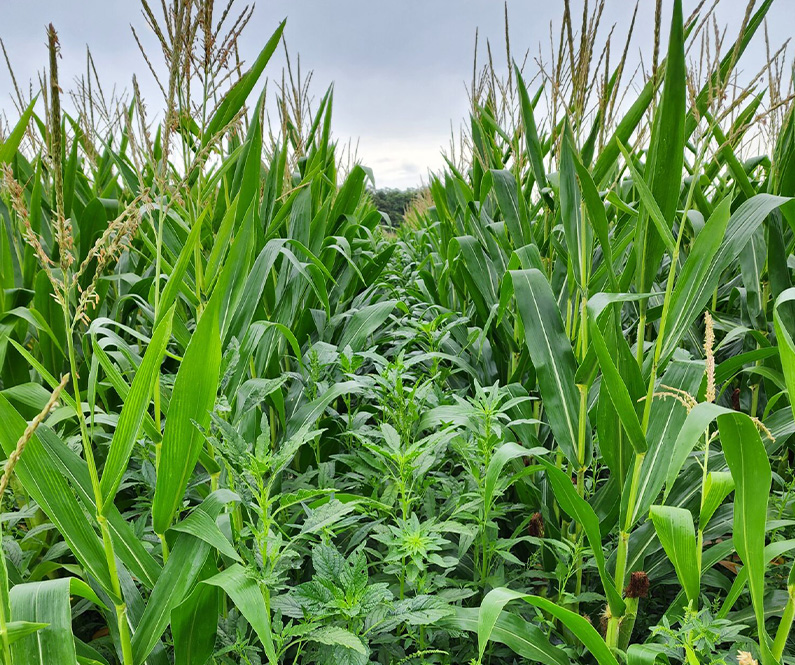
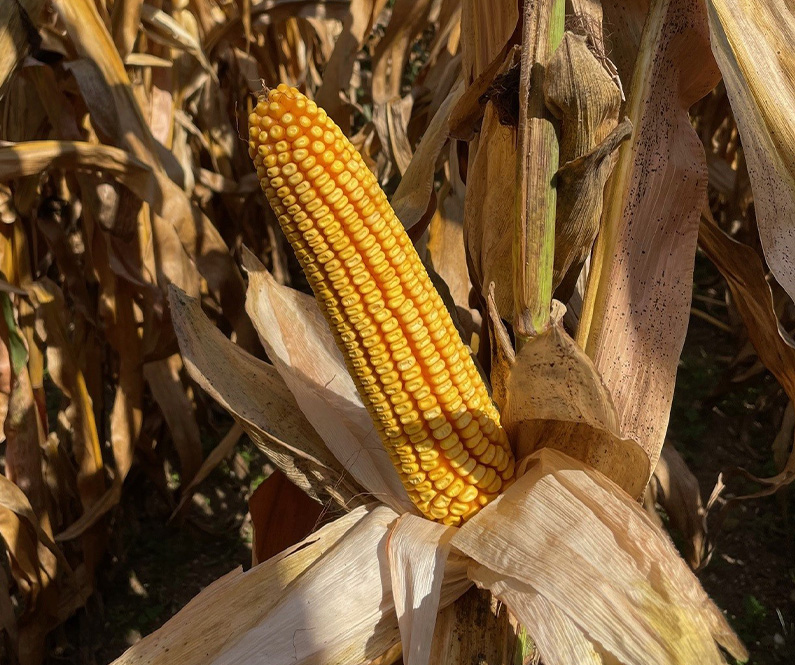
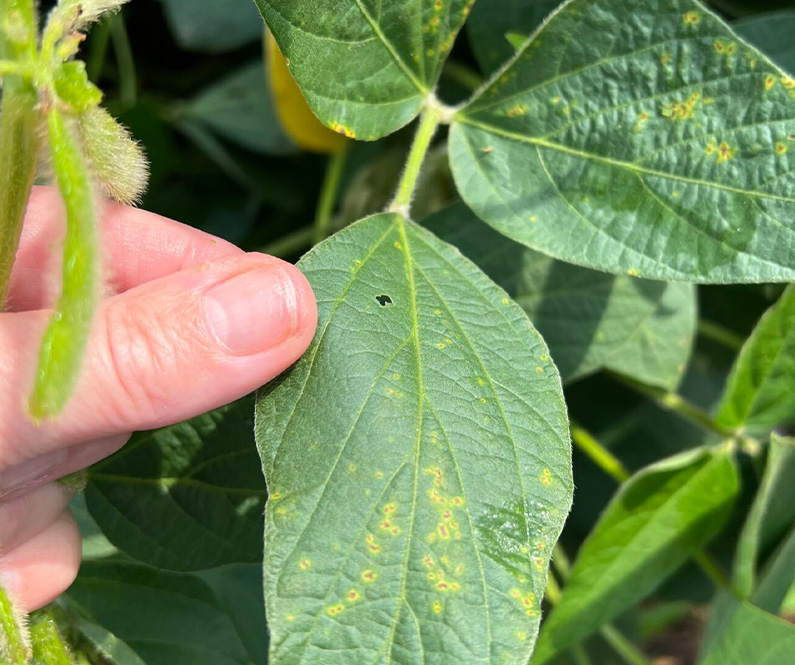
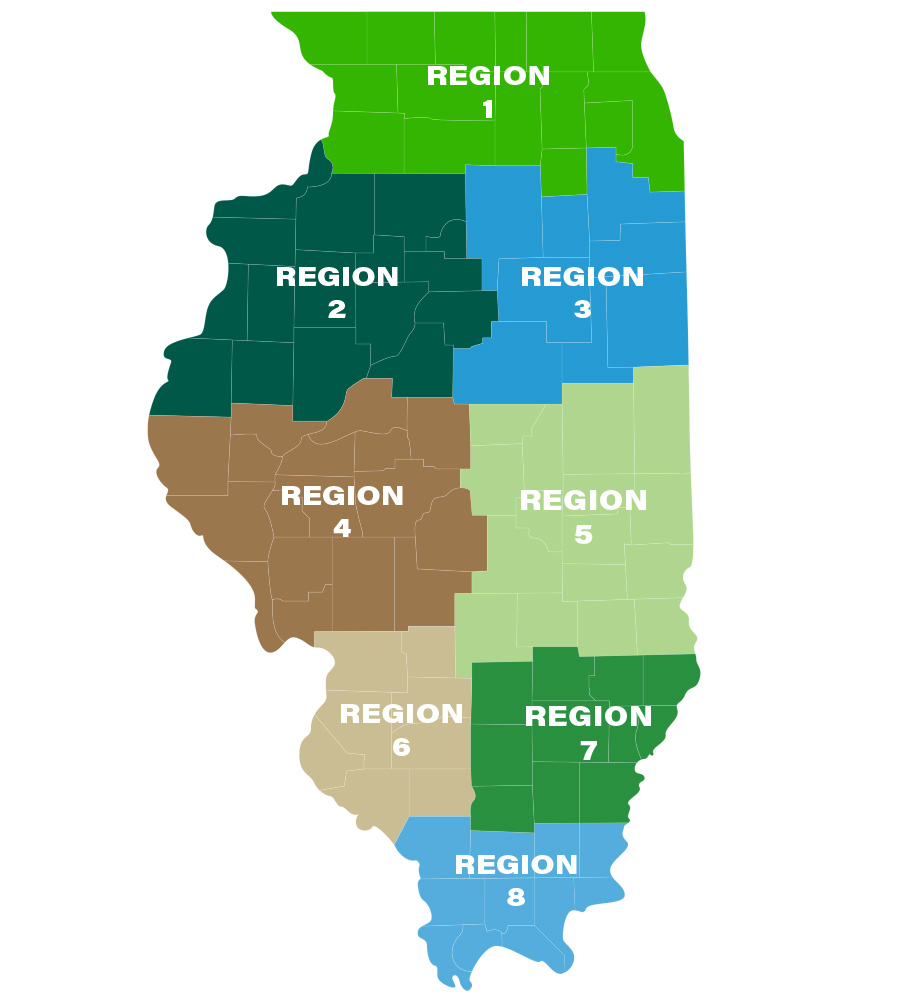
Rain showers earlier this week brought much-needed moisture to the area, giving some fields a boost. Most of the corn in Logan County has entered the R5, or dent, stage, with some fields still in R4, or dough. Soybeans are showing similar progress, with most fields in the R5 stage. The growing season is nearing its end, and some plants are beginning to show signs of full maturity.
Precipitation this past week brought substantial rainfall totals to some fields in Northeast Illinois. Isolated corn fields are showing significant disease pressure but are also nearing maturity. In the R5 stage, the corn kernel contains both “soft” and “hard” starch. The transition, or hardening, of the soft starch into hard starch begins at the top of the kernel and progresses to the tip. This progress is visible as the kernel’s “milk line.” Corn is typically about 55 percent moisture at the beginning of R5 and 30 to 35 percent at its conclusion. Corn plants generally complete the R5 stage in about 30 days, during which they accumulate dry matter content.
The soybean crop is nearing the R6 stage. At R6, or full seed, plants have a green seed that fills the pod at one of the top four nodes on the main stem. Once soybeans reach R6, new leaf growth ceases, and lower leaves begin to yellow and drop. We are encouraging growers, especially those with a history of the disease, to monitor their fields for white mold.
For those attending the Farm Progress Show next week, visit Illinois Extension at the University of Illinois College of ACES tent on West Progress Avenue.
Champaign County received much-needed rain this past week, totaling about 1 to 1.5 inches. During a survey of the southern half of the county on Aug. 20, surface soils in most fields were still slightly wet from the previous morning’s storm, with the southwest corner a bit drier than the rest of the area. Corn fields surveyed were generally in the late R4, or dough, to R5, or dent, growth stages. The severity of tip dieback ranged from minimal to more than 2 inches across the area.
Full-season soybeans were generally in the R6, or full seed, stage, with a few fields beginning to drop leaves and enter R7, or beginning maturity, at least in parts of the field. I also came across a couple of double-crop soybean fields, both just entering the R3, or beginning pod, stage. One of these fields featured a placard from the Illinois STAR Program, which connects farmers using conservation practices with end-users willing to pay premiums that support those practices.
Soybeans in many fields are reaching the R6, or full seed, stage, and late-season insect and disease pests are beginning to appear. A few fields are nearing R7, or beginning maturity.
It has finally stopped raining. Even though we were supposed to have a cool down, it has continued to be very hot and humid. The fungicide on corn appears to be holding fungal diseases below the ear. I did see some Southern rust on the end rows of corn, but not bad as you go into the field. There are obvious disease differences on different hybrids. Corn is almost at full dent. Soybean disease symptoms of SDS are starting to show. Red crown rot has not been a major issue in Montgomery Co., but this year, this disease has unfortunately made its debut and is here to stay. Soybeans are at R4 growth stage.
Southern Illinois experienced planting delays this spring due to excessive rainfall, which pushed field activities into late May and early June. Despite these challenges, soybeans are currently at the R2 (full bloom) growth stage, and the corn that was planted has also reached reproductive stages. One field I scouted showed significant defoliation caused by insect pressure from bean leaf beetle, Dectes stem borer, and striped blister beetle, all of which can continue to impact soybean growth and development if not properly managed. At the R2 stage, the defoliation threshold for bean leaf beetle is 15–20%, and for blister beetle, it is 15%. At these levels, an insecticide application is warranted to prevent economic yield loss.


 and then