
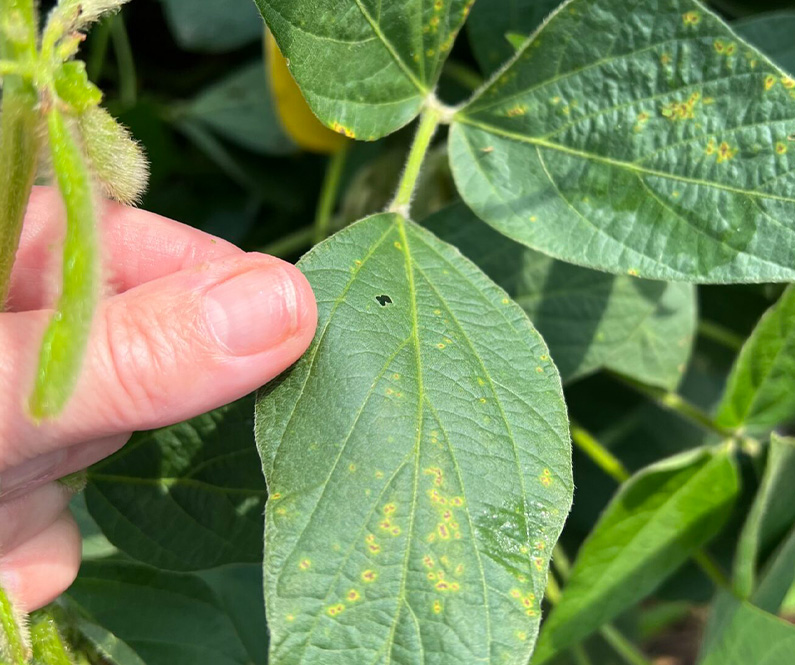
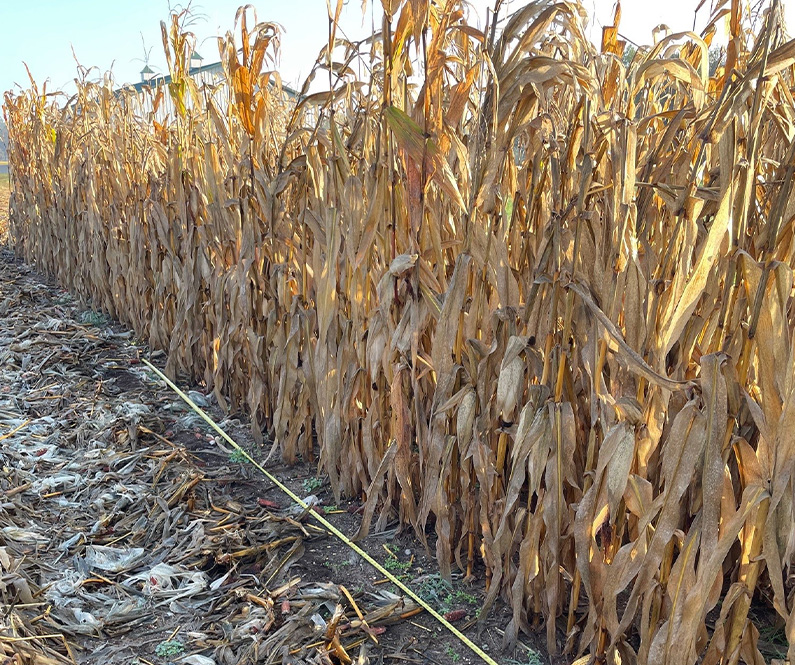
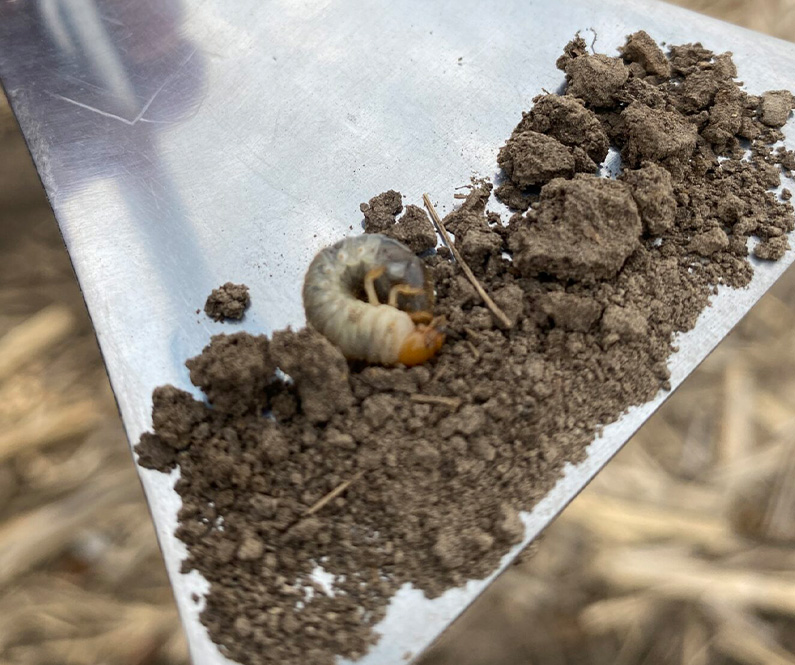
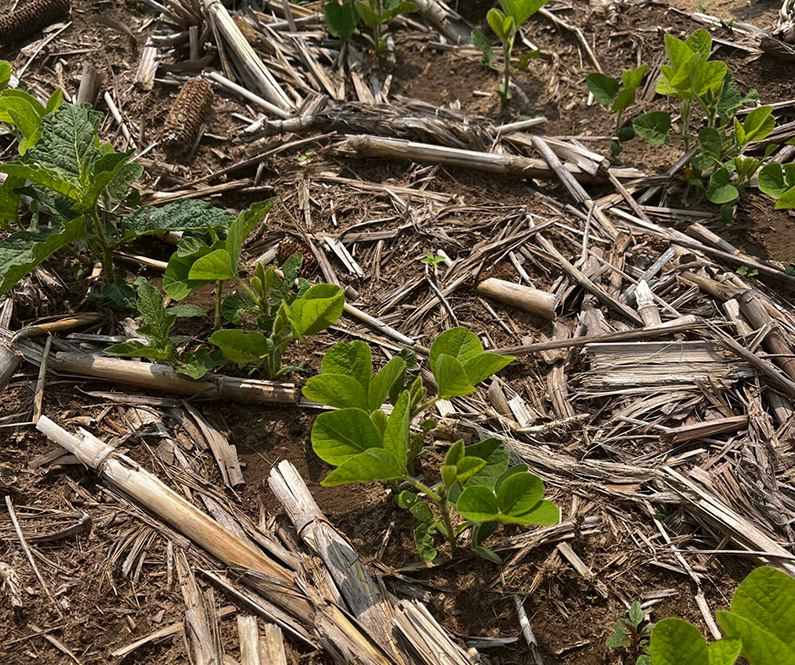
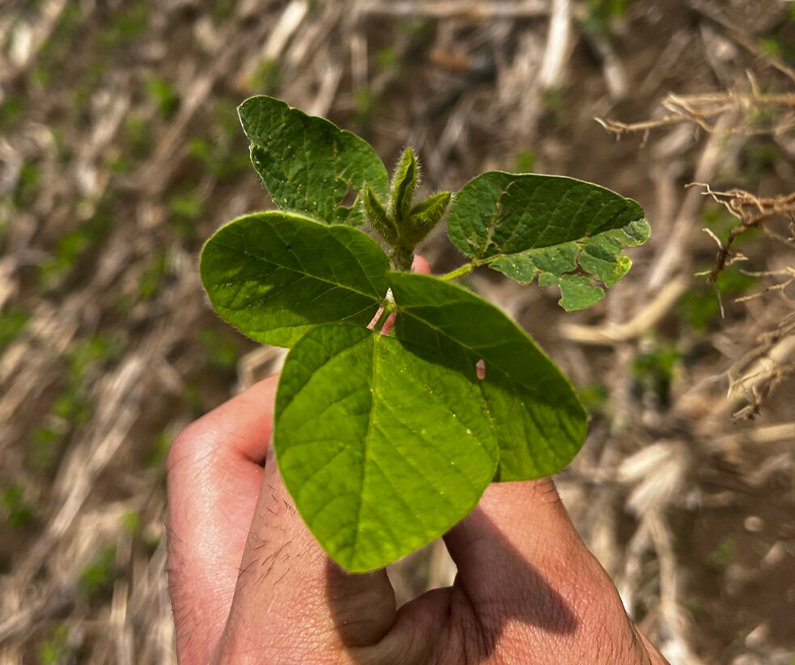
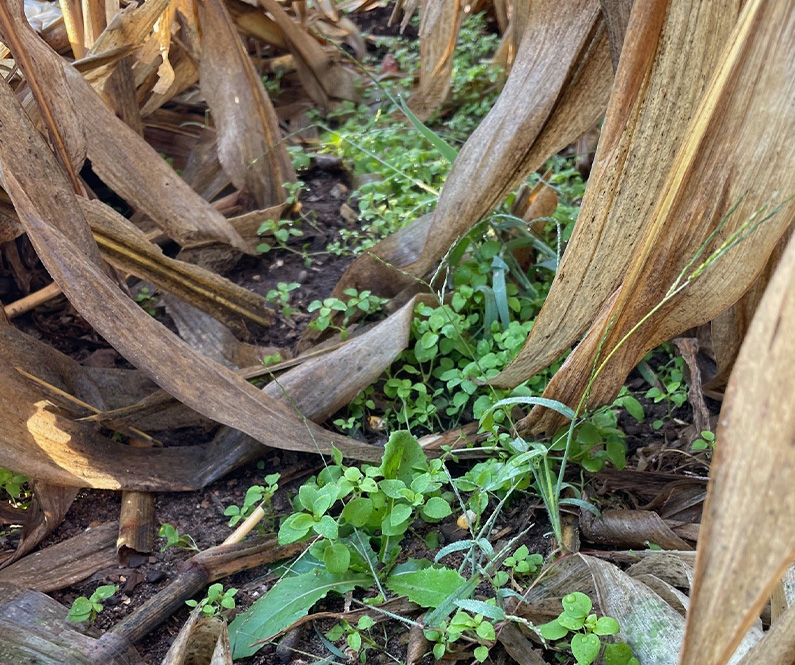
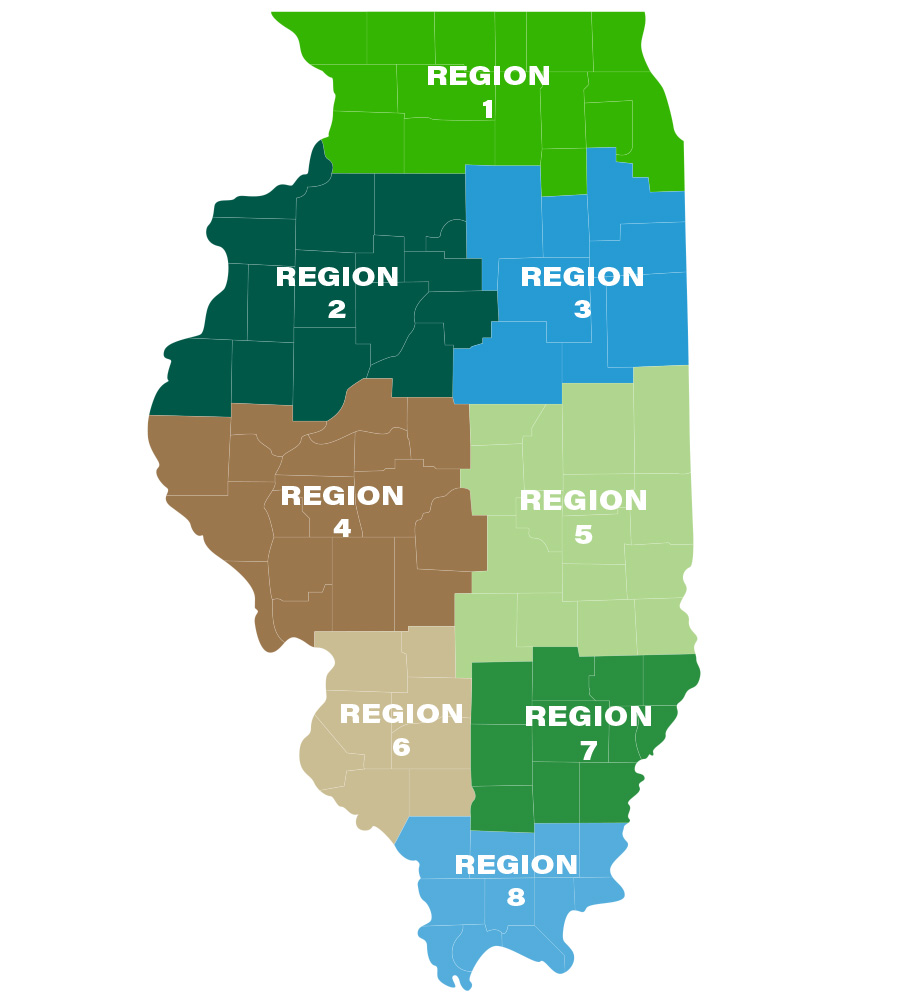
Roughly 75% planted after an early planting season. Crop that’s up is in the “ugly duckling” stage and needs some heat to really get going. Wheat spraying wrapped up for the most part, and many are very optimistic about the wheat crop. Finding ladybug pupae in soybean fields!
There has been no field activity since we received 3.5 to 4 inches of rain last Monday (4/27/26). Rain came down at a record pace and caused flooding. As a result, there was some ponding. Soils are still saturated, and crops are tattered from wind and minor hail. The stands of early planted crops look good despite the weather. Soybeans that were struggling to emerge, with snapped necks in crusted soils, look better, and soybeans continue to emerge, so stands could improve. Corn that was hindered in crusted soils looks significantly better, with good stand counts, but with some gaps in rows. Those who planted right before the heavy rains fear they may need to replant.
3.61 inches of rain for the week of April 26 has put a halt to field operations. Early planted soybeans look excellent. Early corn has emerged and is off to a good start, despite the cooler temperatures. Most corn planted in the window before the large rain still has not emerged. Replant operations appear to be likely on those acres. Soft red winter wheat has headed out, and anthers have appeared, triggering aerial applications of head scab fungicide.
Our region received between 0.4 and 1 inch of rain on Monday, April 27, and the majority of the week was cool and overcast with small chances of rain every day during the week. Since the first part of the week was not optimal for fieldwork, we found a way to stay busy doing projects like aerial seeding a new pasture. Farmers are pushing to get more done before the next rain. Fieldwork picked up toward the end of the week, allowing us to accomplish more than anticipated, as well as assisting in planting corn research plots at the FS Technology Learning Center in Galesburg.
Many had just started to get back into the field after last weekend’s (about 1 inch) rain but have stopped again after today’s rain. A high percentage of fields have been planted, and you can now see around 35% soybean and corn emergence from the road. Overall, both corn and soybean stands and populations look good after last weekend’s cold snap and rain. Some fields that were planted around April 9 or 10 are struggling to emerge in fields that are crusted. One soybean field had necks that were breaking in crusted conditions, and these plants will not survive. Plant populations will need to be reevaluated in another five to seven days to see if replant is needed. Many days have been very windy and not suitable for herbicide applications. Morningglories were seen emerging while scouting soybeans.
We started off the week with unfavorable (15-20 mph-plus) winds, which kept us out of the field for the first half of the week. In the meantime, we have kept busy finishing up spring anhydrous ammonia and delivering seed to customers. We continue to make progress with trials, such as our HumiK trial near Lomax, Ill., where we spread dry fertilizer on Friday—now just to plant—and our ISA on-farm Sulfur 2.0 trial also was planted on Saturday. Wednesday, we started spraying, and a lot of local farmers have started planting as well. Friday morning, we were set back a day from 0.10-0.20 inch of rain. Last Friday, we got severe storms with 1-2 inches of rain, high winds and hail. Temperatures have been in the 50s, with frost overnight. We are expecting more severe storms this next week, which could set everyone back with fieldwork once again.


 and then