
Early tissue test results for V4 corn in central Illinois are coming back low on boron—between 6 to 10 ppm. Sufficiency levels are between 10 and 40 ppm.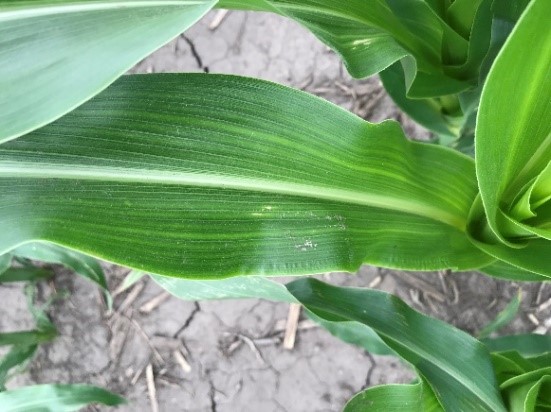 Early deficiencies in corn are also a harbinger for deficiencies in soybeans.
The photo to the right is an image showing rippled leaf margins and small white spots, classic boron deficiency symptoms on corn. It is unusual to see these deficiencies on corn at these early growth stages in Central Illinois soils. Unfortunately, we are seeing more fields with this symptom this year than we typically see as result of such an unusually wet year.
 Boron is water-soluble, so it can be lost via leaching, particularly in sandier, irrigated soils or tiled drained prairie soil. Compared to other micronutrients boron is much more mobile in the soil profile, like nitrate and sulfates, so it isn’t surprising that we are seeing boron deficiencies with the abundant amount of rainfall we received this spring.
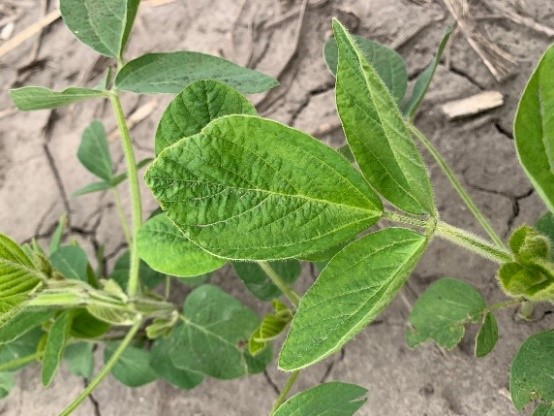
 When we see this type of boron deficiency on corn at these early V stages it’s usually a good indicator the problem is going to spill over into soybeans, and we are starting to see symptoms (image to the right). Soybeans will likely be very responsive to foliar applied boron this year in the geographies hit hard with non-stop rain. Adequate soybean tissue levels of boron are much greater than those for corn; applying foliar boron at both the herbicide timing during vegetative stage and later with a fungicide or insecticides during R stages may make a lot of sense this year. Limited boron supply may negatively impacts yield by decreasing pod set, node counts and lateral branching.
To learn more about boron in soybeans and testing soil and plant tissue click here to review the article posted on ILSoyAdvisor and submitted by Andy Wycislo, agronomist with Waypoint Analytical Laboratories.

The author is Director of Discovery and Innovation at BRANDT, a leading agriculture retailer and manufacturer of specialty agriculture products. A native of Central Illinois, Haschemeyer has a bachelor's degree in Chemistry from Western Illinois University. Haschemeyer can be reached with questions regarding his blog article at Brian.Haschemeyer@Brandt.Co.


 and then
FIND US ON