
Soybean burndown programs often rely heavily on 2,4‑D plus glyphosate to control marestail, giant ragweed and winter annuals. This puts extra pressure on spray performance.
I grew up near Nokomis, Illinois, around quarries that produce crushed limestone. This material is carbonate rock, dominated by calcium carbonate (CaCO₃), which can influence the pH and hardness of well water used for pesticide applications.
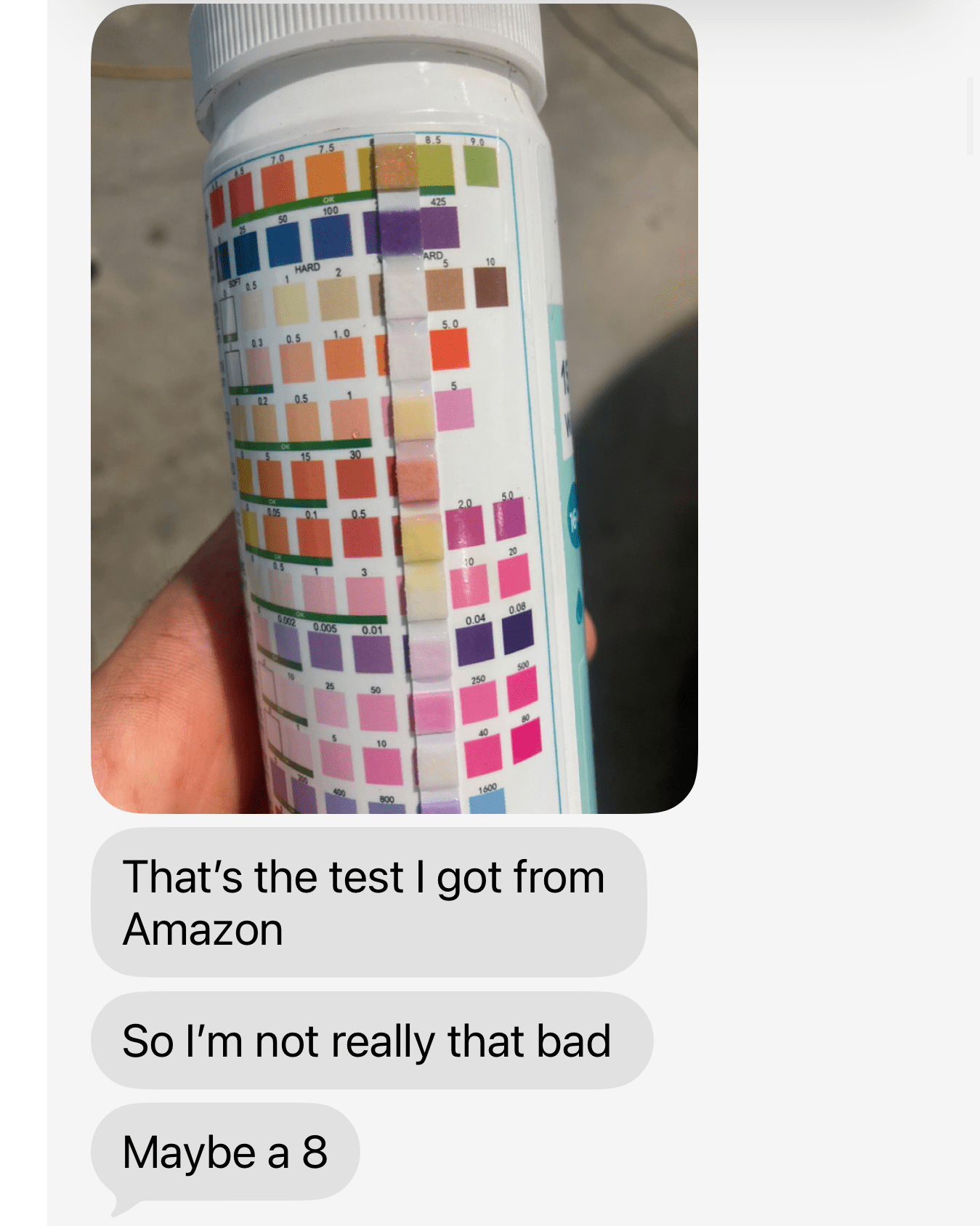
Water pH test
Water pH often gets blamed for herbicide problems, but University of Missouri research shows not all pesticides are highly sensitive to pH. In fact, 2,4‑D is relatively stable across most spray water pH levels commonly found in Illinois. For most burndown applications, typical well or surface water pH (roughly 6–8) is unlikely to reduce 2,4‑D performance. Harder water minerals are usually the bigger concern.
Extremely high pH water, especially when spray solutions sit in the tank, can still cause issues. The best practice is to condition hard water first, mix carefully and spray promptly rather than aggressively chasing pH adjustments that may not be needed.
Many Illinois growers use 2,4‑D ester in early spring burndown programs, while amine formulations are used closer to planting due to volatility concerns. However, 2,4-D amine is more sensitive to hard water. Calcium and magnesium, common in Illinois well water, can tie up 2,4‑D amine, reduce uptake on tough weeds and lead to survivors that complicate postemergence programs. In soybean burndown, managing water quality can be the difference between clean fields and early escapes.
If burndown performance is inconsistent from field to field, water source differences may be part of the issue. Here are some best practices for 2,4-D amine formulations:
- Test spray water, especially from wells
- Expect hard water in many Illinois locations
- Use AMS or water conditioner
- Add AMS before herbicides in the tank
- Follow plant-back intervals carefully after application
Early corn burndown programs often include higher 2,4‑D rates, 2,4‑D ester formulations or additional products that help buffer performance. Esters are less affected by hard water, so issues may show up less often. However, reduced performance can still occur when using lower rates early in cool conditions, targeting larger, hardened weeds, and pulling from very hard water sources.
Even in corn burndown, hard water can slow activity on early-season weeds, reduce consistency across sprayer loads and interfere with glyphosate in tank mixes. A 2,4-D ester burndown is more forgiving, but water quality still affects consistency, especially in mixed herbicide programs. The best practices for 2,4-D ester formulations:
- Know your water source, ester formulations aren’t bulletproof
- Use AMS when glyphosate is included
- Follow correct mixing order
- Balance volatility and performance when selecting formulations
Key Reminder for Both Crops: Mixing Order Matters
- Start with clean water
- Add AMS or water conditioner first
- Add herbicides (including 2,4‑D)
- Add surfactants or drift reduction products last
Skipping this order can reduce the effectiveness of conditioners. Whether you’re burning down ahead of soybeans or corn, spray water quality deserves a spot on your checklist. In Illinois, hard water is common and 2,4‑D performance depends on managing it correctly. A few small steps such as testing water, choosing the right formulation and conditioning the spray solution can lead to more reliable weed control and fewer headaches later in the season.
Resources:
The Influence of Spray Water Quality on Herbicide Efficacy
Effects of Water pH on the Stability of Pesticides | MU Extension

As Outreach Agronomist for the Illinois Soybean Association (ISA), Stephanie supports research efforts and helps communicate both in-field and edge-of-field research and validation studies to Illinois 43,000 soybean farmers. She also helps lead the demonstration and adoption of conservation agriculture practices and raises awareness of best management and continuous improvement practices for conservation agriculture in Illinois.
Stephanie has 23 years of experience that consists of agronomy, conservation, horticulture, plant diagnostics, and education. She has her bachelor’s in crop science and master’s in plant pathology from the University of Illinois. Stephanie is a Certified Crop Advisor and was named the 2018 Illinois Certified Crop Adviser Master Soybean Advisor. She also has experience with corn and soybean pathology research, crop scouting, soil testing, as well as crop consulting. Previously, she utilized her diagnostic training and collaborated with University of Illinois departmental Extension Specialists to diagnose plant health problems and prepare written responses describing the diagnosis and management recommendations as the University of Illinois Plant Clinic.


 and then
FIND US ON