
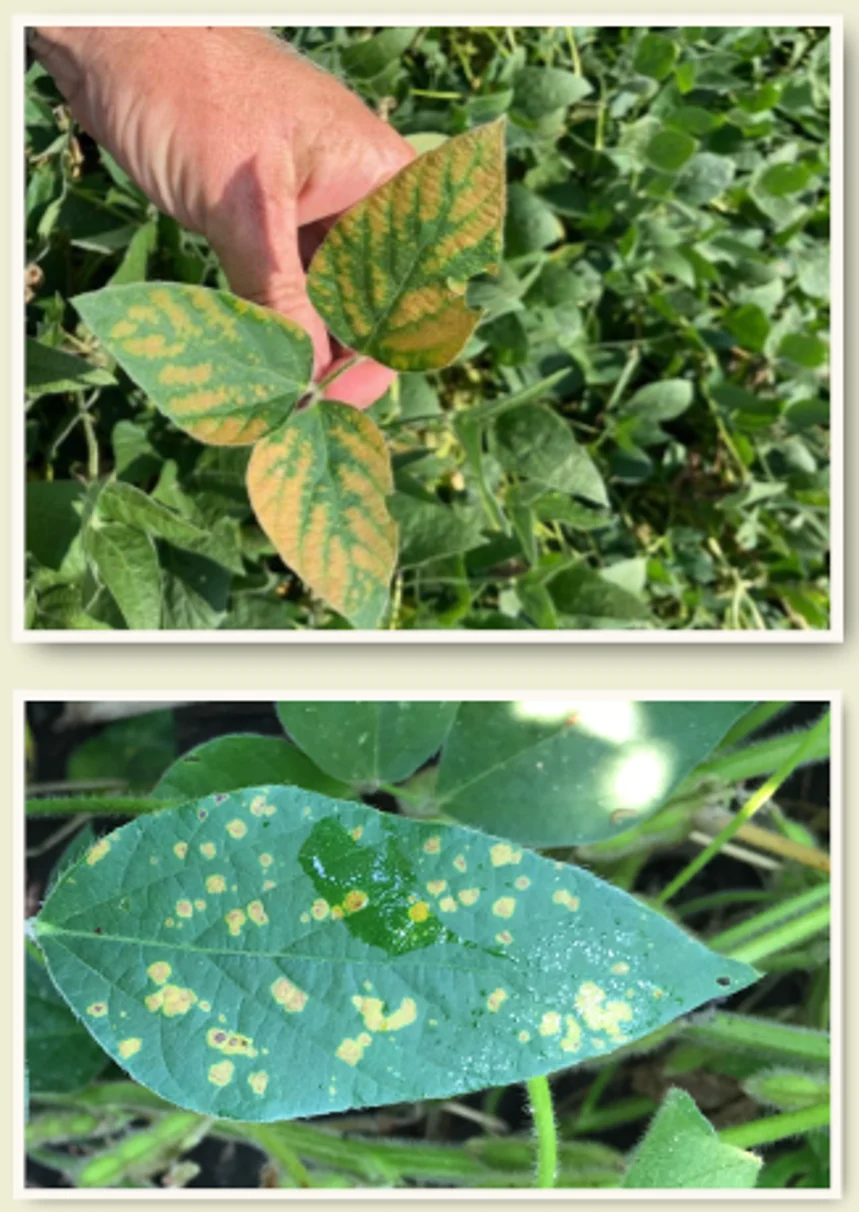
You might be seeing an orange blight in soybeans here in the Midwest that are the same soybean foliar symptoms seen in Brazil. There, they are calling it “Mancha aureolada” or halo blight. These symptoms are often mistaken for disease.
Thus far, leaf samples from across the Brazilian regions show differences in nutrient levels or specific nutritional imbalances, practically low calcium and high potassium levels. Calcium is needed for the integrity of the cell wall and potassium influences water movement and nutrient uptake. If calcium and potassium are imbalanced, these processes can lead to this “halo effect” called orange blight.
Symptoms:
If Soybean leaves are affected, they show a characteristically orange or yellow halo around the necrotic (dead) tissue. These symptoms could resemble a fungal or bacterial blight, but it has not been found to be caused by a pathogen. This suggests that the symptoms are a physiological or nutritional issue and not considered a disease.
What should you do if you see orange blight in soybeans?
- Do not spray fungicides to control this problem to avoid spending money on a not needed input and contributing to fungicide resistance.
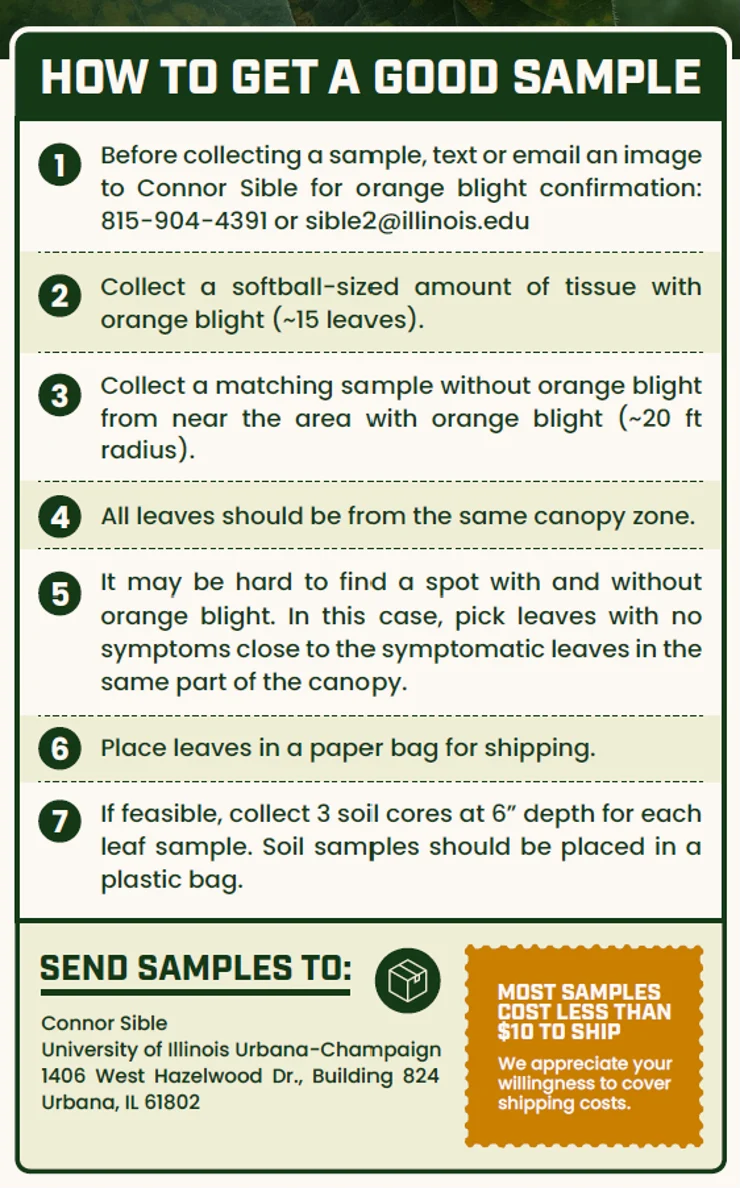
- Send leaf and soil samples to Dr. Connor Sible, University of Illinois Research Assistant Professor, and follow these instructions:
Researchers are interested in learning more about orange blight in soybeans and you can help by submitting leaf and soil samples to Dr. Connor Sible. He is currently working on the Illinois Soybean Association (ISA)-funded project, “Evaluating Leaf Nutrient Tissue Testing and Relation to Soybean Grain Yield.” Soybeans can redistribute nutrients from older parts of the plant to new growth, but questions remain about which nutrients are transferred and in what amounts.
Through tissue testing, this project is helping researchers better understand soybean nutrient movement and develop more accurate in-season nutrient recommendations to support high-yielding crops. This ISA-funded project has since connected researchers, where Dr. Daren Mueller of Iowa State is leading a USB-funded project to “Update Soybean Foliar Disease Portfolio” and their collaboration includes insights to better understand orange blight. The goal would be to learn more about this nutrient imbalance that is causing orange blight and its distribution within Illinois soybean fields. Eventually, the hope would be to better understand nutrient testing, so we get the best results for adequate management strategies.
About the Author: Stephanie Porter



 and then
FIND US ON