
What are those “ladybug-looking” beetles that I see in bean fields? Do they present a soybean production problem?
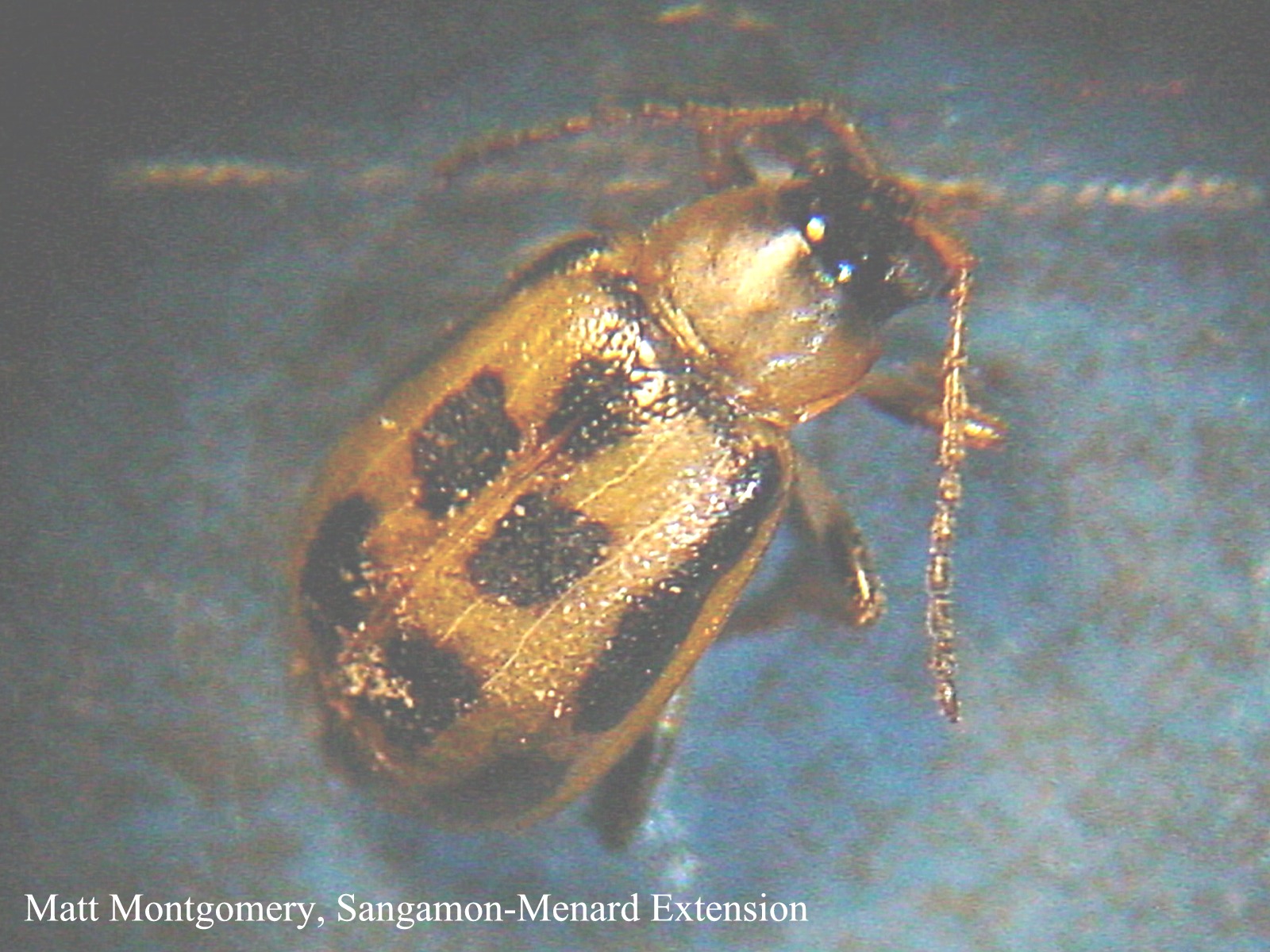
Bean Leaf Beetle. Photo – Matt Montgomery
The noted beetles often come in a variety of colors. Some are green. Some are yellow. Some are orange. Some are red. Spotting also varies, with some beetles displaying several spots and others displaying hardly any. Regardless of color or spotting, when one closely examines these beetles, they notice that they all have a small black, triangle-like mark right behind the head. These quarter-inch-long beetles are called bean leaf beetles, and the risk they pose depends upon the circumstance at play in and around the field.
Bean leaf beetles overwinter as adults beneath leaf litter (in the crowns of clump-type grasses, in residue, beneath leaf litter, etc.). With spring temperatures, the beetles become active moving into alfalfa and clover where they eat, mate and lay a few eggs. As beans emerge, beetles migrate, sometimes very long distances, into that crop. This is where circumstances come into play.
Early-planted beans carry more risk of injury from these chewing, tissue-consuming pests. Because bean leaf beetles prefer soybeans, the earliest emerging fields in an area often see unusually high initial beetle populations and may see the most initial injury. This injury becomes more likely if emerged beans are alone in a landscape otherwise barren of soybean seedlings. Once more beans emerge in the surrounding countryside, bean leaf beetle populations become more broadly distributed. Winter quality also factors into injury risk. A mild winter allows more bean leaf beetles to survive, thus increasing feeding potential. A rougher winter increases mortality and decreases risk.
The female beetles entering a soybean field often arrive in a gravid state. In other words, they are full of eggs and ready to deposit those eggs in the soybean field. Those eggs are deposited within the upper few inches of soil, and each female may deposit up to a couple hundred orangish eggs during her life.
Larvae emerge within about a week and resemble rootworms. While they do feed upon soybean roots, they do not seem to pose any significant root injury threat. They remain in this immature stage for about two to two and a half weeks. They then pupate and emerge about a week later as a new brood of adult beetles. A couple generations occur per season, and in the fall, adult beetles move back to overwintering sites.
What about bean leaf beetle economic thresholds? When are we “money ahead” to rescue a field from bean leaf beetle populations/feeding? 20% stand reduction, with 1-foot gaps in the stand, or an average loss of one seedling per foot of row are needed in those most vulnerable early-planted fields. Significant late-season feeding injury is rare. Feeding beetles would need to remove about 20 to 30 % of all field leaf tissue before a rescue was needed.
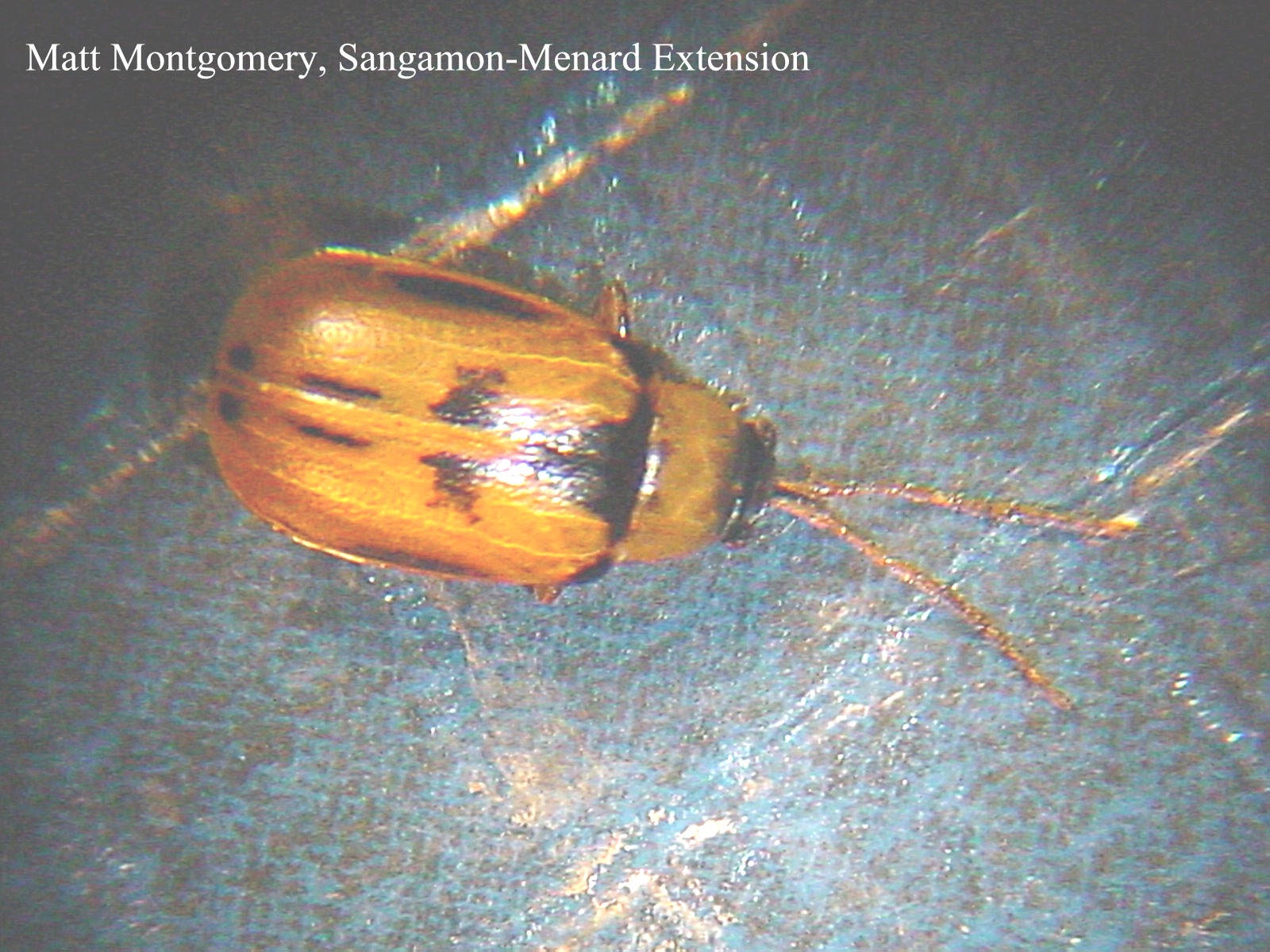
Bean Leaf Beetle. Photo – Matt Montgomery
In most cases, early scouting and understanding thresholds can prevent unnecessary treatments while protecting yield where it matters.

Matt Montgomery is the agronomy education lead at Beck’s Hybrids and resides in Chatham, Illinois. He earned his bachelor’s degree in agriculture from Western Illinois University, followed by a master’s and doctorate from the University of Illinois. Montgomery spent nearly 19 years in an agronomy role with University of Illinois Extension before transitioning to the seed industry. His significant contributions to the field were recognized in December 2024 when he received the Illinois Certified Crop Adviser Award, honoring his exceptional service in nutrient management and crop production. He was also named International Certified Crop Adviser of the Year in 2025. Matt is a 2025 IL Soy Envoy.


 and then
FIND US ON