
By Eduardo Lago & Karla Gage, Southern Illinois University
Weeds resistant to herbicides have become a year-round management challenge. While cereal rye has been the gold standard cover crop in the Midwest, many farmers view its massive winter biomass as an obstacle to sowing the summer crop. Research from Southern Illinois University (SIU) indicates that switching to winter barley could suppress weeds with less biomass than cereal rye.
A field study conducted in Carbondale, Illinois, showed winter barley can play a meaningful role in early-season weed suppression ahead of soybeans. The research suggests the presence of winter barley as a cover crop resulted in a 54% decrease in waterhemp plants and a 21% reduction in giant ragweed emergence by the time of soybean post application.
The duration of this protection was even more impressive. The winter barley effect persisted for 42 days after soybean planting, when establishment of both waterhemp and giant ragweed remained significantly lower in treatments with barley, compared to those without barley.
The Mechanism of Winter Barley: Allelopathy and Biomass
Why is winter barley performing so well? It comes down to its function as a physical barrier and chemical defense.
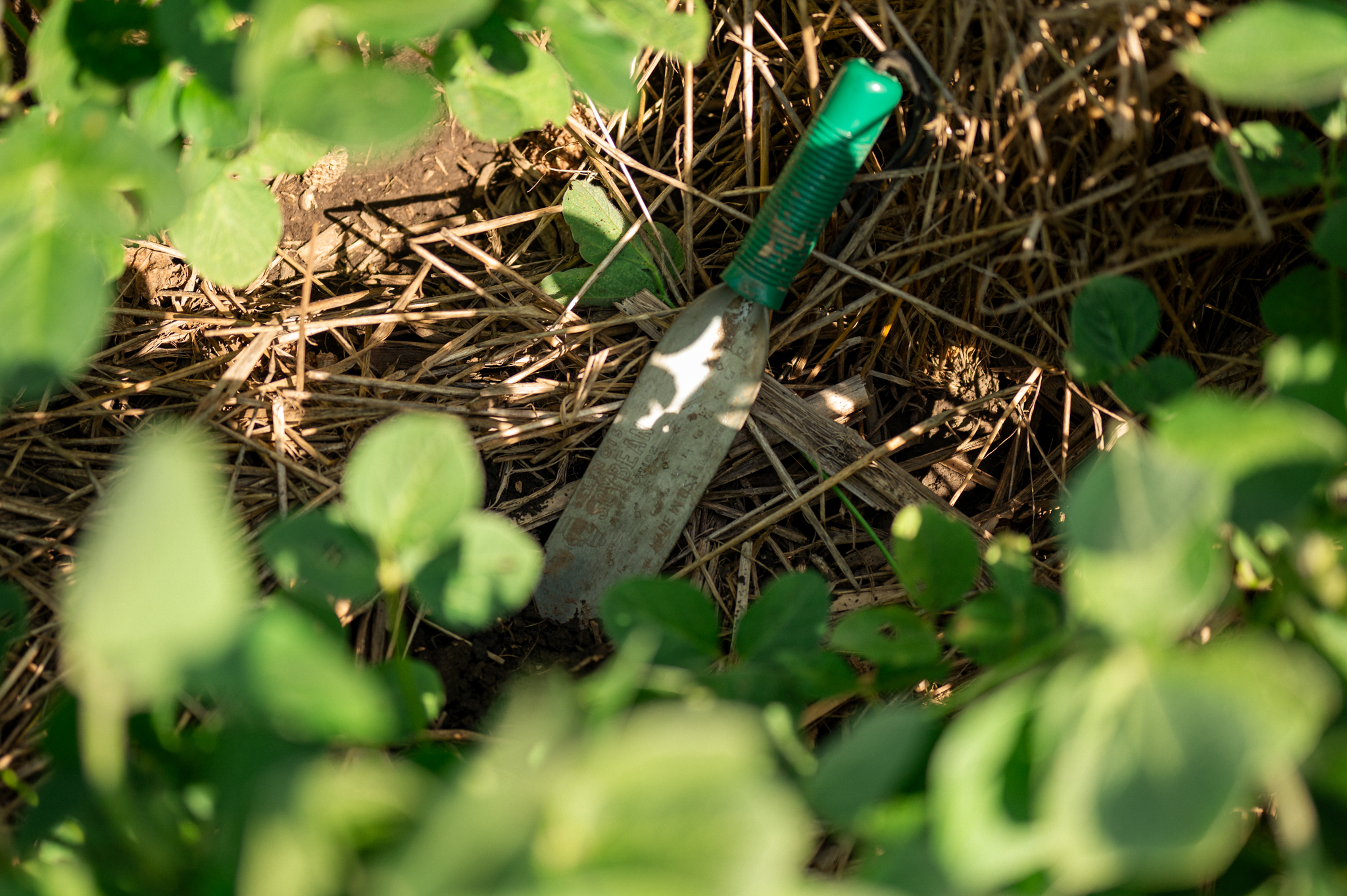
Photo: Illinois Soybean Association
- The “Living Mulch”: Winter barley grows shorter and yields less biomass than cereal rye, making it easier to manage at termination and planting while still providing enough ground coverage to shade and prevent germination of weed seeds.
- Natural Weed Killers: Winter barley not only acts as a physical barrier, but barley is also allelopathic. This means the plant excretes natural chemical compounds into the soil that are responsible for the inhibition of nearby weed seed germination.
Integrated Weed Management: Better Together
While winter barley is one of the potential tools in integrated weed management, this research demonstrates that the winter barley performs best when used with other tools. The most notable control was achieved when barley was applied in conjunction with a pre-emergent herbicide.
For waterhemp, pre-emergent herbicide use minimized emerging weeds across all plots, whether winter barley was early terminated (seven days before planting), terminated on the day of planting soybeans, or terminated a week after planting. In contrast, earlier terminations without the use of pre-emergent herbicide resulted in higher weed emergence by the time of postemergence application. The use of a pre-emergent herbicide provides flexibility and improves weed control when used with cover crops.
The Bottom Line for Your Farm
For growers looking to diversify their cover crop program, winter barley offers the weed suppression needed while remaining easier to manage than traditional options like cereal rye. Just like other cover crops, winter barley won’t replace herbicides, but it can help them work better. And that’s a tool worth having in the toolbox.
To keep up-to-date on our integrated weed management research funded by the Illinois Soybean Checkoff, visit the “Research Hub” on FieldAdvisor.org.
About the Author: Field Advisor



 and then