
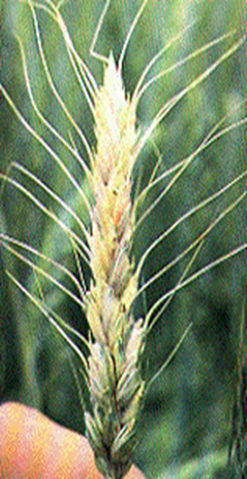
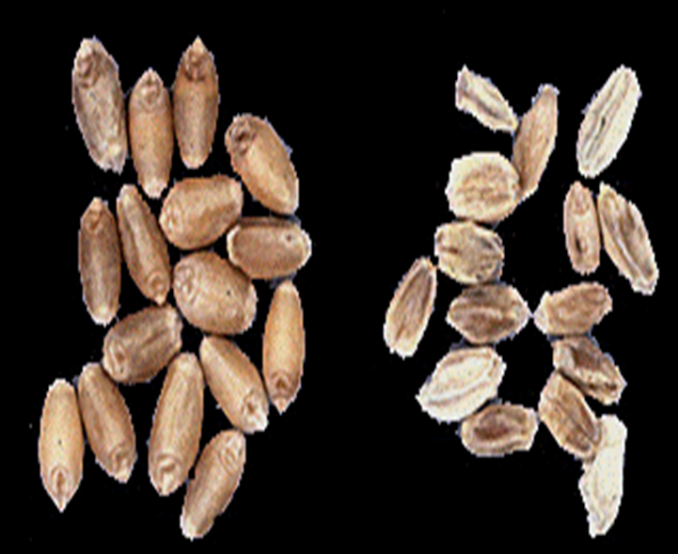

effect of the Falling Numbers score.
As we approach harvest, it is important to note some of the challenges that still lie ahead. Harvest timing is crucial in maintaining grain quality, especially as it relates to test weight. Harvesting the wheat at moistures above field dry, and artificially drying before a rain “rewets” the grain, will greatly improve the chances of selling high quality grain. Harvest timing can also influence the Falling Numbers score that millers use to determine the milling quality of the wheat. This test measures the intactness of the starch chains in the grain and ultimately how the wheat will “bake out”. If the grain is left in the field too long, a germination enzyme in the seed begins to break down the starch chains.
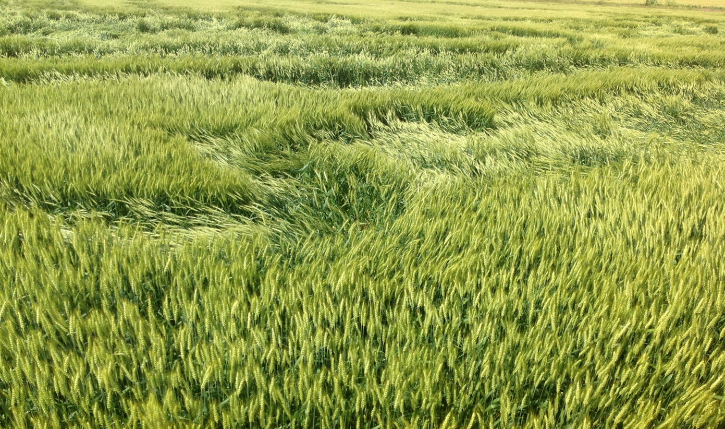
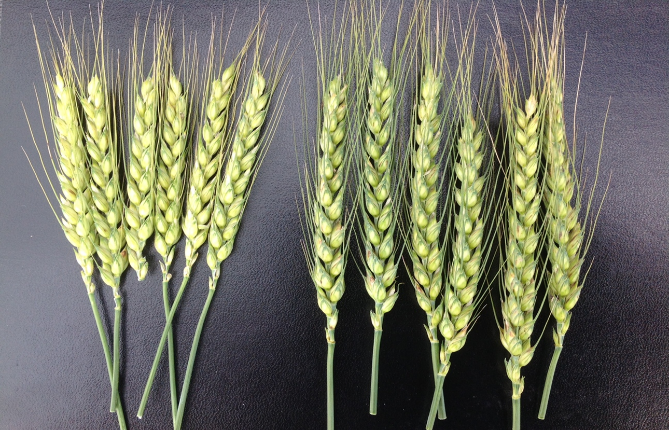
Figures 4 and 5. Wheat heads on the left are from an area of the field that was standing perfectly. The heads on the right are from areas of the field that were lodged. This demonstrates the strong relationship between nitrogen rate and yield.

Eversgerd is a Certified Crop Advisor and has been a Field Agronomist for Pioneer in Southern Illinois for 18 years. He works with local growers to maximize their farming operations in seed selection and all other aspects of agronomy. Eversgerd spent five years in Kentucky as a Crop Consultant on High Management Wheat and Precision Technology and spent five years with Novartis/Syngenta Crop Protection in Indiana and North Carolina. He holds a bachelor’s in plant and soil science from Southern Illinois University and resides in Nashville, Ill. with his wife, Stacie, and two children, daughter Katlyn (18) and son Logan (18). Eversgerd operates his family farm in Clinton county with his two brothers raising corn, soybeans and wheat.


 and then
FIND US ON