
After heavy rainfall, Phytophthora root and stem rot could be showing up in low-lying, compacted or poorly drained areas of your fields, especially after things heated up. Phytophthora is one of the most significant diseases affecting soybeans across the globe. Several Phytophthora species have been associationed with root rot; however, Phytophthora sojae remains the primary cause of root, crown and stem rot. Recently, the University of Illinois Plant Clinic has named it the top yield-reducing disease in the state and it has been diagnosed in nearly all Illinois counties.
Phytophthora root and stem rot can affect soybean at all growth stages. When conditions are right, zoospores move toward soybean root exudates and infect nearby roots. This disease is also going to show up more often on plants that are stressed by compacted soils, nutrient deficiencies and drought. It can cause mature plants to yellow, wilt and eventually die. Signs of Phytophthora would be a soybean top that has curled over and a dark area or canker that starts at the soil line and extends upward on the stem. Dead plants often remain standing with leaves still attached to the stem. It can be confused with other diseases, so if you are not sure, you can send a plant sample to the University of Illinois Plant Clinic.
Managing Phytophthora Root and Stem Rot
Resistance
The most effective tool remains varietal resistance, but not all resistance is created equal. While many varieties are marketed with strong Phytophthora ratings, it’s critical to dig deeper into the Rps genes behind those scores. Genes such as Rps1c, Rps1k, Rps3a and Rps6 can provide strong protection, but they are race-specific, meaning they only work against certain populations of the pathogen. Because of this, rotating resistance sources and selecting varieties with both Rps genes and strong field tolerance is key to long-term success.
Research has shown that some of the most widely used resistance genes, such as Rps1a, Rps1c and Rps1k, are no longer as effective against current populations of Phytophthora sojae. In fact, these genes now only protect against a relatively small percentage of pathogen isolates in the U.S. This helps explain why fields planted with highly rated varieties can still show significant disease symptoms. Because of this shift, it’s becoming increasingly important to prioritize varieties with Rps3a resistance combined with strong partial resistance (field tolerance). But even Rps3a resistance is not perfect, and partial resistance (field tolerance) offers broader and more durable protection. Additional resistance genes such as Rps6 and Rps11 are showing promise and may become important as breeders respond to shifts in Phytophthora populations.
Field Conditions
Managing field conditions plays a major role in reducing disease pressure. Phytophthora thrives in warm, saturated soils, so improving drainage through tiling, reducing compaction and starting with high-quality seed can help limit favorable environments for infection. Crop rotation can also help reduce inoculum levels over time, but because the pathogen can survive in soils for many years, it should always be paired with other management strategies.
Seed Treatments
Phytophthora sojae is an oomycete (water mold), not a true fungus. Seed treatments that target oomycetes are another important layer of protection, particularly during early growth stages when plants are most vulnerable. Products containing active ingredients such as mefenoxam, metalaxyl, oxathiapiprolin and ethaboxam can help protect seedlings, and rotating chemistries is a good practice to reduce the risk of resistance development.
One of the biggest challenges with Phytophthora is that there is no in-season rescue treatment once plants are infected. Scouting fields after heavy rains, noting affected areas and tracking disease history can provide valuable insights for future management decisions. If you’re seeing symptoms this season, the focus should shift toward understanding where and why the disease developed so those risk factors can be addressed.
Moving forward, successfully managing Phytophthora will depend on combining variety selection, seed treatments, field management and careful observation. There isn’t a single fix, but with an integrated approach, we can stay ahead of this disease and reduce its impact year after year.
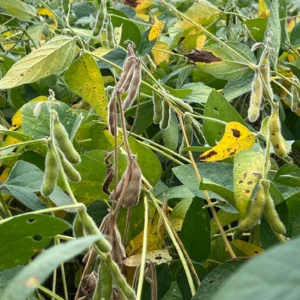
Photo credit: Stephanie Porter, ISA Outreach Agronomist

As Outreach Agronomist for the Illinois Soybean Association (ISA), Stephanie supports research efforts and helps communicate both in-field and edge-of-field research and validation studies to Illinois 43,000 soybean farmers. She also helps lead the demonstration and adoption of conservation agriculture practices and raises awareness of best management and continuous improvement practices for conservation agriculture in Illinois.
Stephanie has 23 years of experience that consists of agronomy, conservation, horticulture, plant diagnostics, and education. She has her bachelor’s in crop science and master’s in plant pathology from the University of Illinois. Stephanie is a Certified Crop Advisor and was named the 2018 Illinois Certified Crop Adviser Master Soybean Advisor. She also has experience with corn and soybean pathology research, crop scouting, soil testing, as well as crop consulting. Previously, she utilized her diagnostic training and collaborated with University of Illinois departmental Extension Specialists to diagnose plant health problems and prepare written responses describing the diagnosis and management recommendations as the University of Illinois Plant Clinic.


 and then
FIND US ON