This article was originally published in the November 2025 issue of Illinois Field & Bean magazine.
ISA Unveils Agronomy Farm for Farmer-Led Research
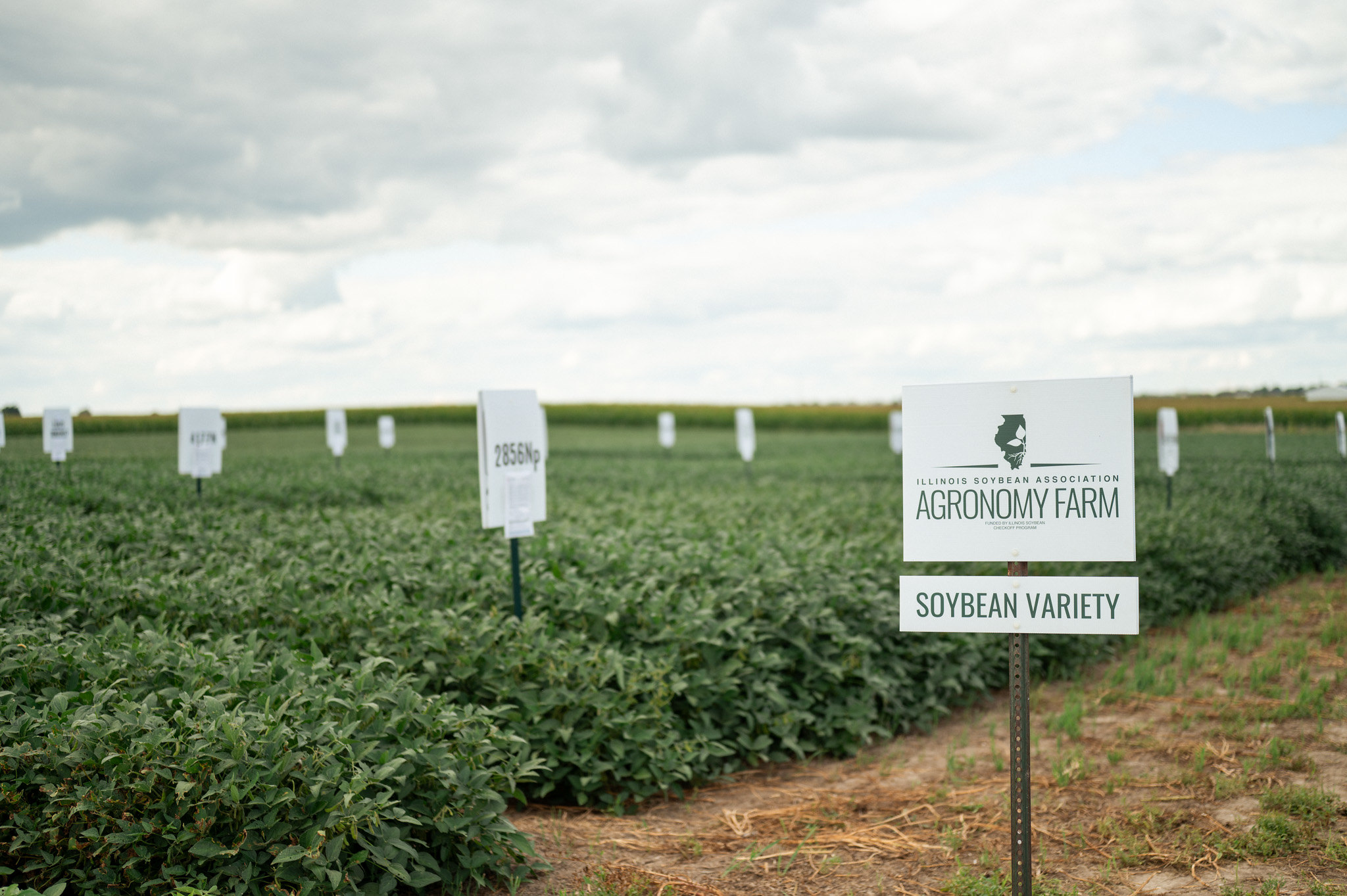
The Illinois Soybean Association (ISA) has a new demonstration site managed by the ISA agronomy team dedicated to supporting Illinois farmers. The nearly 98-acre site is designed to turn checkoff-funded research into practical, field-ready insights for soybean farmers statewide.
Located just south of Heyworth, the farm began its first phase of trials during the 2025 growing season. It marks a milestone in our commitment to understanding the science within soybean systems and sharing it with all who invest in soybean production.
By serving as a comprehensive resource, the ISA Agronomy Farm strengthens farmers with the information needed to optimize production practices and stay ahead in an ever-evolving industry.
Strategically Placed, Farmer-Focused
The location of the Agronomy Farm is representative of a typical central Illinois field. It’s situated just off Route 51, about 20 minutes away from the ISA office in Bloomington, offering convenience, accessibility and visibility for visiting researchers, board members and farmers alike.
The land represents what some growers see on their own acres, including tile, slopes and soil variability.
The site allows ISA to host stakeholders who might only have a single day in Illinois, providing a one-stop opportunity to visit the office, meet with staff and see agronomic research in action, all within a few miles.
From Concept to Reality
Once the farm was purchased in early 2024, ISA’s Production department immediately got to work. Coordinating logistics, planning plot layouts and engaging both researchers and farmer collaborators became the foundation of the farm’s first growing season.
Focusing on research from small plot experiments to larger demonstrated acres, the site will help explore what we can learn from checkoff-funded research to make sure farmers are getting the most value from their investments.
Agronomist Jim Isermann plays a key role in daily execution, ensuring the farm operates smoothly and efficiently across planting, spraying, harvesting and data collection. Local farmers also support the work, adding real-world perspectives and hands-on know-how.
Big Plots, Bigger Purpose
Unlike many small-scale research sites, the Agronomy Farm is set up for visibility and real-world transferability. With 10-acre plot sizes, the farm is designed to demonstrate new practices to evaluate if these tools work.
Initial trials for 2025 included:
- Double-crop soybeans following wheat
- Pollinator plots established in partnership with Pheasants Forever and Quail Forever
- Cover crop species demonstration
- Soybean Variety Plot in partnership with University of Illinois
- Maximum return to nitrogen corn plot in partnership with Illinois Fertilizer and Chemical Association
- Soybean Cyst Nematode (SCN) testing
With the next phase of the farm layout, we will continue to establish plots that answer what farmers are asking.
Why Farmers Back It
For ISA board directors such as Ron Kindred and Heath Houck, the farm represents a long-awaited opportunity to run independent research designed by and for Illinois soybean farmers.
“This farm can take a deep dive into nutrient management that could potentially drive increased productivity while also decreasing nutrient loss,” says Kindred, Immediate Past Chairman of the ISA Board.
The focus on insights farmers can put to work right away will be a game-changer.
“The biggest benefit to farmers is the fact that this farm provides actionable information that can directly improve yields and operational efficiency,” explains Houck, District 13 Director and current Production Committee Chair.
Kindred is particularly interested in trials on biologicals, sulfur application, micronutrient testing and double-crop soybeans, especially since the farm is just 12 miles from his own acreage.
Houck sees value not only for growers but also for legislators and global visitors.
“The cover-crop plots stand out to me this year and will be very beneficial to educate different groups or even legislators to what farmers are talking about when discussing cover crops,” he says.
Unbiased By Design
At ISA, our goal is to deliver reliable, farmer-directed data that complements—but doesn’t replicate—what’s already available from corporate trials or university research.
We’re not promoting any product. Instead, our job is to answer agronomic questions based on science and let the results speak for themselves.
Kindred agrees.
“This farm fills a critical gap left by reduced Extension funding. It’s about bringing back farmer-focused, independent research,” he says.
ISA collaborates closely with university researchers, particularly those conducting checkoff-funded projects, and works to elevate their insights by showcasing them in action.
In the months and years ahead, we will continue working with all of our university partners. This investment is designed to help them get their good work on display and connect farmers directly to research that matters.
What’s Next
As the farm matures, we at ISA expect to deepen the facility’s research portfolio, host more field days and enhance educational opportunities.
“We’re already thinking about how we can expand educational efforts for everyone from growers to policymakers,” Houck says.
The farm also will provide a centralized platform for gathering multi-year data on soybean rotations, conservation practices and productivity strategies. We’re hopeful that this long-term approach will help inform a wide range of activities, including planting decisions and environmental planning.
The goal is to improve ROI, operational efficiency and environmental outcomes and to do it all with data that starts right here in Illinois.
A Bigger Mission
Focused on showcasing the latest innovations in soybean production to improve market development and government relations, the farm provides a platform for practical, research-driven knowledge that supports farmers in making informed decisions from the field to market.
It exists to produce insights that lead to real-world soybean production results. We’re here to help you make informed decisions and drive success across the state.
For more Agronomy Farm updates, field reports and opportunities to get involved, visit contact the ISA Agronomy team.
We hope to see you at the Agronomy Farm soon.
About the Author: Abigail Peterson

 and then