Recently, temperatures that dipped into the 30s F made us a little nervous that damage could have occurred to soybeans that had emerged. Soybean seeds could have also experienced chilling injury if cold water (<40 F) was imbibed within 24 hours of planting.
- Be patient. Wait at least three to five days after a cold event to evaluate soybean stands.
- You don’t need frost for cold injury to occur. Cold damage can cause soybean tissue to darken or collalpse within 24 hours.
- The extent of the injury will depend upon temperature (36 F to < 28 F) and duration of temperatures below 36 F, as well as soil moisture, residue, field topography, seeding depth (if just emerging) and growth stage. This makes it very important to evaluate the entire field.
- Soybeans are slightly more tolerant to cold at VE-VC (emergence to unifoliate), but more susceptible at V1 – V2 (trifoliate stages).
- Several other evironmental factors, herbicides or even seed treatments can cause superficial leaf discoloration (yellow to brown) on healthy soybean plants, which might be confused with cold injury. These types of injury may disappear as the soybean grows, but in some cases, you may still need to evaluate and monitor soybean stand.
- Cold leaf damage is not an indicator of plant death. Soybeans can still survive, but this will depend upon whether the hypocotyl or growing points (nodes) remain viable. Soybean growing points are above the soil surface as soon as the plant emerges and are exposed by VC (cotyledon stage).
- The apical meristem (main growing point) can still be protected between the cotyledons. Check the stem (hypocotyl) below the cotyledon. If it is soft, pinched or hollow, this plant’s vascular tissue could be injured and this could lead to plant death. You can read more about cold injury to the soybean hypocotyl here: How Frost Affected Soybeans Throughout Illinois – Field Advisor.
- Inspect the growing points (nodes). If they are brown or mushy, the plant may not survive. However, if axillary buds (secondary growing points) are present and alive at the cotyledonary nodes, the soybeans can branch or recover. You can read more here: Risks, Rewards, and Recommendations for Early Soybean Planting in Illinois – Field Advisor.
- Evaluate stand. For more information, you can check out: Soybean Plant Stands: Is Replanting Necessary? – Field Advisor.
- Avoid rushing to replant. Replanting will depend upon final stand count (as low as 75,000 – 100,000 plants/A), calendar date, stand uniformity or gaps, and delayed emergence.
References:
How Frost Affected Soybeans Throughout Illinois – Field Advisor
Soybean Plant Stands: Is Replanting Necessary? – Field Advisor
Risks, Rewards, and Recommendations for Early Soybean Planting in Illinois – Field Advisor
Which PRE Herbicides Increase Injury Risk in Early-Planted Soybeans? – Field Advisor
(Click on the arrow on the right-hand side of the photos to scroll through photos)
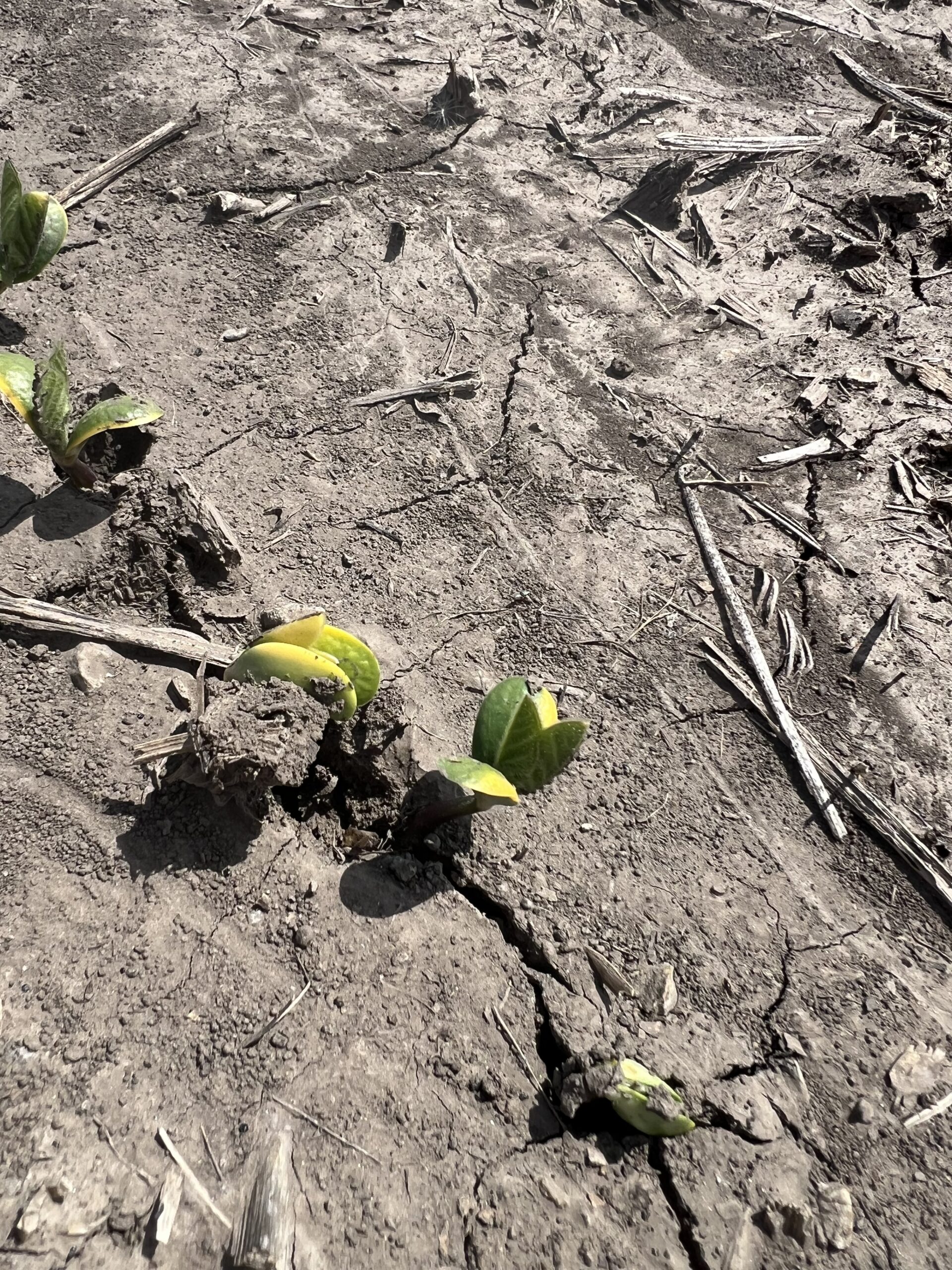
Soybeans struggling to emerge, which can cause cotyledon or leaf tips to yellow (injury not necessarily attributed to cold). – Stephanie Porter, April 24, 2025
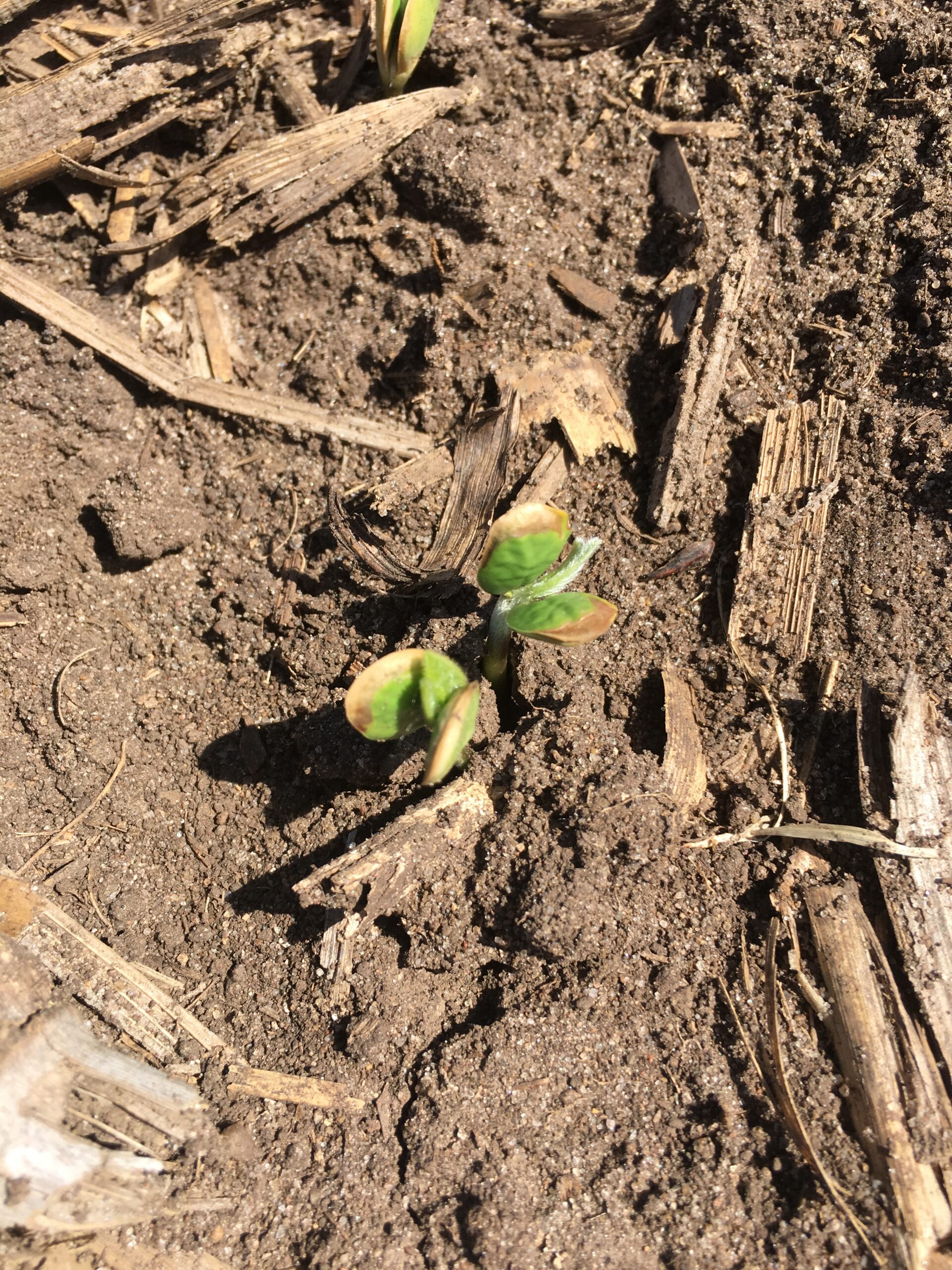
The ILeVO, Bayer seed treatment “halo” effect on healthy soybean cotyledons. - Stephanie Porter, June 6, 2017. No other seed treatments (e.g., the newer seed treatment Victrato, Syngenta), to my knowledge, cause leaf necrosis or browning on cotyledons.
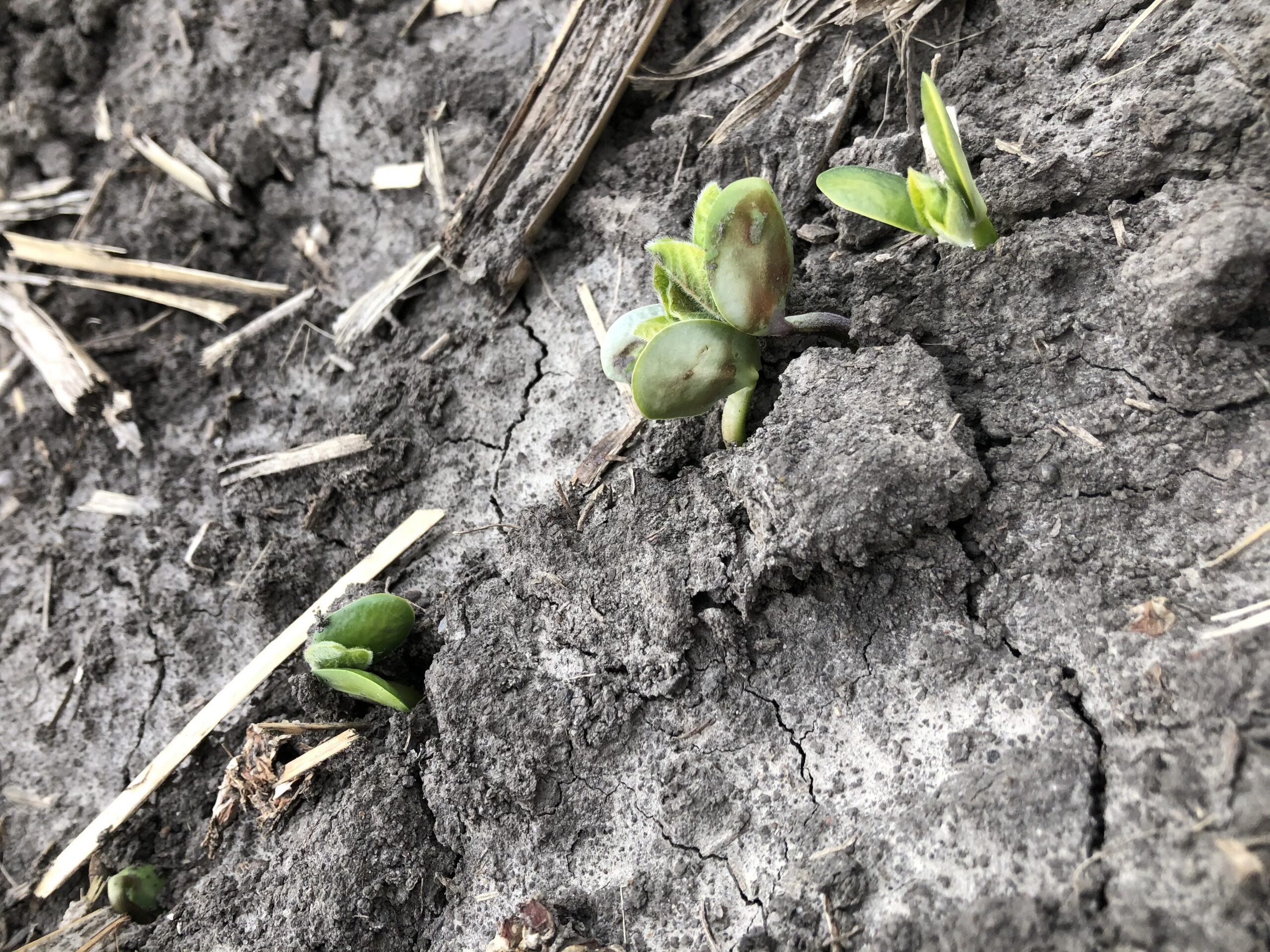
This is minor cold injury on soybeans, and they should fully recover in good growing conditions. - Stephanie Porter, April 22, 2025
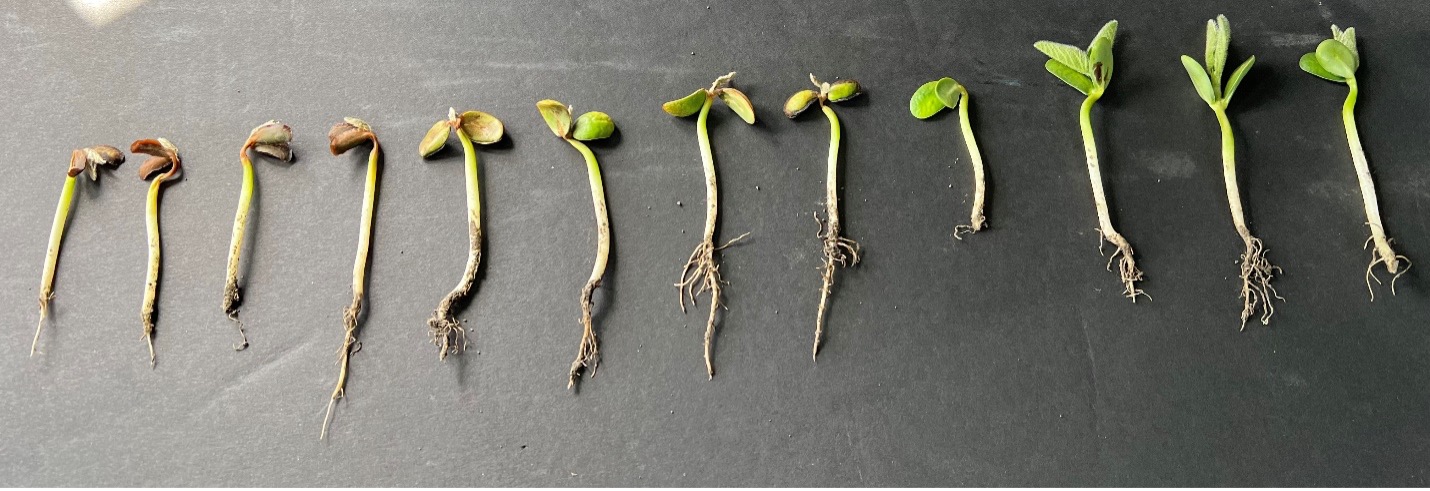
An example of cold injury on soybean hypocotyls (necks). If hypocotyls are green and healthy, soybeans should survive. – Stephanie Porter
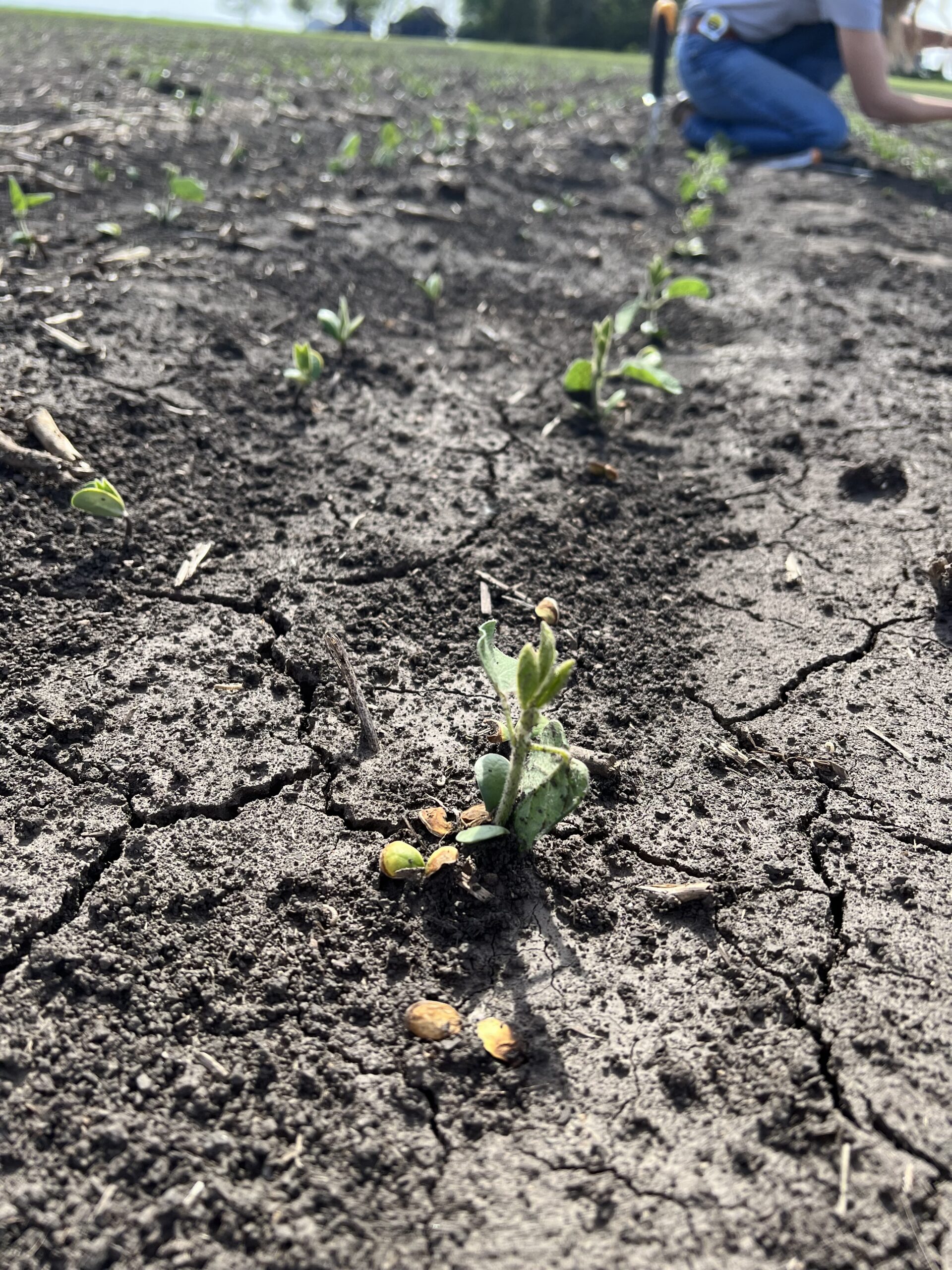
An example of cold injury to soybeans where replanting was needed because of a lower final stand population. Stephanie Porter, May 10, 2023
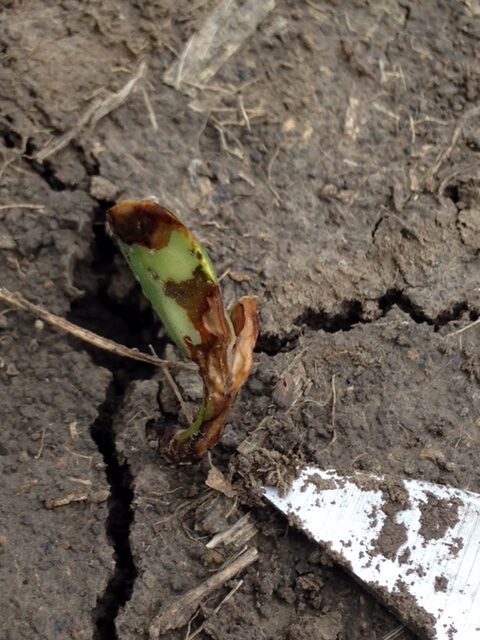
Herbicide (PPO) injury on emerging soybeans. – Stephanie Porter, May 7, 2016
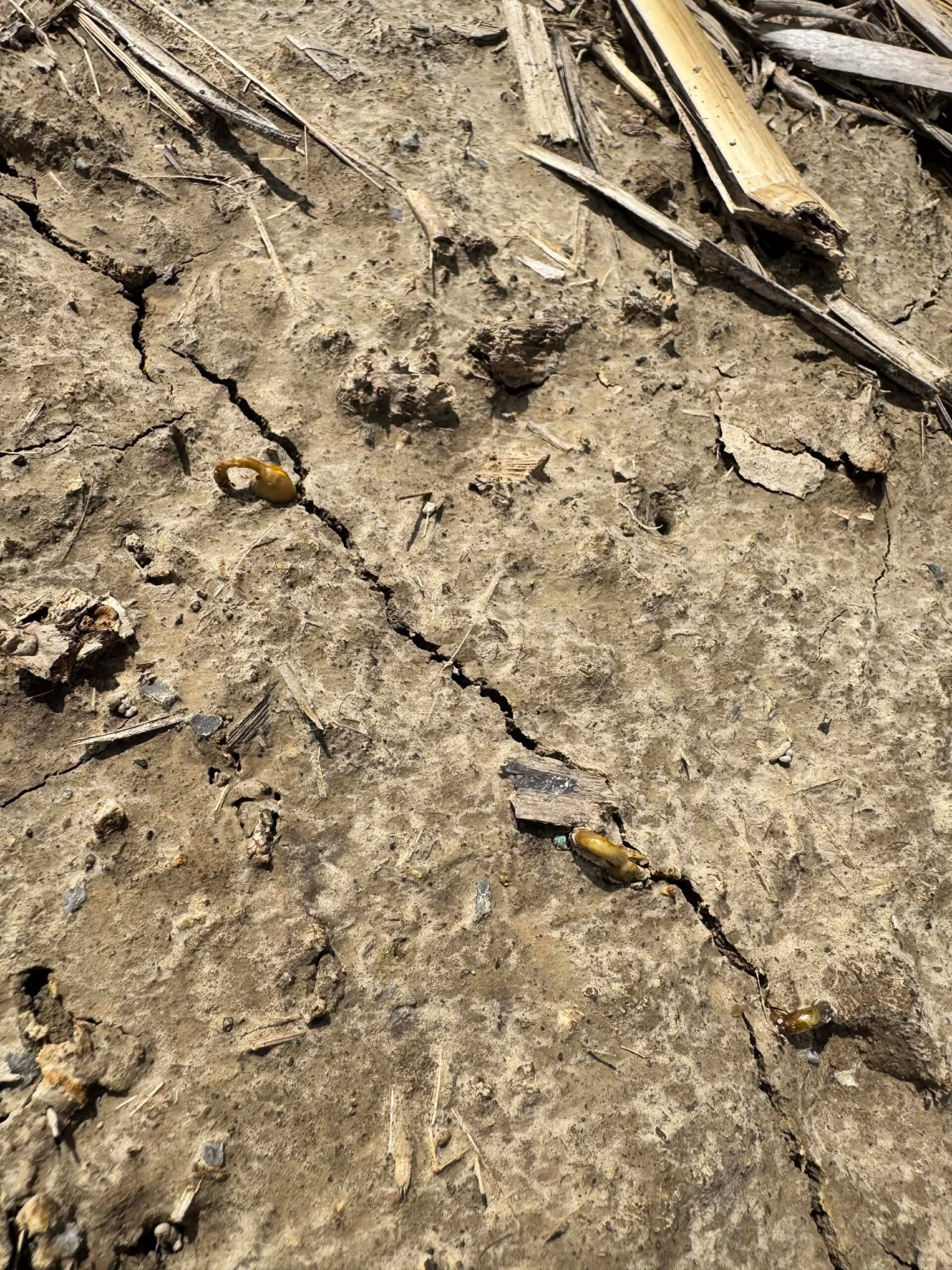
Herbicide injury on emerging soybeans. – Kelly Robertson, April 8, 2026.

As Outreach Agronomist for the Illinois Soybean Association (ISA), Stephanie supports research efforts and helps communicate both in-field and edge-of-field research and validation studies to Illinois 43,000 soybean farmers. She also helps lead the demonstration and adoption of conservation agriculture practices and raises awareness of best management and continuous improvement practices for conservation agriculture in Illinois.
Stephanie has 23 years of experience that consists of agronomy, conservation, horticulture, plant diagnostics, and education. She has her bachelor’s in crop science and master’s in plant pathology from the University of Illinois. Stephanie is a Certified Crop Advisor and was named the 2018 Illinois Certified Crop Adviser Master Soybean Advisor. She also has experience with corn and soybean pathology research, crop scouting, soil testing, as well as crop consulting. Previously, she utilized her diagnostic training and collaborated with University of Illinois departmental Extension Specialists to diagnose plant health problems and prepare written responses describing the diagnosis and management recommendations as the University of Illinois Plant Clinic.

 and then
FIND US ON