By Darby Danzl, ISA Regional Technical Agronomist
—
Weather influences nearly every management decision made throughout the growing season. It affects when farmers can enter the field, how crops grow and develop, when diseases become a concern and ultimately, crop productivity.
Understanding today’s weather conditions is the first step in a farmer’s day because it helps them decide when to begin a field operation. Beyond day-to-day management, seasonal weather patterns provide valuable context for understanding crop performance and explaining the outcomes observed at harvest
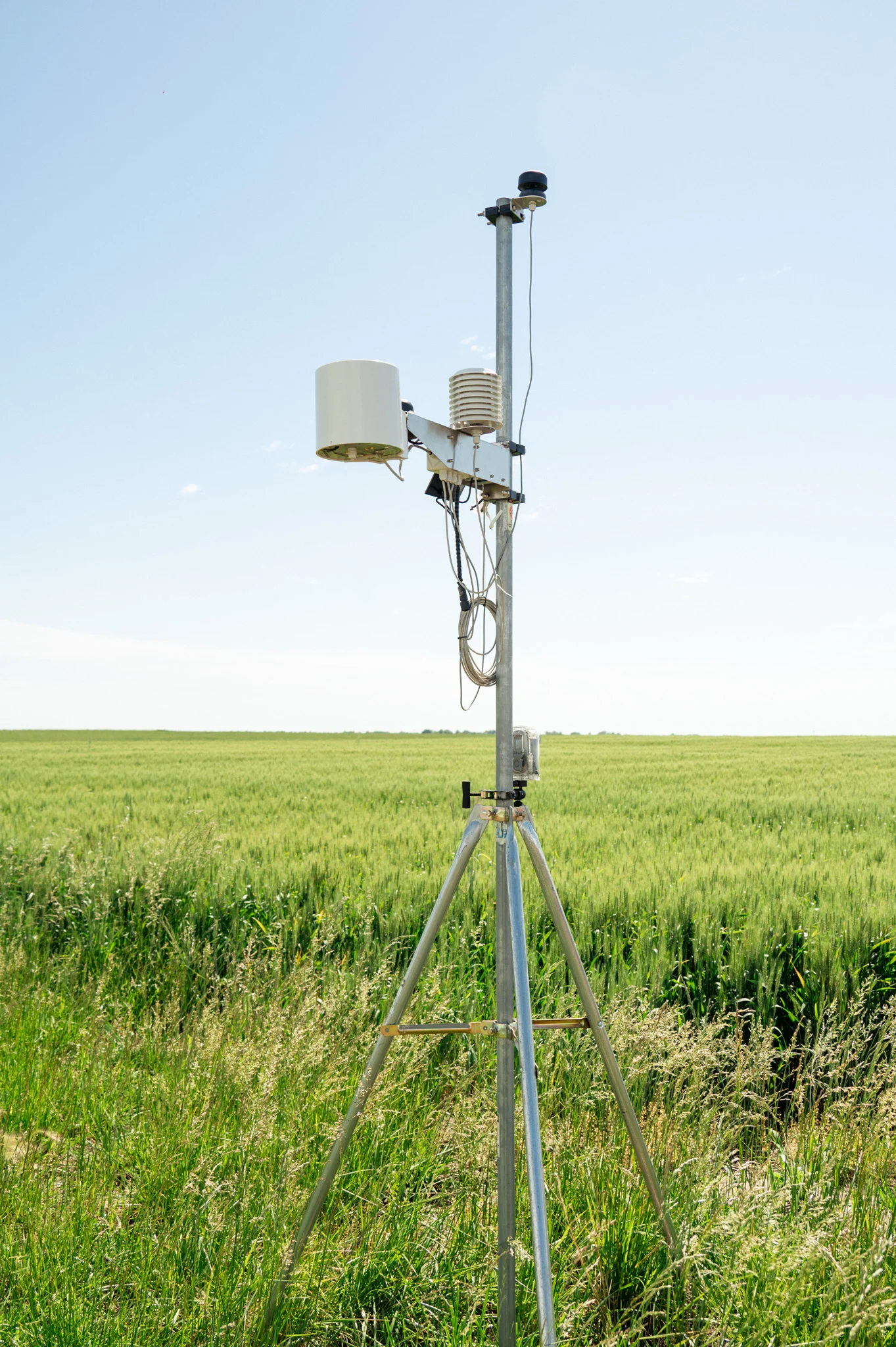
Because weather plays such an important role in crop production and agronomic research, the Illinois Soybean Association (ISA) Soybean Production team installed two weather stations at the ISA Agronomy Farm in August 2025. These stations continuously collect field-specific environmental data, providing the team with real-time information to support day-to-day field management while also building a historical weather record for research conducted at the farm.
The ISA weather stations continuously monitor a wide range of environmental variables that support both daily management decisions and agronomic research. Below is a list of the metrics that the weather station collects as well as why these metrics are agronomically significant.
- Air temperature – Drives crop growth and development and is used to calculate growing degree days (GDDs). Temperature also affects evapotranspiration, nutrient uptake rates, pollination success and the occurrence of heat or frost stress.
- Precipitation – Determines water availability, influences field trafficability, affects nutrient transport and loss and provides essential context for interpreting crop performance and research results.
- Relative humidity – Influences evapotranspiration, canopy drying and together with temperature and leaf wetness, helps characterize conditions favorable for disease development.
- Leaf wetness – Indicates the duration that free moisture remains on plant surfaces, a key factor in the infection cycle of many fungal and bacterial diseases. It is most valuable when interpreted alongside temperature and humidity.
- Wind speed & direction – Critical for herbicide and foliar application decisions by minimizing spray drift and improving application efficacy. Wind also influences crop water loss through evapotranspiration.
- Sunshine duration – Provides a measure of light availability throughout the season helping explain differences in crop growth development and productivity when interpreted with solar radiation and temperature.
- Solar radiation – Supplies the energy that drives photosynthesis and biomass accumulation. It also contributes to evapotranspiration and helps explain seasonal differences in crop growth and yield potential.
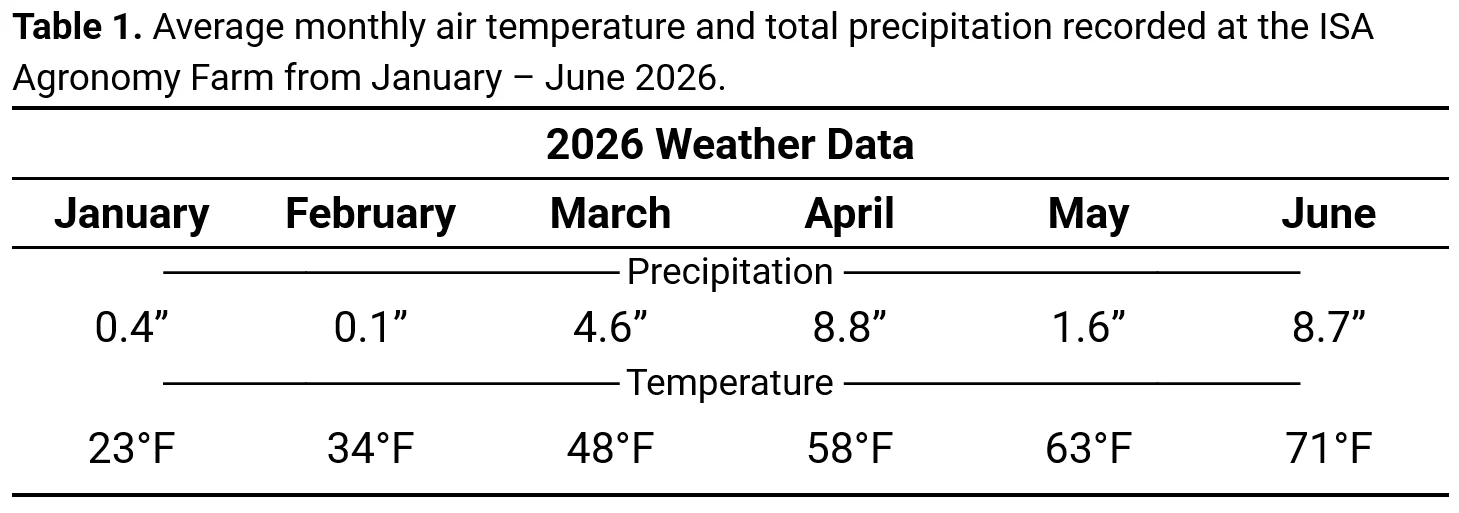
One of the greatest advantages of an on-site weather station is having access to field-specific environmental conditions rather than relying on observations collected miles away. Recent weather patterns have demonstrated how dramatically rainfall, temperature and other conditions can vary over relatively short distances, making on-site measurements invaluable for both field management and research. The table below summarizes the average monthly air temperature and total precipitation recorded at the ISA Agronomy Farm during the 2026 growing season.
Weather is one of the few variables that cannot be controlled, but it can be measured, monitored and better understood by collecting accurate field-specific environmental data. The ISA weather stations help transform weather observations into information that supports better management decisions and strengthens agronomic research.
As the ISA Agronomy Farm continues to grow, field-specific weather data will remain an important tool for understanding how environmental conditions influence research results and management practices across Illinois.
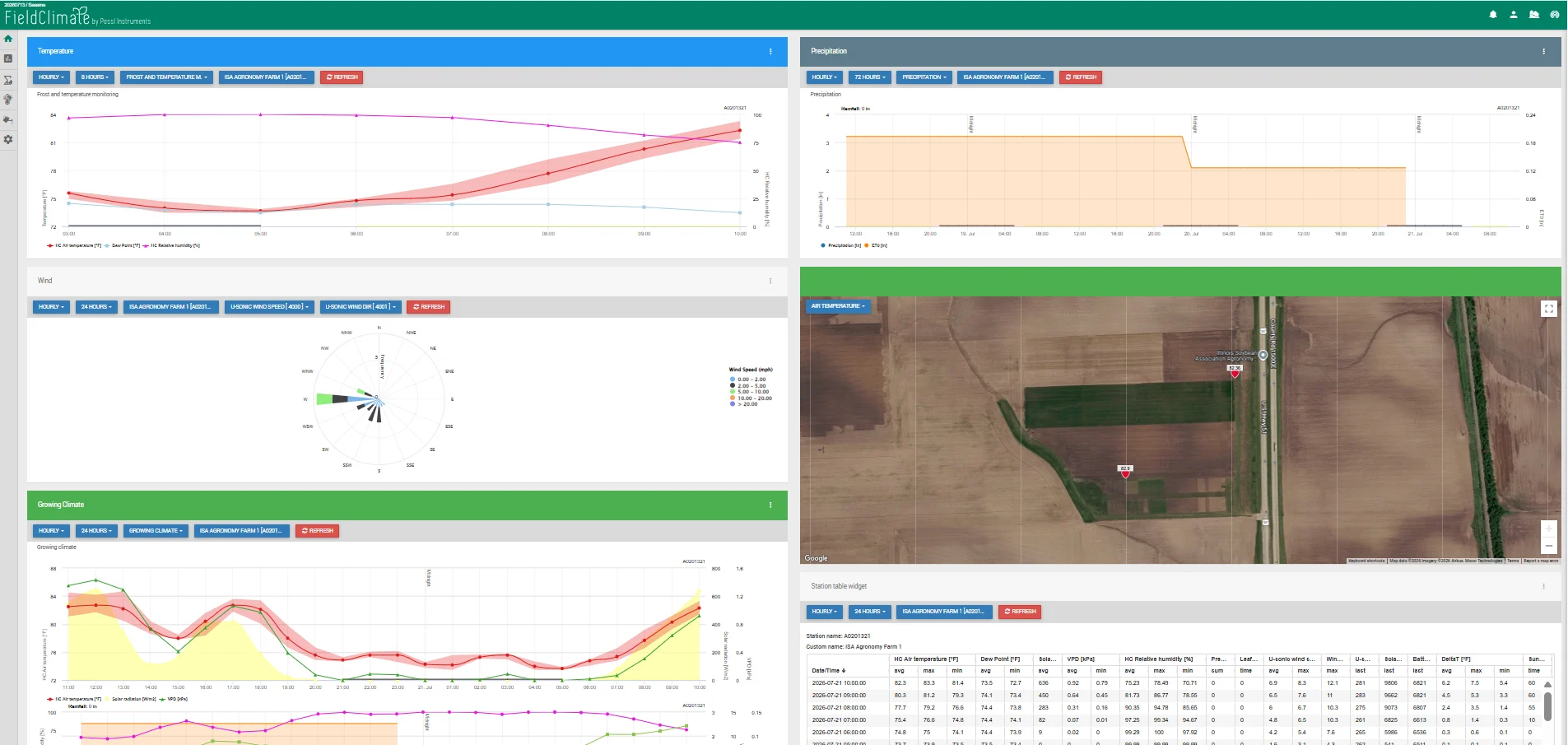
If you are interested in viewing live metrics and recent weather summaries collected at the ISA Agronomy Farm, please visit the farm page at https://www.ilsoy.org/isa-agronomy-farm/.
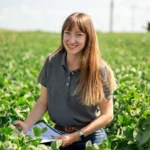
Darby Danzl is the Regional Technical Agronomist for the Illinois Soybean Association (ISA). In her role, she contributes to on-farm trials, outreach efforts and NRCS partnership responsibilities.
Darby Danzl holds a B.S. in Environmental Economics and Policy, a minor in Horticulture, and an M.S. in Crop Sciences from the University of Illinois at Urbana-Champaign. Her graduate research at the Crop Physiology Laboratory involved small-plot research with a focus on soil health and regenerative agricultural practices. She is passionate about advancing agricultural sustainability using science-based practices that improve soil health, increase resource efficiency, and boost long-term productivity.


 and then
FIND US ON