
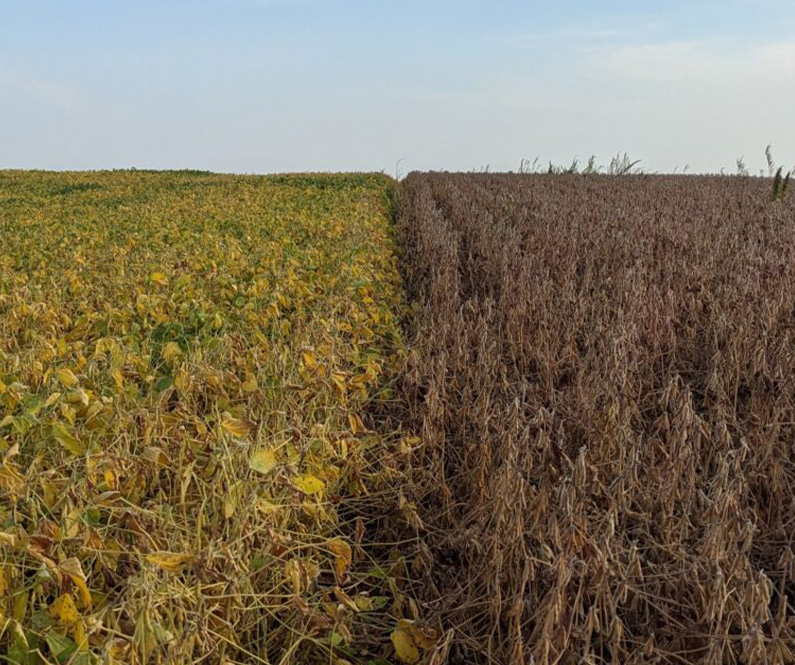
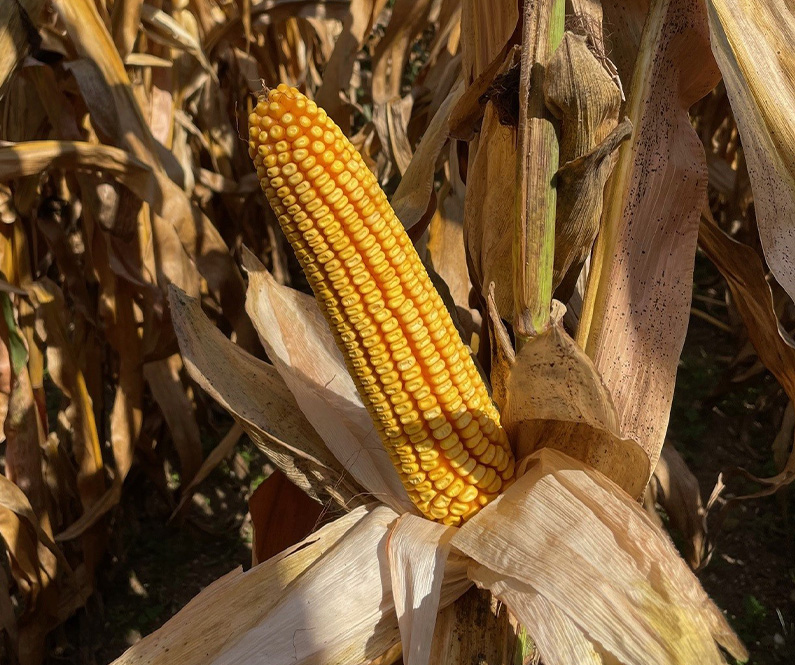
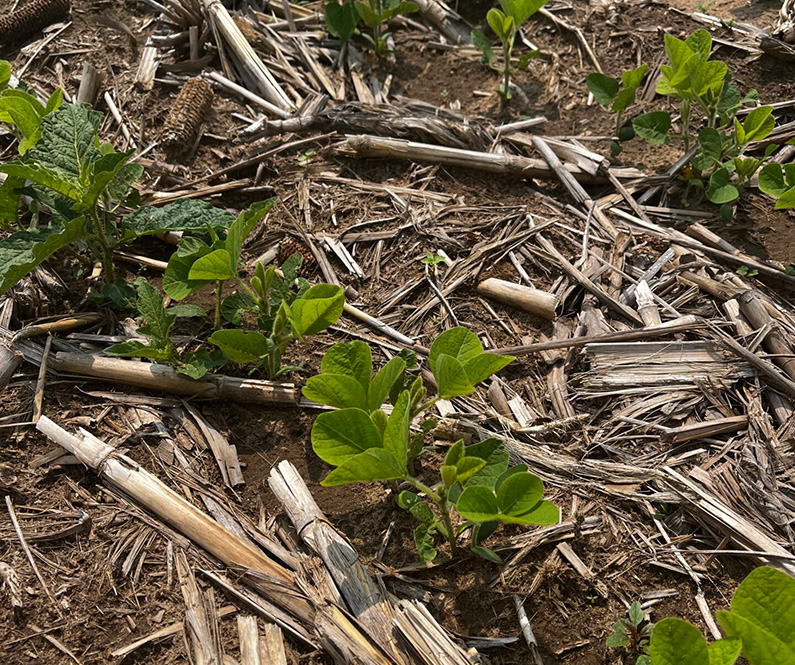
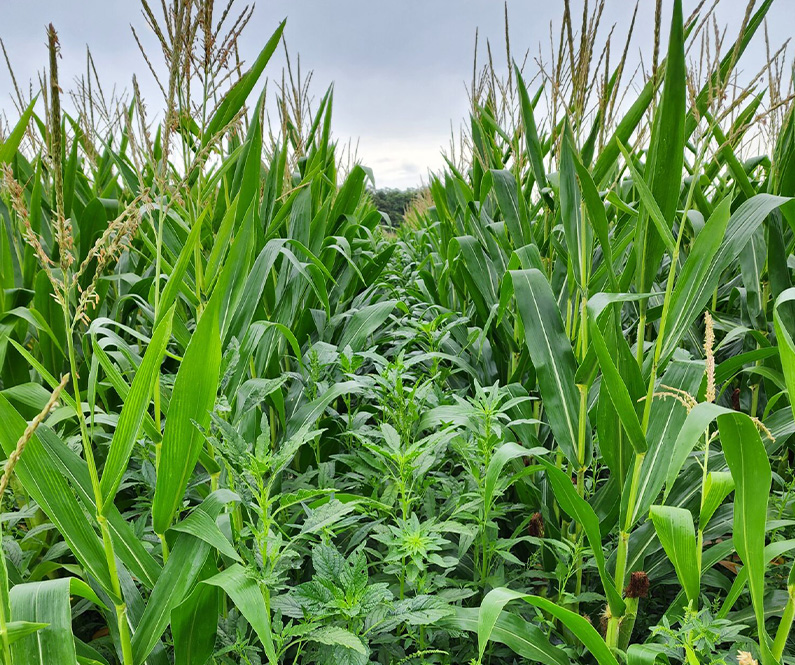
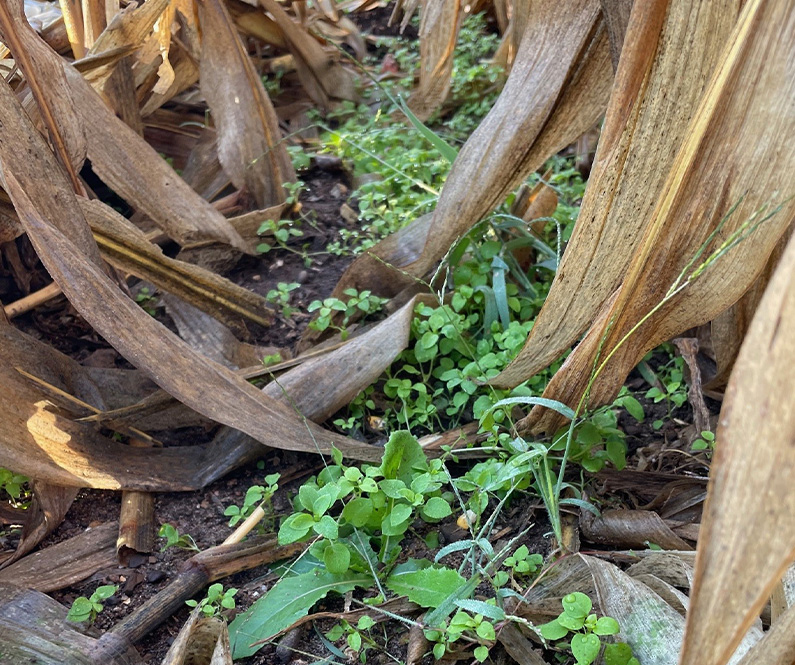
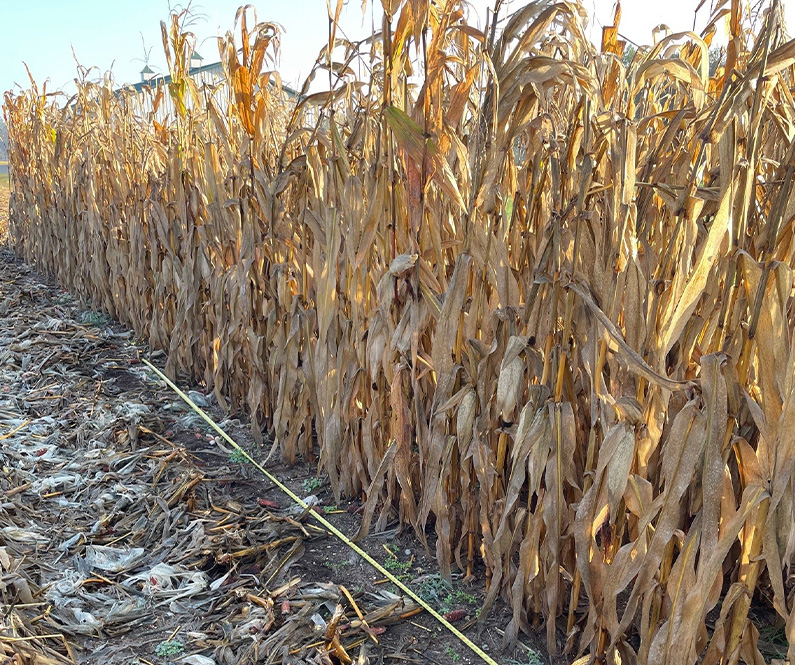
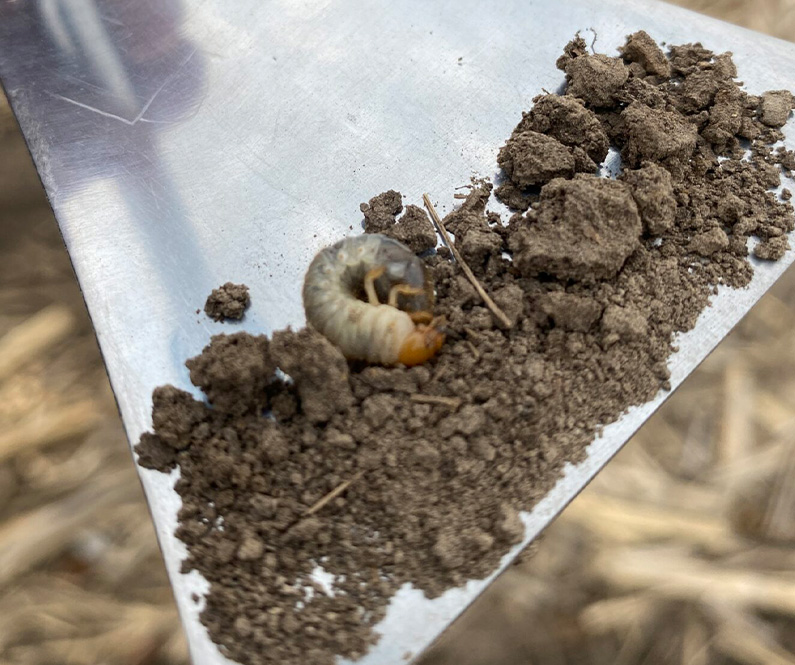
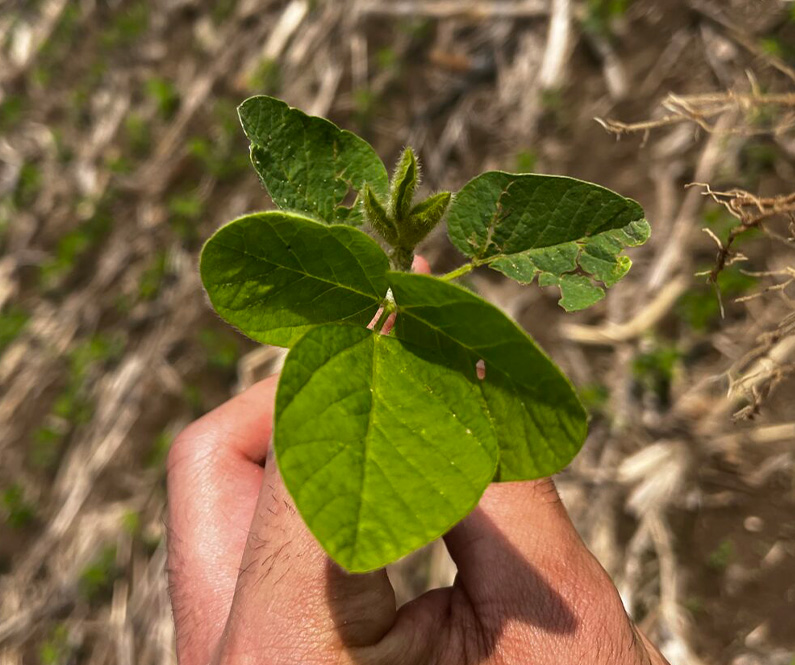
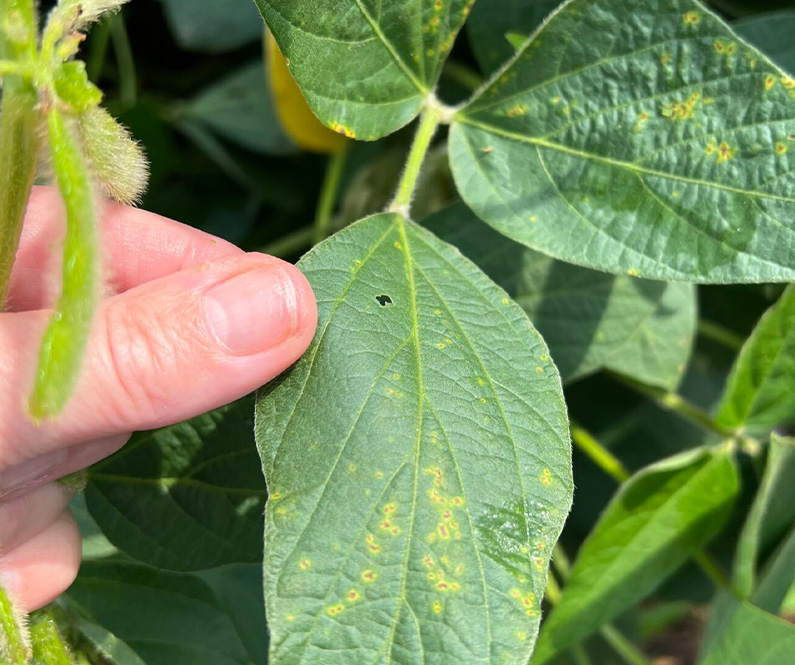
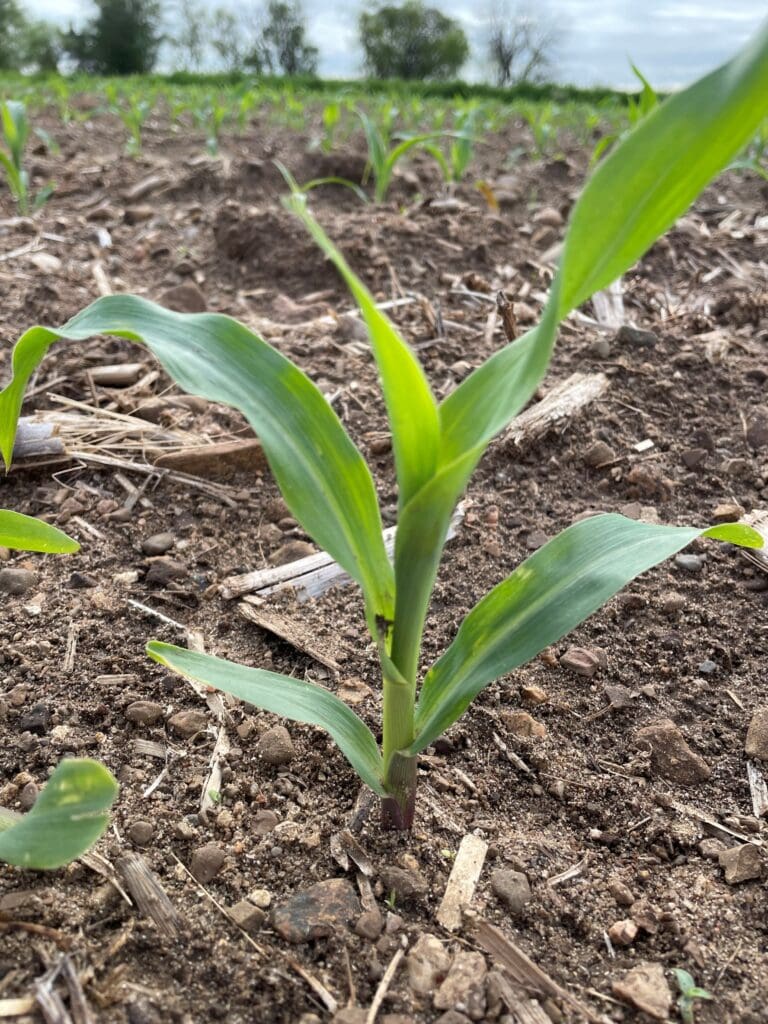
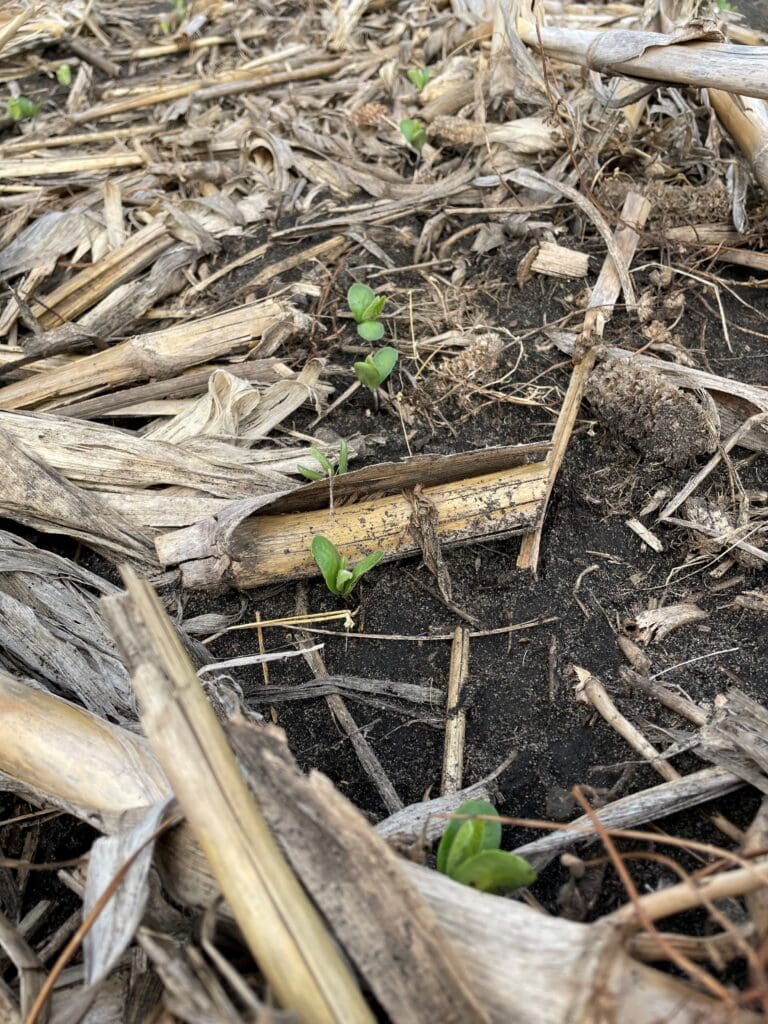
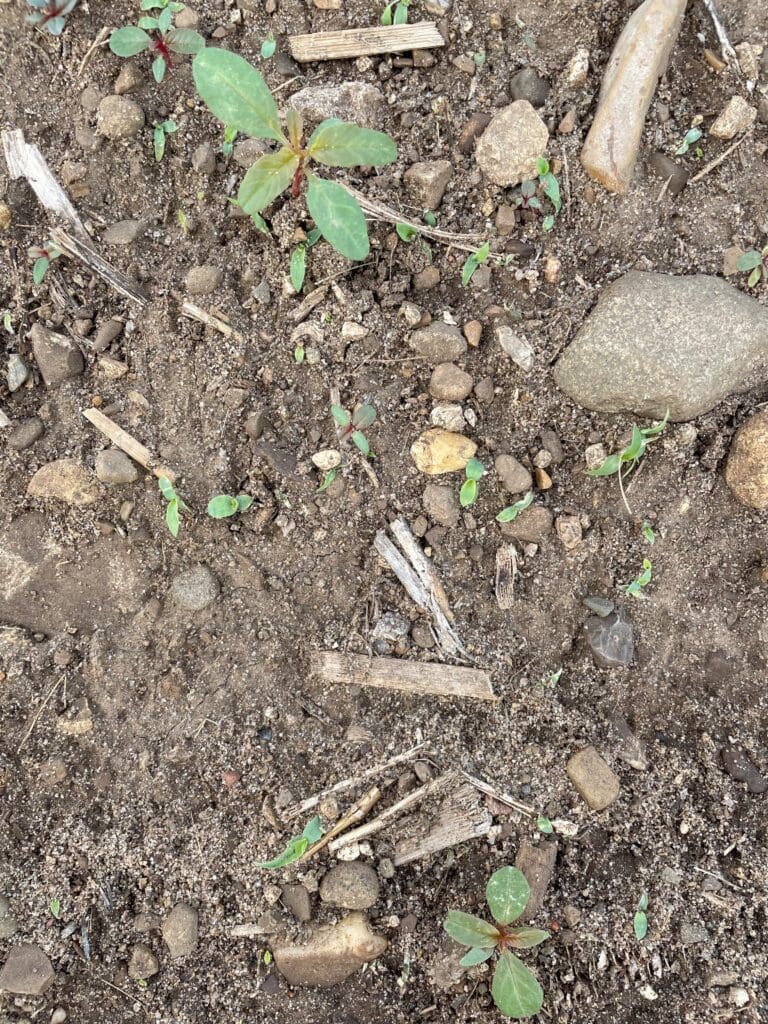
Another good week for field work in the region. Substantial progress was made in both corn and soy planting. Several eighty degree days helped spur growth in planted crops; however, I noted no-till soy fields, especially soy planted into heavy corn residue, were lagging in emergence and development, likely due to cooler soils. It is generally suggested with soybeans that cotyledons provide the needs of the plant during emergence to almost V1 (first trifoliate) stage. After V1, the photosynthesis of the vegetative plant will sustain itself. Early planted corn in the region has reached V4. Underground, the seminal root system has been joined by the nodal root system. The nodal root system of the corn plant is initiated at VE and becomes the major supplier of nutrients and water to the plant by V6.
Scouting fields at emergence and early vegetative stages is helpful in evaluating planter (and operator) performance by observing uniformity of plant stands, spacing and overall emergence. Additional notes can be taken on early season diseases, compaction or poorly drained areas in a field, and early season performance of soil-applied herbicides.
Soft red winter wheat has reached anthesis or flowering. For those considering a fungicide application to control Head Scab, this is a recommended window of application. In forage crops, alfalfa has started to flower, an indicator for harvest consideration (depending upon your goal of quality or quantity) when a favorable weather window permits.
EMAIL SIGN UP
Sign up to receive our newsletter for up-to-date news and offers directly in your inbox:
LINKS
FOLLOW FIELD ADVISOR

The Illinois Soybean Association (ISA) checkoff and membership programs represent more than 43,000 soybean farmers in Illinois. The checkoff funds market development, soybean production and government relations efforts, while the membership program, Illinois Soybean Growers (ISG) and the Illinois Soybean Growers PAC actively advocates for positive and impactful legislation for farmers at local, state and national levels. ISA upholds the interests of Illinois soybean farmers through promotion, advocacy, research and education with the vision of becoming a trusted partner of Illinois soybean farmers to ensure their profitability now and for future generations.
© 2026 Illinois Soybean Association

 and then