
Archive
If you find yourself wondering what happened when, look no further than the Crop Report Archive. We’ve compiled past reports, listing the most recent first. You can search by Region, Month, or Reporter to find information.
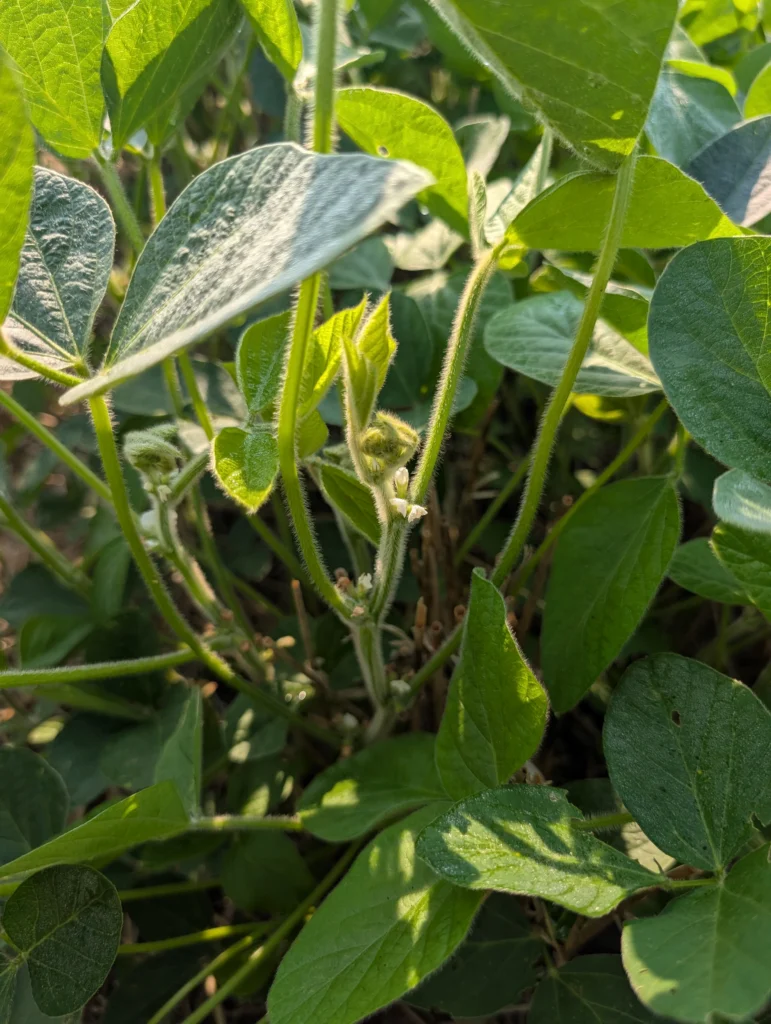
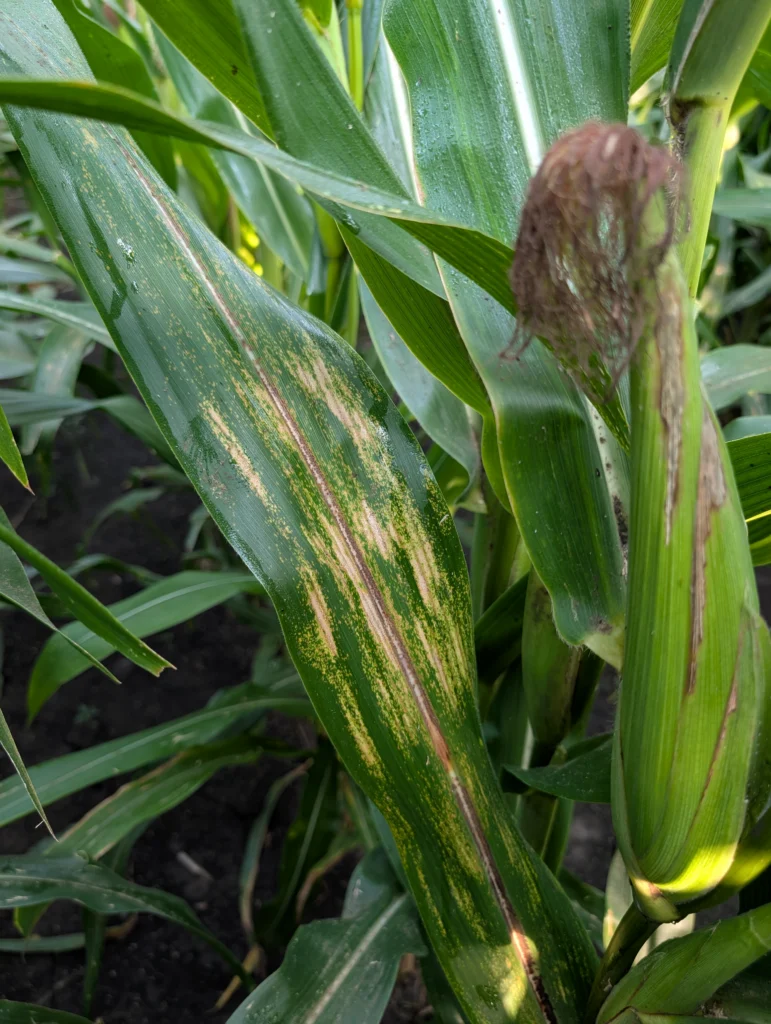
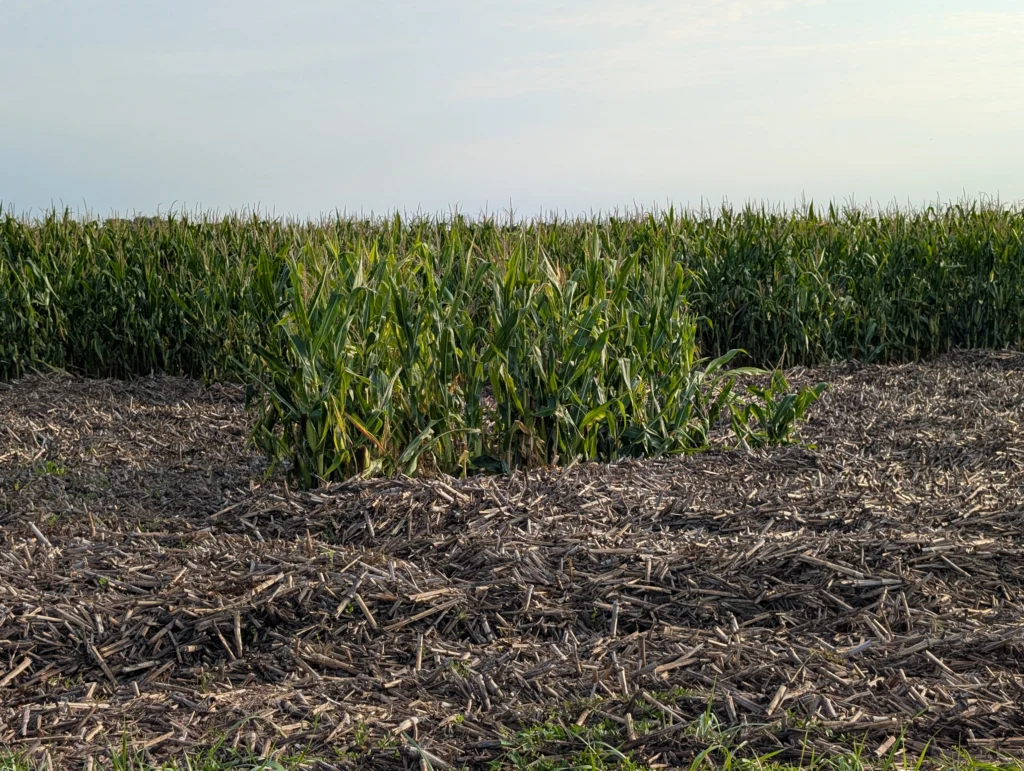
With much of the east central IL region receiving at least 0.5″ of rain over the past week, soil moisture has rebounded back to optimal or ‘near normal’ levels in most fields, following a bit of a dry spell. In Douglas County, like much of the region, remnants of spring storms are still visible, but the remaining crop is overall healthy and progressing well. Disease and insect pressure continued to be low in the soybean fields I visited. Full season soybean fields are reaching R5, or beginning seed, on the most advanced end, and double crop soybeans are beginning to flower (R1-R2). Corn fields visited ranged from R2 (blister) to late R4 (dough), with closer to the more advanced end of that range. Aphids were present in a couple fields visited, although they seemed to be in isolated pockets within those fields. Similarly, isolated areas with leaf and stalk symptoms consistent with Physoderma brown spot/stalk rot could also be found in a couple of the fields surveyed.
I went south this week specifically on the lookout for any southern rust that might have made its way this far north, but I did not spot any pustules at this time. Once corn is past R4 (dough) growth stage, the available research shows a low likelihood of a fungicide providing a positive economic return (https://farmdocdaily.illinois.edu/2020/01/southern-rust-in-corn-disease-development-and-fungicide-use.html). So, at this point in the season, most fields are past the point of concern and late planted fields or late maturing hybrids should be the focus of scouting efforts.
EMAIL SIGN UP
Sign up to receive our newsletter for up-to-date news and offers directly in your inbox:
LINKS
FOLLOW FIELD ADVISOR

The Illinois Soybean Association (ISA) checkoff and membership programs represent more than 43,000 soybean farmers in Illinois. The checkoff funds market development, soybean production and government relations efforts, while the membership program, Illinois Soybean Growers (ISG) and the Illinois Soybean Growers PAC actively advocates for positive and impactful legislation for farmers at local, state and national levels. ISA upholds the interests of Illinois soybean farmers through promotion, advocacy, research and education with the vision of becoming a trusted partner of Illinois soybean farmers to ensure their profitability now and for future generations.
© 2026 Illinois Soybean Association

 and then