
After a week of some welcomed dryer weather, and perhaps less welcome heat, the crop in southern Vermilion County is progressing quickly towards maturity.
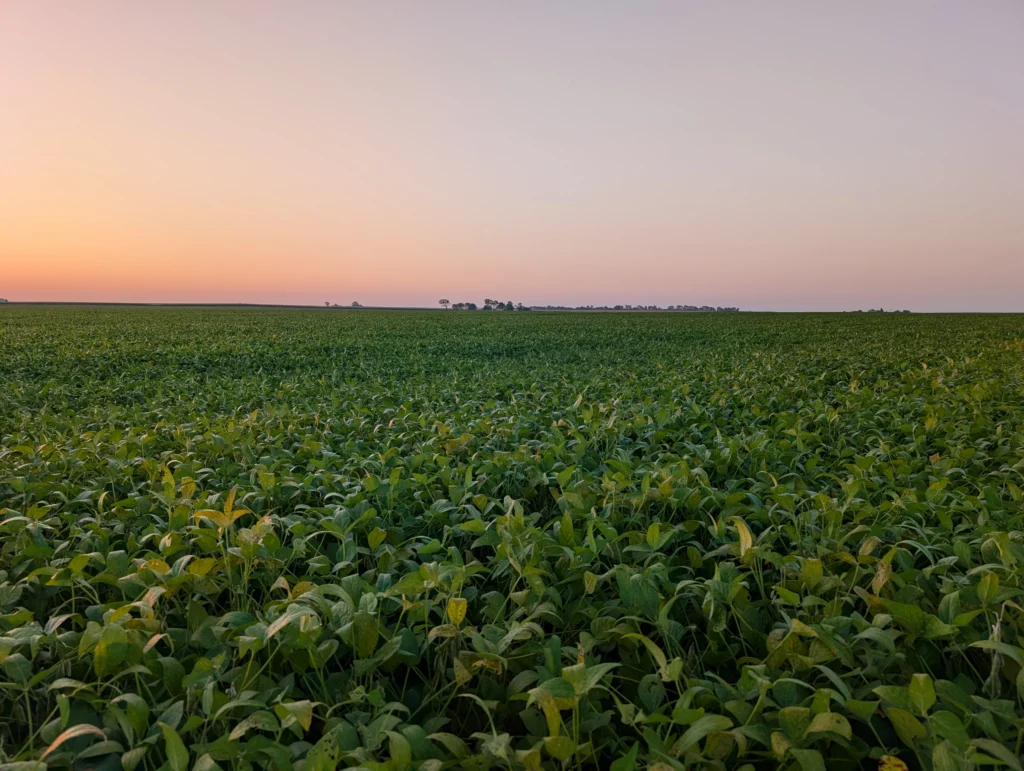
Most soybean fields in that part of the county were somewhere in the full seed (R6) growth stage, with a couple fields starting to drop leaves and close in on beginning maturity (R7). Some pockets with disease issues could be found and are relatively easy to spot at this point in the season, as they tend to be a bit stunted and yellowing/dropping leaves faster than surrounding areas. But for the most part, most fields are relatively clean of disease as they near maturity.
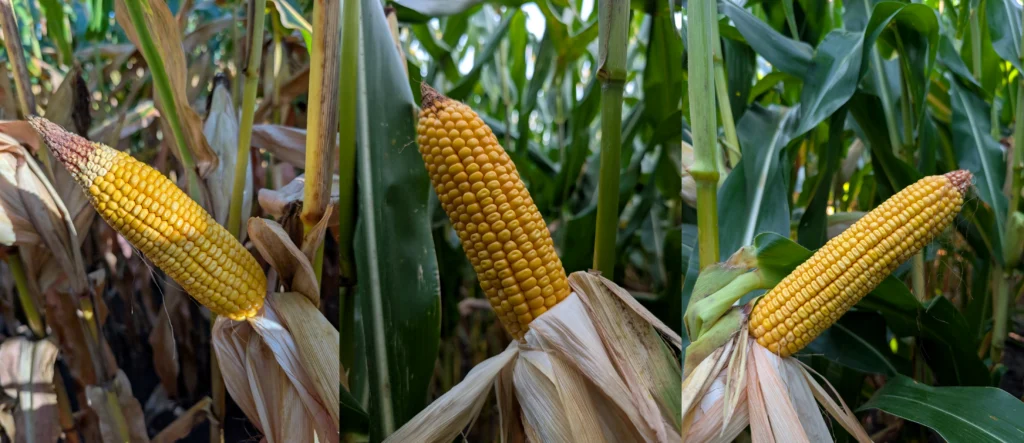
Most corn fields are somewhere in the dent (R5) stage. I did not find any kernels at black layer in the fields I surveyed, but there were at least a couple fields that were very close. As these fields senesce, more foliar disease can be seen in the canopy as well. Even if it won’t impact this year’s management decisions, now is a good time to scout your fields to determine how well your disease management plan worked this year. Over time, these observations can help you determine which diseases may be more prevalent in certain fields as well as help you determine the influence of genetic resistance in your chosen hybrids to different diseases. Another reason to scout now is to asses the levels of stalk rot and lodging in your fields. I found a couple fields during my survey with some localized lodging due to crown and stalk rots. The use of drones or recent satellite imagery, if you have access, may help to assess extent and severity of lodging and help with prioritization of harvest activities.
EMAIL SIGN UP
Sign up to receive our newsletter for up-to-date news and offers directly in your inbox:
LINKS
FOLLOW FIELD ADVISOR

The Illinois Soybean Association (ISA) checkoff and membership programs represent more than 43,000 soybean farmers in Illinois. The checkoff funds market development, soybean production and government relations efforts, while the membership program, Illinois Soybean Growers (ISG) and the Illinois Soybean Growers PAC actively advocates for positive and impactful legislation for farmers at local, state and national levels. ISA upholds the interests of Illinois soybean farmers through promotion, advocacy, research and education with the vision of becoming a trusted partner of Illinois soybean farmers to ensure their profitability now and for future generations.
© 2026 Illinois Soybean Association

 and then