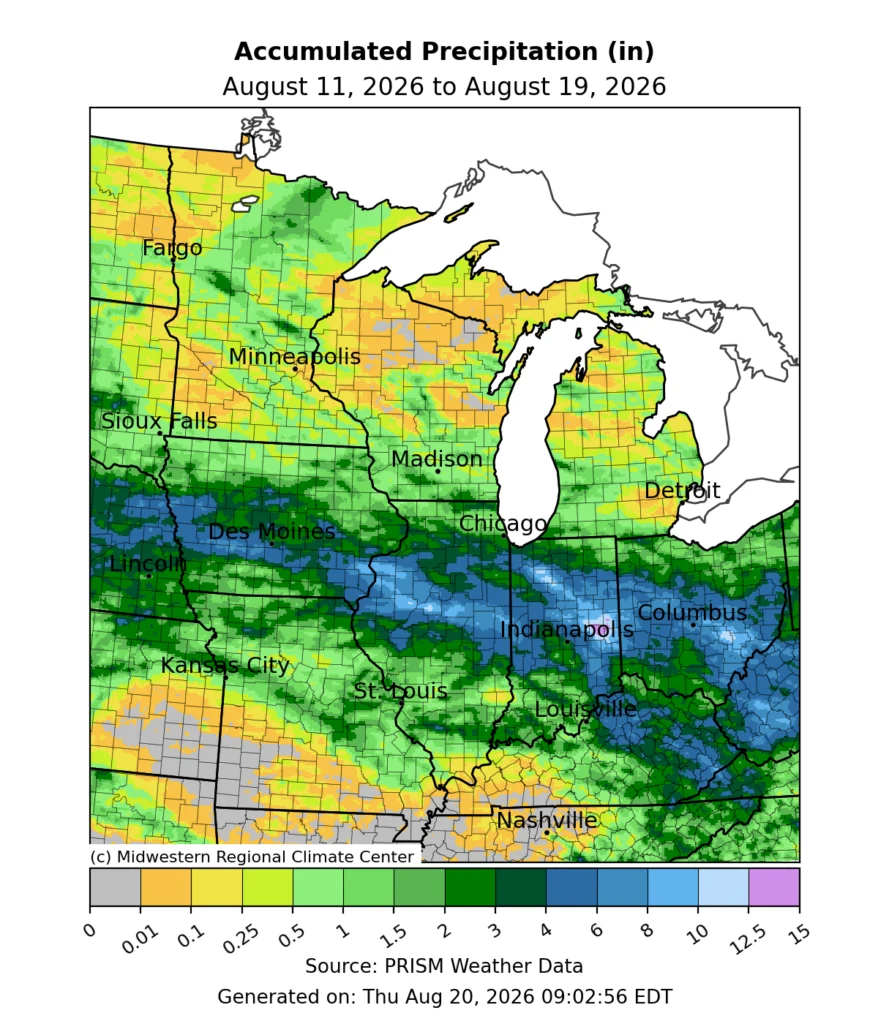
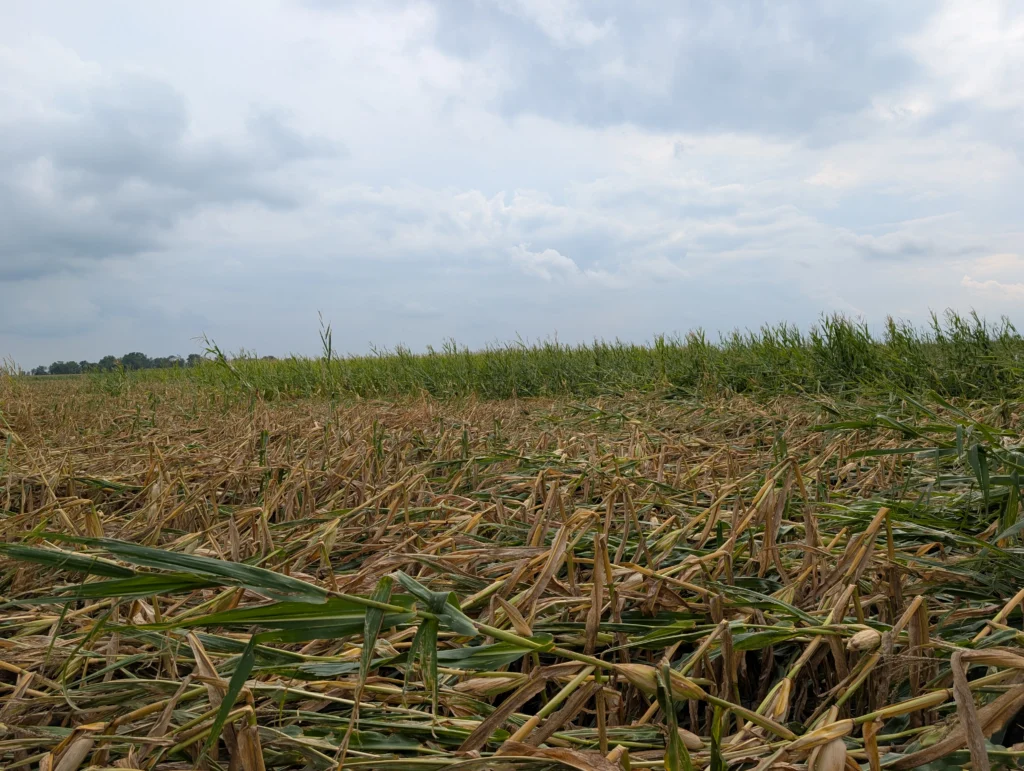
Wet conditions have returned to much of central IL. Following a bit of a dry spell in late July and early August, the Illinois Soil and Water Survey’s weather station in Champaign has registered more than 8 inches of rain over the past 9 days. The recent storms also brought high winds and a tornado in the southwestern portion of Champaign County, near Giblin, leaving pockets of crop damage (mostly corn) in that area. Standing water is also back in low areas of some fields. Many of these areas were already absent of crop due to the same issues earlier in the growing season, but standing water could also be seen in some areas where the crop had survived that early-season stress.
Wind damage appeared to decrease as I continued toward Sadorus and Tolono during my survey of southern Champaign County, although the flooding in low-lying areas persisted. Corn conditions were a bit variable. Many fields still look healthy and green, but some corn fields are starting to “fire”, or lose color in their lower canopy, indicating remobilization of nutrients from those tissues to the developing ear. Most fields range from the late dough (R4) to dent (R5) growth stages; I didn’t find any fields at black layer, or full maturity (R6), quite yet. Some fields are starting to show more symptoms of foliar disease, primarily gray leaf spot, but also some northern corn leaf blight. But with those fields generally at early dent (R5) or later, the level of disease observed is unlikely to have a large impact on yield.
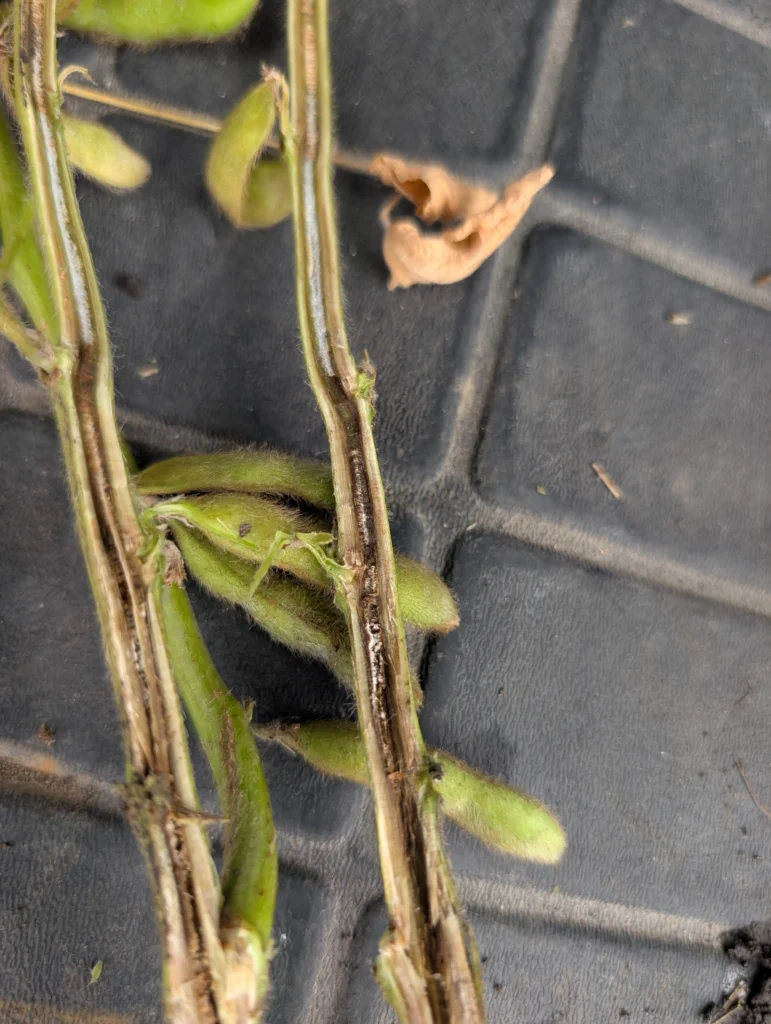
Soybean conditions are also starting to look more variable in the area. Again, many fields are looking healthy with a dense, green canopy and full pods, at or nearing the full seed (R6) growth stage. But some fields are starting to show areas with yellowing leaves, indicating some kind of disease issue. In a couple of those fields, I collected plants and split stems to identify pith symptoms characteristic of brown stem rot. This may also be the issue in other fields I observed with similar foliar symptoms, but there are a number of diseases that often present similar foliar symptoms that may be difficult to differentiate and properly diagnose in the field. Resources are available from the Crop Protection Network to help with identifying these diseases (https://cropprotectionnetwork.org/publications/scouting-for-soybean-stem-diseases), and samples can always be submitted to The Plant Clinic (https://extension.illinois.edu/plant-clinic) to get a lab diagnosis. Having an accurate diagnosis is essential for selecting resistant varieties and developing a successful integrated pest management plan for future growing seasons.
EMAIL SIGN UP
Sign up to receive our newsletter for up-to-date news and offers directly in your inbox:
LINKS
FOLLOW FIELD ADVISOR

The Illinois Soybean Association (ISA) checkoff and membership programs represent more than 43,000 soybean farmers in Illinois. The checkoff funds market development, soybean production and government relations efforts, while the membership program, Illinois Soybean Growers (ISG) and the Illinois Soybean Growers PAC actively advocates for positive and impactful legislation for farmers at local, state and national levels. ISA upholds the interests of Illinois soybean farmers through promotion, advocacy, research and education with the vision of becoming a trusted partner of Illinois soybean farmers to ensure their profitability now and for future generations.
© 2026 Illinois Soybean Association
 and then