
Article by Tim Laatsch, CCA, IL Soy Envoy
—
Embracing change on the farm is rarely easy, and the hesitation many Illinois producers feel around cover crop adoption is completely understandable. If you have experienced a frustrating past failure, such as a patchy stand or a spring termination nightmare, you are not alone. Cover crops are often viewed as an extra cost or a management headache when the value they create isn’t properly considered.
When we shift our perspective and treat cover crops with the exact same rigor, precision and respect as primary corn and soybeans, the entire equation changes. By treating cover crops as a vital, active crop in the rotation, we can turn previous frustrations into consistent victories for our bottom lines.
The 5-Step Cover Crop Playbook
Elevating your cover crop game requires planning, preparation, discipline and mastery of the same management fundamentals that you apply with cash crops.
- Set Realistic, Site-Specific Goals
Let your specific agronomic goals, such as minimizing erosion or improving soil tilth, drive your choice of cover crops. Your goals must respect what your environment can reasonably deliver. A northern Illinois operator faces a tight post-harvest window and may have poor success with late-seeded legumes like crimson clover, making ultra-hardy cereal rye a safer bet. Use regional resources like the Midwest Cover Crops Council (MCCC) Cover Crop Decision Tool to evaluate county-level data and see what your location can reasonably deliver.
- Plan Strategic Species & Seed Sourcing
You would never pull up to a planter with a mystery bin-run variety and hope for the best. Avoid pitfalls by securing high-quality, weed-free seed early from a trusted vendor to guarantee germination percentages. Be aware of which cover crop species could host a pest or disease that harms your next cash crop.
- Manage and Balance Your Establishment Risks
Just like cash crops, cover crops need to be well-established with a uniform stand at the right population to deliver the results you want. Every seeding method involves calculated trade-offs between timing, cost and stand success. Trying to buy time through relay cropping (such as aerial broadcasting into a standing crop) sounds efficient, but surface-applied seeds carry a higher risk of failure than direct seeding due to inconsistent seed-to-soil contact. Conversely, waiting to use a no-till drill until after harvest to seed a nitrogen-fixing legume slashes its remaining growing degree days and significantly increases risk of winterkill. What risks are you trying to manage and what system or tools will provide the best mitigation?
- Master Spring Termination and Biomass Management
Before a single seed goes into the ground, map out your spring termination. If managing cereal rye ahead of soybeans, determine early if you will spray ahead of time or plant “green.” What is your failsafe if ground conditions don’t allow timely termination? Do you have access to an ATV sprayer or drone services?
Be aware of the potential limitations to nitrogen availability for cover crops with high C:N ratio. For example, cereal rye biomass can tie up early nitrogen. Do you have the capability to supplement nitrogen on the planter or an early side-dress option to ensure your corn seedlings never suffer a nutritional gap? Should you consider a lower biomass cover crop ahead of corn, such as wheat or winter barley? Should you till strips or plant covers in traditional wide rows to ensure that the subsequent cash crop has a good seedbed with ample nutrients?
- Frame Inputs as Investments with Tangible Returns
Reframe your view of cover crop input costs as a direct investment in your soil that yields compounding returns over the long haul. Proactive management of cover crops can also deliver some short-term economic value by stabilizing soil, suppressing waterhemp, stimulating soil biology, creating root pathways to deeper nutrients and moisture, and by stabilizing unused nutrients. Illinois farmers can offset these investments from day one by stacking agronomic returns with incentives like the Illinois Department of Agriculture’s Fall Covers for Spring Savings crop insurance rebate or federal EQIP funding through the USDA NRCS.
By mastering the fundamentals and elevating our cover crop game, we protect our investments, build long-term soil health and unlock concrete financial rewards in the nearby. Let’s stop planting cover crops just to cover the ground and start managing them to fuel our farm’s future legacy.
Reference Footnotes
- Midwest Cover Crops Council. Cover Crop Decision Tool. Facilitated in partnership with the Illinois Sustainable Ag Partnership. Hyperlinked at: https://covercroptool.midwestcovercrops.org/
- Illinois Soybean Association Checkoff Program. “5 Tips to Cover All the Cover Crop Bases.” ILSoyAdvisor / Field Advisor. Hyperlinked at: fieldadvisor.org
- Precision Conservation Management. Managing Risks with Cover Crops. Joint ICGA and ISA publication. Hyperlinked at: precisionconservation.org
- Armstrong, S., Gentry, L., Schaefer, D., Miller, E., & Pike, J. Considering Cover Crops? Guide to Cover Crop Success. Illinois Nutrient Research & Education Council (IL NREC). Hyperlinked at: illinoisnrec.org
- Illinois Nutrient Research and Education Council. Cover Crop Guide. Hyperlinked at: NREC Cover Crop Guide
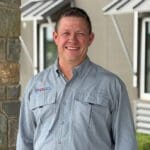
Tim Laatsch, CCA, is owner and president of Field Hawk Ag Research LLC, a company providing contract research services to the agricultural industry. He has held a variety of roles across the agricultural sector, including eight years leading agronomy in North America for Koch Agronomic Services, three years in technical agronomy with GROWMARK, 12 years in environmental management and executive operations leadership with The Maschhoffs, and three years with University of Illinois Extension. Through these roles, Laatsch has developed a holistic perspective on agriculture as a seasoned business leader, people developer, skilled communicator and sustainability advocate. His academic training is in soil science and microbiology, earning a bachelor’s degree from Southern Illinois University Carbondale and a master’s degree from Michigan State University. He is a graduate of the Illinois Agricultural Leadership Foundation Class of 2010 and recently served three years on the Illinois Nutrient Research and Education Council. Laatsch and his wife, Jane, reside in rural Altamont adjacent to the Laatsch Centennial Farm. Fourth-generation farmers who both grew up in agriculture, they took over the family operation 10 years ago. They enjoy traveling, hiking, biking and spending time with their two adult children, son-in-law and four grandchildren.


 and then
FIND US ON