
ByBy Rachel Vann, University of Illinois Crop Sciences
Many soybeans across Illinois are rapidly moving towards physiological maturity. Inevitably some green stem will start to show up. This is a problem I dealt with frequently as an agronomist in North Carolina.
Green stem occurs when pods are ready for harvest but the stem remains green, often leading to delayed and complicated harvests. Green stem is caused by a variety of issues but typically occurs when the source (vegetative portion of the plant) to sink (developing pods/seeds) ratio has gotten out of whack. When the sink is limited to do various stressors but the source remains strong, stems remain green beyond the normal growth period.
Stress during the growing season is often implicated in causing this problem. With that being said, I have also seen green stem in soybeans that have yielded over 100 bu/A where it is hard to accept the sink was limited! We also know that soybean genetics and environmental factors contribute to green stem. I have seen the same variety planted on the same day two miles apart in different fields with drastic differences in green stem, showing how the environment has a big impact on this production problem. Other factors that can influence green stem are certain fungicide applications, some diseases, and stink bugs. Our national Science for Success team has compiled more information on green stem and various causes.
Unfortunately, there are limited production opportunities to resolve green stem. This is often because by the time producers realize this is going to be a challenge, it is too late to apply a desiccant to help minimize the problem. While previous work on green stem shows varying effectiveness of using desiccants, our recent Science for Success research did find that desiccation at R6.5/R7 was able to reduce green stem about 50% of the time. However, even at R7 (one mature pod on the plant) it is challenging to know if you are going to have green stem issues or not to determine if desiccation would provide a return-on-investment.
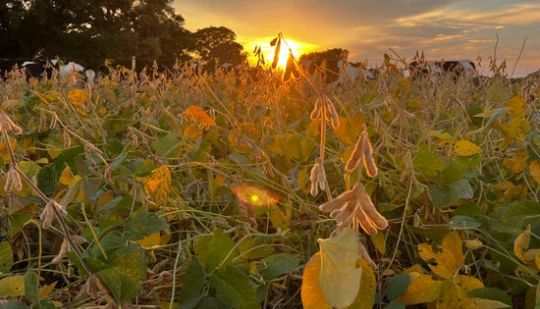
Image from Abigail Peterson, CCA, ISA Director of Agronomy
References
Kendall, M. A., Mourtzinis, S., Lindsey, L. E., Menza, N. C. L., Licht, M. A., Matcham, E. G., McNeal, J. P., Moseley, D. O., Mulvaney, M. J., Naeve, S. L., Plumblee, M. T., Fontes, G. P., Ross, W. J., Vann, R. A., & Conley, S. P. (2025). Harvest aid applied at soybean growth stage R7 rarely impacted seed, protein, or oil yield. Agronomy Journal, 117, e70109. https://doi.org/10.1002/agj2.70109
Naeve, S., J. McNeal, J. Ross, and R.Vann. 2024. Understanding green stem in soybeans. Science for Success. https://soybeanscienceforsuccess.org/2025/06/23/understanding-green-stem-in-soybeans/
Vann, R. 2025. Understanding green stem in soybeans. Science for Success. Understanding Green Stem in Soybeans
About the Author: Rachel Vann



 and then
FIND US ON