
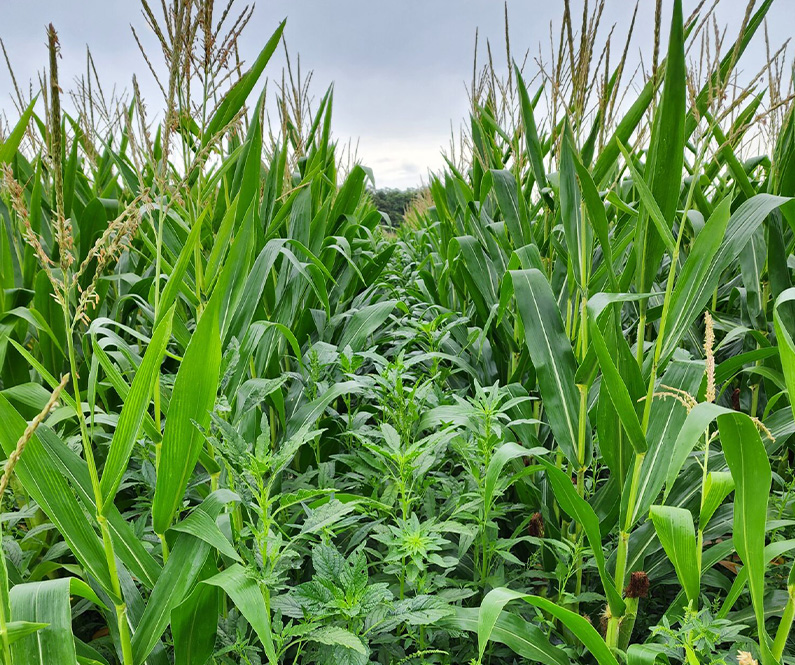
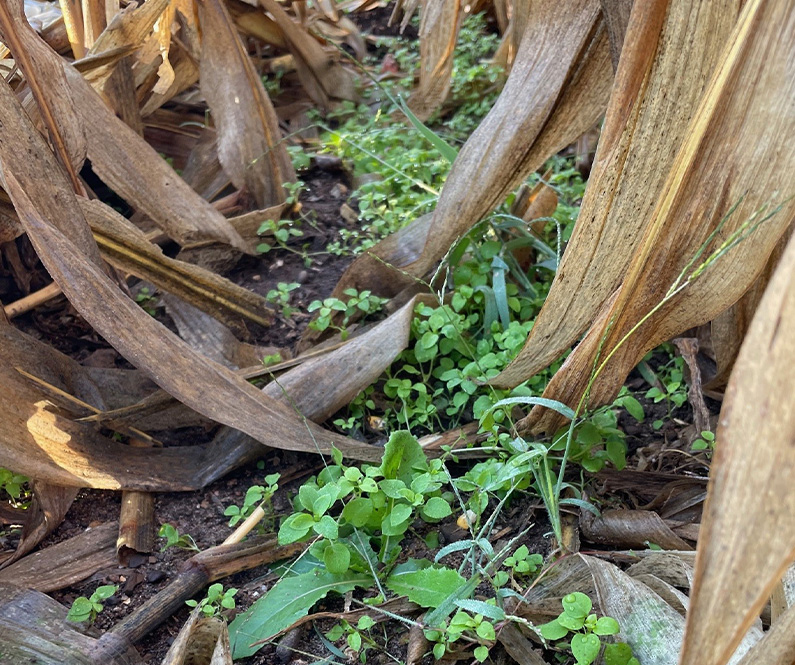
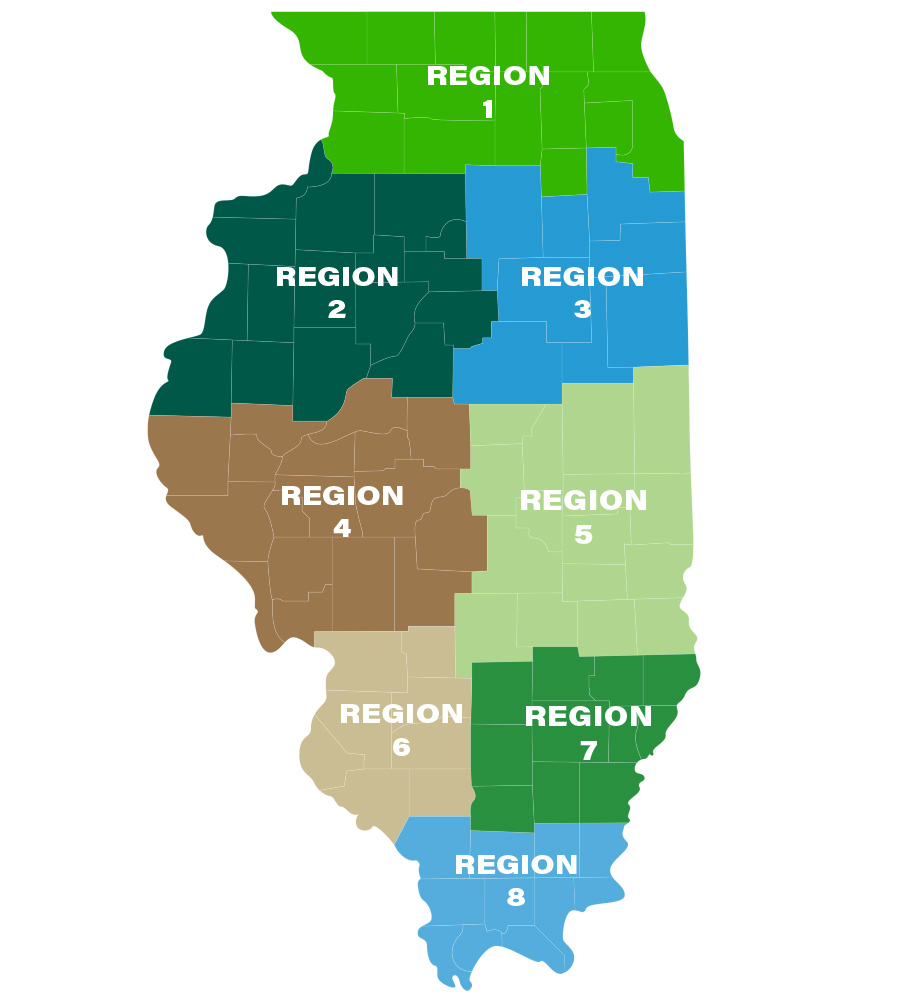
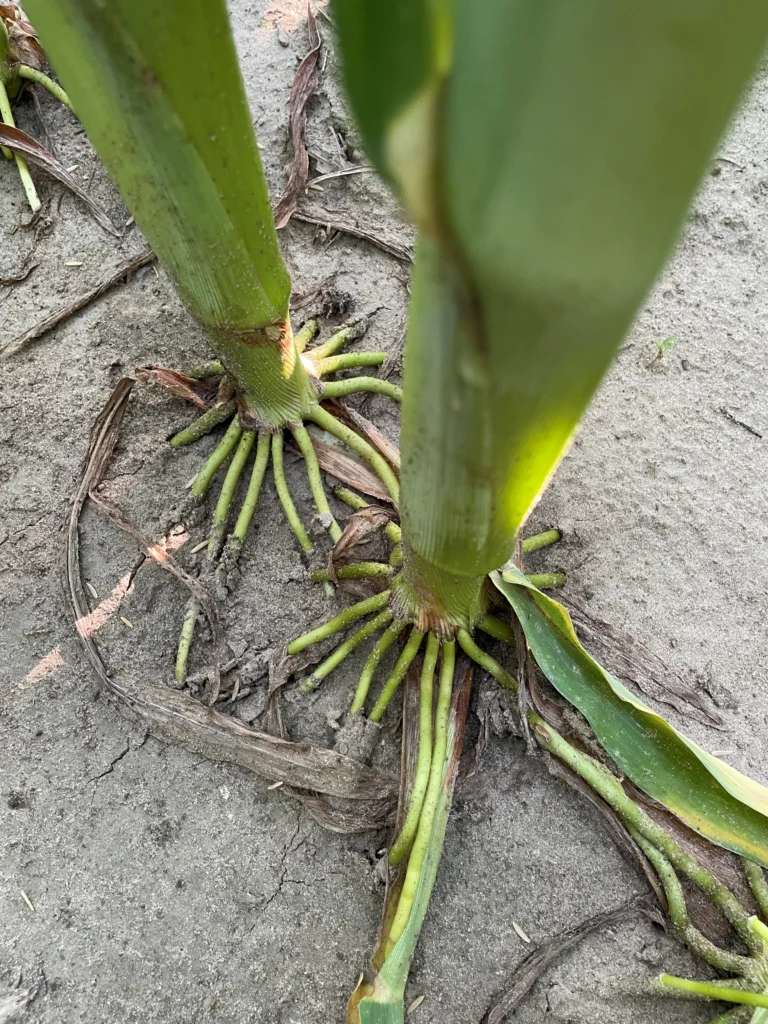
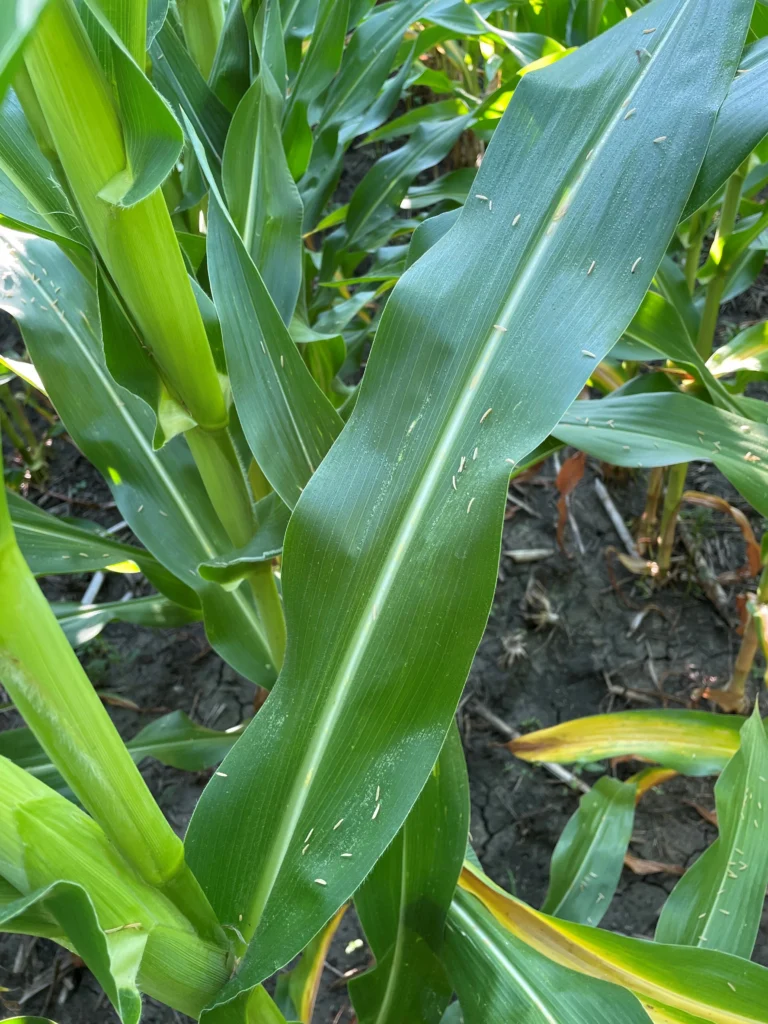
A favorable week for crop growth in the northeast region of Illinois. Corn is pollinating, despite predicted 90 degrees plus highs this week, most fields have adequate moisture and should not suffer despite elevated temperatures at this critical stage for the corn crop. I enjoy my early morning coffee looking across several corn and soy fields. This past week I noted most mornings start with a mist or fog. The mist does not come directly from the corn and soy crops, even though both put water vapor in the air through the process of transpiration. The morning mist is the result of the cooling of the moist air. As the air cools overnight, it reaches its “dew point” and can no longer hold water as a gas, causing water vapor in the air to turn into liquid droplets. Of significance to those scouting for crop diseases, the morning mist extends periods of leaf wetness, a favorable requirement to several fungal leaf diseases. This week, with the appearance of brace roots in the corn crop, the question of underground root expansion was raised. There are many limiting factors to root growth, too much or limited moisture, soil compaction or other natural barriers. However, the general suggestion is that root expansion in the corn crop continues through pollination. At this point the crop redirects energy toward grain fill. By this time with favorable soil structure, it is not uncommon for corn roots to extend to six feet in depth. Our soy plants tend to generate roots further into the vegetative stages, to R5 and R6, beginning and full seed.
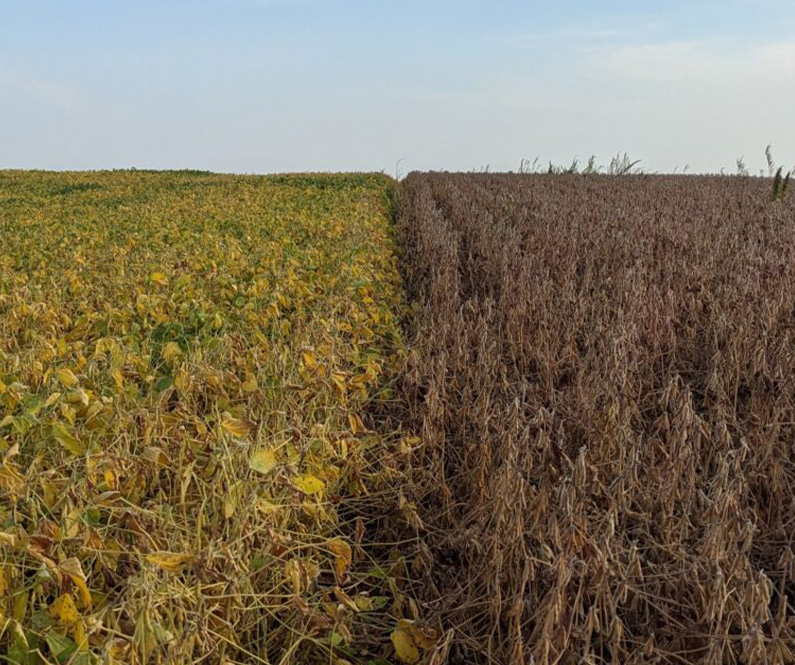
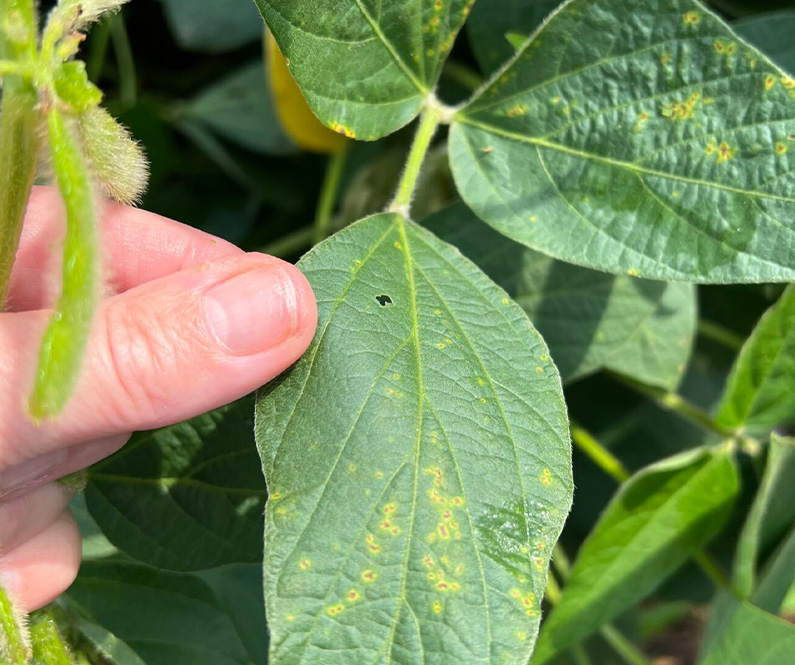
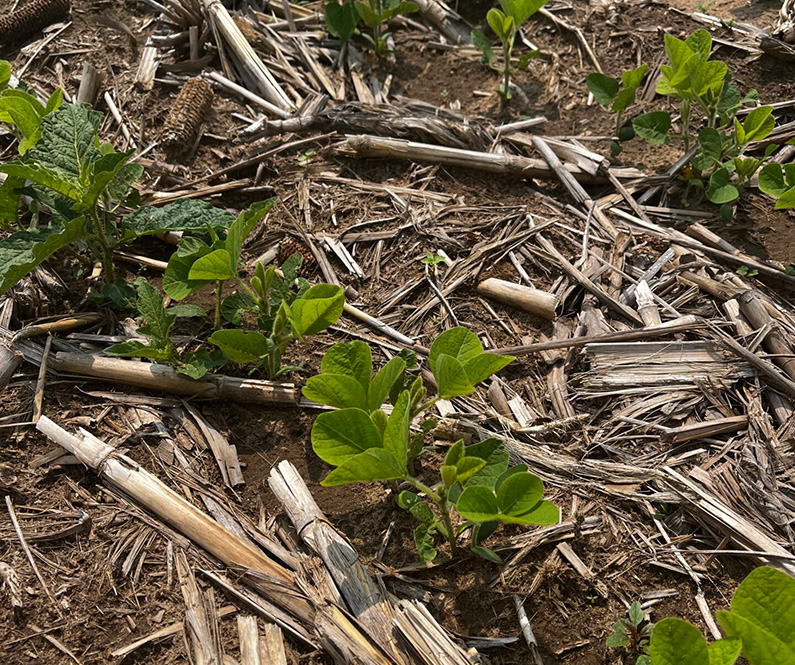
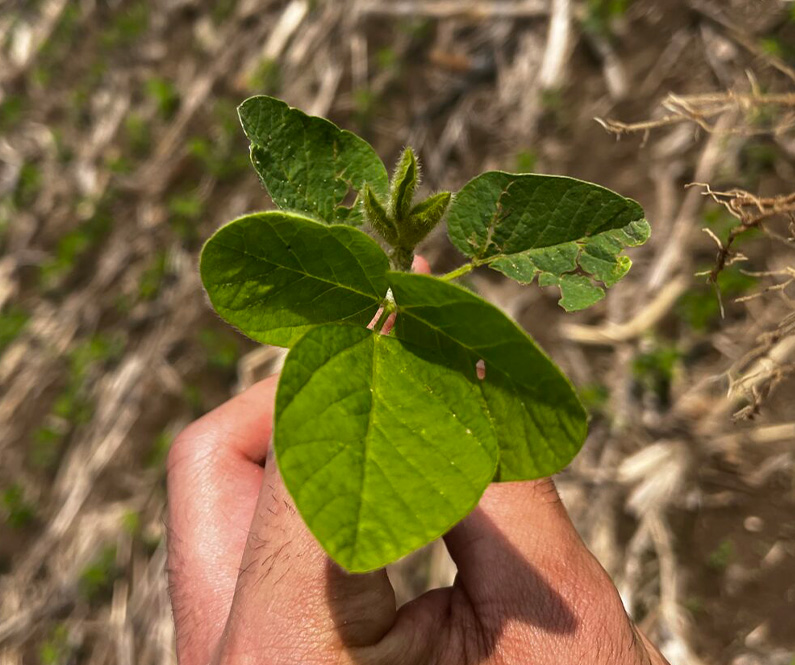
The corn crop is R1 with kernel fertilization underway. Soy is between R2, full flower and R3, or beginning pod. Despite favorable conditions for leaf diseases, I have yet to see an outbreak of tar spot on corn or soy leaf disease in fields I have scouted. Growers are encouraged to remain diligent with both field visits and local reports.
EMAIL SIGN UP
Sign up to receive our newsletter for up-to-date news and offers directly in your inbox:
LINKS
FOLLOW FIELD ADVISOR

The Illinois Soybean Association (ISA) checkoff and membership programs represent more than 43,000 soybean farmers in Illinois. The checkoff funds market development, soybean production and government relations efforts, while the membership program, Illinois Soybean Growers (ISG) and the Illinois Soybean Growers PAC actively advocates for positive and impactful legislation for farmers at local, state and national levels. ISA upholds the interests of Illinois soybean farmers through promotion, advocacy, research and education with the vision of becoming a trusted partner of Illinois soybean farmers to ensure their profitability now and for future generations.
© 2026 Illinois Soybean Association

 and then