
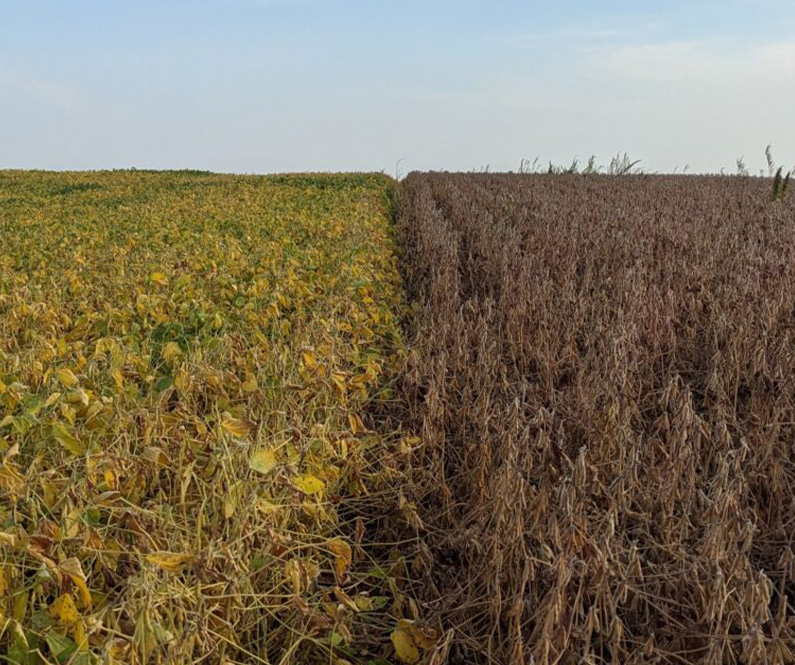
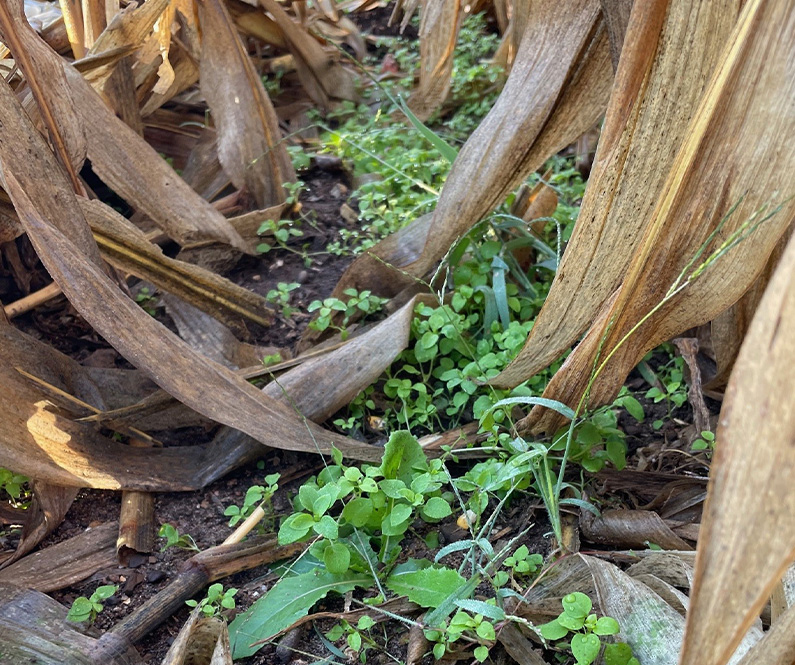
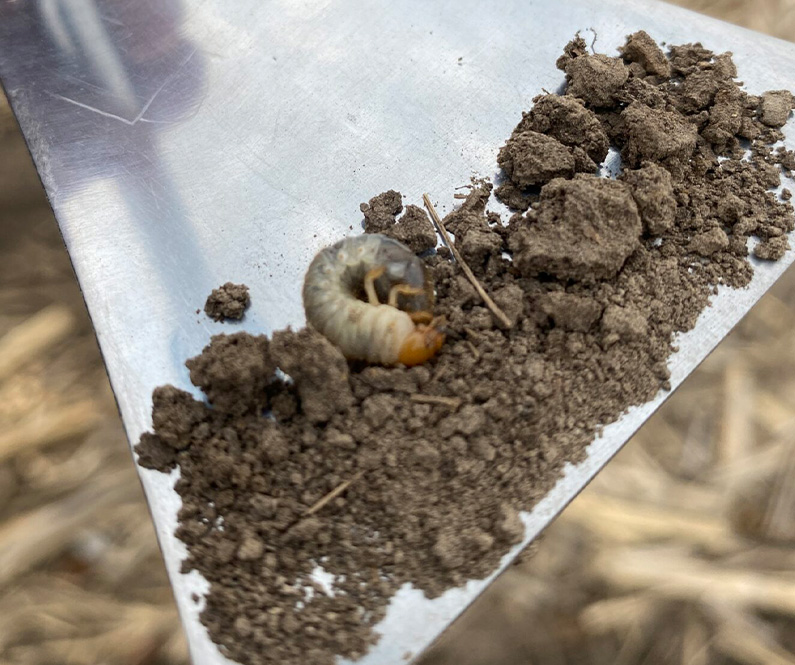
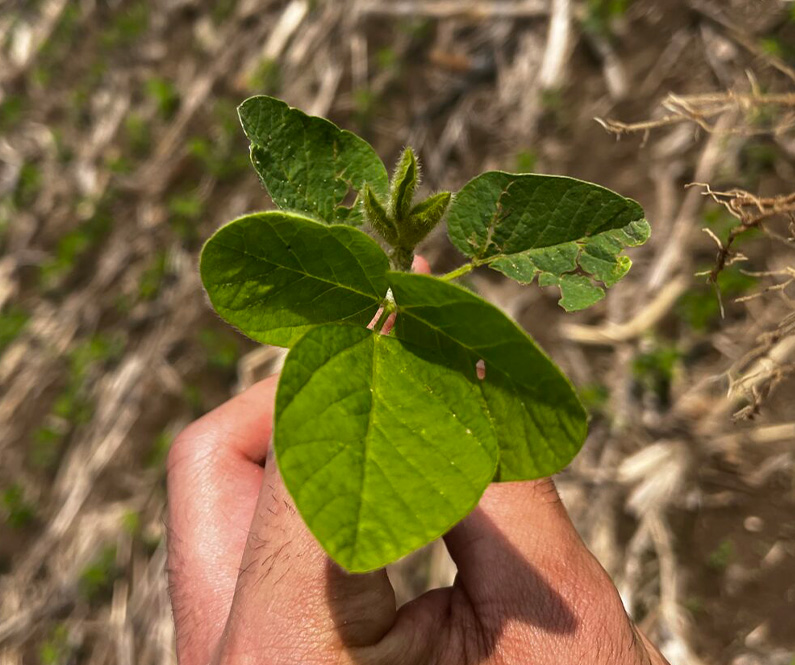
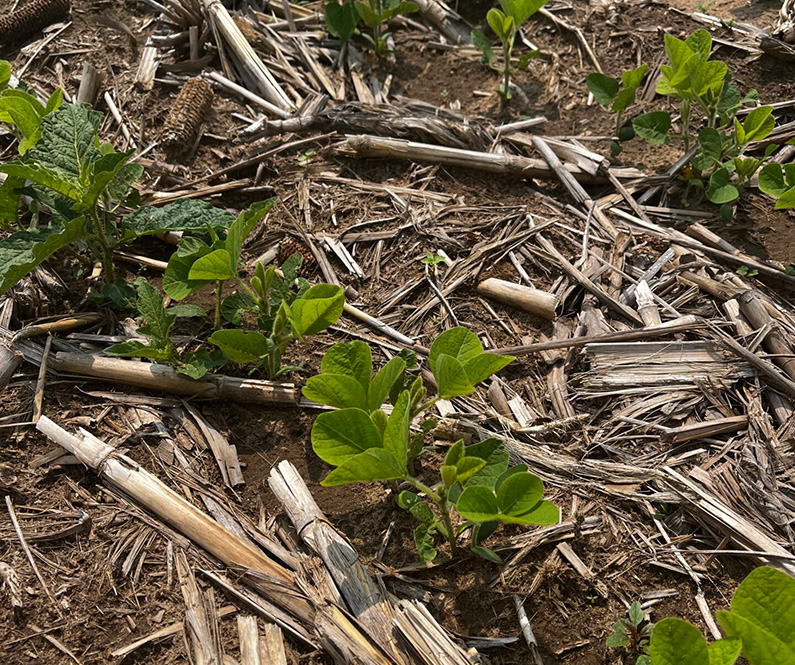
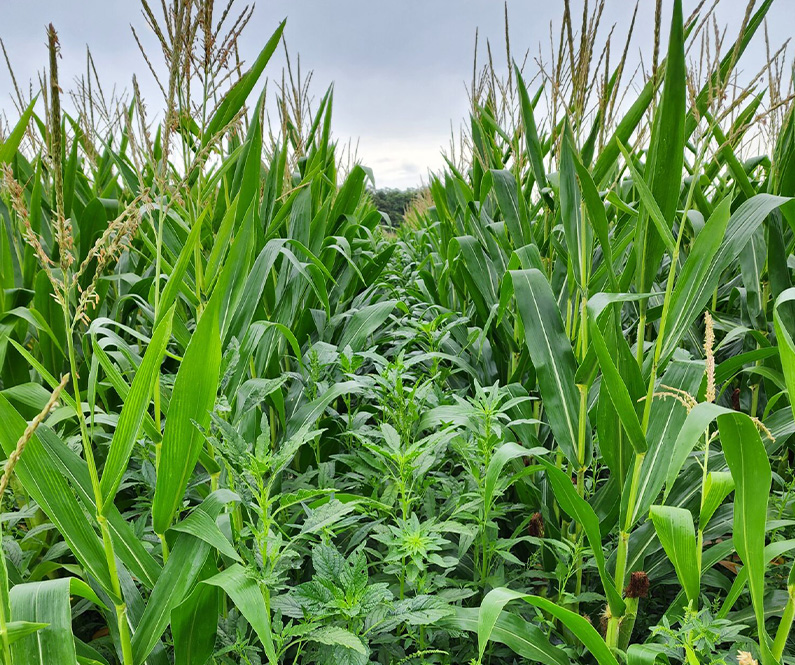
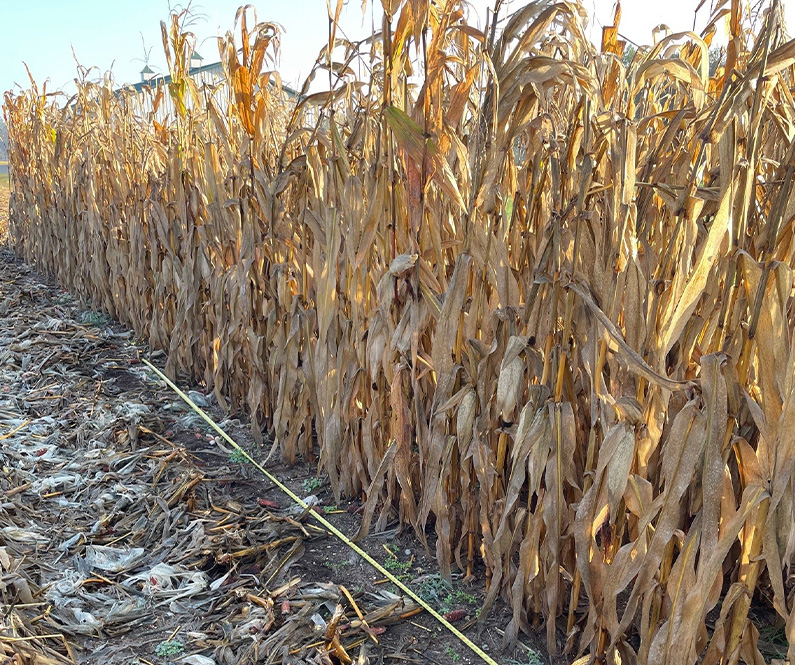
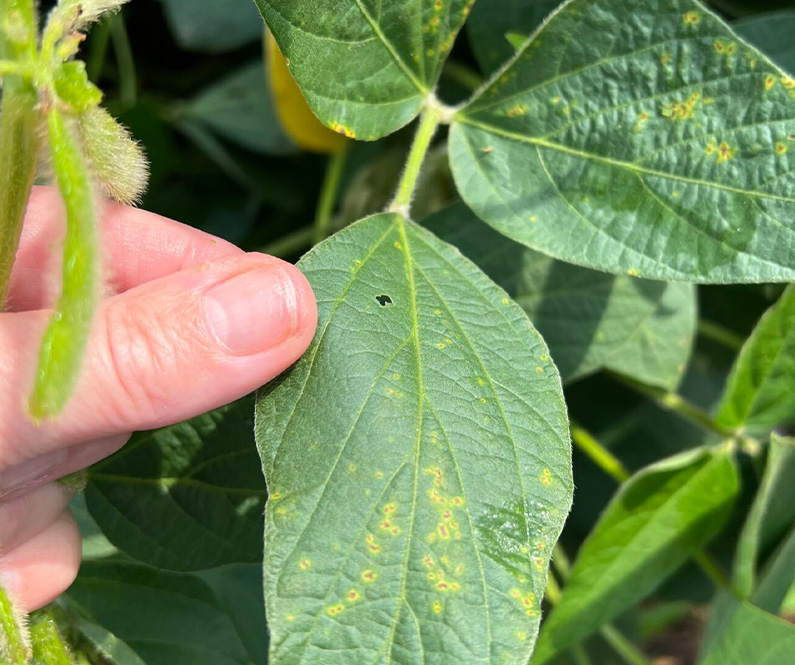
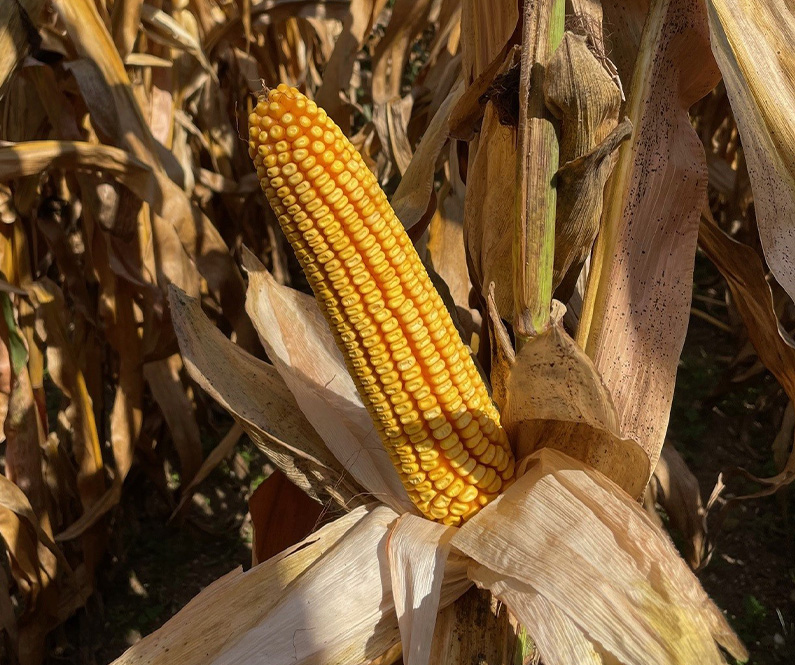
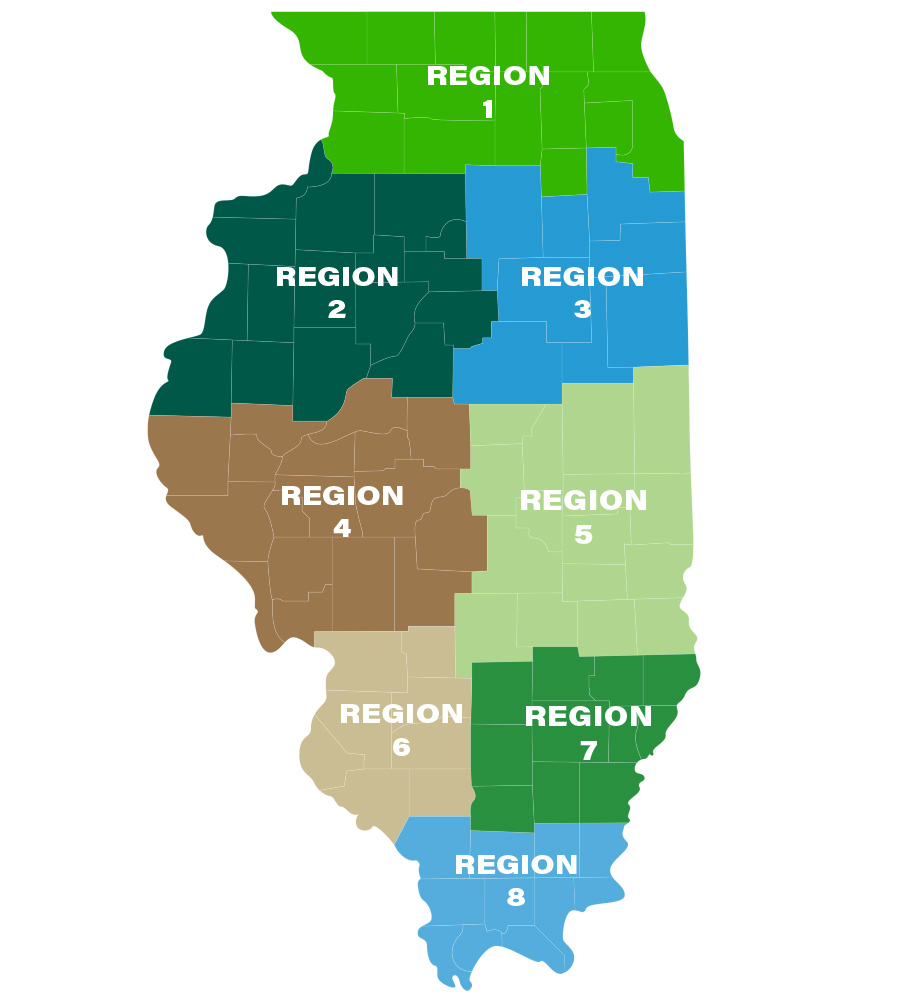
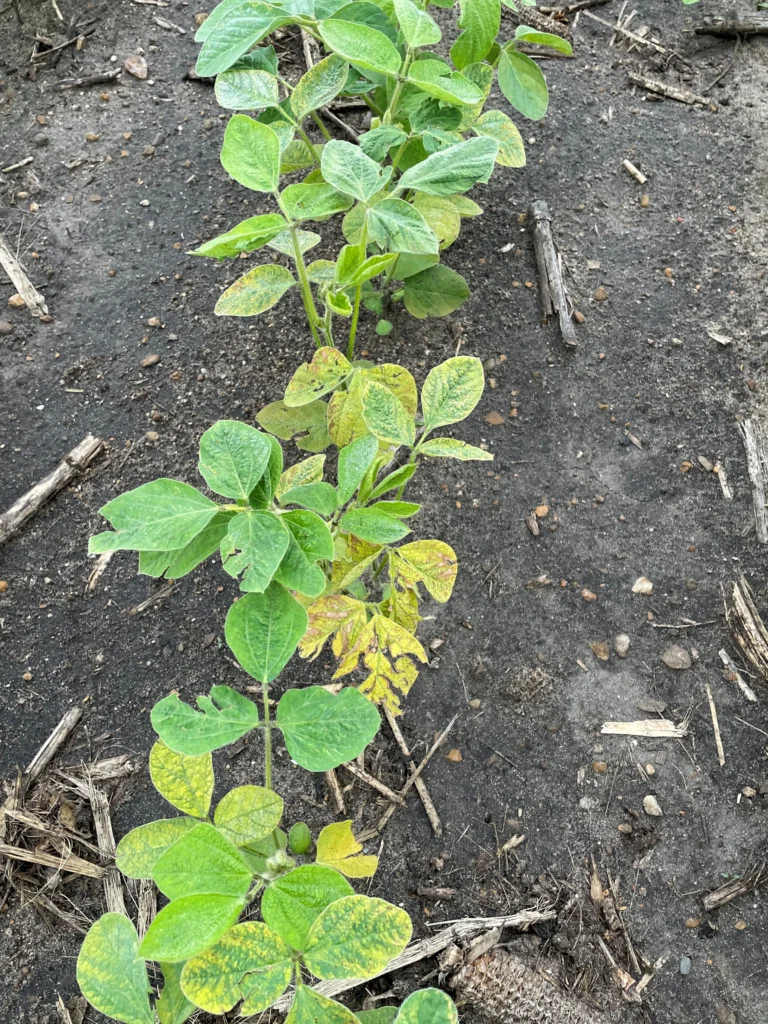
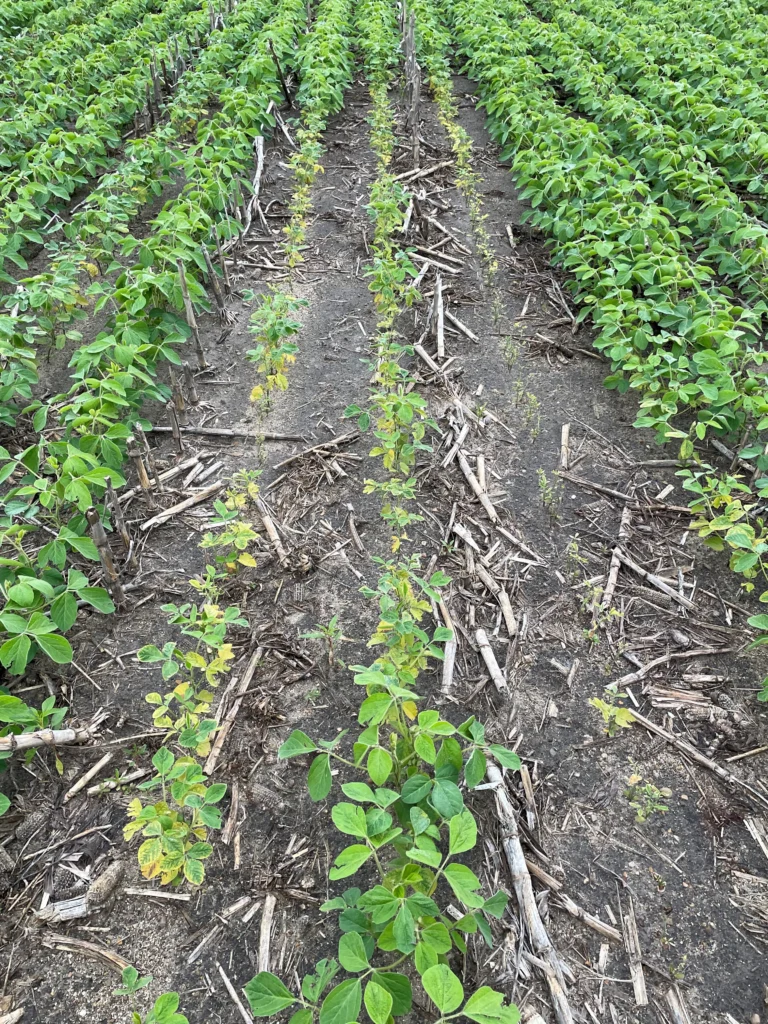
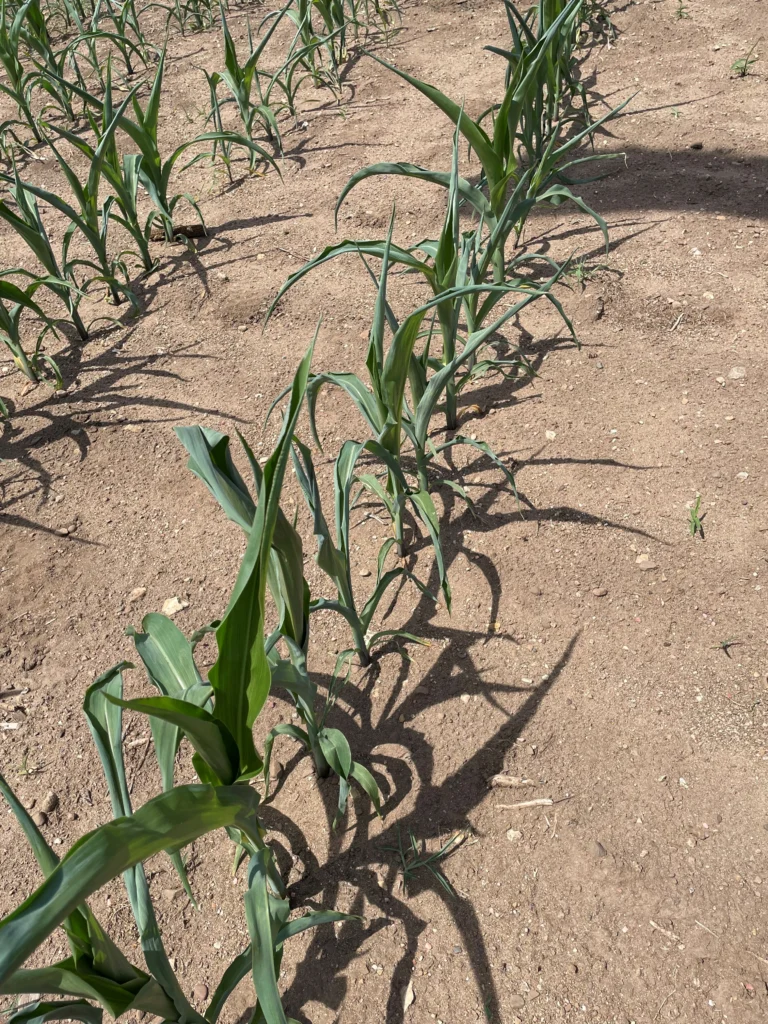
When I left Illinois for a brief vacation the first week of June, the Northeast Region was dealing with impending drought concerns (note wrapped corn from June 4th). Twelve days and 5+ inches of precipitation for many acres, an entirely new set of concerns for the 2026 crop. New concerns relate to saturated soils, erosion and crop damage caused by moving surface water and wind, and the lack of opportunity to apply post herbicides while weeds are in the optimum treatment window. Even when standing water dissipates, a saturated soil very quickly limits oxygen availability to a growing crop. An oversimplified way of describing the effects of a saturated soil is that the lack of soil oxygen available to the roots can reduce or stop plant functions. This can include transpiration, nutrient uptake, and water uptake. Extended saturated soil can cause visible stunting and even plant death, resulting in varying degrees of reduced final yield. In addition to struggling crops, persistent precipitation has prevented many post-herbicide applications from taking place. A few weeds, especially waterhemp, easily have exceeded the recommended maximum weed size for control of most herbicide. Soy on well drained soils are starting to enter their reproductive stage (flowering). We are near halfway through the growing season and have experienced the environmental conditions of excessively cool, hot, dry, and wet; What’s next?
EMAIL SIGN UP
Sign up to receive our newsletter for up-to-date news and offers directly in your inbox:
LINKS
FOLLOW FIELD ADVISOR

The Illinois Soybean Association (ISA) checkoff and membership programs represent more than 43,000 soybean farmers in Illinois. The checkoff funds market development, soybean production and government relations efforts, while the membership program, Illinois Soybean Growers (ISG) and the Illinois Soybean Growers PAC actively advocates for positive and impactful legislation for farmers at local, state and national levels. ISA upholds the interests of Illinois soybean farmers through promotion, advocacy, research and education with the vision of becoming a trusted partner of Illinois soybean farmers to ensure their profitability now and for future generations.
© 2026 Illinois Soybean Association

 and then