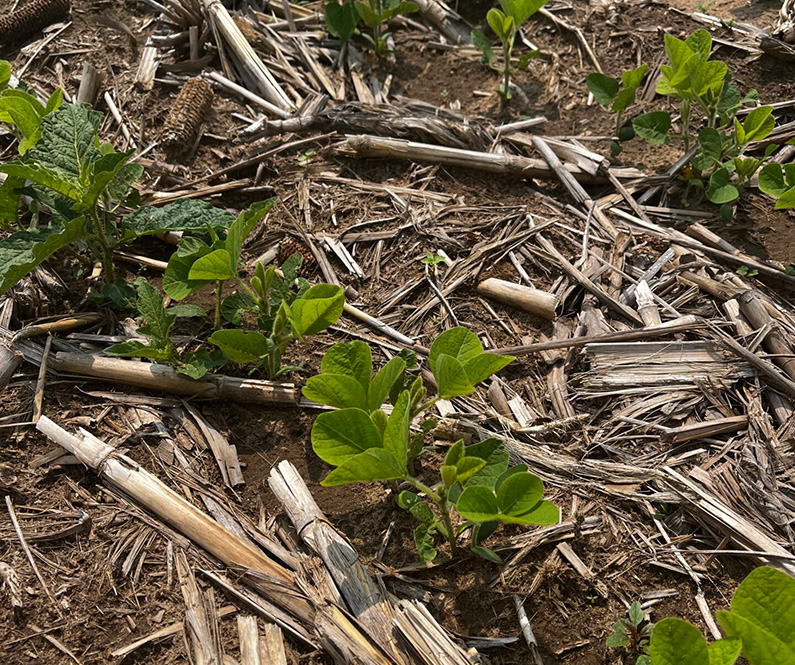
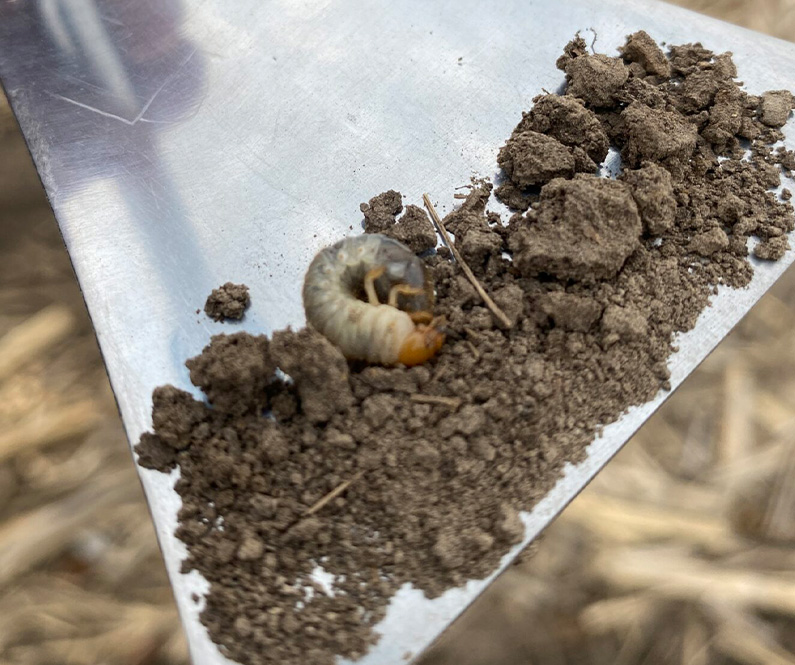
Cooler temperatures have arrived this fall (late summer, really) as we move through the waiting period of the growing season for corn and soybeans. Temperature averages in the 70s and low 80s have brought much relief after a very hot stretch across northern Illinois. Nearly every corner of Illinois north of I-80 is at normal rain and water levels, while downstate areas are beginning to enter into a slight drought, and plants continue to work through ear and pod fill. I have noticed diseases starting to really ramp up with temperatures dropping and heavy dews every morning.
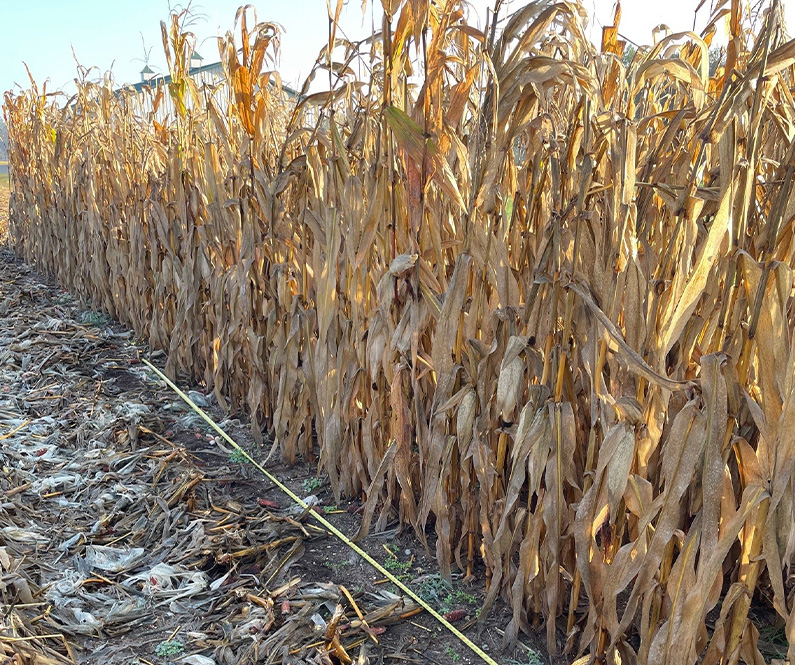
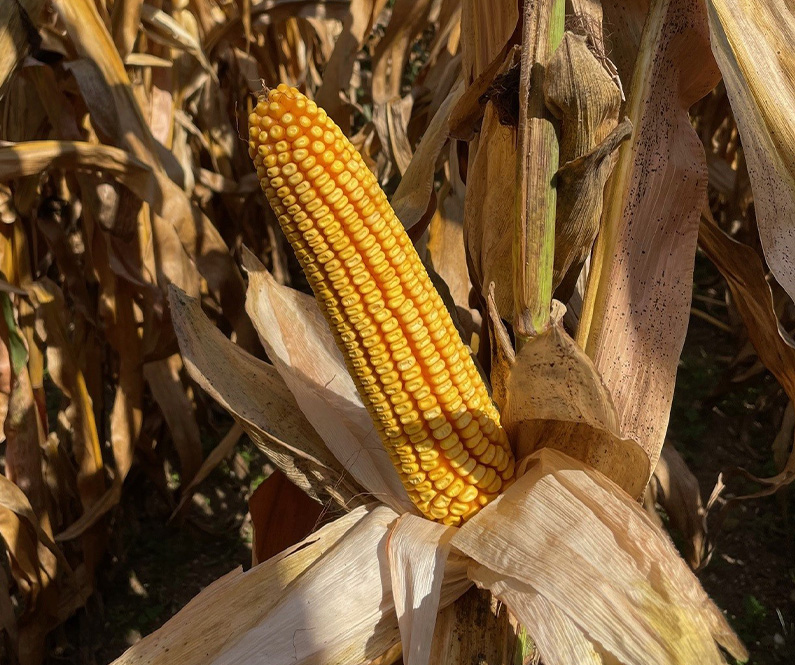
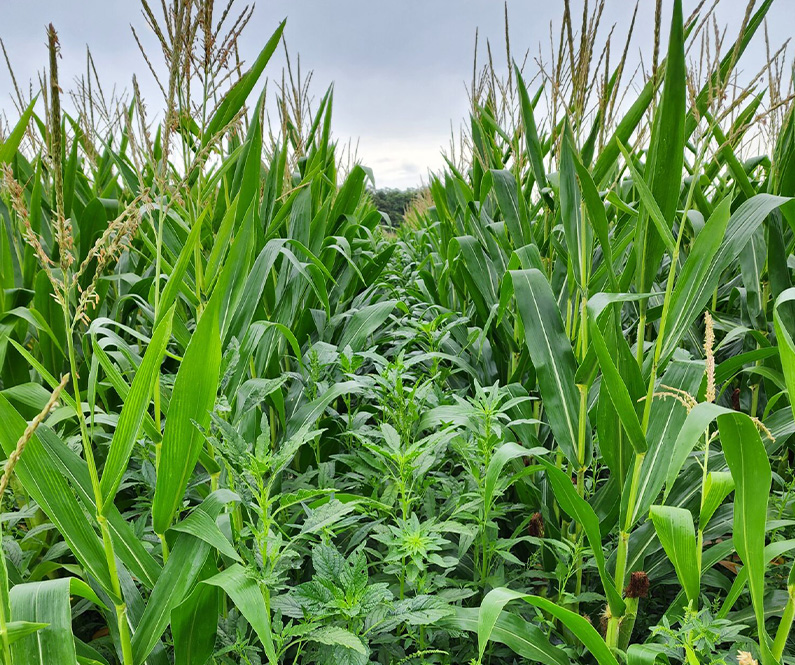
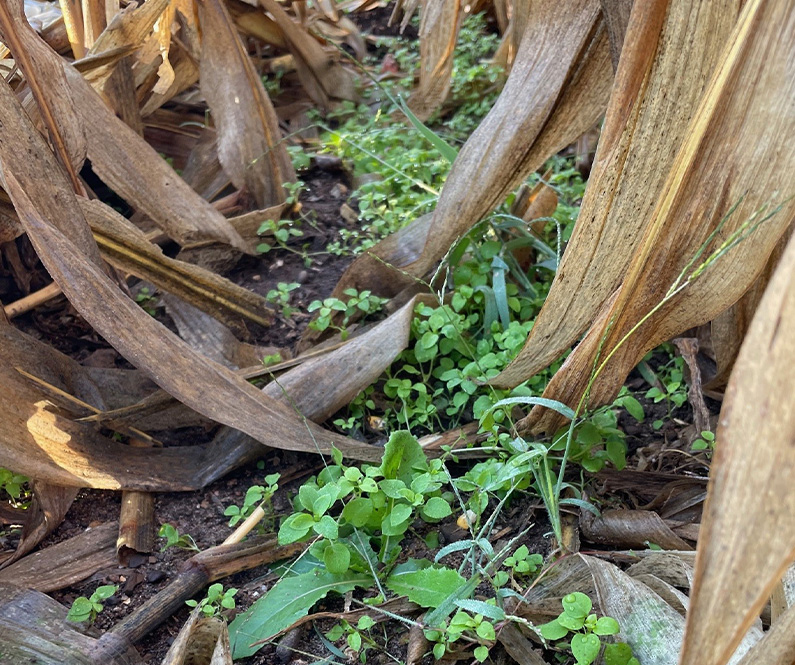
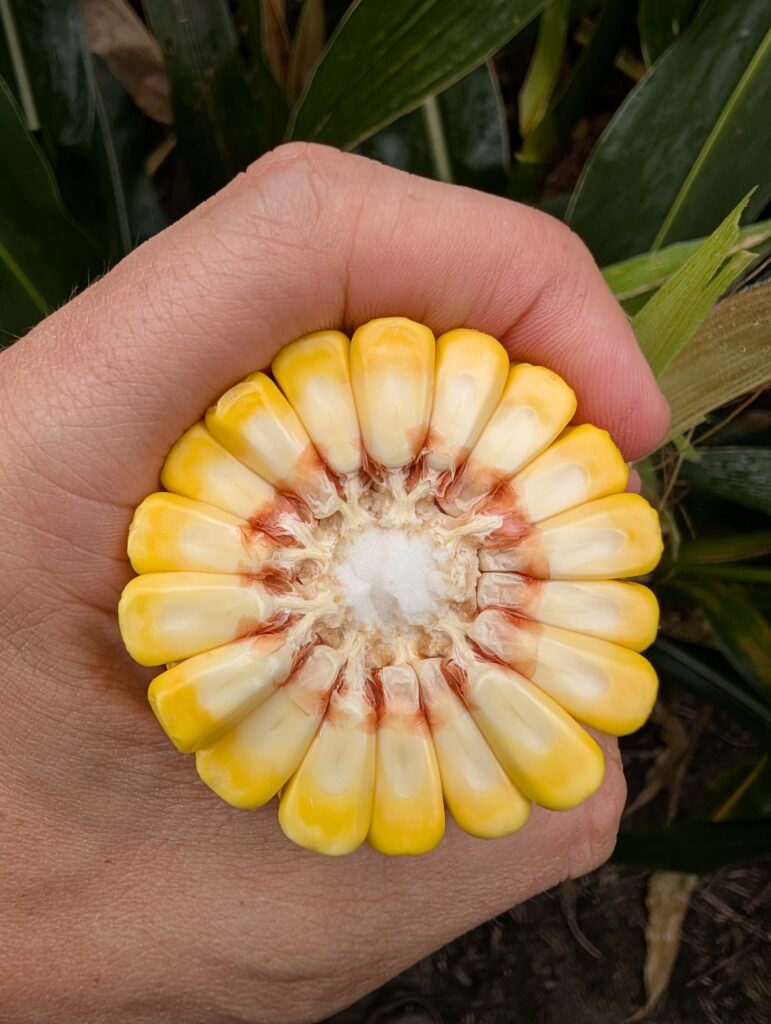
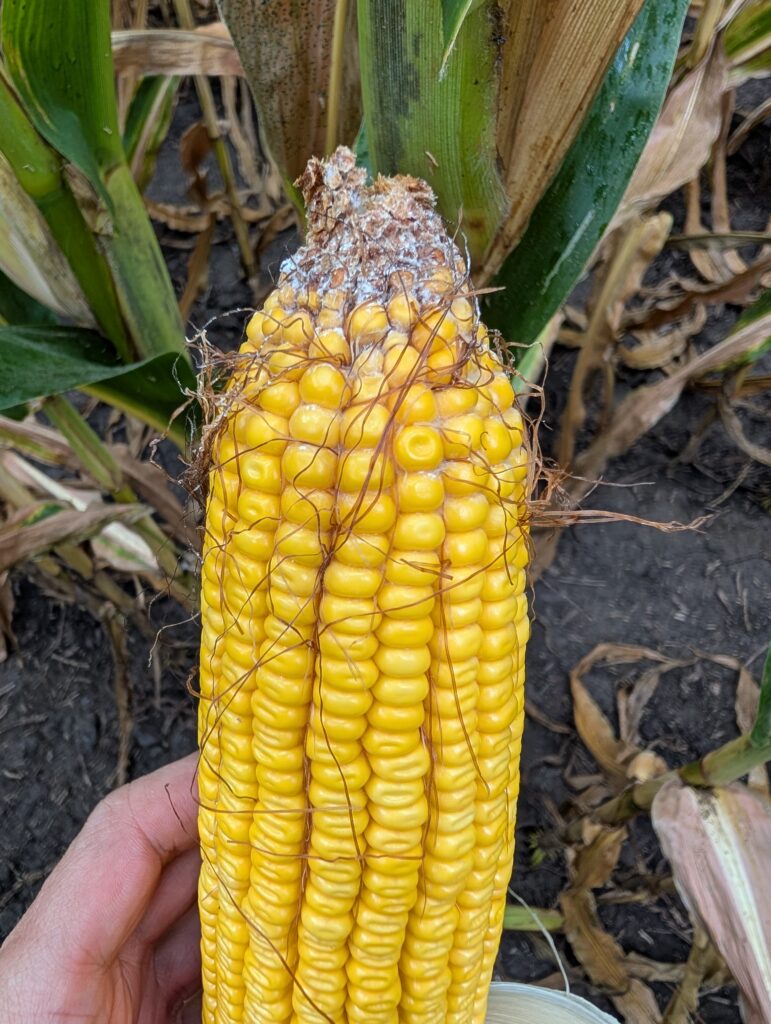
Corn is still green and starting to fire as it reaches maturity. Most fields I visited were full dent, with the milk line in the ear around 50%—maybe a little further along in some places (west of DeKalb was scouted this week). With the cooler temperatures and daily dews, tar spot and ear mold in particular have taken off in corn. Every field I visited had lesions well into the upper canopy, with lower leaves turning brown, necrotic, and dying. The upper third of plants above the ear are still green, so ear fill is still occurring even as the bottom dies out. Ears are starting to see small amounts of mold on the ear tips as well. Black layer is most likely 10–14 days away, based on the milk line and cooler temperatures.
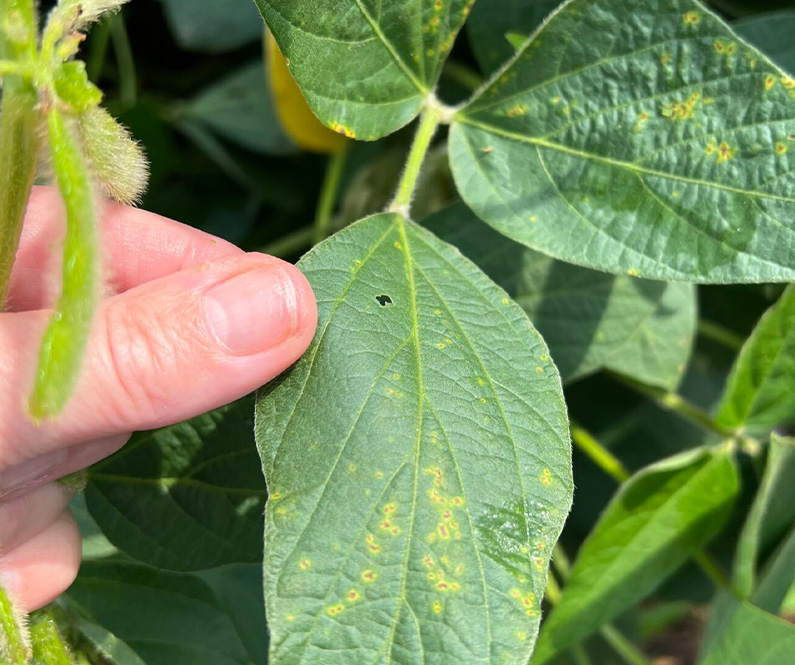
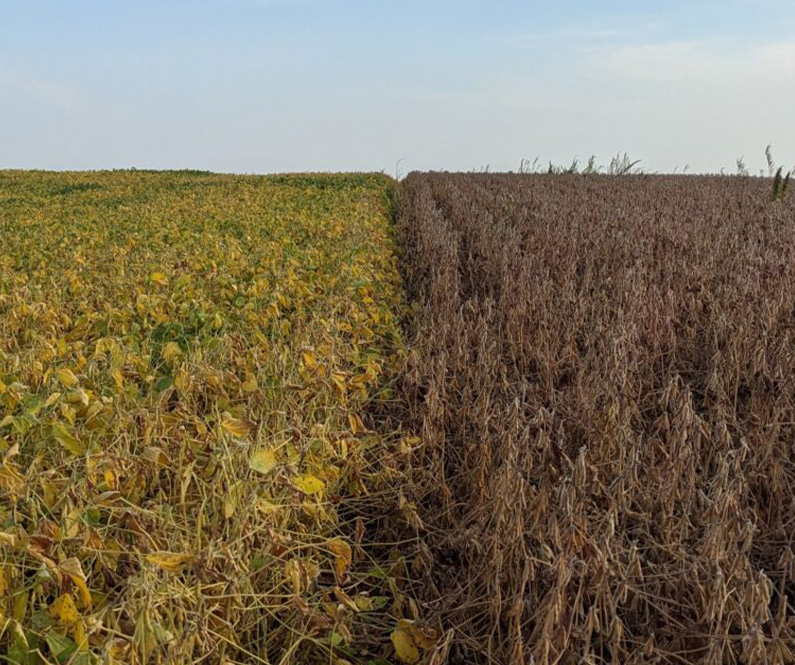
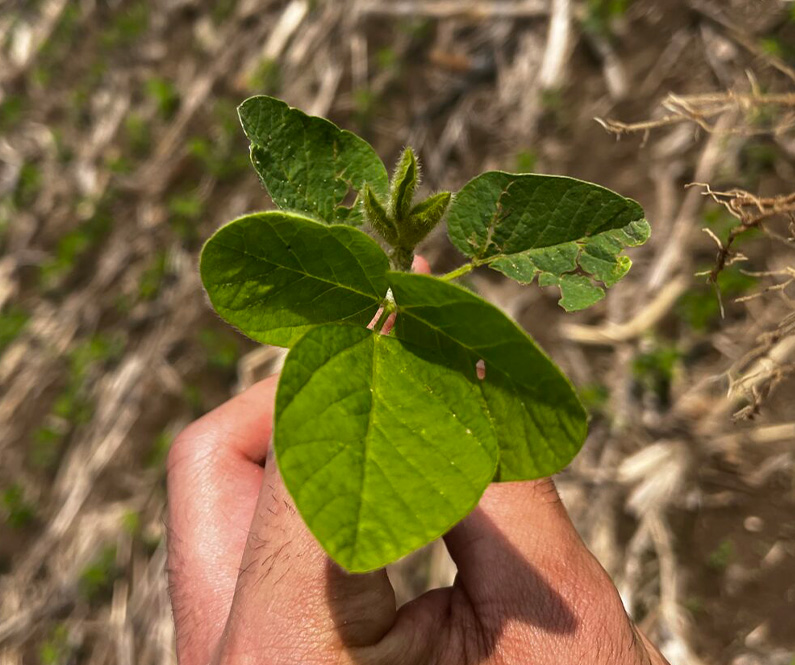
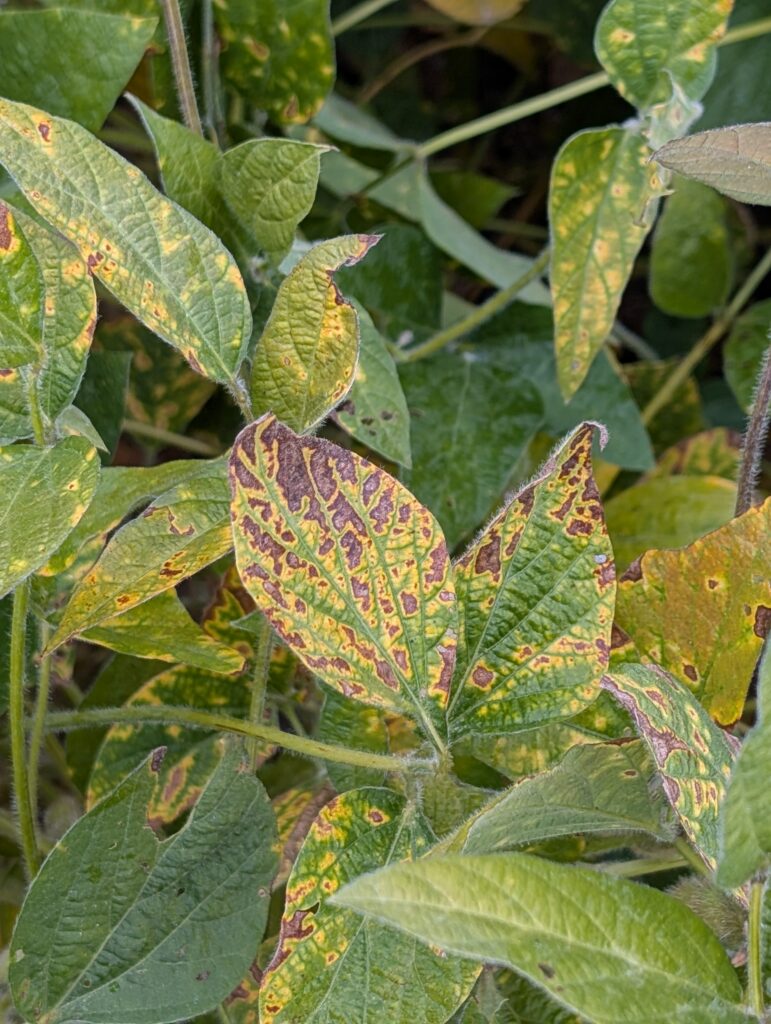
Soybeans are still mostly green, with select fields either planted early or of an earlier variety starting to turn and enter senescence. For as disease-free as we were early in the season, SDS has flared up across many fields and is starting to take off in hot pockets. This year is a very important year to scout your fields if you see SDS symptoms. Red crown rot is a new disease seen in the area that has the exact same foliar symptoms. The key characteristic to look for is a bright red color on the soybean stem just above the soil layer, and in some cases, red spore balls called perithecia. If you find what you think could be red crown rot, please contact your local extension office so we can work with you to get that sample tested for identification.
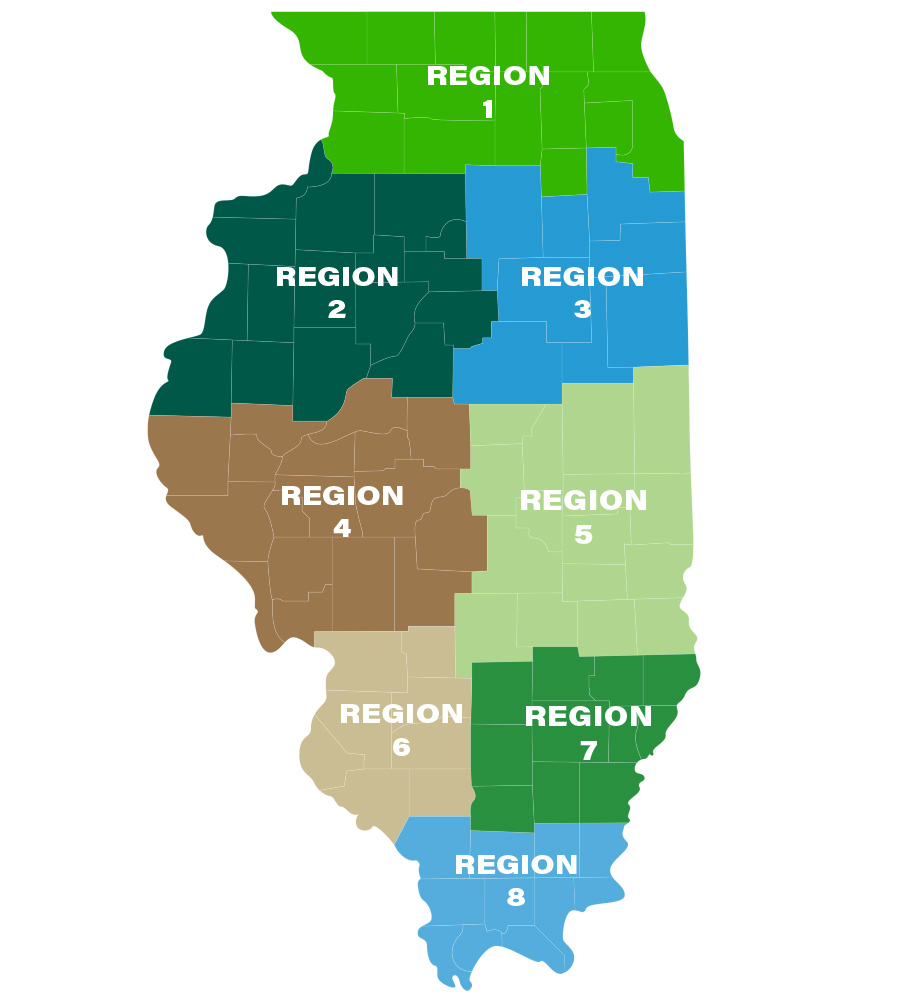
Other than that, we are moving along and marching toward harvest. Northwest Illinois and Joliet are a bit ahead of the DeKalb area in terms of maturity, and harvest will be right around the corner!
EMAIL SIGN UP
Sign up to receive our newsletter for up-to-date news and offers directly in your inbox:
LINKS
FOLLOW FIELD ADVISOR

The Illinois Soybean Association (ISA) checkoff and membership programs represent more than 43,000 soybean farmers in Illinois. The checkoff funds market development, soybean production and government relations efforts, while the membership program, Illinois Soybean Growers (ISG) and the Illinois Soybean Growers PAC actively advocates for positive and impactful legislation for farmers at local, state and national levels. ISA upholds the interests of Illinois soybean farmers through promotion, advocacy, research and education with the vision of becoming a trusted partner of Illinois soybean farmers to ensure their profitability now and for future generations.
© 2026 Illinois Soybean Association
 and then