

Darby Danzl
Regional Technical Agronomist
darby.danzl@ilsoy.org
Darby Danzl
Regional Technical Agronomist
darby.danzl@ilsoy.org
Darby Danzl UPDATES
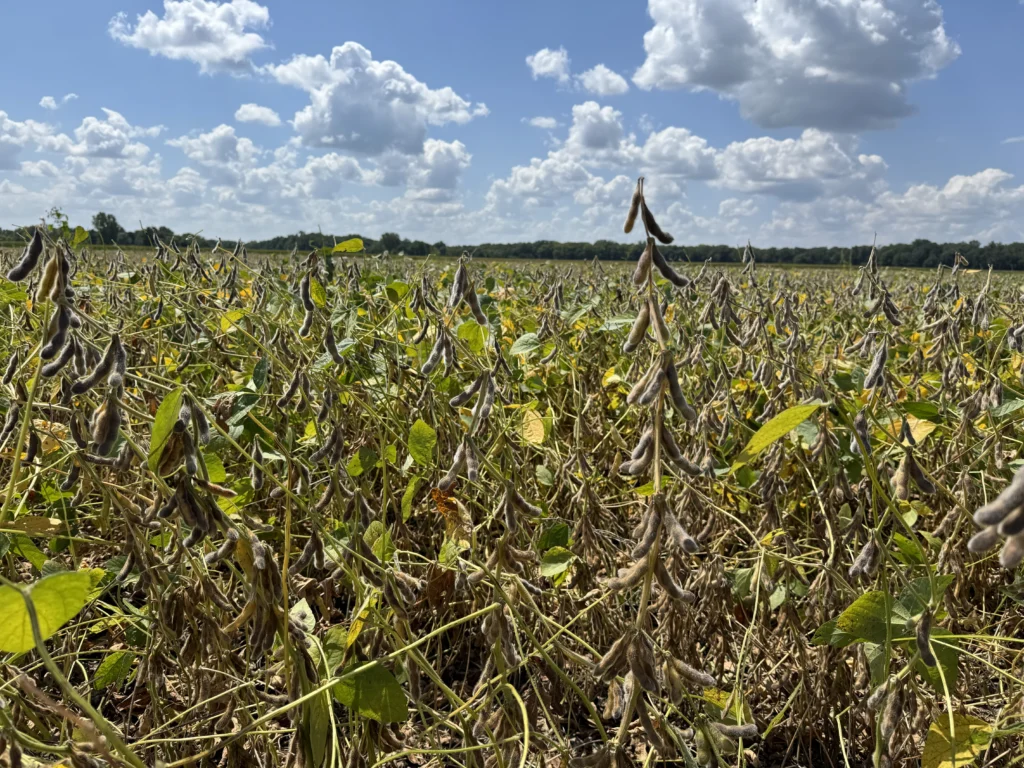
Both corn and soybean fields are maturing well and looking promising… or they suffered from recent heavy rains/winds and are visibly struggling. While flooded fields have mostly drained over the past week, you can still see the evidence of high waters in bean fields where plants were drowning and are now painted in a layer of soil, or in corn fields showing N deficiencies and early dry down. Some areas that needed the precipitation have soaked it up and appear dry again. The precipitation received this month, coupled with the more mild temperatures, will really help the soybeans as they finish off grain fill. As the saying goes: Beans are made in August.
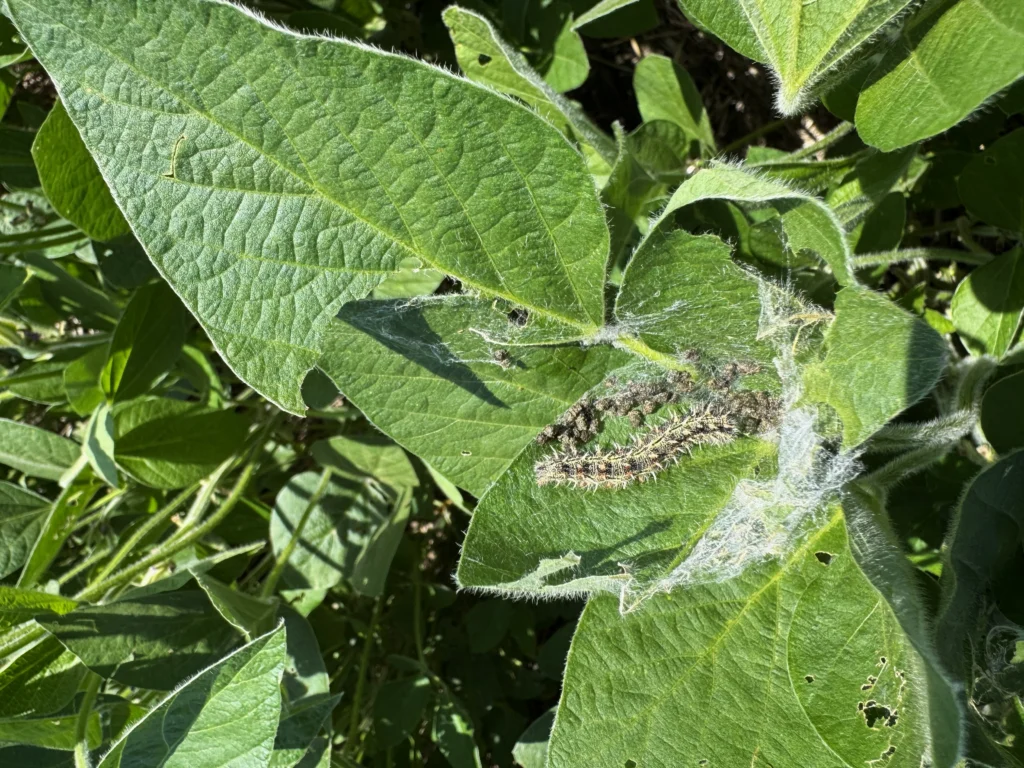
One insect I’ve seen a lot of lately is thistle caterpillar. Thistle caterpillar, the larval stage of the painted lady butterfly, will build a very distinctive web in soybean leaves and cause defoliation. Threshold levels for control have not been met in fields I’ve scouted, but one double crop field I visited had notable pressure. Per Iowa State University Extension, these caterpillars are a migratory pest, coming north from the southern United States and Mexico, and likely do not overwinter in our climatic region.
Seed corn harvest is in progress just south of Springfield, IL.
Full season beans are R5-R6, while some March planted soybeans in Sangamon county are getting into R7 (beginning maturity). Double crop beans are between R2 (full bloom) and R3 (beginning pod), while a field I scouted in southern Illinois was well into R4 (full pod).
Around R4 (dough) – R5 (dent).
Thistle caterpillar
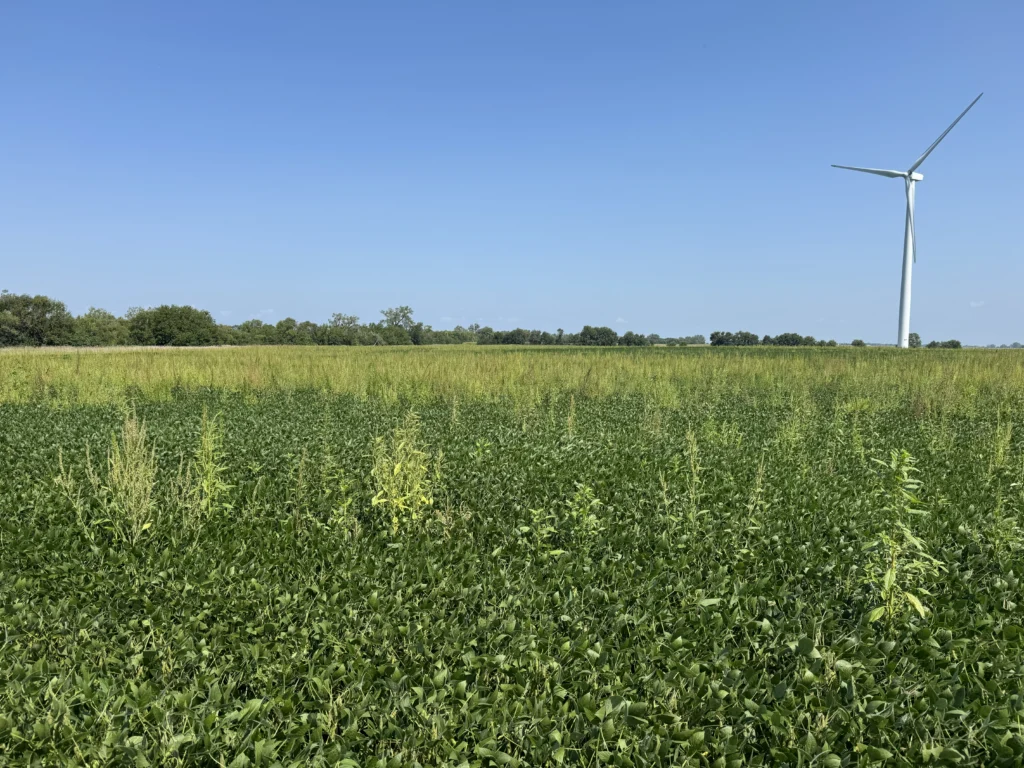
Waterhemp and volunteer corn in soybeans
Red crown rot in soybeans
EMAIL SIGN UP
Sign up to receive our newsletter for up-to-date news and offers directly in your inbox:
LINKS
FOLLOW FIELD ADVISOR

The Illinois Soybean Association (ISA) checkoff and membership programs represent more than 43,000 soybean farmers in Illinois. The checkoff funds market development, soybean production and government relations efforts, while the membership program, Illinois Soybean Growers (ISG) and the Illinois Soybean Growers PAC actively advocates for positive and impactful legislation for farmers at local, state and national levels. ISA upholds the interests of Illinois soybean farmers through promotion, advocacy, research and education with the vision of becoming a trusted partner of Illinois soybean farmers to ensure their profitability now and for future generations.
© 2026 Illinois Soybean Association

 and then