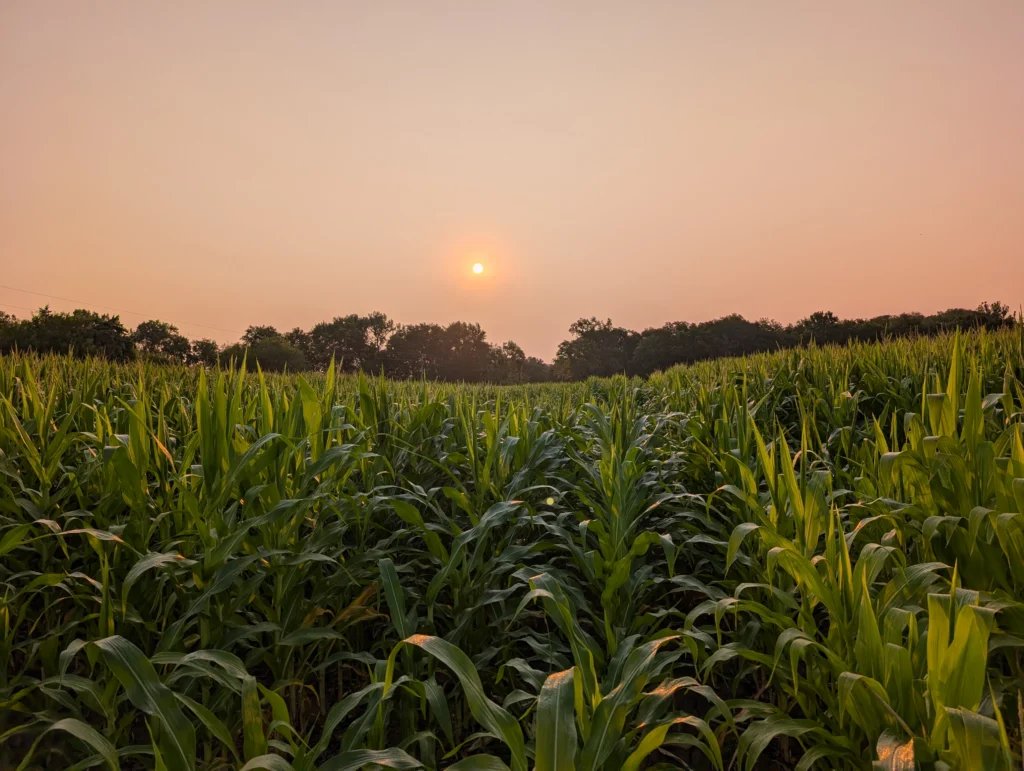
Corn and soybeans are progressing well in northern Vermilion County, as full-season crops are entering key grain fill stages. Impacts from wet weather early in the season can still be seen in low-lying fields, with uneven growth stage and canopy where the crop survived. Conditions have been a bit dryer in the region over the past several weeks, and surface soils are starting to crack. That said, crops do not appear to be experiencing much stress at this point, as they are likely able to access moisture deeper in the soil profile.
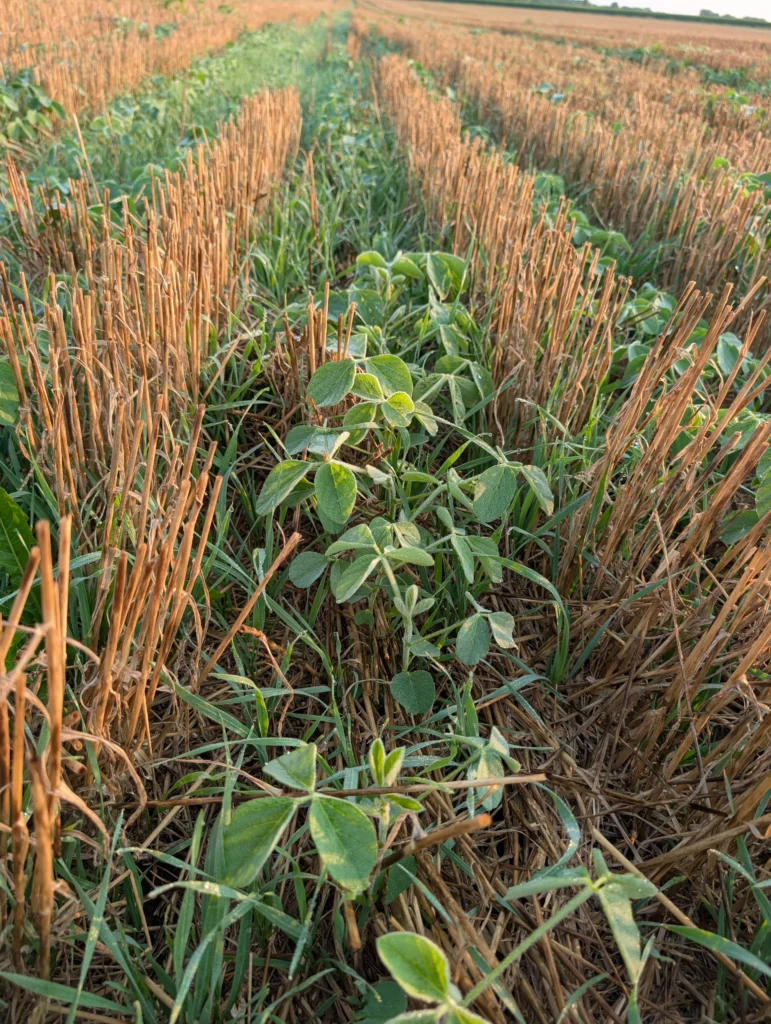
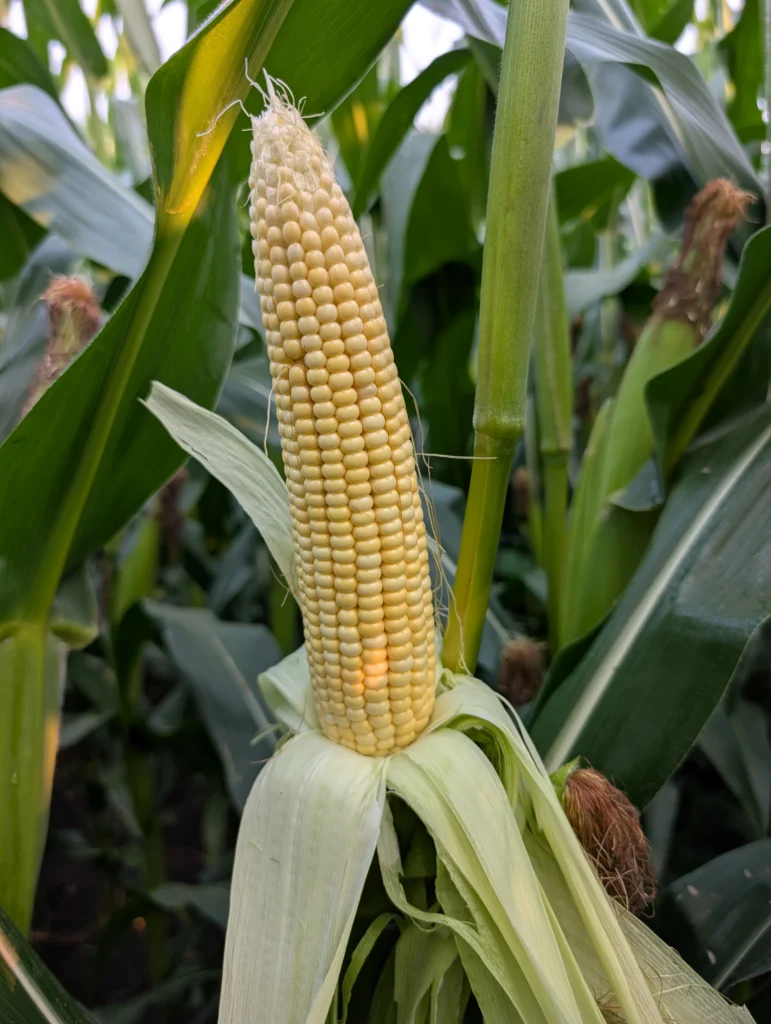
Most full-season soybean fields were somewhere in the pod development stages (R3-R4), and the few double-crop soybean fields I found were in the V2-V3 range. Disease and insect pressure still appeared to be low in most soybeans, but weeds were a different story in a handful of fields. Corn generally ranged from R1 (silking) to R3 (milk). I found a couple fields with some mild aphid pressure, and foliar symptoms of nitrogen deficiency could be found in the lower canopy in those areas affected by the early-season moisture and subsequent soil conditions. Foliar disease symptoms can also be found in these areas where plants are stressed, but healthy corn still looks relatively clean of foliar diseases.
EMAIL SIGN UP
Sign up to receive our newsletter for up-to-date news and offers directly in your inbox:
LINKS
FOLLOW FIELD ADVISOR

The Illinois Soybean Association (ISA) checkoff and membership programs represent more than 43,000 soybean farmers in Illinois. The checkoff funds market development, soybean production and government relations efforts, while the membership program, Illinois Soybean Growers (ISG) and the Illinois Soybean Growers PAC actively advocates for positive and impactful legislation for farmers at local, state and national levels. ISA upholds the interests of Illinois soybean farmers through promotion, advocacy, research and education with the vision of becoming a trusted partner of Illinois soybean farmers to ensure their profitability now and for future generations.
© 2026 Illinois Soybean Association
 and then