
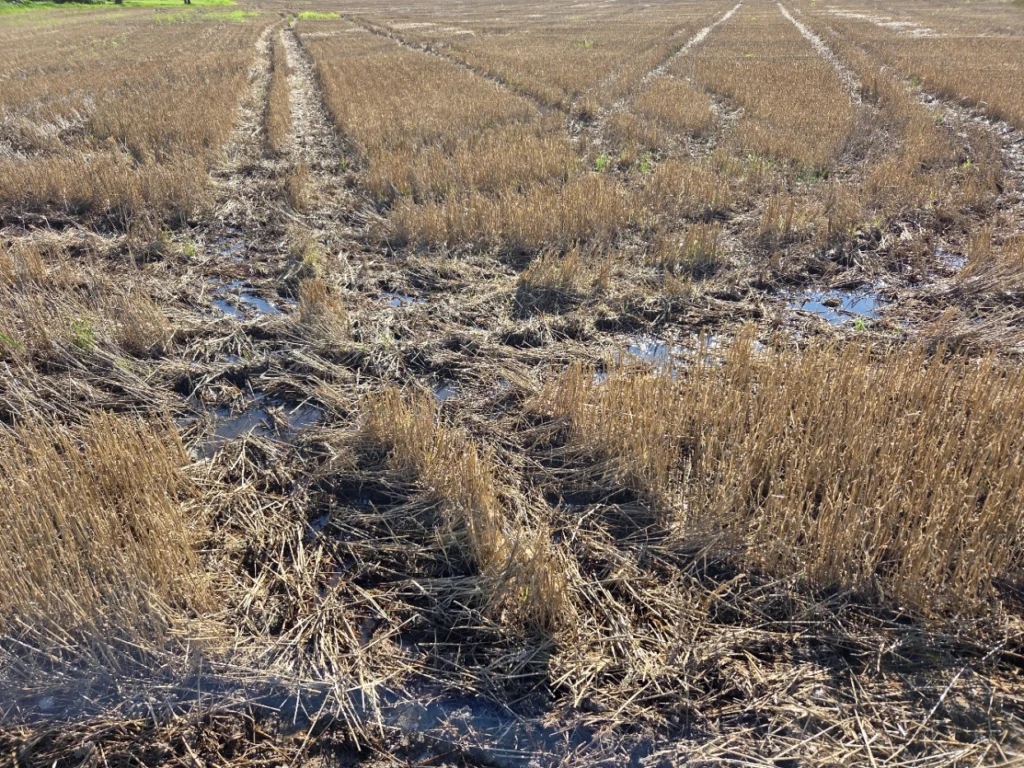
Continued rain has been the story in south-central Illinois, with 0.63″ for the week ending 7/11/2026 and 1.83″ month-to-date for July. This has led to some prevented planting claims for soybeans in the area, including double-crop soybeans. This will provide an opportunity to close some combine ruts, manage residue, possibly clean a drainage ditch later in August. Have to figure out a good cover crop solution for the stubble, probably spring oats and crimson clover in August.
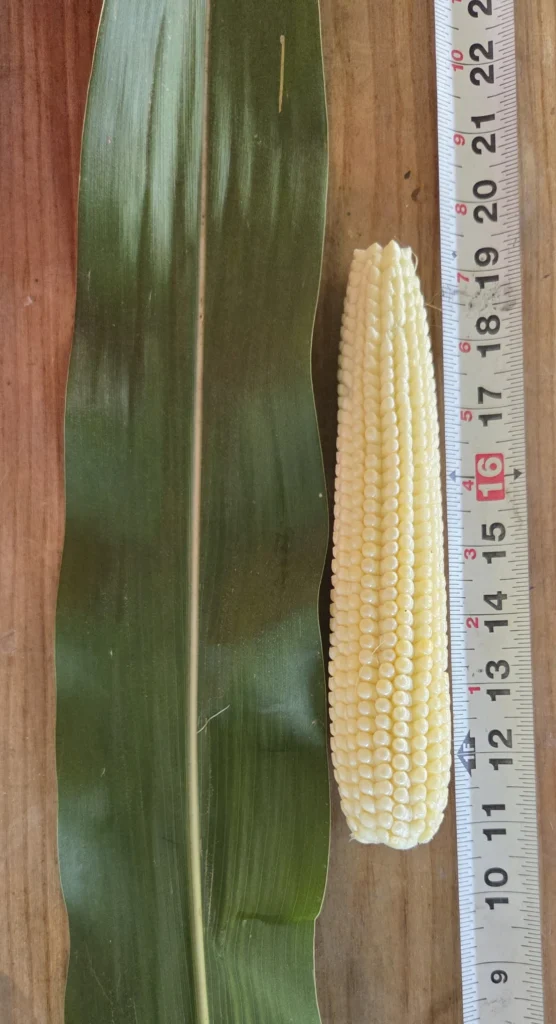
Early corn has reached R1-R2 growth stage, with good yield potential and fairly consistent pollination. Mid-season corn should tassel in the next week to 10 days. Replant corn is still at least a couple weeks away from pollination and has struggled to grow in wetter zones of fields. The ear leaf picture above illustrates how little disease pressure we see in early corn this year – no evidence of southern rust or tar spot yet and very little grey leaf spot (well below thresholds to trigger spraying). But recency bias from southern rust and tar spot in 2025 is leading many growers to make prophylactic/preventative fungicide applications to corn, even in the absence of disease. My suggestion would be to continue scouting and wait – we can still see a benefit from an application as late as R3 if disease shows up. And keep a close eye on the late-planted or replant crop, as the early corn could serve as incubation chambers for the late crop.
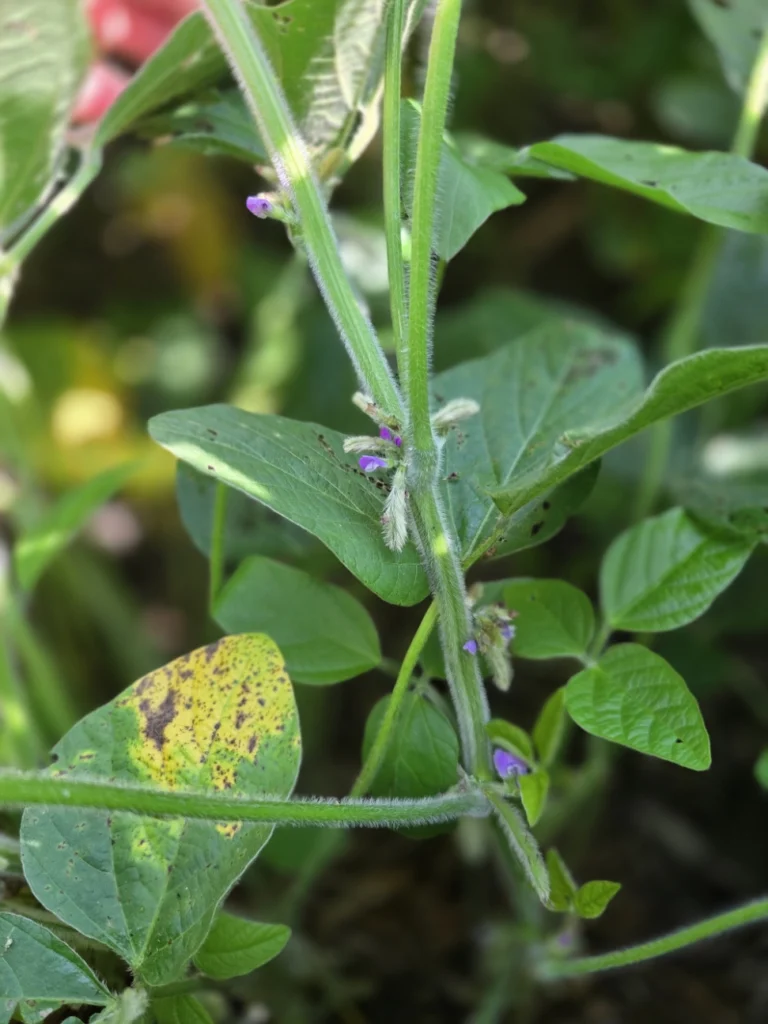
Early soybeans are R3-R4 and looking better now that rains have tapered some. Still some slow growth and general yellowing in low-lying areas that received too much water. Late season weed pressure could be a challenge this year, as high rainfall has allowed waterhemp to recover more effectively from post applications and has led to some degradation of residual herbicide. Some defoliation is present in the upper canopy but below threshold. And septoria brown spot is very prevalent in the lower canopy, as is commonly the case this time of year. I don’t see anything that would lead me to apply fungicide/insecticide to beans at this time.
Continued wet, but forecast to be hot, humid, and sunny this week. Which would be a short-term blessing here, provided that it doesn’t become a long-term pattern.
0.63″ last week. 1.83″ for July. None forecasted for next 7 days.
Wet to very wet.
Final post herbicide applications on both corn and beans that were planted late. VT corn and R3 bean fungicide applications on early planted crops. Almost time (Aug 1) to safely mow ditches for bird conservation.
Early beans, R2-R3. Late beans, V4.
Early corn, R1-R2. Middle corn, VT. Late corn, V7-V10.
Harvested.
Japanese beetles and defoliation complex in beans. Very little pressure in corn.
Waterhemp keeps coming in both corn and beans. Some post sprays were marginally effective. Seeing some giant ragweed escapes in early beans.
Corn: very limited grey leaf spot, no tar spot or southern rust or northern corn leaf blight.
Excessive water stress in corn and beans in low-lying areas of fields.
Prevented planting double-crop beans opens a rare opportunity for August-seeded legumes ahead of next year’s corn.
EMAIL SIGN UP
Sign up to receive our newsletter for up-to-date news and offers directly in your inbox:
LINKS
FOLLOW FIELD ADVISOR

The Illinois Soybean Association (ISA) checkoff and membership programs represent more than 43,000 soybean farmers in Illinois. The checkoff funds market development, soybean production and government relations efforts, while the membership program, Illinois Soybean Growers (ISG) and the Illinois Soybean Growers PAC actively advocates for positive and impactful legislation for farmers at local, state and national levels. ISA upholds the interests of Illinois soybean farmers through promotion, advocacy, research and education with the vision of becoming a trusted partner of Illinois soybean farmers to ensure their profitability now and for future generations.
© 2026 Illinois Soybean Association

 and then