
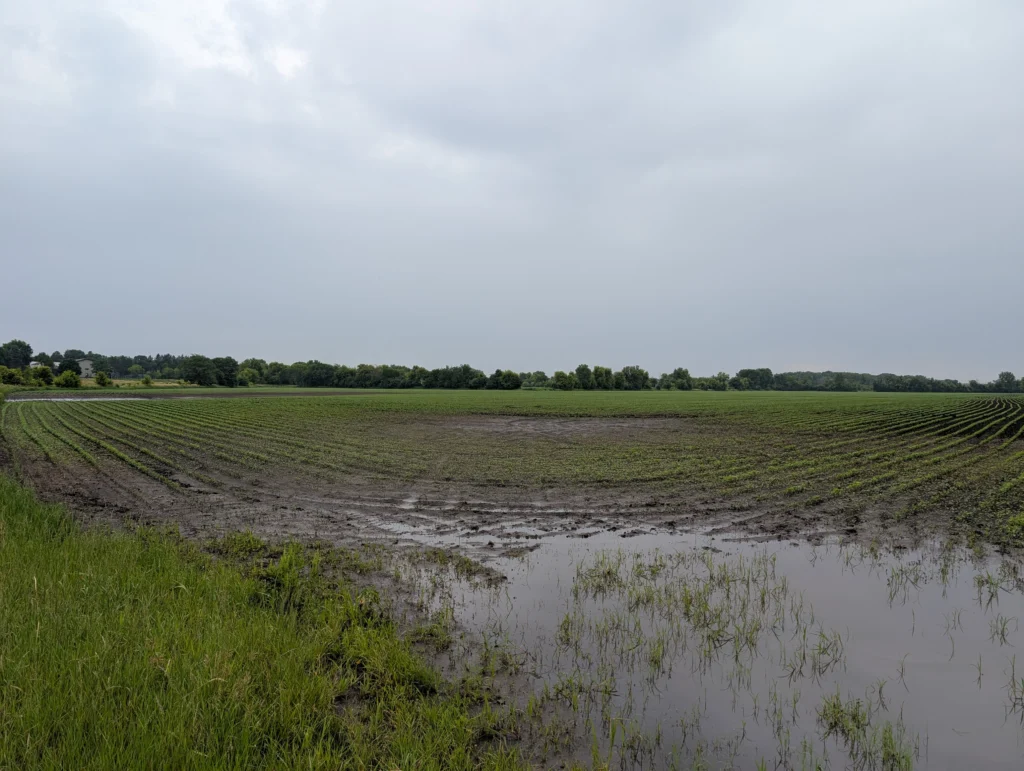
What a turn of events over the last couple of weeks from the start of the season. Heavy rains, hail, strong winds, and even tornadoes have brought out of the early drought and well past into extremely saturated soils. Areas hit hard by storms have significant standing water. Established crops have begun to show signs of stress and are being drown out in low areas with long standing water. Those who avoided the flooding are enjoying great moisture. We are seeing significant growth across both corn and soybeans.
Early in the season there was staggered emergence, and lots of variability within fields and that largely faded out as crops even out with ample water. Field to field si still showing high variability and that is mostly due to staggered planting with rain events in April and early May. Ive seen soybean fields anywhere from V2, with some fields approaching R1 flowering in the next week or so. Fields looks healthy as far as the crops are (outside of aforementioned flooding and water logging damage). With delayed emergence and plenty of water recently, missed post applications could become a problem quickly as weed pressure is taking off. I have not seen much if any disease in soybeans yet. The dry conditions early on prevented a lot fo soil borne disasese from taking hold such as pythium or phytopthora. Once soybeans start to canopy we will need to remain vigilant for late season disease such as white mold and SDS. Overall soybeans look good all things considered.
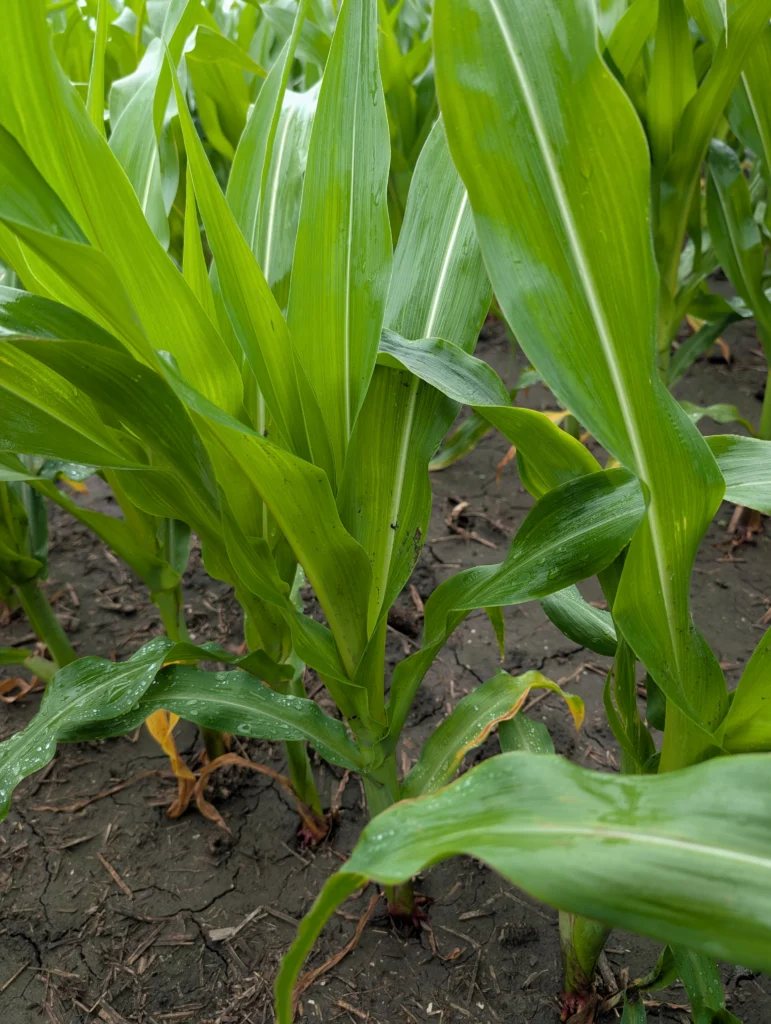
Corn has started to jump growth stages quickly. Other than low spots and fields with extreme flooding, much like soybeans corns is looking great. Most fields I visited were in the V5 growth stage, with some a little further west near Amboy at V6 and growing quickly. One thing to really look out for in corn will be disease in the coming weeks. Many foliar fungal diseases (Tarspot, Gray Leaf Spot, and Northern Corn Leaf Spot) thrive in cooler, wet conditions with extended leaf wetness. These are the exact conditions we are seeing currently before an end of week warm up. Many of these disease can infect plants, but won’t show symptoms until 10-14 days after the initial infection. I would highly recommend scouting vigilantly starting next week to catch any early signs of disease so you can act accordingly. Early infections of tarspot can wipe out fields of corn. so it’s very important to be on top of.
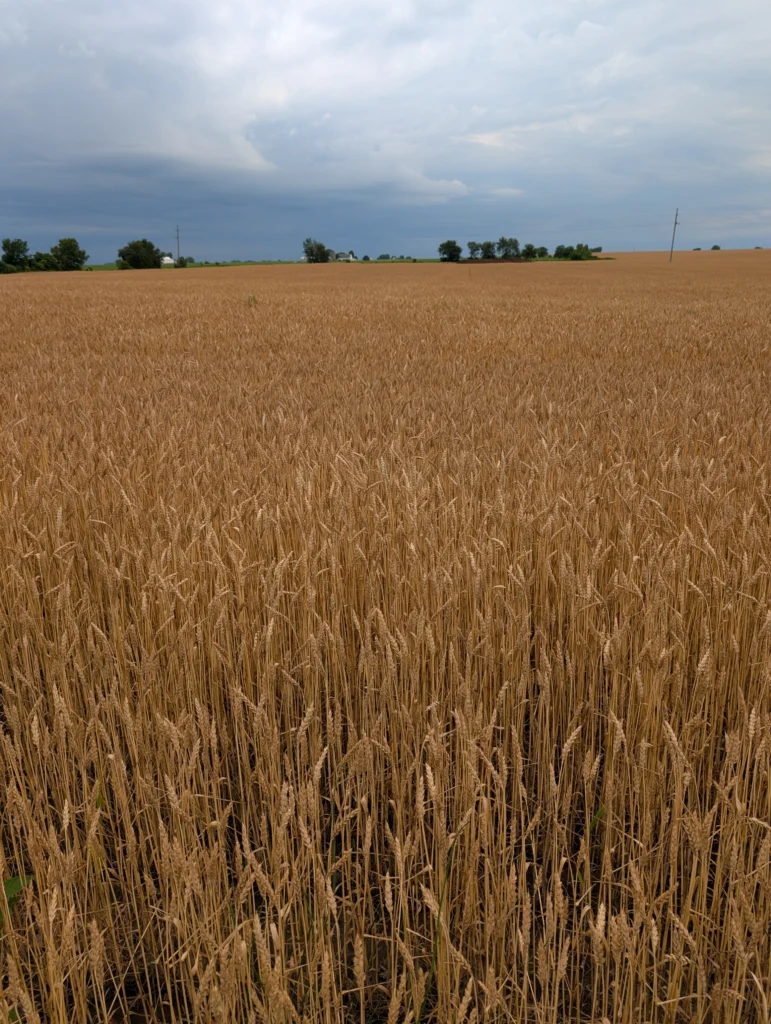
Ill touch on wheat quickly. Fields are drying down nicely, many fields are close to being ready to harvest, and appear healthy and disease-free from what I have scouted. If we catch some breaks from the rain, early July could be in play for harvest.
For help identifying windows when weather conditions are optimal for diseases to replicate, using the Crop Protection Network crop risk tool can be very helpful. This site has a multitude of helpful tools, and I will link it below.
https://cropprotectionnetwork.org/tools
Ill be back next week with another update
EMAIL SIGN UP
Sign up to receive our newsletter for up-to-date news and offers directly in your inbox:
LINKS
FOLLOW FIELD ADVISOR

The Illinois Soybean Association (ISA) checkoff and membership programs represent more than 43,000 soybean farmers in Illinois. The checkoff funds market development, soybean production and government relations efforts, while the membership program, Illinois Soybean Growers (ISG) and the Illinois Soybean Growers PAC actively advocates for positive and impactful legislation for farmers at local, state and national levels. ISA upholds the interests of Illinois soybean farmers through promotion, advocacy, research and education with the vision of becoming a trusted partner of Illinois soybean farmers to ensure their profitability now and for future generations.
© 2026 Illinois Soybean Association

 and then