
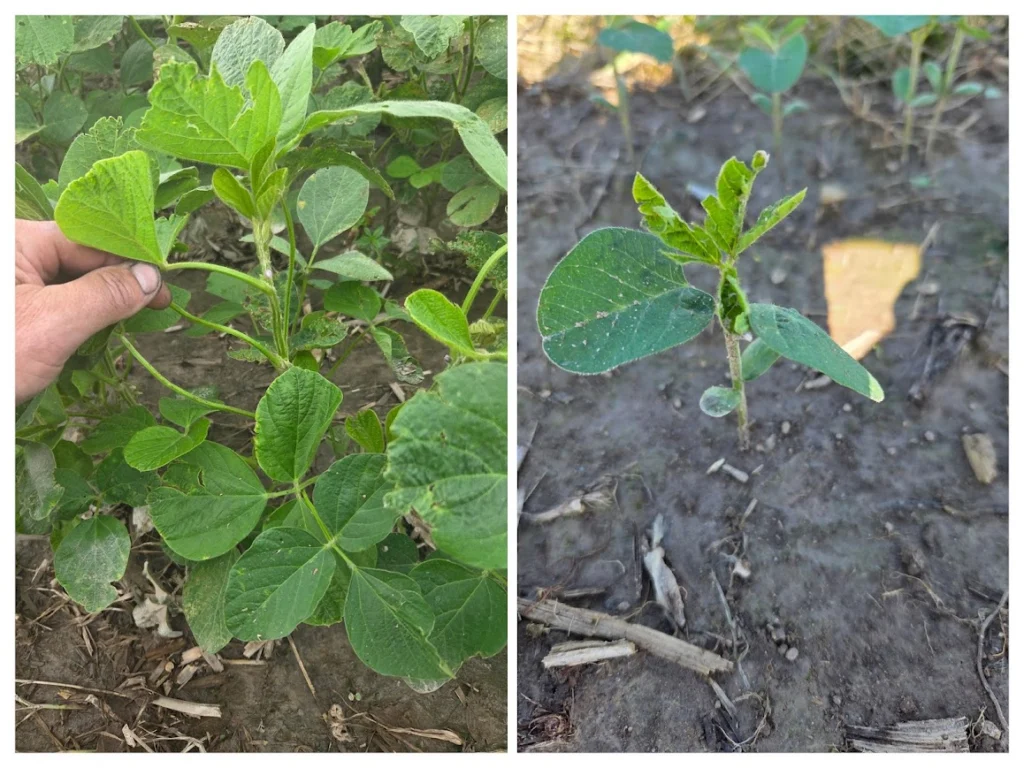
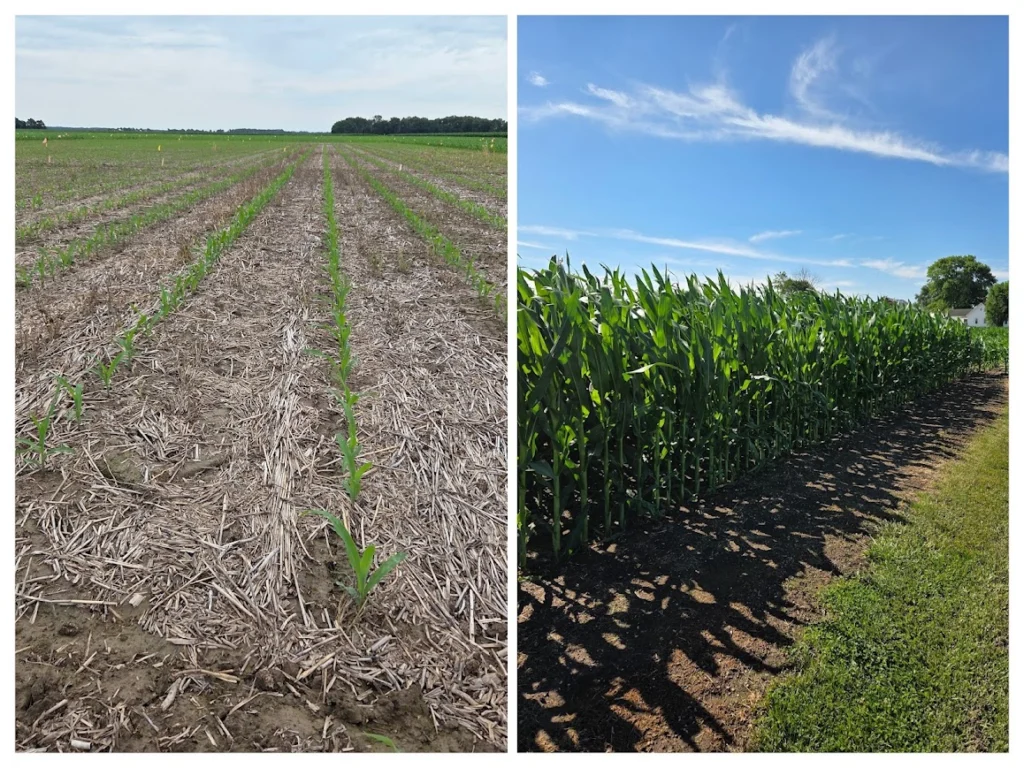
2026 may be the tale of two (or three) seasons. Pictures above show the contrast between corn planted in early April vs no-till corn in cover crops planted late May, and also first crop soybeans planted early April (flowering) and those planted early June. Early crops appear to have a distinct advantage, but we will have to see how the season plays out. Everything planted in the middle of those two windows struggled to emerge and many acres had to be replanted. Some of that middle season corn is V5-V7 now and growing rapidly, but showing some unevenness across the field, probably due to compaction and waterlogged soils.
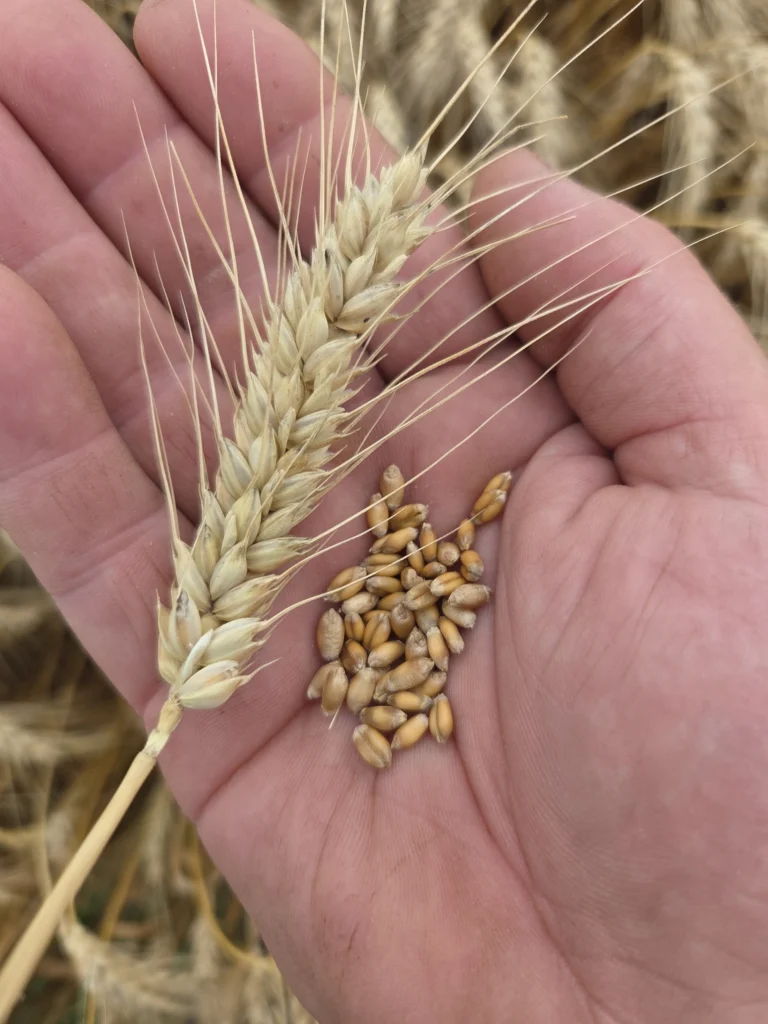
Soft red winter wheat is nearing harvest, with some acres having been cut in the area. Yields are reportedly very, strong and we are anxious to get started on harvest.
Storms dropped another 1.9″ of rain this week along with some powerful tornados that ripped through the area and caused extensive damage to buildings and trees. Thank the Lord, we were safe and were spared any damage at our farm. Prayers to those families who were not so fortunate.
Side-dress N and post herbicide in corn should wrap up next week. Some early beans got first post herbicide apps before the big rain.
Continued above normal precipitation has hampered field activity, with limited days to work and working in wetter than desirable conditions.
1.99″ total this week.
Wet
Sidedress N, post herbicide apps, wheat harvest starting
V1 to R1
V3 to V10
Mature
Some stinkbug activity in the corn
Waterhemp, waterhemp, waterhemp. Especially problematic in replant corn stands. We can probably get it controlled, but a never-ending battle.
Some septoria on the beans. Corn is fairly clean so far.
Rain splash has caused some herbicide phytotoxicity in both corn and beans. Major corn yellowing showing up in low areas, especially with replant corn – anoxic conditions are limiting nutrient availability and uptake.
Areas of high residue from the previous year are locking up nitrogen, the so-called carbon penalty is quite evident.
EMAIL SIGN UP
Sign up to receive our newsletter for up-to-date news and offers directly in your inbox:
LINKS
FOLLOW FIELD ADVISOR

The Illinois Soybean Association (ISA) checkoff and membership programs represent more than 43,000 soybean farmers in Illinois. The checkoff funds market development, soybean production and government relations efforts, while the membership program, Illinois Soybean Growers (ISG) and the Illinois Soybean Growers PAC actively advocates for positive and impactful legislation for farmers at local, state and national levels. ISA upholds the interests of Illinois soybean farmers through promotion, advocacy, research and education with the vision of becoming a trusted partner of Illinois soybean farmers to ensure their profitability now and for future generations.
© 2026 Illinois Soybean Association

 and then