
Crop Report
Several days of favorable weather and soil conditions had the planters rolling aggressively. More than half of the soybean acres were planted this week, and a few corn acres as well. Spraying has been hampered by consistent high winds, but there are some soil-applied, residual pre-emergence herbicides going down in the early morning hours before the wind picks up. The area received 0.72 inches of rain on Wednesday night, which put a temporary halt to fieldwork.
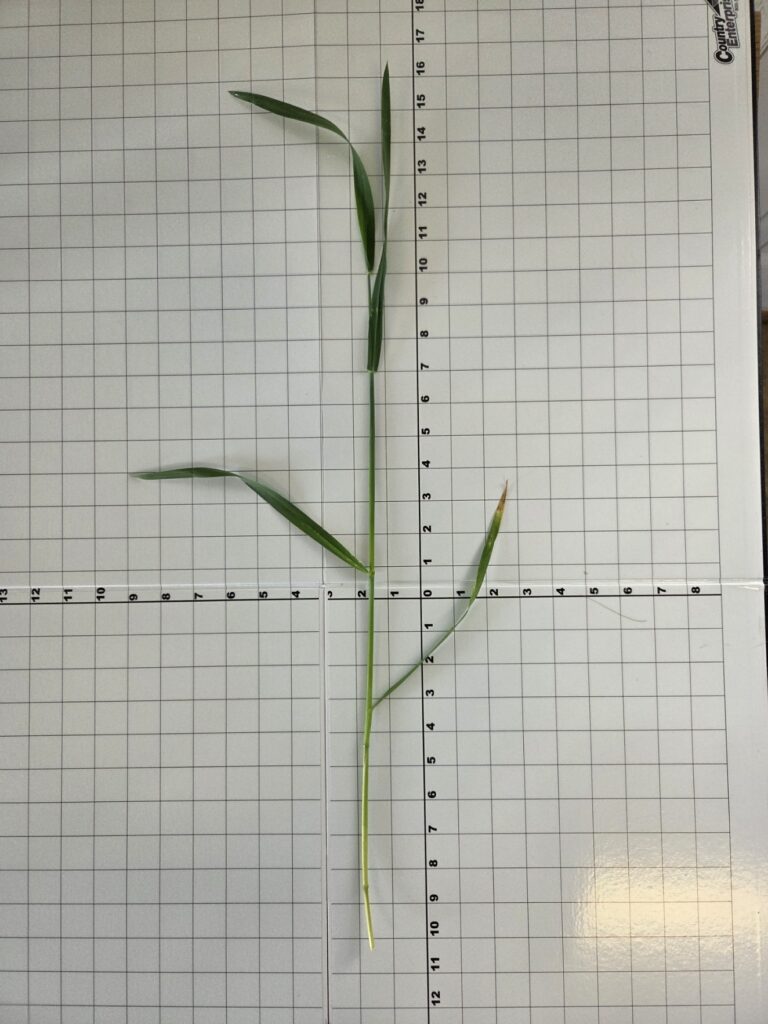
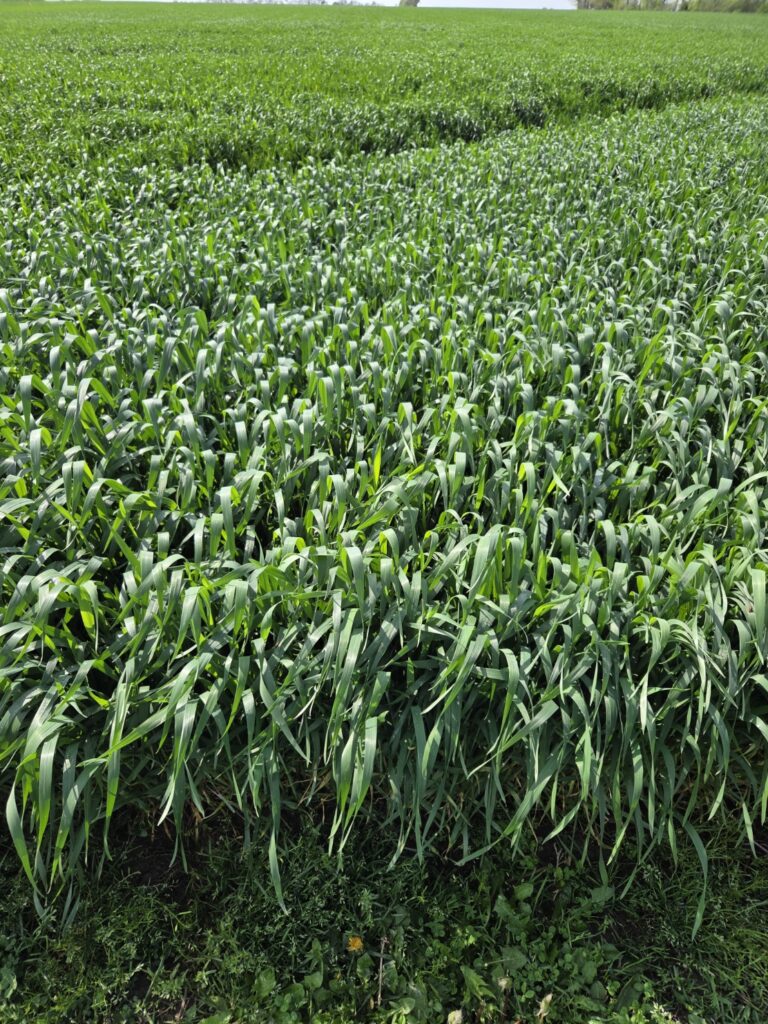
With the rapid accumulation of GDUs this spring, wheat has already reached growth stage Feekes 8, the critical stage of flag leaf emergence. This leaf is responsible for most of the photosynthesis that drives head fill and grain production. Protecting it against disease and insect damage is important to optimize yield. No visible signs of disease yet, but conditions have shifted toward being favorable for development of several foliar diseases, and storms blowing in from the south could be carrying spores. I will be applying foliar fungicide applications to research plots today, evaluating potential benefits of flag leaf protection. Overlap areas on the nitrogen application are looking prone to lodging at this stage. In the photos, we can still see the freeze damage on the lower leaf and also a little damage near the stem on the middle leaves that appears to be some very early windowpane feeding by cereal leaf beetle. There are a few stink bugs milling about, which could cause problems later as the heads emerge. Time to scout and be diligent.
0.72″ of rain on April 15, 2026. Overnight lows in the 30s expected.
Too wet to do field work now.
Everything was happening in the past week. NH3 application, tillage, planting, spraying.
The first planted soybeans should be emerging soon.
First planted corn is about 30 GDUs from spiking.
Feeke’s 8.
Already seeing seedling common ragweed and giant ragweed. Seems very early for these to be showing up.
Burndown symptoms are showing up now in several cover crop fields after spraying last week.
NEWSLETTER SIGN UP
Sign up to receive up-to-date news and offers directly in your inbox:
LINKS
FOLLOW FIELD ADVISOR

The Illinois Soybean Association (ISA) checkoff and membership programs represent more than 43,000 soybean farmers in Illinois. The checkoff funds market development, soybean production and government relations efforts, while the membership program, Illinois Soybean Growers (ISG) and the Illinois Soybean Growers PAC actively advocates for positive and impactful legislation for farmers at local, state and national levels. ISA upholds the interests of Illinois soybean farmers through promotion, advocacy, research and education with the vision of becoming a trusted partner of Illinois soybean farmers to ensure their profitability now and for future generations.
© 2026 Illinois Soybean Association

 and then