
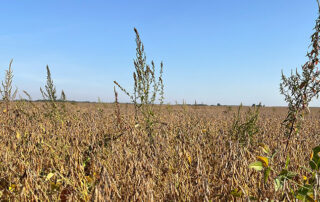
Early Detection of Group 15 Waterhemp Resistance
Develop tools to detect Group 15 herbicide resistance in waterhemp before residual control visibly fails, helping farmers distinguish resistance from weather effects and make field specific herbicide decisions that protect early season weed control.
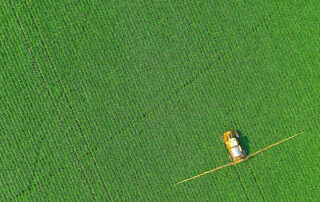
Improving Glufosinate Performance for Waterhemp Control
Identify how temperature and herbicide rate affect glufosinate performance on waterhemp to help farmers improve POST control, slow resistance development, and protect one of the last effective herbicide options for soybean production.
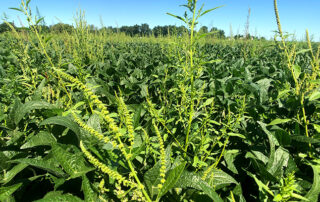
Understanding and Managing Nontarget-Site Herbicide Resistance in Waterhemp
Waterhemp with nontarget-site resistance is one of the biggest weed challenges for Illinois farmers. Using an epidemiological approach with real field histories, this project will identify which management practices best slow resistance so farmers can protect herbicides, maintain yields, and manage waterhemp sustainably.
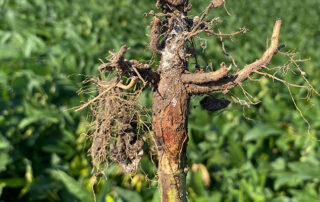
Red Crown Rot Management in Soybeans
Detect red crown rot (RCR) hotspots with satellite imagery, evaluate commercial products, and study how those treatments influence the interaction between RCR and soybean cyst nematode to improve disease management in soybean fields.
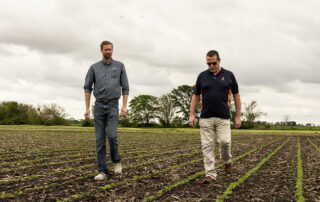
Managing Weeds in Early-Planted No-Till Soybeans
Evaluate the effectiveness of PRE and POST herbicide programs, with and without cereal rye, for weed control in early-planted no-till soybeans to help farmers maintain yield and manage resistance under tight application windows.
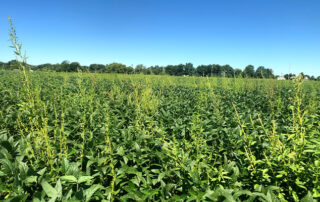
Using Integrated Weed Management to Control Waterhemp in Soybeans
Develop integrated weed management strategies that combine cover crops, herbicides, and tillage to control herbicide-resistant waterhemp, protect soybean yields, and support long-term sustainability.

Bioherbicides to Control Palmer Amaranth and Waterhemp in Soybeans
Develop and test bioherbicides that specifically target palmer amaranth (pigweed) and waterhemp without harming soybeans, while creating a commercialization roadmap to provide farmers with a cost-effective, sustainable weed control option.
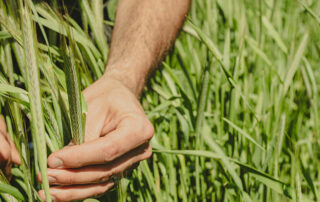
Evaluating the Impact of Cover Crops on Lesion Nematodes in Soybeans
Assess how cover crops influence lesion nematode populations and their impact on soybean yield through field and greenhouse studies, while identifying and evaluating the pathogenicity of different lesion nematode species found in Illinois.
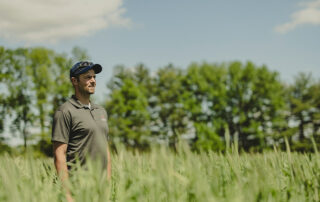
Refining Cover Crop Recommendations for Corn-Soybean Rotations Based on Species and Timing
Compare how different cover crop species and mixtures, combined with two termination timings, affect corn and soybean performance in rotation to help refine regional recommendations for farmers and advisors.
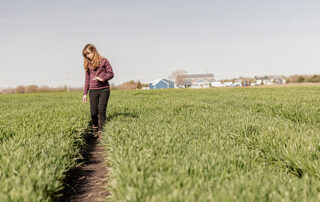
Enhancing the Profitability of Wheat-Soybean Double Cropping
Characterizing and developing new high-yielding winter wheat varieties with early maturity – an important trait that enables earlier planting of double-crop soybeans to maximize yield potential.


 and then