
The Soil Health Leadership Program, an 18-month training from the Illinois Sustainable Ag Partnership, brings together farmers, ag retailers, crop advisers, and conservation professionals to build soil health knowledge and leadership. In its second session, the 2026–2027 cohort explored how we can quantify soil health and rationalize it economically. Soil health is easy to support in principle, but the practices that improve it can be hard for some farmers to justify when the benefits are challenging to measure. Fortunately, this session focused on finding the balance between implementing conservation practices and staying profitable.
We began by talking about whether certain inputs, such as insecticides, are truly needed. Dr. Nick Seiter led a discussion on how farmers often apply insecticides with their fungicide by default, regardless of whether pest pressure has reached a threshold level to justify it. Insecticides kill beneficial insects along with pests, so if the pressure isn’t there, you could be doing more harm than good.
Data from Seiter’s research generated a simple result: if insect pressure is not at threshold when you go to spray, an insecticide probably won’t provide a return in yield. Skipping the insecticide in a fungicide pass may only save a few dollars per acre, but across many acres and years, that adds up to real money. Meanwhile, the beneficial insects you didn’t spray stay on the job and could help keep pest populations in check.
Dr. Andrew Margenot then joined the group to discuss the latest in soil health testing. Currently, scientists can only measure indicators of soil health, not soil health itself. Indicators such as aggregate stability and soil organic matter have been measured by soil testing labs for years, but biological indicators are newer measurements that are not yet fully understood. Margenot specifically cautioned against one biological indicator, permanganate oxidizable carbon (POXC), which is being sold as an “active carbon” test. According to Margenot, what this test measures isn’t active, and it isn’t carbon. He also encouraged farmers to consider the cost of soil testing when evaluating the overall ROI of their operations.
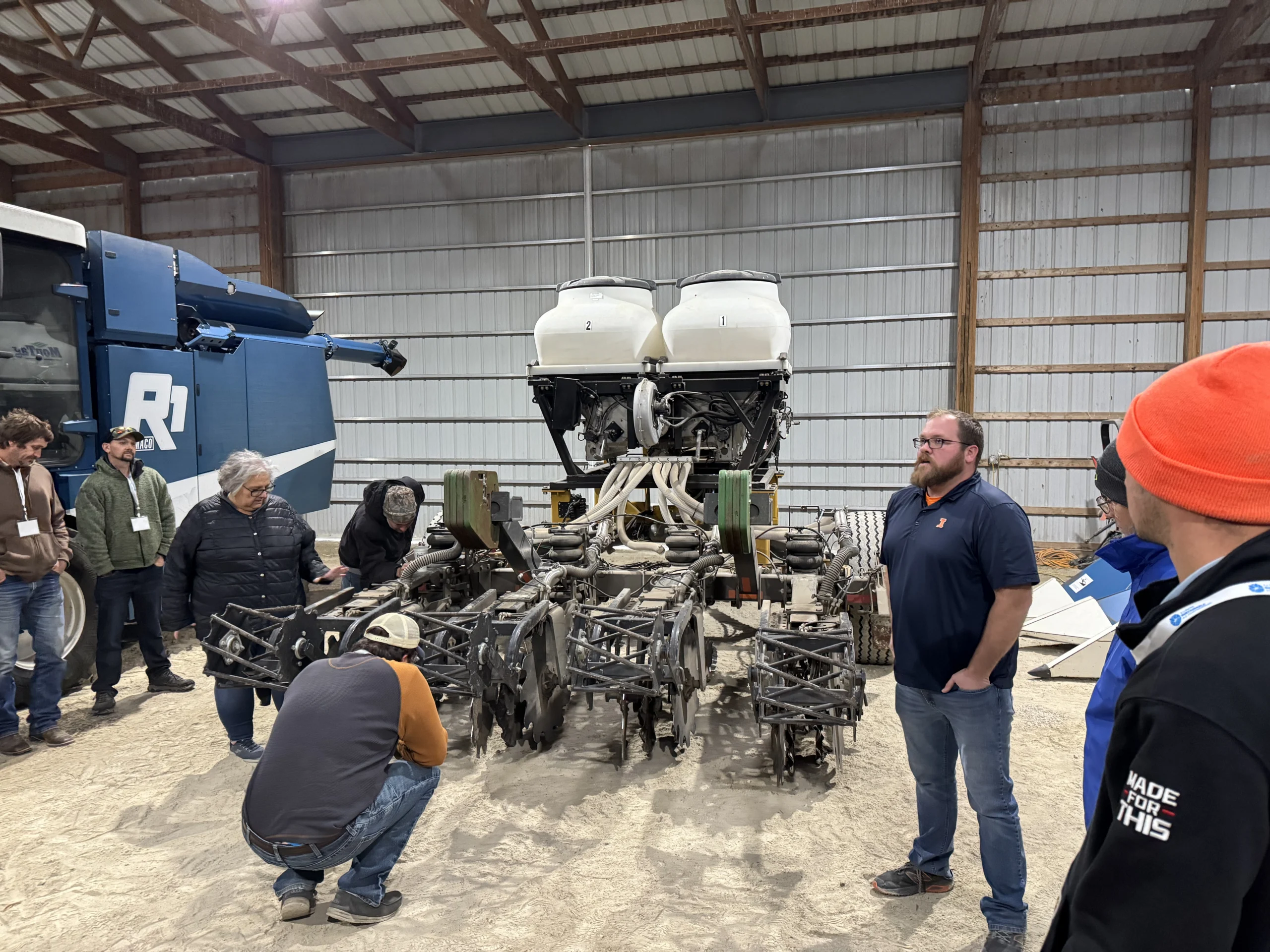
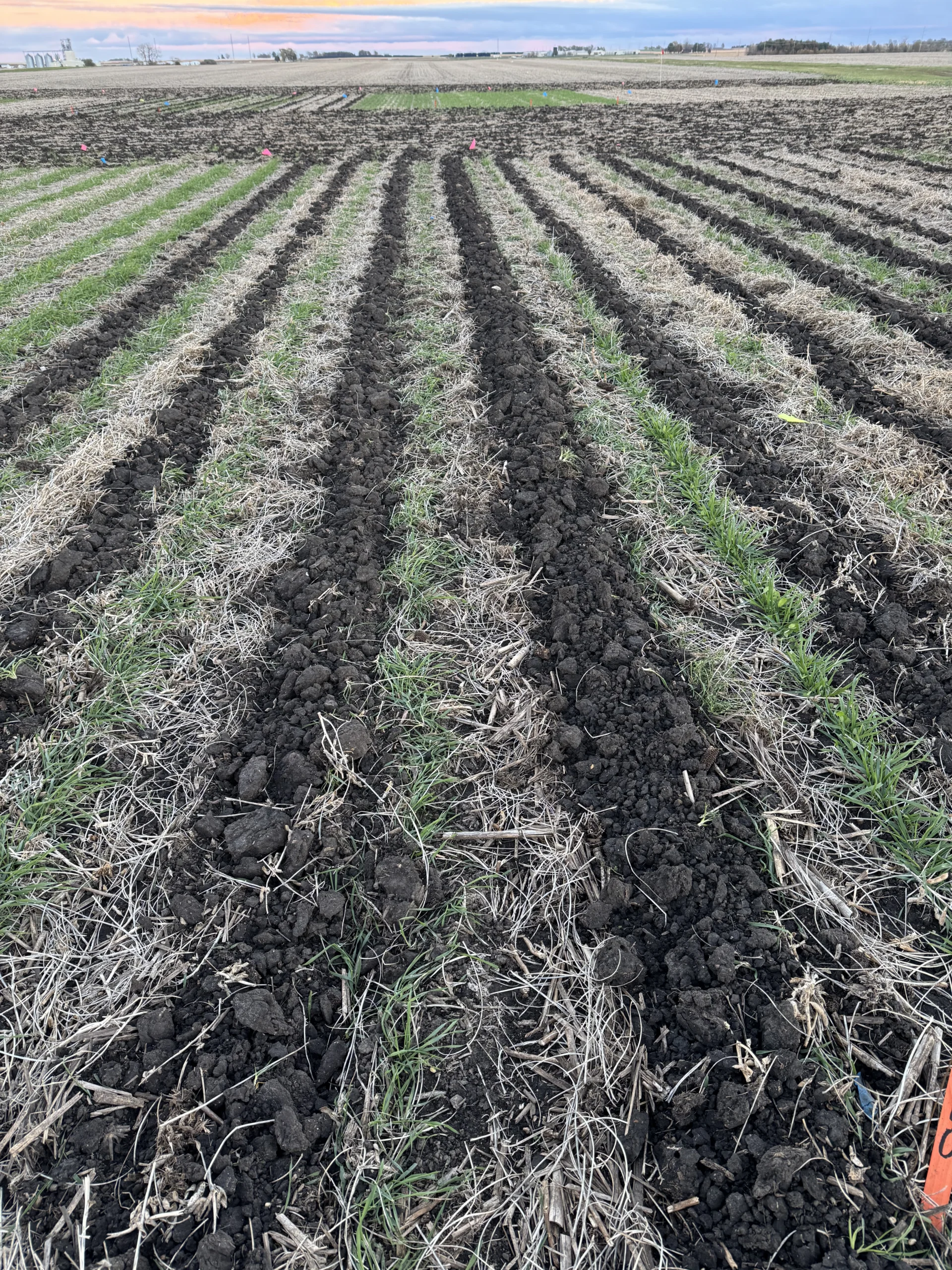
Continuing the theme of finding the middle ground between conservation and profitability, we heard from Dr. Connor Sible about research on strip-tillage, which offers the best of both worlds between conventional tillage and no-till: a clean seedbed with reduced soil disturbance. Dr. Giovani Preza Fontes then took us out to see some of his research trials, which take strip-tillage a step further by adding cover crops. Again, this combination gives farmers flexibility with conservation practices while avoiding competition with cash crops.
Day two of the session took us to Eric Miller’s farm with Dr. John Jones and Dan Schaefer, where we learned that simply adjusting the timing of fertilizer applications and applying the optimal rate can make a big difference. Achieving higher yields with the same N rate applied at a different time, or even with a lower N rate, can have huge implications for a grower’s ROI, all while preventing nutrient losses that harm other ecosystems and represent lost dollars for the farmer.
Schaefer emphasized that farmers should avoid making fall nitrogen applications, because “the worst place to store your nitrogen for 6 months is in the soil,” largely due to the high potential for loss. This recommendation comes from many years of data from the Maximum Return to Nitrogen (MRTN) trials Schaefer conducts, which help growers find the economic optimum N rate for their operations. Making the switch to spring can be a simple and effective change.
After more presentations from individuals including Torey Colburn on cover crop seeding methods, Lowell Gentry on nitrogen and water quality, Dr. Emily Heaton on perennial systems and Dr. Carmen Ugarte on soil nutrient cycling, we went out to see some of Miller’s research comparisons in tilled and no-till plots.
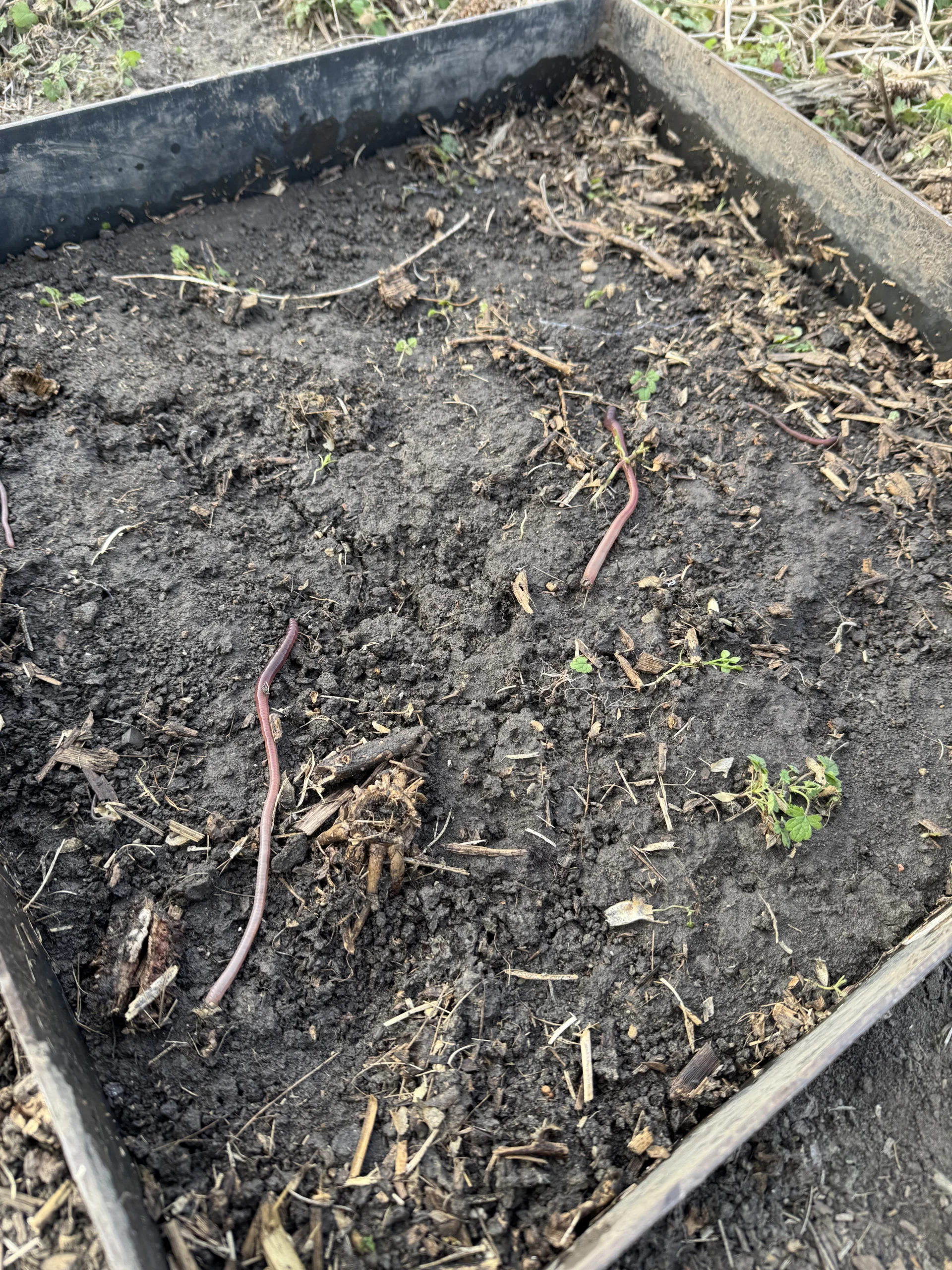
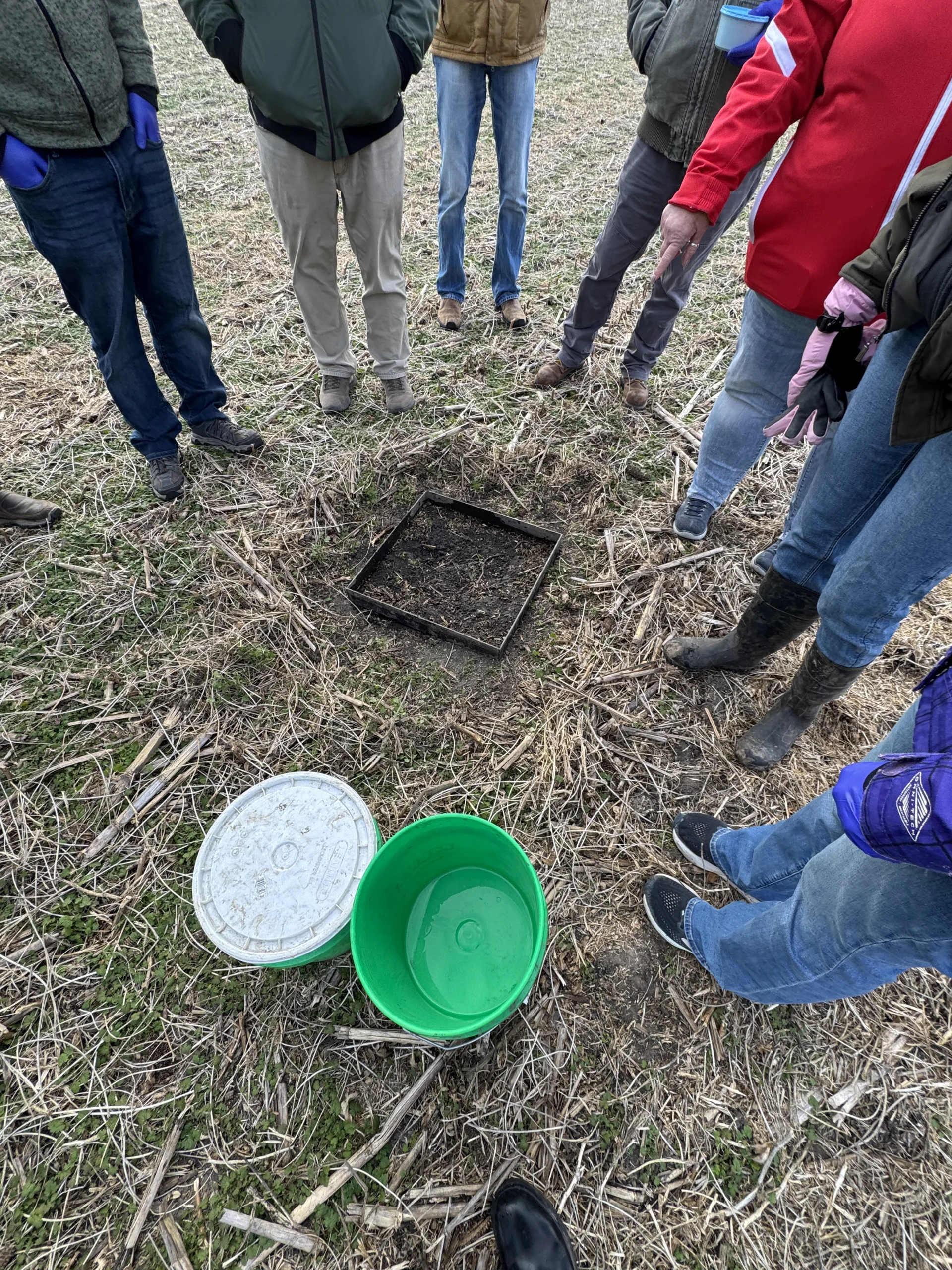
The biggest takeaway for many in this comparison was the dramatic difference in earthworm populations between the two systems. Students from the University of Illinois poured a mustard solution on the soil surface to draw the worms out of the ground. The result? Roughly 35 worms were collected from a small sample area in the no-till strip, compared to only 3 in the tilled plot. With more than 10 times as many earthworms, the no-till system has a big advantage, since their deep burrows and channels can improve soil structure, water infiltration, and root growth.
Soil health may not come with a single number from a lab, but that doesn’t mean it can’t be measured. Sometimes it’s as simple as counting worms. And as this session showed, improving soil health doesn’t have to come at the expense of profitability. Skipping an unneeded insecticide application, adjusting fertilizer timing, or adding cover crops to a strip-till system are all practical steps that can benefit both the soil and the bottom line.
Darby Danzl is the Regional Technical Agronomist for the Illinois Soybean Association (ISA). In her role, she contributes to on-farm trials, outreach efforts and NRCS partnership responsibilities.
Darby Danzl holds a B.S. in Environmental Economics and Policy, a minor in Horticulture, and an M.S. in Crop Sciences from the University of Illinois at Urbana-Champaign. Her graduate research at the Crop Physiology Laboratory involved small-plot research with a focus on soil health and regenerative agricultural practices. She is passionate about advancing agricultural sustainability using science-based practices that improve soil health, increase resource efficiency, and boost long-term productivity.


 and then
FIND US ON