Cover crops aren’t new. If you have been in the agriculture industry for long, you have probably read articles or listened to presentations about cover crops and their benefits for weed reduction, erosion control, nutrient management, soil health, potential yield increases over time and more. It is also common knowledge that managing cover crops can be challenging, especially for beginners, and have the potential to cause lower yields if not done correctly (and even sometimes if things are done correctly).
In the Illinois Nutrient Loss Reduction Strategy (NLRS), cover crops are shown to be one of the most important practices when it comes to reducing the loss of nutrients such as nitrogen and phosphorus from agricultural fields into local waterbodies. Yet because of the potential challenges and costs associated with cover crops, widespread adoption around the state has been slow.
Rachel Curry, University of Illinois Extension Educator, and the Illinois Extension Watershed Implementation Team crafted an idea to get free cover crop seed into the hands of farmers with fields in nitrogen and phosphorus priority watersheds, according to the NLRS. While the program operated from 2021-2023 in Whiteside County with support from the Environmental Protection Agency, the Illinois Soybean Checkoff Program has provided funds since 2024 to help expand the program to more counties in priority watersheds. Priority is given to farmers who have not used cover crops before, are within their first three years of adoption or are new to this program. The hope is that by removing the cost associated with the seed, more farmers will give cover crops a try.
In the fall of 2025, in collaboration with the local Soil and Water Conservation Districts, this program provided free cover crop seed to 63 farmers across Whiteside, Mercer, Coles, Henry and Carroll counties, which resulted in over 7,300 acres of cover crops planted. Each county was given the choice to receive the cover crop as all cereal rye or to have 25% of the seed be a mix. This was an adjustment from earlier years of the program when cereal rye was the only option provided. Curry’s team responded to farmer concerns about planting cereal rye before corn by providing a mix option. Coles and Carroll counties chose oat/radish as their mix option, while Mercer chose triticale, and Whiteside selected oat/turnip. Henry County opted to receive their seed as 100% cereal rye.
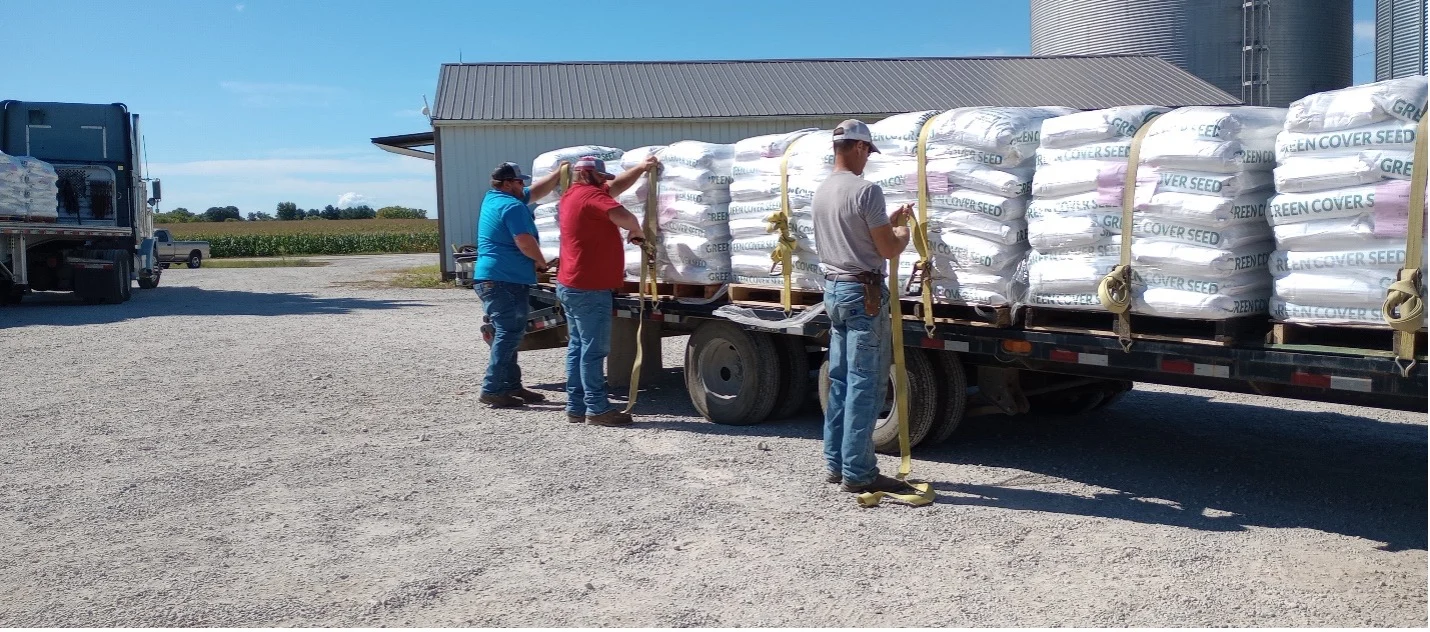
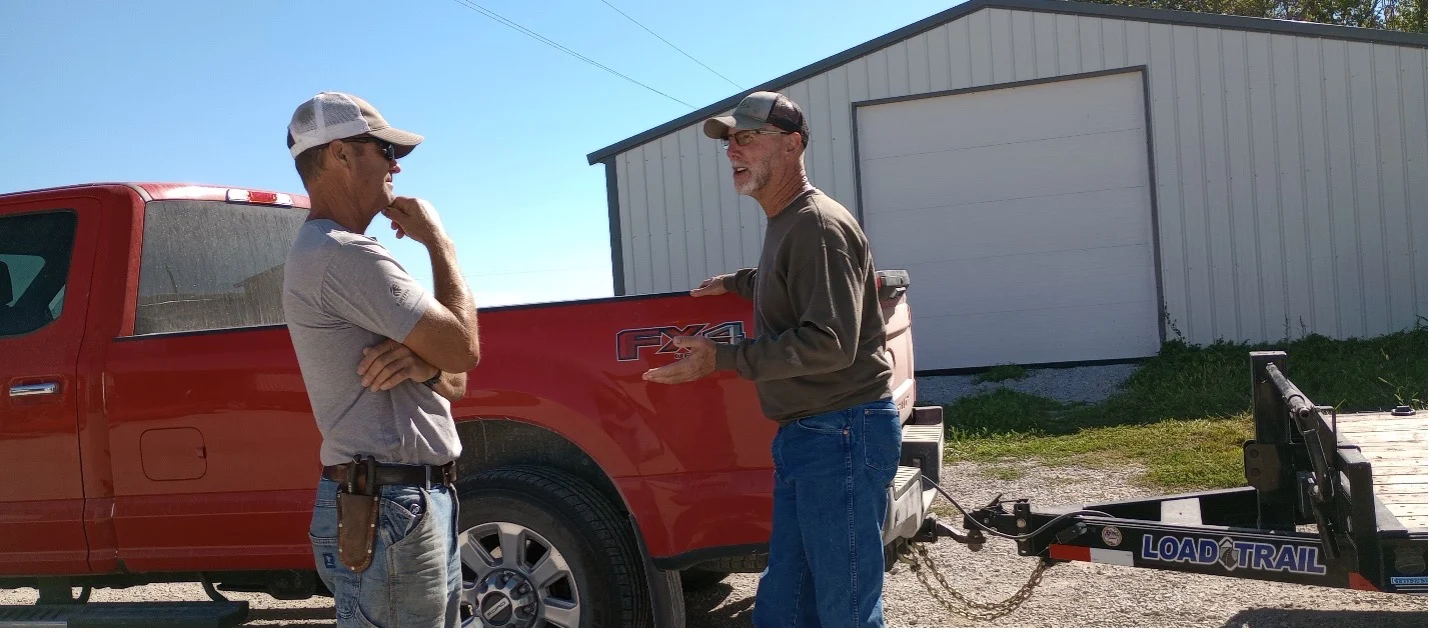 2025 cover crop seed delivery in Coles County. Picture credit: Malina Przygoda
Through this project, the Extension team hosted a virtual farmer panel in July of 2025 that allowed farmers from around the state to share about their experiences with cover crops. A recording of the farmer panel is available here.
In 2026, Curry and her colleagues have identified Carroll, Whiteside, Mercer, Coles and Jasper counties as this year’s target areas for the free cover crop seed. Cover crop seed has been ordered according to the requests from each county in the program and will be distributed soon ahead of fall planting. This year, Coles County requested their proportion of seed to be 75% cereal rye/rapeseed mix and 25% cereal rye. Mercer, Whiteside and Carroll counties asked for 75% cereal rye/25% mix with each county requesting different species as their mix. Mercer chose winter camelina, Whiteside oat/turnip and Carroll oat/radish. Jasper County elected to have 100% cereal rye.
The Illinois Soybean Checkoff Program is proud to help provide this service to farmers in Illinois. Farmers interested in learning more about this program and how they can participate in the fall of 2027 should contact Rachel Curry at rccurry@illinois.edu.

As Research Agronomist for the Illinois Soybean Association (ISA), Jennifer Jones works on behalf of Illinois soybean farmers in the development and the implementation of conservation agricultural research and outreach programs. She supports research efforts and helps communicate both in-field and edge-of-field research and validation studies to ISA’s farmer audiences; leads demonstration of conservation agriculture practices; and raises awareness of best management and continuous improvement practices for conservation agriculture in Illinois. Contact Jennifer at jennifer.jones@ilsoy.org.

 and then
FIND US ON