
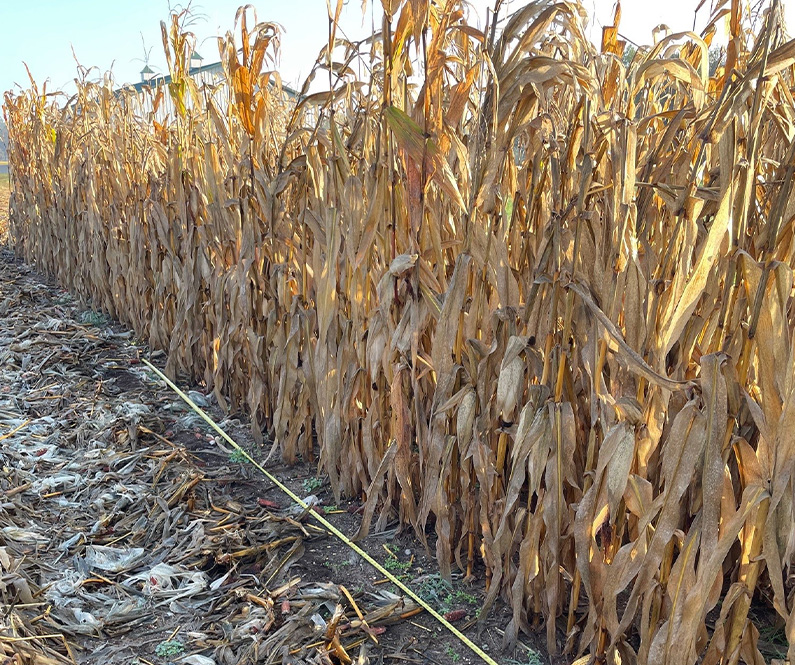
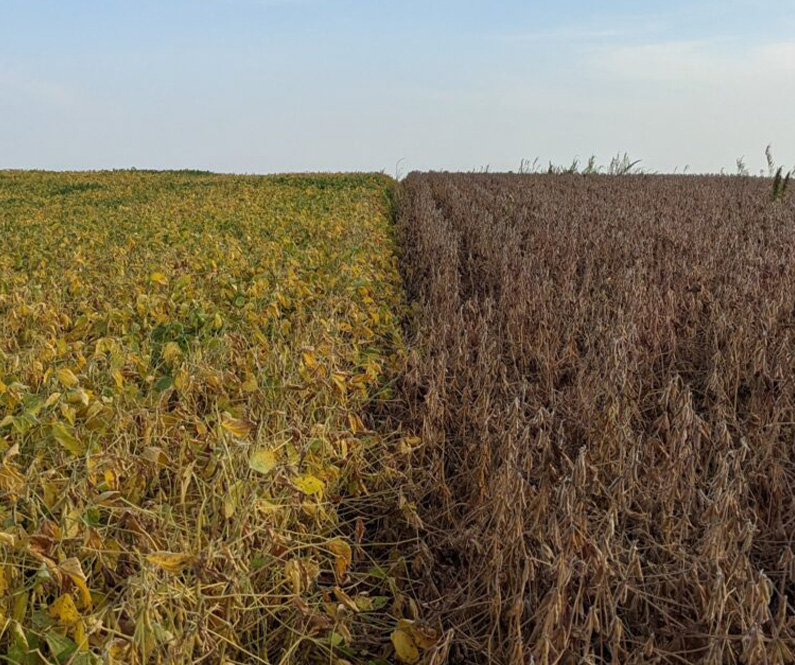
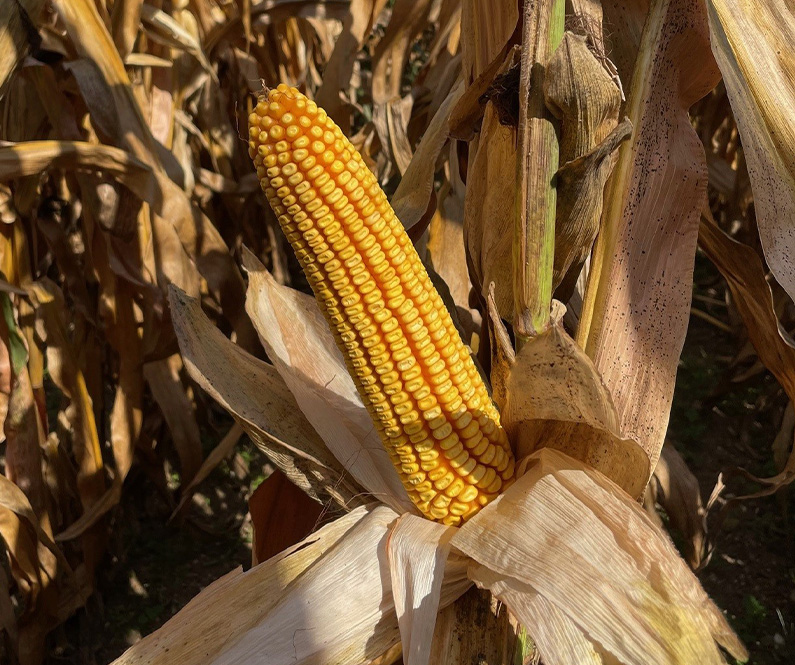
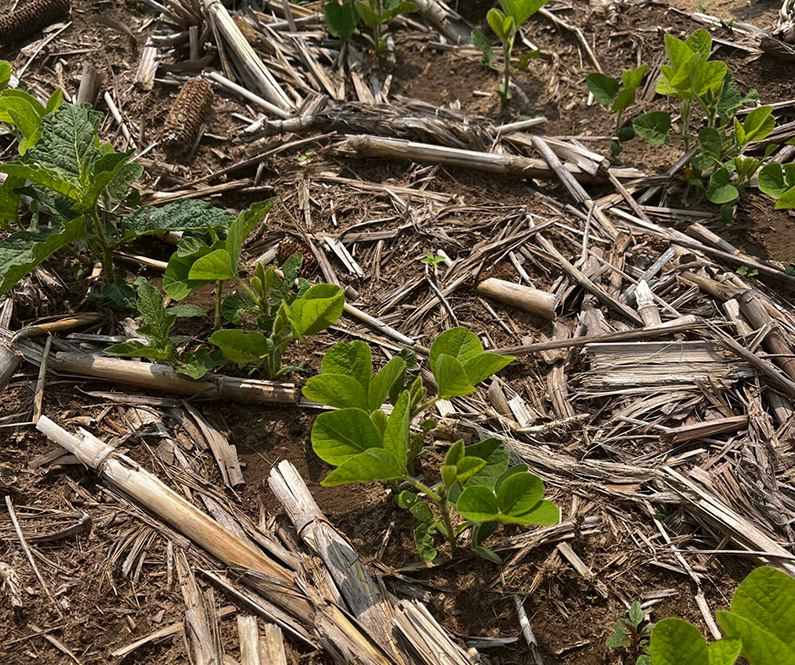
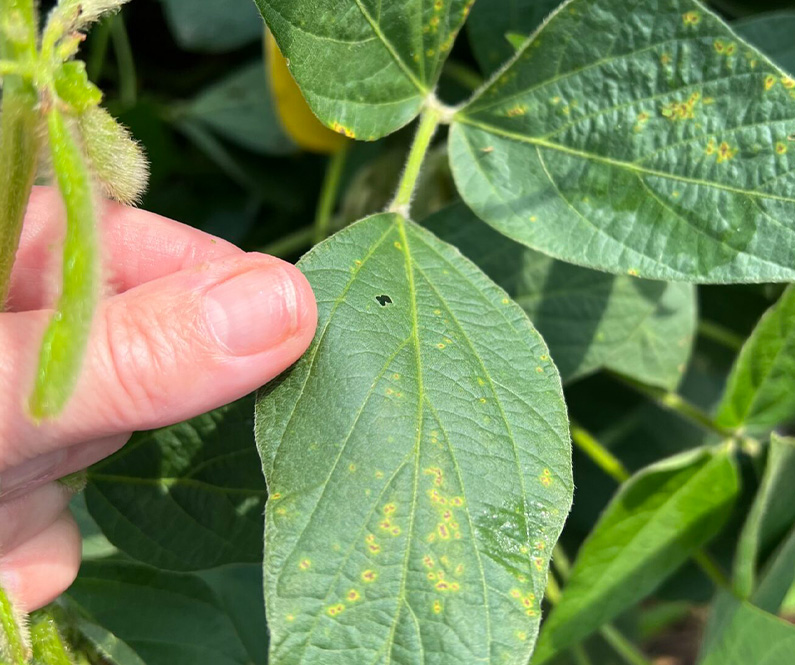
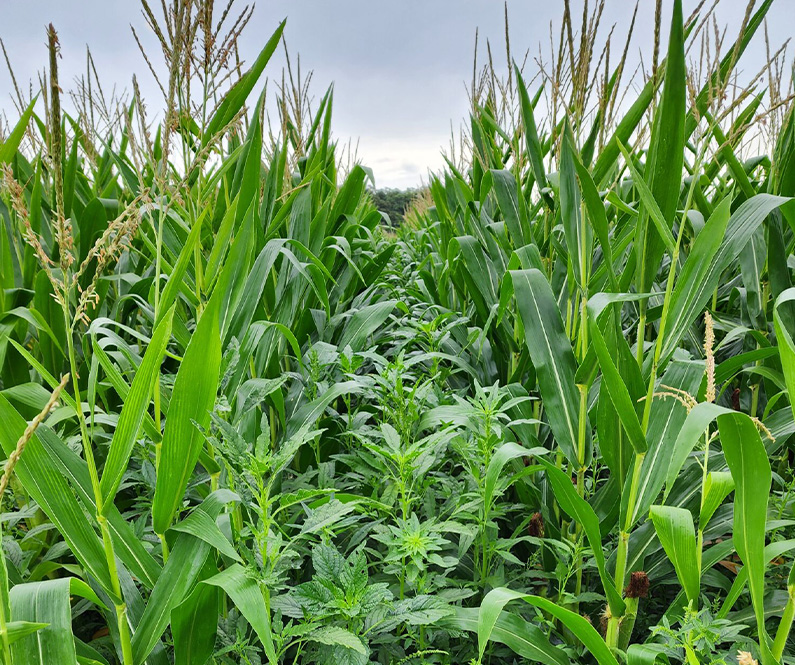
Harvest is underway in Douglas County. During my survey Tuesday (9/15) morning, I saw both corn and soybean fields being harvested as well as a handful of others that had recently been harvested, or at least “opened up”. Most corn fields visited are at black layer (R6) or close to it, with the exception of a couple fields that were presumably planted late due to early season wet conditions. Soybean growth stage across the county showed a bit more of a range, with the majority of fields at beginning maturity (R7) or beyond, but a fair number still mostly green across the canopy. Those soybeans that are still holding on to some green leaves are turning quickly as soil moisture continues to decrease in the area with warm temps and minimal rainfall. As I write this on Wednesday (9/16), we did catch some rain in the area from the south edge of a storm system that moved through this morning. Available reports from Douglas County show a range of ~0.1-0.8″ in accumulation from that storm, so probably not enough to keep people out of the fields too long, depending on how the scattered storms in the forecast for the rest of the week play out.
For many Labor Day weekend is considered the unofficial end of summer. For the ag community in Northeast Illinois the end of summer is the Sandwich Fair, held annually the week following Labor Day. Yesterday I had the opportunity to judge commercial corn entries at the Horticulture and Crops barn at the fair, Using the size and kernel number of ears as an indicator, it has been a good growing season. In the field, both corn and soy are nearing maturity, in most fields I observed it appears corn is winning the race. Most in this region will likely start the 2026 harvest in corn before soy. As farmers prepare for the harvest this is an ideal time to check corn fields for any standability issues. This can be accomplished by walking the field or by use of a drone. With this knowledge, field harvest order can be adjusted accordingly. With the variability we have seen within fields this year it will be important to check combine settings often during crop harvest.
I haven’t made a report for several weeks as I’ve been on paternity leave and up to my elbows in diapers and bottles for my twin infants. Until this last week my windshield surveys had me thinking that the crop was still doing pretty well despite the hot dry weather over the last two months. I had seen a few patches of stressed plants in pockets of fields with thinner soils, or regions that missed a rain, but overall the crop didn’t seem too visibly stressed. In the last week (prior to the rains that came through on 9/10/26) I started noticing more and larger areas of visible stress. When I walked out in some late planted and double crop beans that from the road, looked healthy; I was surprised at how many pods contain only one or two developing beans. Clearly the hot dry weather was impacting fertilization and seed set more than I realized. A lot of these later planted fields do have a number of very small pods that may still set. Hopefully the rains this week help prevent them from aborting and at least fill the pods we do have out there.
I saw my first combine shelling corn in Marion county on August 27th. I still have only seen that one farm shelling and drying corn, everyone else seems to be letting the triple index heat dry their corn down for now. The hot, dry weather has had all corn in the area at black layer and drying for a while, regardless of how late it was planted. From what I’ve seen, it looks like corn planted from April to mid May had decent fill before being forced into senescence. Ear size may not be anything to write home about, but it seems there’s more grain out there than 2025 in this area (which is a low bar). Fingers crossed as combines start to get rolling.
Cooler and wet conditions have moved in across northern Illinois. Light rain and heavy morning dews have propagated some late season disease in both corn and soybeans as we start to enter wide-scale senescence and harvest.
Soybeans in McHenry and Dekalb counties are producing large amounts of pods, as well as filling those pods very well. I expect many soybean fields to have high yields. I have seen mostly foliar late season diseases such as SDS and septoria leaf spot, but nothing of major concern that will slow down soybean pod fill. Fields with earlier maturities are well into senescence as well.
Corn is finally starting to show some disease with the prolonged leaf tissue wetness, and lower temperatures that we have seen in September. Tar spot, northern corn leaf blight, and even some late season southern rust are being found in fields. Many corn fields are starting to fire and die down, as well as hitting black layer, or physiological plant death. Disease at this point will mostly go on to determine inoculum load for next season, as well as assist in drying down plant material for harvest.
Overall, we are steadily marching towards harvest, and hoping for some great drying and harvest weather to finish out the season
Harvest has begun in northern Champaign County, albeit on very limited acreage, primarily seed corn fields at this point. Another week of dry weather along with high temps in the 90s have dried up any standing water that remained in fields in that part of the county and has moved the corn crop, in particular, much closer to harvest. Most corn fields I visited still have not quite hit full physiological maturity (R6), but with the milk line all but disappeared on most ears, they don’t have far to go. Ear size and grain fill was once again variable. Foliar diseases in corn are “helping” to turn fields from green to brown quickly at this time of year, and I’ve seen a bit more lodging in corn fields as the weeks progress. In fields surveyed with lodging issues, the main culprit appeared to be Diplodia stalk rot. But other stalk and crown rots could be contributing to this issue as well. I’ll reiterate my message from last week encouraging the use of recent drone or satellite imagery to asses lodging severity in fields to aid in harvest decision making. Soybeans are also progressing towards maturity, but many fields remain with plenty of green in the canopy, still somewhere between full seed (R6) and beginning maturity (R7) growth stages.
Entering September an intense shift in weather as a “heat dome” became established in Northeast Illinois. While fields near the Wisconsin state line received precipitation, most areas did not. The ninety degrees plus days provided ample Growing Degree Days (GDDs) for crops finishing grain fill. On lighter soils the temperatures are causing a water deficit reflected by the wilting/yellowing plants. As mentioned in previous reports, there is very good corn, and not as good, depending on where you collect samples. This week I collected from fields that should be very high yielding.
Few things are left to surprise me in this growing season, but a sunflower field in Kendall County did just that! Not sure when the field was planted or harvest plans for the crop, but an interesting rotation option. Several winter wheat fields that had been harvested earlier in the season are now supporting a robust weed population. Farmers should consider mowing, tillage or a chemical option to prevent these weeds from adding to the weed seed bank. For those considering a third or fourth cutting of alfalfa, an often asked question is when? Adequate time is needed for regrowth of alfalfa to replenish root carbohydrates to increase overwintering ability of the perennial crop. Our general answer has been four to six weeks before a killing frost for the hay crop. Newer recommendations encourage farmers to look at GDD’s, with a minimum of 500 GDD’s between last cutting and a killing frost.


 and then